Norwegian Getaway Cabins to Avoid (and the Cabins I’d Choose)
On Norwegian Getaway, skip a cabin whose balcony, ceiling, or daily walking route doesn’t fit the reason you’re booking it.
Start on Deck 10 or 11 for a balanced standard room, then compare the specific compromises before choosing a guarantee, a Waterfront-adjacent room, or a high aft balcony.
Short version
Light sleepers should compare Deck 10 or 11 before an unchecked Deck 9 room over Waterfront venues or Deck 14 room below public activity. Keep cabin-number control when view, access, or connecting arrangements matter, and choose an aft balcony only when the wake view beats the longer forward walk.
Skip BX when an exact location matters
A Balcony Guarantee, Category BX, leaves Norwegian to assign your room within the fare’s terms. That means you can’t build the decision around a particular elevator route, a favorite deck, or a room next to the rest of your group.
Choose a numbered cabin when an accessible layout, connecting pair, or short walk is essential. A lower fare is less useful if the assignment creates the very problem you were trying to avoid.
Before accepting a guarantee, read the actual assignment and view terms in your booking. Don’t assume a room photo represents the room you’ll receive; the current room options describe categories, while your assignment establishes the specific location.

Compare Deck 9 with the venue directly below
Deck 9 sits just above Deck 8’s Waterfront restaurants, bars, and music spaces. That puts an evening downstairs wonderfully close, but it also makes the exact public-space footprint a useful part of a sleep-focused cabin choice.
If you go to bed early, compare the room with a similar Balcony on Deck 10 or 11 before paying. You gain a residential buffer without giving up easy access to The Waterfront and the lower dining area.
Don’t rule out the whole deck: a room over a different part of the promenade is a different decision from one directly above a lively venue. Use the current deck plan to match the room to its actual downstairs neighbor.
Deck 14 deserves a proper ceiling check
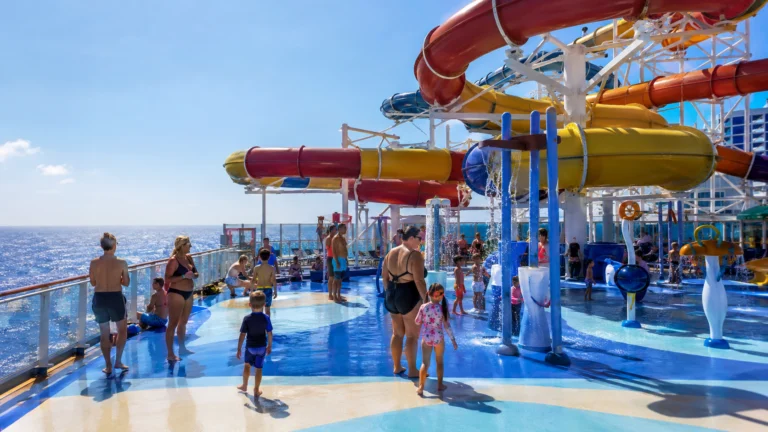
Deck 14 is the highest broad cabin deck beneath Deck 15, where Garden Café, pools, the Aqua Park, and the spa occupy different areas. One upper-cabin label doesn’t explain what sits on the other side of your ceiling.
For a late sleeper, compare a room beneath public flooring with an available option one or two decks lower. A Deck 12 or 13 room with cabins above may be worth a small fare difference if you don’t need the shortest possible breakfast route.
For a family making frequent pool trips, the convenience can still be useful. Keep it when the exact overhead area and your daily routine make sense together, rather than choosing the deck solely because it is near the slides.
A big balcony doesn’t remove a public-space boundary
The B6 Large Balcony category is forward on Deck 9, while M6 Club Balcony with Larger Balcony sits forward on Deck 8. Both are worth comparing when you plan to read or have coffee outside every day.
The important extra question is location. An M6 room trades a middle residential deck for the Waterfront level, and a B6 room sits one deck above the public band; more outdoor area doesn’t make either ceiling or floor irrelevant.
If your balcony use is usually five minutes at sailaway, choose a well-placed standard Balcony instead. If you spend hours outside, compare the actual outdoor arrangement and nearby public spaces before paying for the large-balcony category.
Choose 14278 for the wake view, not a quietness promise
Cabin 14278 sits at the aft end of Deck 14, which makes its position useful to understand before choosing it for a wake-facing view. It doesn’t put you in the middle of the ship or give you the shortest route to forward spaces.
A passenger’s comfortable stay cannot guarantee how another sailing will feel during maneuvering or in rough water. If early arrival vibration or motion bothers you, compare a lower, more central room instead of treating a good past review as a permanent room feature.
Keep a high aft room when the view is the feature you’ll enjoy and the longer walk is acceptable. Compare a lower aft category when you still want the wake perspective but would rather give up height than the view itself.
Avoid high-forward choices when motion matters most
The main Haven enclave is high and forward, with its restaurant and courtyard on Deck 16. That location can make daily suite life convenient while still being less conservative for motion than a lower, more central cabin.
If you’re sensitive to movement, decide how much that matters before paying for the private neighborhood. Bigger rooms and better service can improve the experience, but they don’t change where the room sits on the moving ship.
A standard central Balcony can be the more useful purchase for a motion-sensitive couple. If Haven access remains important, compare the locations of eligible suites and understand the walk to the enclave before making the final choice.
Don’t buy a remote Haven suite for immediate courtyard access
Some Haven suites sit away from the main high-forward complex. A large aft balcony can be a lovely reason to choose one, but the cabin’s Haven designation doesn’t place the private restaurant and lounge beside its door.
For someone who expects to use the courtyard, restaurant, and concierge repeatedly, choose inside or near the core enclave first. For someone who mainly wants a wake-facing terrace and suite service, the more distant position may be a fair trade.
If stamina is limited, picture the trip to every included private facility rather than only the room photo. Pay for the suite whose location fits your routine, not a benefit list that leaves you making a long walk several times each day.
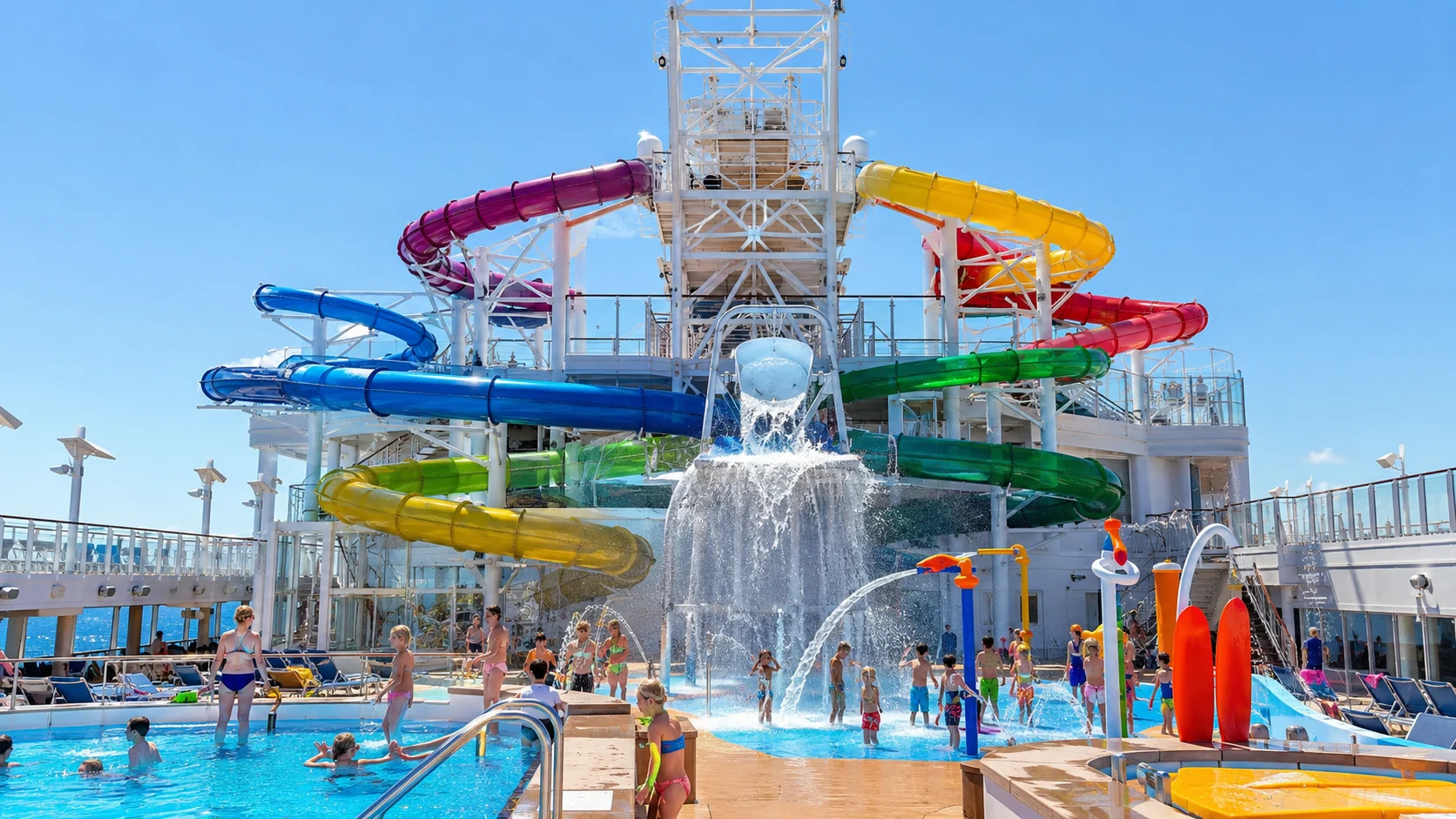
Family Balcony is a location choice as well as a bed count
Family Balcony rooms sit on Decks 13 and 14 in the current roster. Their family label doesn’t mean you can ignore how much floor space remains after the extra beds are in use.
Check the exact bedding symbols and capacity for your room, then picture everyone’s suitcases and the path to the bathroom at night. For teenagers or several adults, two confirmed connecting rooms can be more useful than one category upgrade.
For young children using Splash Academy, the forward route matters because the youth spaces span Decks 12 and 13 forward. An aft family room can shorten the pool trip while leaving the youth-club handoff farther away than the category name suggests.
Confirm the connecting door, not just adjacent numbers
Two neighboring cabins don’t automatically connect internally. Find the connecting mark on the plan and have the exact pair confirmed before making it part of your children’s sleeping arrangement.
For friends or a couple who don’t need the connection, a nonconnecting alternative is worth comparing when privacy matters. The door is useful when your party controls both sides, but it shouldn’t be purchased as a benefit you won’t use.
Nor does a connecting door prove a room will be noisy. The practical choice is matching the layout to your group and understanding the doorway arrangement, rather than treating every connection as a warning.
Choose for the route you’ll repeat most
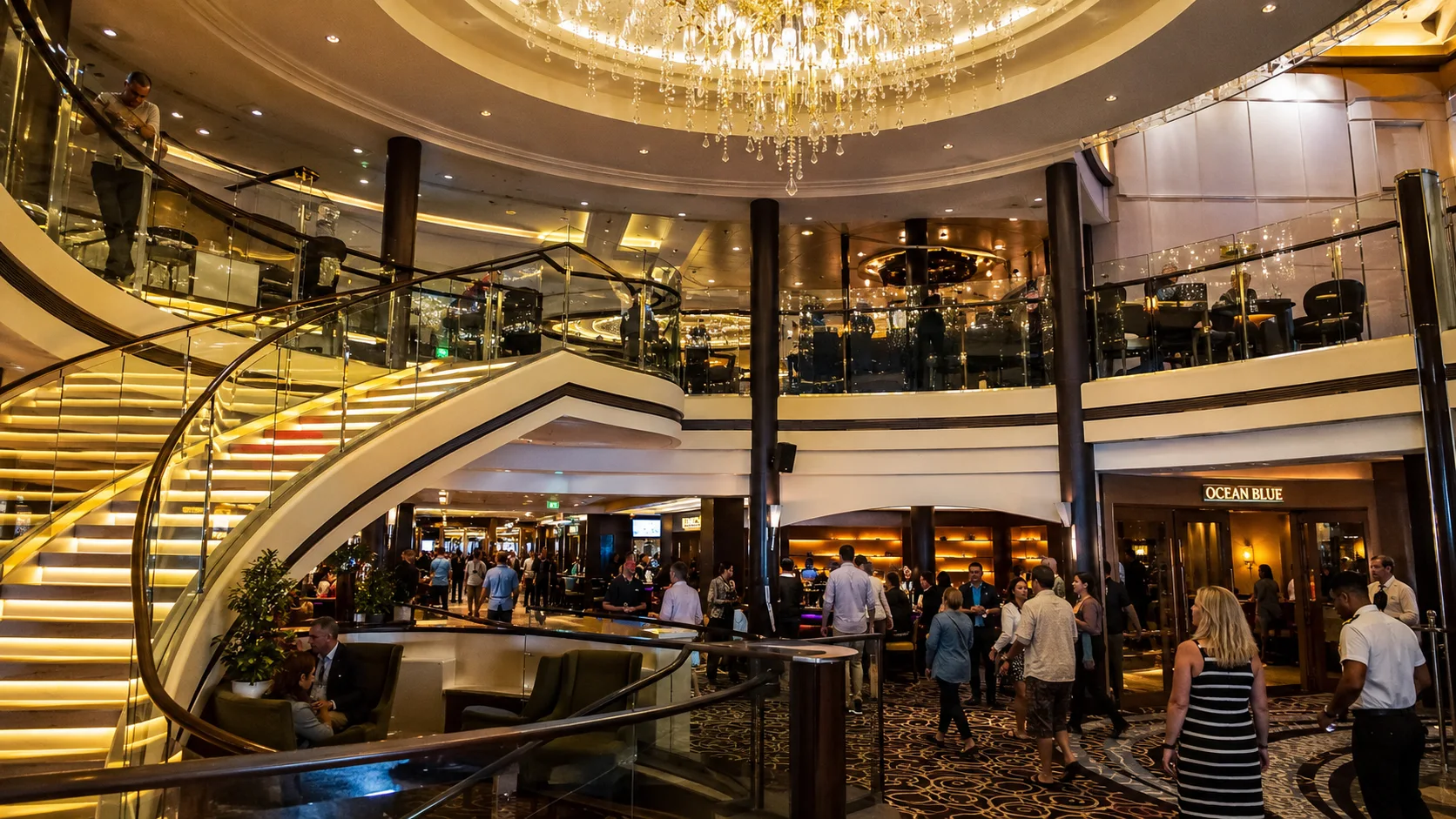
Aft favors Garden Café, Spice H2O, the upper sports approach, and wake-facing rooms. Forward favors the theater, spa, Splash Academy, and the main Haven complex, so no single room can be next to every favorite.
If walking is tiring, prioritize your most frequent trip and choose a useful elevator bank nearby. A centrally placed ordinary cabin may make the vacation easier than an unusual end room whose best feature you only enjoy occasionally.
Elevator proximity alone isn’t a reason to reject a cabin. Compare the exact door and nearby lobby with the convenience you’ll gain, then leave enough time for the busier waits after shows and at dinner.
Accessible needs should decide the room first
An accessible layout is a specific room requirement, not something a larger standard suite automatically provides. Discuss the bathroom, doorway, transfer space, bed clearance, and equipment storage with NCL before paying.
Use the accessibility information to start that conversation, then ask about your actual itinerary. A shipboard lift or accessible cabin doesn’t establish that every gangway, tender, excursion vehicle, or historic street will work for you.
Keep control of the room assignment when those features are essential. Once access is confirmed, use the same venue-route comparison as any other traveler to avoid unnecessarily long trips between the room and your daily plans.
Smoke sensitivity needs a route and balcony check
The Deck 7 plan marks a smoking casino area, and the ship has other designated smoking locations. Learn an alternative public route if repeated casino passage would make evenings unpleasant.
For outdoor preferences, check current smoking-area signs and the location of the balcony you’re considering rather than relying on one older description of a deck side. Wind and the current operating setup can change how a nearby outdoor area feels.
A nonsmoking cabin rule doesn’t make every surrounding public space smoke-free. Choose distance and a usable alternate route when this is an important comfort requirement, and don’t make a central category label do that work for you.

The simple Getaway cabin shortlist
For most couples who want a balanced room, compare a selected Balcony on Deck 10 or 11 with cabins above and below. For a family using Splash Academy frequently, compare an appropriate forward Deck 12 or 13 room and the exact bedding.
For outdoor space, compare B6 and M6 deliberately; for the wake view, accept the aft walk; for private suite facilities, choose the Haven location that matches your priorities. Those decisions are more useful than calling an entire deck good or bad.
Our best cabins guide compares categories, while the deck guide explains the daily routes. The practical tips help you plan the week once the room is settled.
How this guide was researched
We checked Getaway’s current room-category descriptions and visually inspected the published deck images for cabin and public-space boundaries. Cabin advice identifies location and layout compromises, rather than claiming a particular noise level or promising the outcome of a guarantee fare.