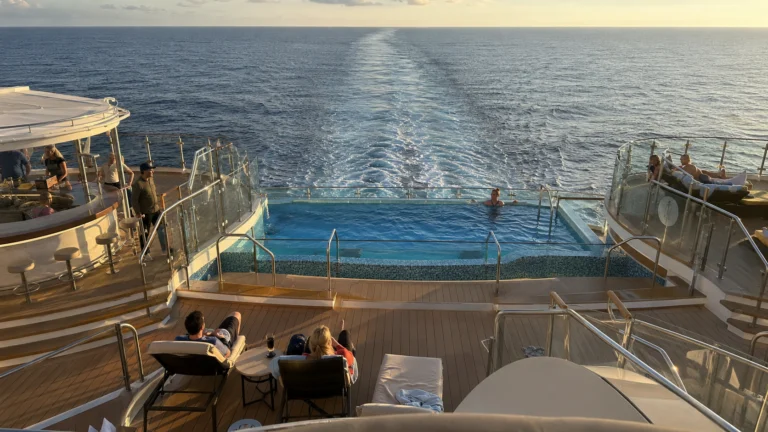
Arvia Cabins to Avoid (and What the Deck Plan Reveals)
Arvia’s biggest cabin tradeoffs are Family Sea View Suites without balconies, Deck 8 promenade privacy and rooms beneath busy parts of the upper public decks.
Choose a standard balcony between cabin decks for light sleep, or take the promenade and upper-deck locations when their shorter routes are worth the privacy and overhead tradeoffs.
Short version:
- Suites 8.109 and 8.110 have no balcony, so skip them if private outdoor space is the reason you are upgrading.
- Deck 8 Promenade cabins trade privacy for being right beside the public walking deck.
- Light sleepers should check every Deck 15 cabin against Deck 16 before booking.
- Conservatory Mini-Suites on Decks 8 and 9 can have very different neighbors, so the exact room matters.
- For the simplest quiet choice, start with a selected balcony on Deck 10, 11, 12, or 14 with cabins above and below.
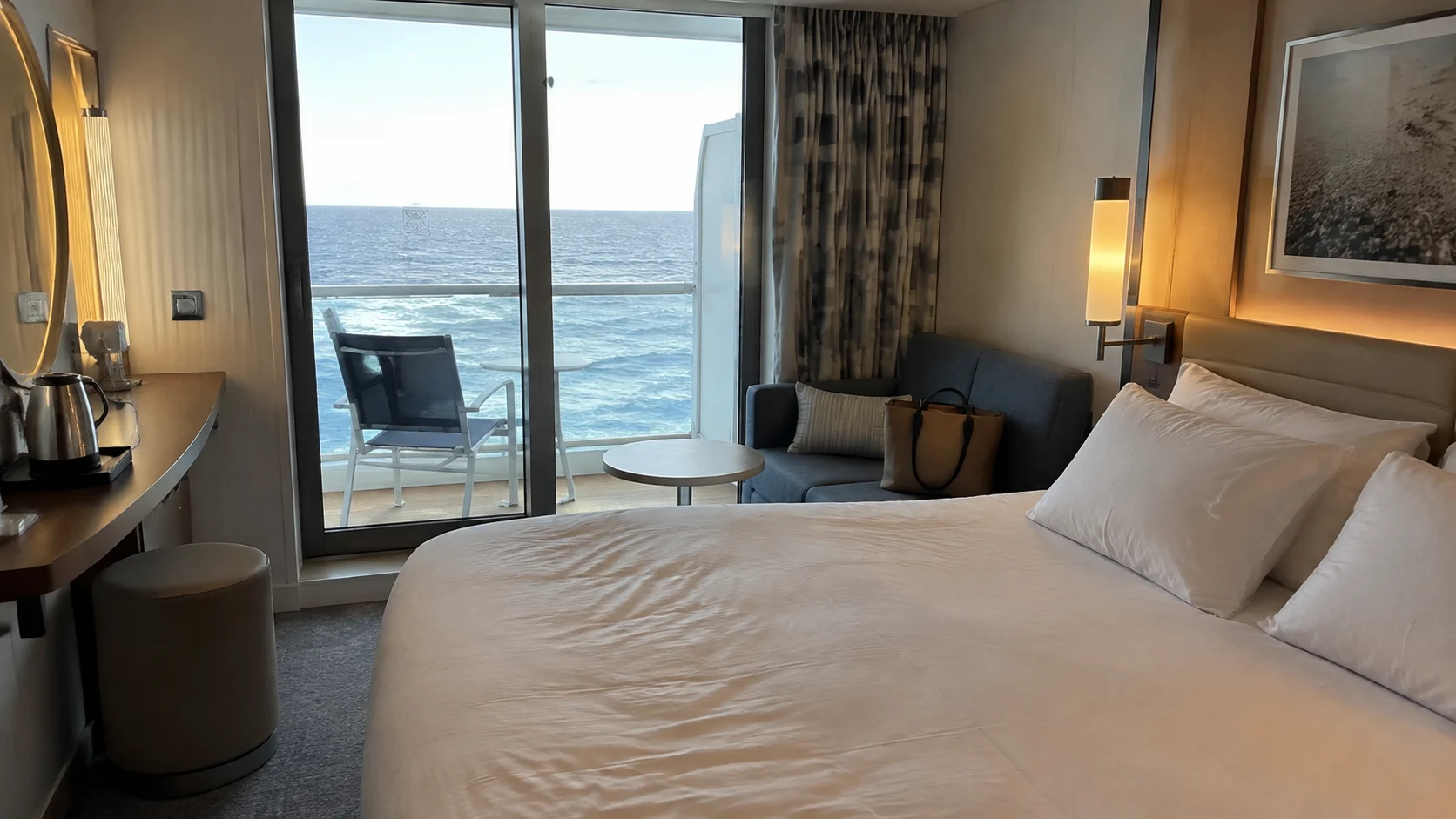
Suites 8.109 and 8.110 are the easiest ones to misunderstand
The two Family Sea View Suites sit on the Promenade Deck and are marked without balconies; choose them for interior family space when private outdoor time is unnecessary.
That matters because the word “suite” does a lot of psychological work on a booking screen. It is very easy to picture more space plus a balcony and notice the missing outdoor area only after you have fallen in love with the category.
For a family needing separate living space, the layout can be useful; for morning coffee outdoors or a private place to sit in the breeze, a regular Balcony or balcony-equipped suite is the more suitable comparison.
P&O also marks these cabins as visible from the Promenade. So even though they can be useful family rooms, they are a poor match for someone who wants both a private outlook and a private balcony.
Deck 8 Promenade cabins are a privacy decision
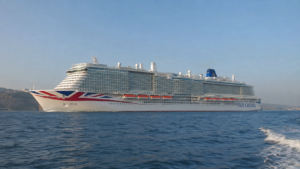
Arvia’s Promenade wraps public walking space around Deck 8, and selected cabins sit right beside it. That can be wonderfully convenient, but it changes the feeling of the room in a way a normal side balcony does not.
Promenade-facing windows and balconies can be visible to people passing outside; choose a room higher up when leaving the curtains open and using the balcony privately are everyday priorities.
For people who love being close to the action, this can be a fun location. You are right near a public outdoor route and do not have to travel several decks every time you want to step outside.
For a quiet couples’ trip, I prefer a conventional side-facing balcony higher in the residential stack. You lose the Promenade-at-your-door convenience, but you gain a more private feeling when you are actually in the cabin.
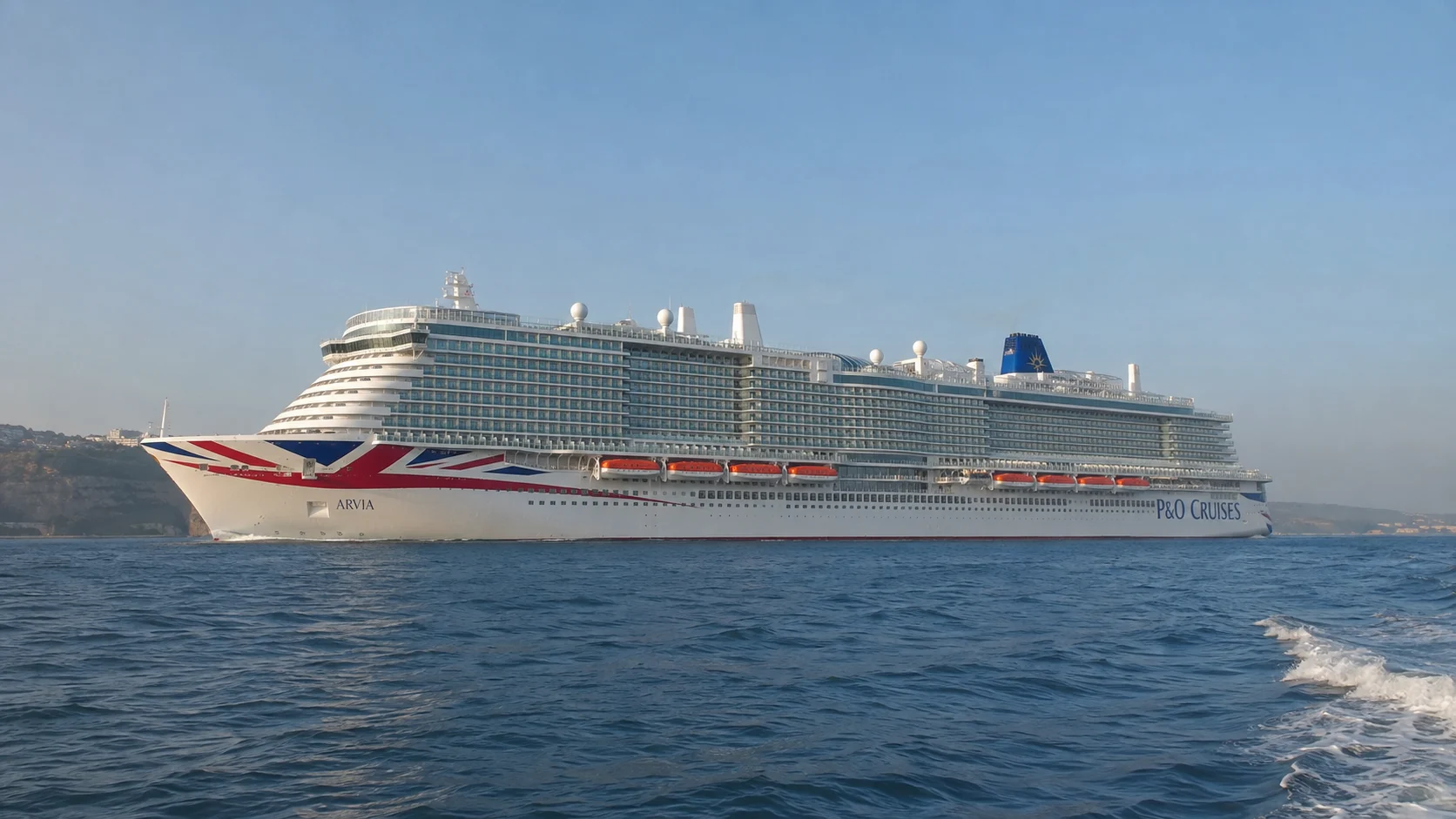
Conservatory Mini-Suites on Deck 8 need an extra look
The Conservatory Mini-Suite sounds like an easy upgrade because you get that glazed sitting area between the cabin and balcony. The catch is that the Deck 8 versions are still living right beside the Promenade.
P&O marks several Conservatory Mini-Suites for Promenade visibility, and some have additional view restrictions. That means you can pay for more room and still end up with less privacy than someone in a cheaper conventional balcony a few decks higher.
Choose a Conservatory Mini-Suite for the extra sitting area, then favor Deck 9 when more distance from the promenade is important; the category name alone does not make the outdoor space secluded.
Deck 9 brings a different question because it sits above the restaurants, Promenade, and other Deck 8 venues. Again, the category name is less important than the exact vertical position.
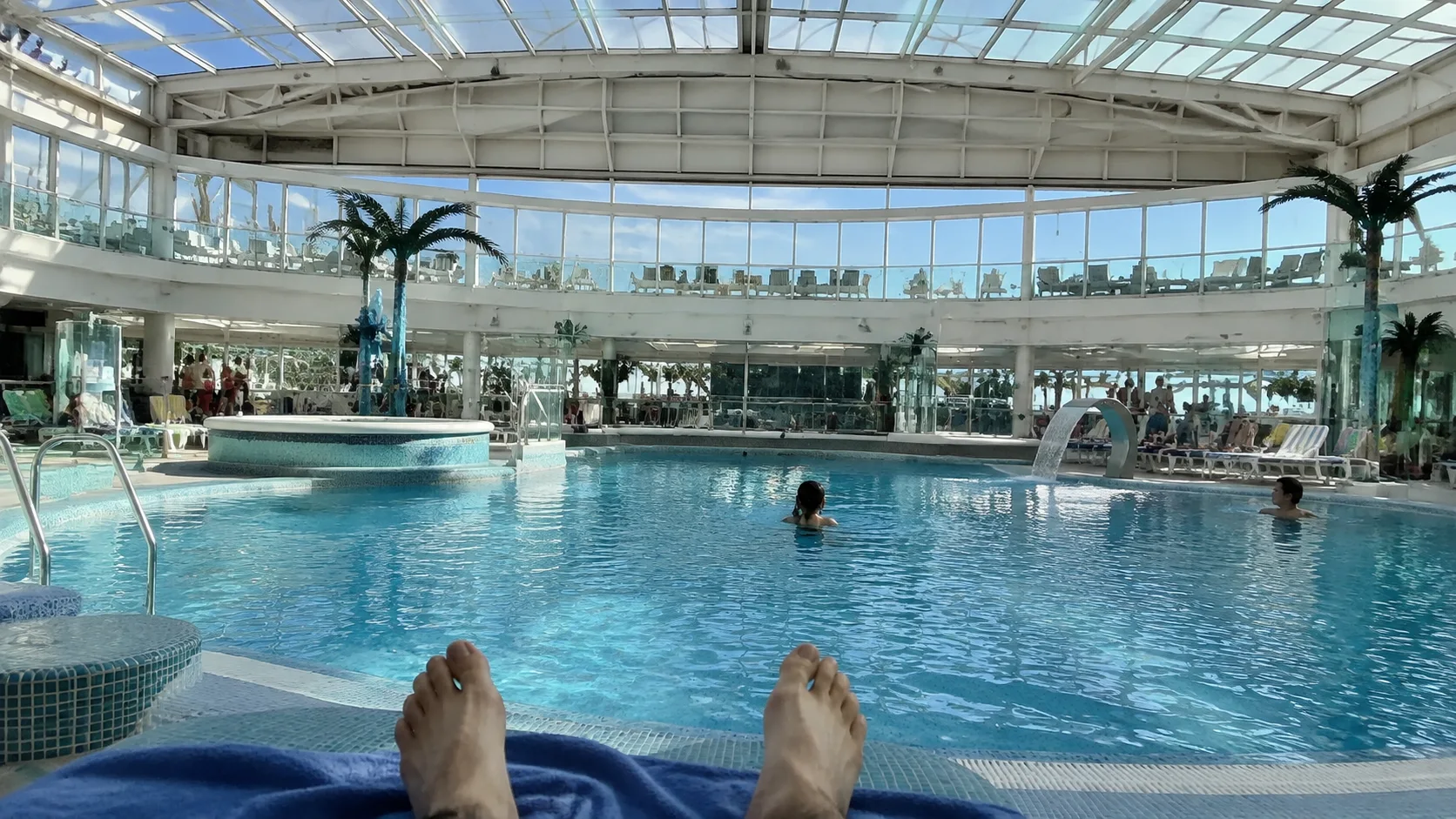
Deck 15 is where light sleepers should check the ceiling
Deck 15 sits directly below Deck 16, and Deck 16 changes a lot as you move along the ship. There are cabins in some sections, but there are also pools, outdoor seating, Horizon, and other busy public areas.
The public spaces over Deck 15 change along the ship, so its rooms have different tradeoffs; choose by the actual space overhead rather than rejecting the whole deck.
Deck 15 suits travelers awake early and happy to be close to the pool; for late mornings or afternoon naps, a middle cabin deck with other rooms overhead is the better starting point.
The official deck plan is the best friend you have here. Line up the exact cabin with Deck 16 instead of judging the whole deck by one review.
Deck 9 also changes depending on what is below
Deck 9 sits above the Promenade level, where restaurants, bars, The Club House, and other public spaces occupy different parts of the ship. One Deck 9 cabin may have a pretty ordinary floor beneath it while another sits over a venue that is active well into the evening.
If you are choosing Deck 9 for a Conservatory Mini-Suite or balcony, look down one deck before you get excited about the room itself. The answer can be as simple as moving a little farther along the corridor.
Late-night people may love being close to the venues they use. Early sleepers should give themselves a little more buffer, especially when a similar cabin is available on Deck 10, 11, 12, or 14.
Forward balconies can come with view and access quirks
P&O’s deck-plan notes flag several things that matter on forward balconies: some have steel fronts, some can be overlooked by the bridge, and access to some balconies may be restricted during high winds. Those are much more useful warnings than a vague “avoid the front” rule.
A steel-fronted balcony can be perfectly nice when you are standing at the rail. It is less appealing if your whole plan is to sit low in a chair and watch the water through clear glass.
For balcony time in variable weather, a side-facing room without the plan’s high-wind restriction is the more dependable choice than a forward room carrying that caveat.
For motion sensitivity, start lower and central; it also shortens the average walk on a ship where a far-forward room can be a long way from aft dining.
Extra beds can make a roomy cabin feel much smaller at night
Arvia’s deck plan distinguishes sofa beds from pull-down berths, and that matters more than it sounds when three or four people are sharing. A pretty daytime room can feel completely different once every sleeping surface is open.
If you are traveling with kids, picture the bedtime route before choosing a cabin. Can everyone still get to the bathroom, storage, balcony door, and cabin entrance without climbing over someone else’s bed?
For two adults, a simpler two-person layout without an unused connection can be appealing, while a family occupying both rooms gains real convenience from that door.
For an adapted room, use P&O’s accessibility guidance alongside the exact plan symbol; a powered-device designation and a larger standard suite do not automatically provide the bathroom arrangement you need.
Accessibility symbols deserve a careful read
P&O separates fully adapted cabins from partially adapted grades intended for certain nonpowered walking aids. A small accessibility symbol is not enough reason to assume every adapted room works for every mobility device.
If you need an accessible cabin, match the exact room to the equipment and bathroom setup you use. If you do not need those features, leave the limited accessible inventory for someone who does when an equivalent standard cabin is available.
Arvia alternatives by traveler
For light sleep and a straightforward balcony, start with Deck 10, 11, 12 or 14 and choose a side-facing room with cabins above and below; neighbors can still be heard, so this is separation from public venues rather than a promise of silence.
That is not the flashiest answer, but it removes several of Arvia’s common question marks at once. You are away from the Promenade privacy issue, away from the Deck 15 public-space ceiling, and still in the middle of the accommodation stack.
If you specifically want a Conservatory Mini-Suite, compare Deck 9 with Deck 8 and decide whether the Promenade relationship or the venue below matters more to you. The best cabins guide goes deeper on the rooms worth targeting.
If walking distance is your biggest concern, use the deck guide to choose the elevator bank closest to the places you will use most. Arvia is big enough that a well-placed ordinary balcony can feel better than an expensive room at the wrong end of the ship.
Arvia cabins that still suit the right traveler
Deck 8 suits travelers who enjoy the promenade nearby and accept visibility, while Deck 15 suits early risers who value pool access; a forward balcony can still be worthwhile when its view and fare outweigh the motion and wind tradeoffs.
A Promenade cabin can be fun when you like being close to activity. A Deck 15 cabin can be brilliant for a heavy sleeper who wants the shortest possible trip to the pool.
Even Suites 8.109 and 8.110 are not “bad” cabins. They are simply the wrong suites for someone whose definition of a suite includes a private balcony.
A well-positioned standard balcony is the stronger purchase when the more expensive room carries a compromise that conflicts with your routine; spend on the feature you will actually enjoy.
For the rest of the ship, the Arvia tips are a useful final read before you book.
How this guide was researched: I checked P&O’s current ship page and current deck plan, including its notes for balcony visibility, obstructions, high-wind restrictions, extra beds, and accessible cabins. Exact layouts and operating arrangements can change, so confirm the room on the deck plan for your sailing before paying the final balance.