Carnival Freedom Cabins to Avoid (and How to Pick a Quiet One)
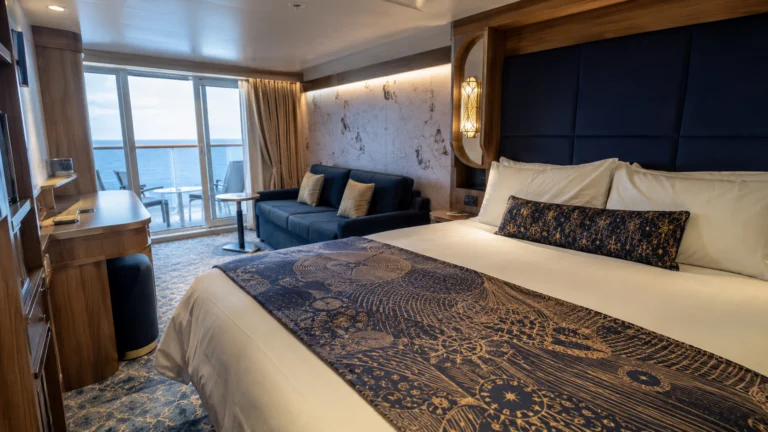
For Carnival Freedom, the cabin mistakes worth avoiding are an unwanted bed arrangement, an obstructed window you expected to be clear, and a room directly beside a busy public-space boundary.
Start on Deck 7 for a straightforward sleep-focused choice, then move elsewhere only when the price, view, or shorter walk makes the compromise worthwhile.
Short version
Check Ocean Views 2446 and 2449 for their marked obstruction, Category 1A for its nonstandard beds, and Category 4J for a window facing a public walkway. For light sleepers, favor Deck 7 over an unchecked Deck 6 nightlife ceiling or Deck 8 Lido ceiling.
Check 2446 and 2449 before paying for a clear ocean view
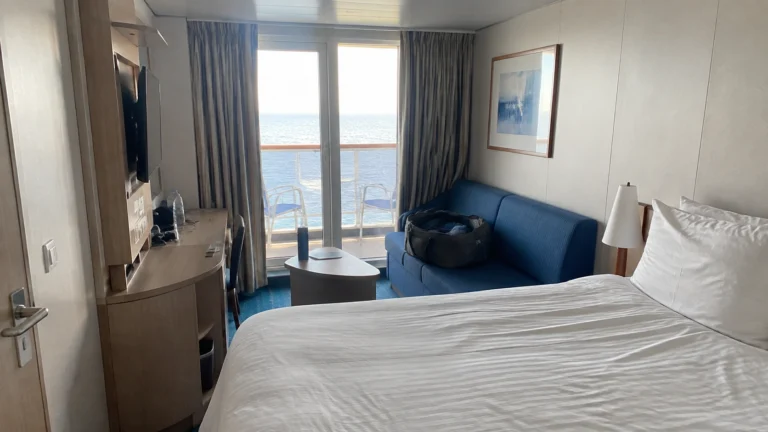
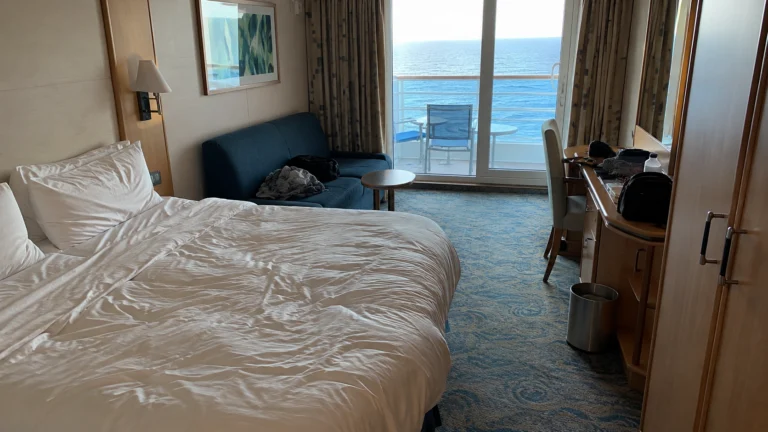
Cabins 2446 and 2449 are the two Category 6B Ocean Views marked as obstructed on the official deck plan. If the whole reason you’re choosing an ocean view is watching the horizon from bed, take another room with an unobstructed outlook.
These aren’t automatically bad cabins: they still give you a window and daylight. They become a poor choice when you pay nearly the same price as a clear-view room or expect the scenery to be the cabin’s main attraction.
Compare the actual fare for these rooms with an unobstructed Main Deck Ocean View, a Porthole, and an Interior. Choose the obstruction only when the savings are meaningful to you and you mainly want daylight rather than a postcard view.

Skip Category 1A if you need a normal shared bed
Interior Upper/Lower cabins use a different sleeping arrangement from Carnival’s usual convertible twin beds. The second bed can be an upper Pullman or a sofa bed, so the category name alone doesn’t tell you whether someone will need a ladder.
For a couple who wants one shared bed, a standard Interior is the simpler purchase. For friends, a parent and child, or a solo traveler, a 1A can be a perfectly sensible bargain once the exact room’s bed setup is confirmed.
If climbing is difficult, get the bedding arrangement in writing before booking. Don’t accept ‘sleeps two’ as the answer, because the number of sleepers doesn’t explain how they’ll get into bed or whether the beds join together.
Treat 4J as a daylight interior, not a private ocean view
Category 4J is an Interior with Picture Window overlooking an exterior observation walkway, and the view is partially obstructed. Passengers can use that outside space, which changes how comfortable you may feel leaving your curtains open.
Choose a regular Ocean View when privacy and a sea-facing window are your priorities. Keep the 4J on your shortlist if you’d rather have some daylight than no window and don’t mind closing the curtains when you need privacy.
The forward location also deserves thought if you get seasick. A lower, more central Ocean View gives up the high-forward perspective but can be a better match for someone who values comfort more than an unusual window.
Light sleepers should look beyond an unchecked Deck 6 room
Upper Deck 6 sits directly above Promenade Deck 5, where Freedom concentrates much of its evening entertainment. Depending on the exact room, the space below can include the theater, casino, nightclub, piano bar, or aft lounge area.
That doesn’t make every Deck 6 cabin noisy. It means an early sleeper shouldn’t choose a room there simply because it’s one quick flight from the evening venues; the convenience also places public activity on the other side of the floor.
For a sleep-first choice, move your search to the same part of Empress Deck 7. You keep an easy route downstairs while putting a cabin deck between your room and Promenade entertainment, without needing to predict a particular performer’s volume.
Deck 8 needs a ceiling check, especially toward the stern
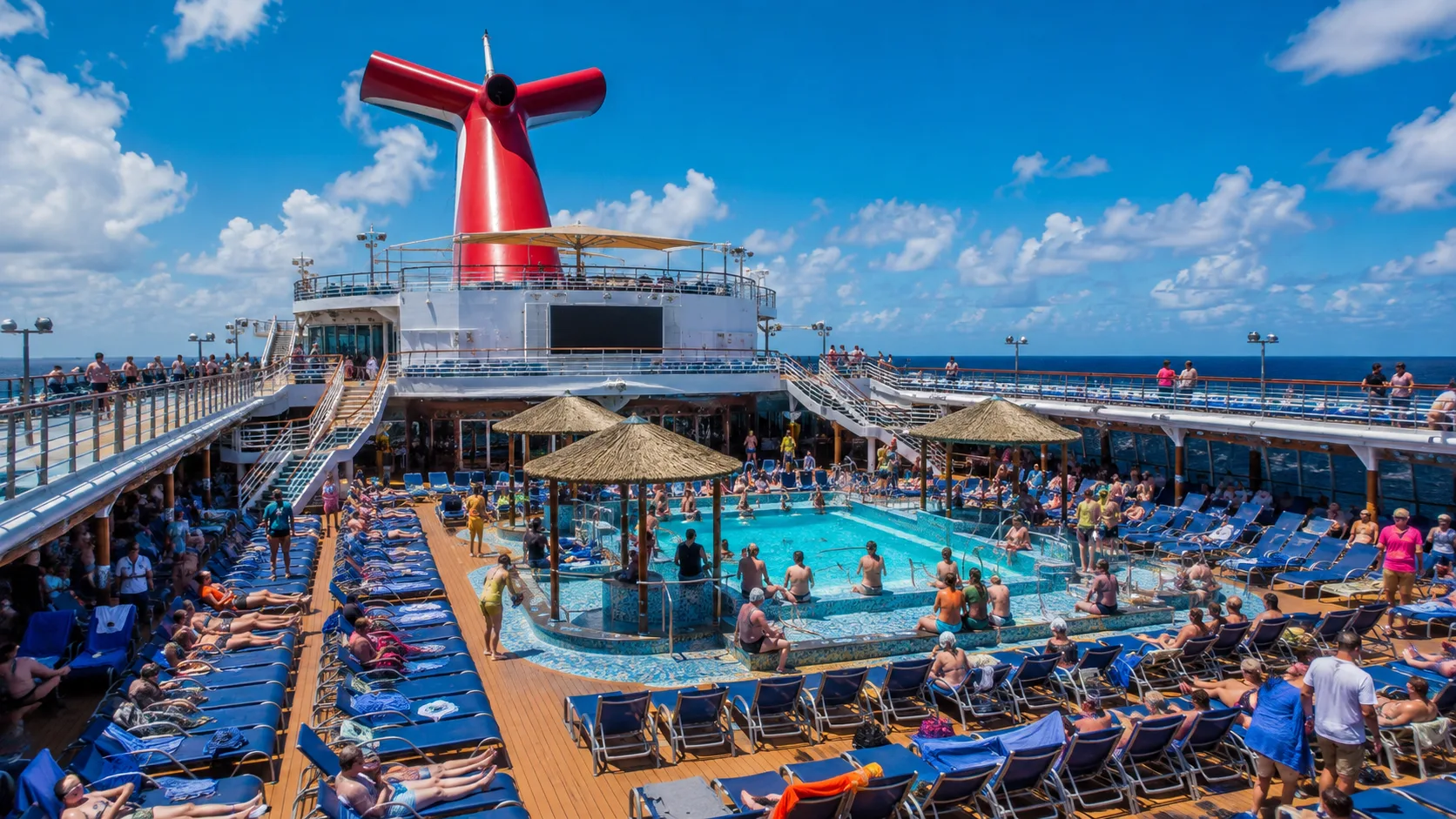
Verandah Deck 8 is one flight below Lido, which is handy when your family spends half the day between food and the pool. But Lido includes outdoor seating, restaurants, and working food areas as well as its forward cabin section.
Don’t buy the convenient deck number without looking at what sits directly above your room. For an early bedtime or late morning in bed, a Deck 7 room is an easier starting point than a Deck 8 room beneath active public flooring.
A carefully positioned forward Deck 8 cabin with accommodation above can still make sense. Compare the actual footprints on both decks, then decide whether the short breakfast-and-pool route is worth moving away from the middle residential deck.
For an aft-corner balcony, compare Deck 7 first
Premium Vista cabins 7440 and 7445 sit at the aft corners on Deck 7. The same aft-corner category appears at 6452 and 6483 on Deck 6 and at 8448 and 8455 on Deck 8.
If you want the broader side-and-wake perspective but also care about the public-space buffers, compare the Deck 7 pair first. Deck 6 sits over Promenade, while Deck 8 sits beneath Lido; the middle pair gives you cabins above and below.
An aft location still means a longer walk to the forward theater, spa, and adult retreat. Pick it because you’ll enjoy the balcony, rather than assuming a special category name makes walking distance, docking vibration, or every possible noise concern disappear.
Avoid high-forward rooms when motion is your biggest worry
Freedom’s Scenic Ocean View and Scenic Grand Ocean View rooms put large windows high and forward. The Captain’s Suites also offer impressive space forward, which can be tempting when the photos are doing most of the selling.
If you already know motion bothers you, start lower and nearer the middle instead. A less dramatic window can be the better vacation purchase when it lets you use your cabin comfortably on sea days.
Neither a low deck nor a midship location removes ship movement entirely. The useful decision is relative: avoid paying extra for an extreme location when the feature you’re buying is less valuable to you than a steadier starting point.
Choose your elevator bank for the places you actually use
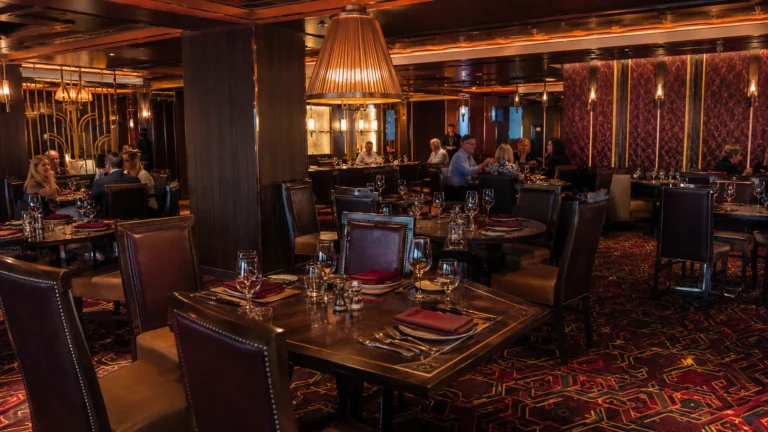
Aft favors Posh dinner and the rear Lido food-and-pool area, while forward favors Victoriana, the spa, Camp Ocean, and Serenity. Staying near the useful bank can matter more than choosing the exact mathematical center of the ship.
If long walks are tiring, don’t book a distant aft room solely for its wake view and then plan every morning around the forward youth or wellness spaces. A centrally placed ordinary room may make the trip much easier.
Being near elevators isn’t proof of a bad cabin, either. For sleep, compare the door’s position, connecting-room marks, and public areas around it; for mobility, favor the route that reduces repeated corridor walks.
Don’t confuse neighboring rooms with connecting rooms
A connecting pair has an actual interior door shown by its symbol on the plan. Two adjacent room numbers aren’t enough, and a balcony-divider request isn’t a substitute for a connection between the cabins themselves.
For a family, that door and second bathroom can be much more valuable than squeezing everyone into one slightly larger room. Confirm the pair before payment, particularly if you need younger children within immediate reach at night.
For a couple who doesn’t need the connection and is sensitive to sound from another room, compare a nonconnecting alternative. The connecting door is a feature to match to your needs, not a reason to blacklist every room that has one.
Count the open beds, not just the advertised capacity
An extra Pullman or sofa bed can make a room bookable for your party without making it spacious. Before putting four people in an Interior, picture all beds open, luggage stored, and everyone trying to reach one bathroom before a port departure.
Families with young children may be comfortable with that arrangement, especially on a short sailing. Four adults should price two nearby rooms before assuming the single-cabin fare will be worth the loss of space and privacy.
Use the bedding symbols for your exact cabin instead of borrowing photos from another room in the category. If the arrangement doesn’t work at night, an attractive daytime photo and higher deck won’t solve the problem.
A large suite is not an accessible-cabin substitute
If you need wheelchair access, transfer space, or an adapted bathroom, choose the appropriate accessible cabin rather than the largest ordinary suite. Freedom’s accessible plan distinguishes fully accessible, single-side-approach, and ambulatory-accessible accommodations.
Check the exact needs with Carnival’s Guest Access team, including the bathroom, doorways, transfer side, balcony access, and storing your mobility device. Extra floor area by itself doesn’t establish that those features will work.
Use the accessible route plan for the public spaces you expect to visit, too. A convenient cabin is most useful when the complete route to dinner, the pool, or the youth-club handoff works for you.
Keep room-number control when one outcome would spoil the trip
A guarantee can be a reasonable deal when you’d be happy in any eligible room. It is a much weaker bargain if you’re already ruling out walkway windows, particular bed setups, public-space ceilings, or a long corridor walk.
Price a chosen room beside the guarantee before deciding. When the difference is modest, keeping control of the location can be more useful than saving a little and then hoping the assignment avoids every feature you dislike.
This matters especially for light sleepers and families with a very specific bedtime routine. Book the room whose compromises you understand, rather than paying for a category label and waiting to discover how that category works on your sailing.
The simple Freedom shortlist
For most sleep-focused couples, start with a Deck 7 Interior or Balcony surrounded by accommodations. For a wake-facing splurge, compare 7440 and 7445; for daylight on a budget, compare a clear-view Ocean View with the price of 2446 or 2449.
For the full category comparison, use the best cabins guide. Keep the dining guide beside it so the sleeping arrangement and daily walking route are part of the same decision.
Finally, compare your room against the official ship page and your booking confirmation. The activity guide can help you plan the rest of the week once the cabin question is settled.
How this guide was researched
We checked Carnival Freedom’s official ship page, inspected its standard and accessible deck-plan PDF, and compared the recommendations with Carnival’s venue information and latest refurbishment announcement. Cabin-location advice describes the spaces shown on the plan; it cannot guarantee how much sound or motion you’ll notice on a particular sailing.