Disney Treasure Cabins to Avoid: Rooms and Better Picks
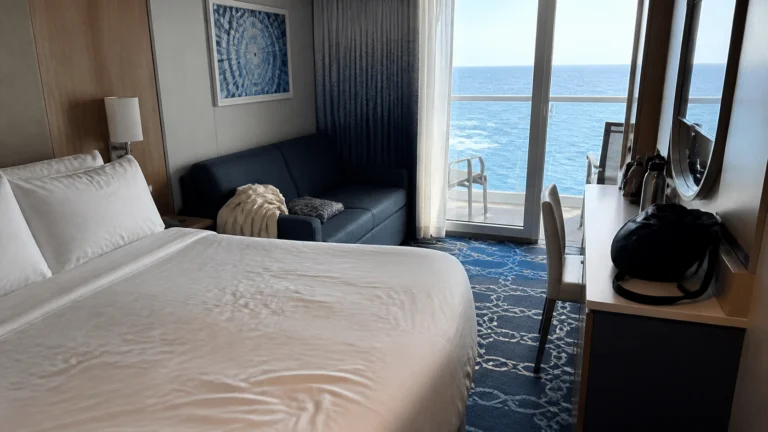
Disney Treasure has several verandahs where the exact room number changes what you are really buying.
Cabin 7194 is not the same balcony experience as 7196, the Navigator’s Verandahs have partial obstructions, and the 6A and 6B rooms trade a cleaner outlook for a different price.
Short version
That is why I would compare the actual room before climbing the category ladder. A cheaper cabin with the view you want can easily beat the “upgrade.”
- Start here: Hidden gems to look for before upgrading.
- Compare carefully: 7194 is a Navigator’s Verandah, and 7196 is not the same cabin type.
- Watch for: The 18 Navigator’s Verandahs: partial obstruction, not an enclosed balcony.
- Better choice: 6A and 6B: 32 standard verandahs with a view compromise.
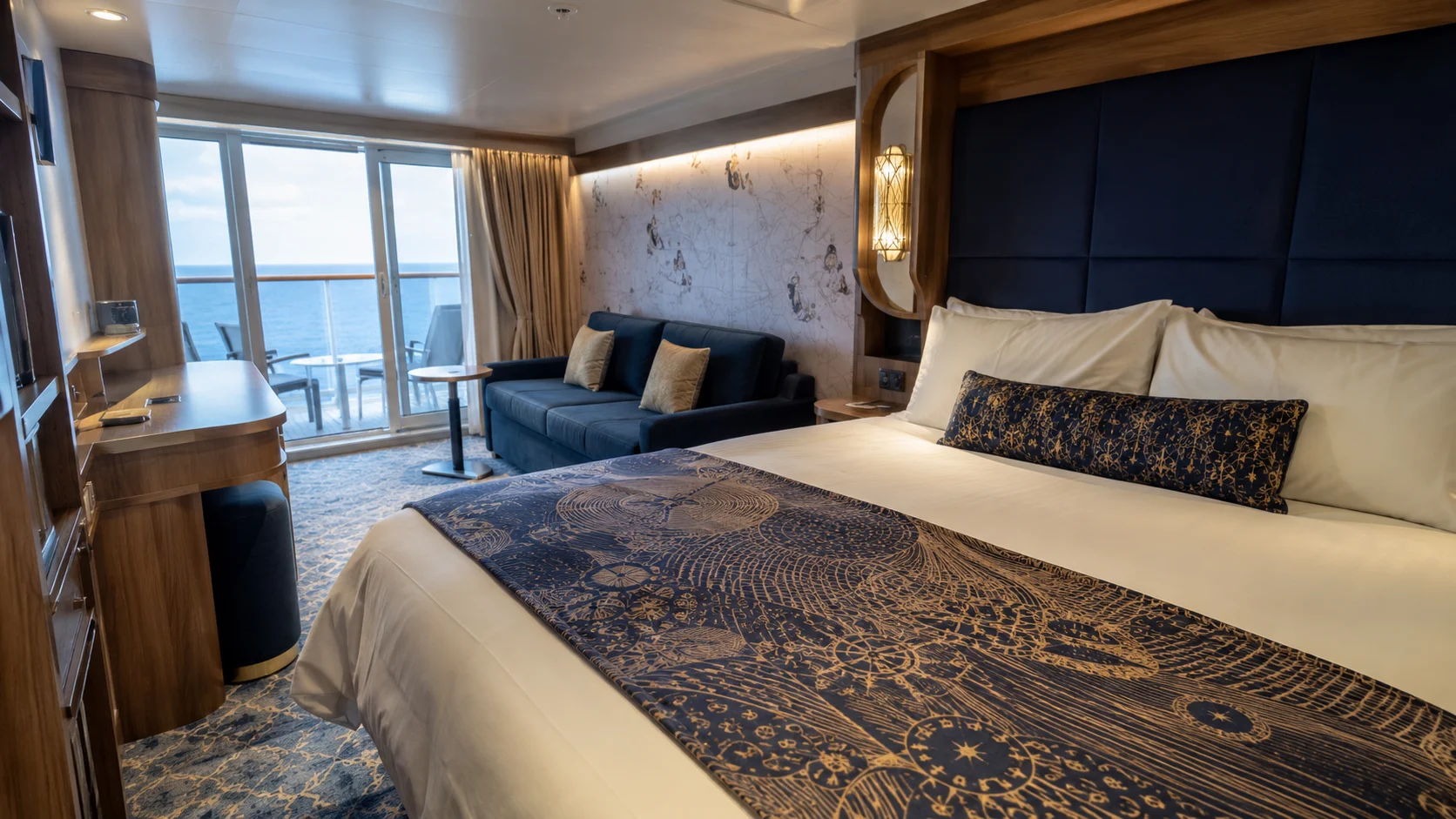
Hidden gems to look for before upgrading
Treasure has several rooms where the number buys something useful without concierge pricing; start with these when more than one cabin is available in your budget.
9182 and 9184: These are Category 4E Deluxe Family Oceanview Staterooms with Extended Verandahs on Deck 9. You get the family-room interior and a genuinely larger balcony, which is a much more meaningful upgrade than simply moving the same standard verandah one deck higher.
7008, 7506, 8008, and 8506: These are the four Category 9A oceanviews. Their forward-corner positioning makes them more interesting than a plain straight-wall porthole room, and you should price one before assuming a balcony is the only way to make the cabin feel special.
7618: This Deck 7 Category 5C is the sort of ordinary cabin I like when I want the trip to be easy. It is mid-aft, holds up to four, has the split bathroom, and avoids paying extra for an obstructed balcony category when the conventional verandah is what I actually wanted.
If you are specifically shopping premium rooms, my Disney Treasure best cabins and suites guide is where you should compare the Royal Suites, Tomorrow Tower Suite, and the best extended-verandah inventory.
7194 is a Navigator’s Verandah, and 7196 is not the same cabin type
These neighboring numbers are not interchangeable: 7194 is a Category 7A Navigator’s Verandah, while 7196 is an accessible Category 5C conventional verandah; choose 7194 for a view compromise at the right fare and 7196 when its adapted layout matches your needs.
Do not group them together as a pair of standard hard-aft balconies, and do not single either one out for vibration. Treasure’s azipod propulsion and the ship’s newer hull design make it a mistake to copy stern warnings from older Disney ships as though the same cabin numbers behave identically here.
Cabin 7194 still deserves a price check because it is one of the 18 Navigator rooms with a partial obstruction. Cabin 7196 deserves a layout check because accessible rooms use altered bathroom and circulation space, which is useful when needed and not simply “extra room” to chase as an upgrade.
The broader stern trade remains ordinary ship geometry. Very aft cabins can feel more vibration during docking or high-speed operation and involve a longer walk, but do not blacklist Treasure’s whole aft section or pretend 7194 and 7196 are uniquely bad.
The 18 Navigator’s Verandahs: partial obstruction, not an enclosed balcony
The complete Category 7A list is 6174, 6674, 7022, 7174, 7194, 7518, 7670, 7690, 8022, 8170, 8520, 8668, 9014, 9160, 9172, 9514, 9660, and 9672. Each uses the standard-size 243-square-foot Deluxe Oceanview Stateroom size, including the verandah.
The important correction is balcony style. On Treasure, the balcony is not the deeply recessed, fully enclosed porthole verandah found on Disney Magic and Wonder; the balcony remains open, with structural obstruction affecting the sightline.
That makes Category 7A much easier for me to recommend at the right price. You are not giving up outdoor air or being boxed behind a giant steel wall, but you are accepting that the view is not as clean as a normal 5-series verandah.
Choose 7A when the discount is meaningful and the balcony is mainly for air, sitting outside, or watching the sea in general. Take a conventional 5B or 5C instead if photographing an unobstructed horizon is your main reason for paying for outdoor space.
A guarantee becomes less attractive if this distinction matters to you. The fare is only a bargain when you would be genuinely happy with any balcony style that satisfies the assignment.
6A and 6B: 32 standard verandahs with a view compromise
Category 6 is another place where you should look at the exact room instead of assuming every “verandah” is visually identical. These cabins use the same broad 243-square-foot room type as the 5-series rooms, but hull and railing geometry create a partial obstruction that lowers the category.
The 14 Category 6A rooms are 8182, 8184, 8186, 8188, 8680, 8682, 8684, 8686, 9174, 9176, 9178, 9674, 9676, and 9678. The 18 Category 6B rooms are 6188, 6190, 6192, 6194, 6688, 6690, 6692, 6694, 7186, 7188, 7190, 7192, 7682, 7684, 7686, 7688, 8192, and 8690.
Do not describe these as the full solid-white-wall verandahs from Disney’s older ships. The useful booking takeaway is simpler: Category 6 costs less because the balcony sightline is less ideal than the cleanest Category 5 rooms.
If Category 6 is hundreds cheaper, take the savings. If a clear-view 5C is $40 more for the week, you can buy the cleaner balcony and stop thinking about it.
Bed count matters more than the words “family stateroom”
Treasure’s 4-series and 8-series family rooms can sleep up to five, but the category maximum does not mean every cabin has every possible pull-down bed. The exact stateroom occupancy on Disney’s booking page is the number that matters.
This is especially important when the fifth berth is non-negotiable. Some rooms use a queen, convertible sofa, upper berth, and wall pull-down bed; another room in the same broad family tier may be capped at four because one of those extra beds is not installed.
A guarantee must accommodate the booked party, but it gives up control over the exact bed arrangement and cabin location; choose a specific room when separate beds, an adapted bathroom or a particular balcony style is essential.
For five people who do not care about a balcony, an 8B or 8C Family Oceanview is one of my favorite value categories. You keep the split bath and about 237 square feet of indoor room instead of spending part of the stated square footage on outdoor space.
6000–6006, 6500–6504, 7000–7004, and 7500–7502: the bow Ocean Views
These twelve Category 9D Ocean View rooms sit right at the bow where the hull angles sharply. Their portholes do not look straight out like a normal side-facing window, so the view is more directional and the ship itself occupies more of the visual frame.
Do not call them bad rooms. They are a smart way to buy daylight and a real ocean view at a lower fare when the exact angle does not matter much to you.
For someone prone to seasickness, a lower midship oceanview is the better choice than these far-forward windows; the view discount is less useful if the bow position makes the room uncomfortable when the sea rises.
The four Category 9A rooms, 7008, 7506, 8008, and 8506, are the better forward comparison when available. They sit slightly back from the extreme bow and give you a more conventional premium Ocean View position without paying for a verandah.
Inside rooms: the bathroom is the feature you actually lose
Treasure’s Standard Inside Staterooms are about 169 square feet across Categories 11A, 11B, and 11C. They use one conventional bathroom rather than Disney’s split setup, so one person cannot use the toilet while another gets ready at the second sink or tub space.
For a couple, this is not enough to make me spend hundreds more. The room is compact but perfectly usable, and Disney still gives you the same queen bed, storage approach, service, and full tub-shower.
For four people, I think much harder. The extra beds occupy more of the room at night and everybody is funneling through one bathroom, which is exactly when the split-bath design on the other categories earns its keep.
What you can book instead: A Category 9 Ocean View when the fare gap is manageable. You gain a window, more room, and the split bathroom without paying balcony pricing.
Deck 10 and 11: choose by the public spaces above
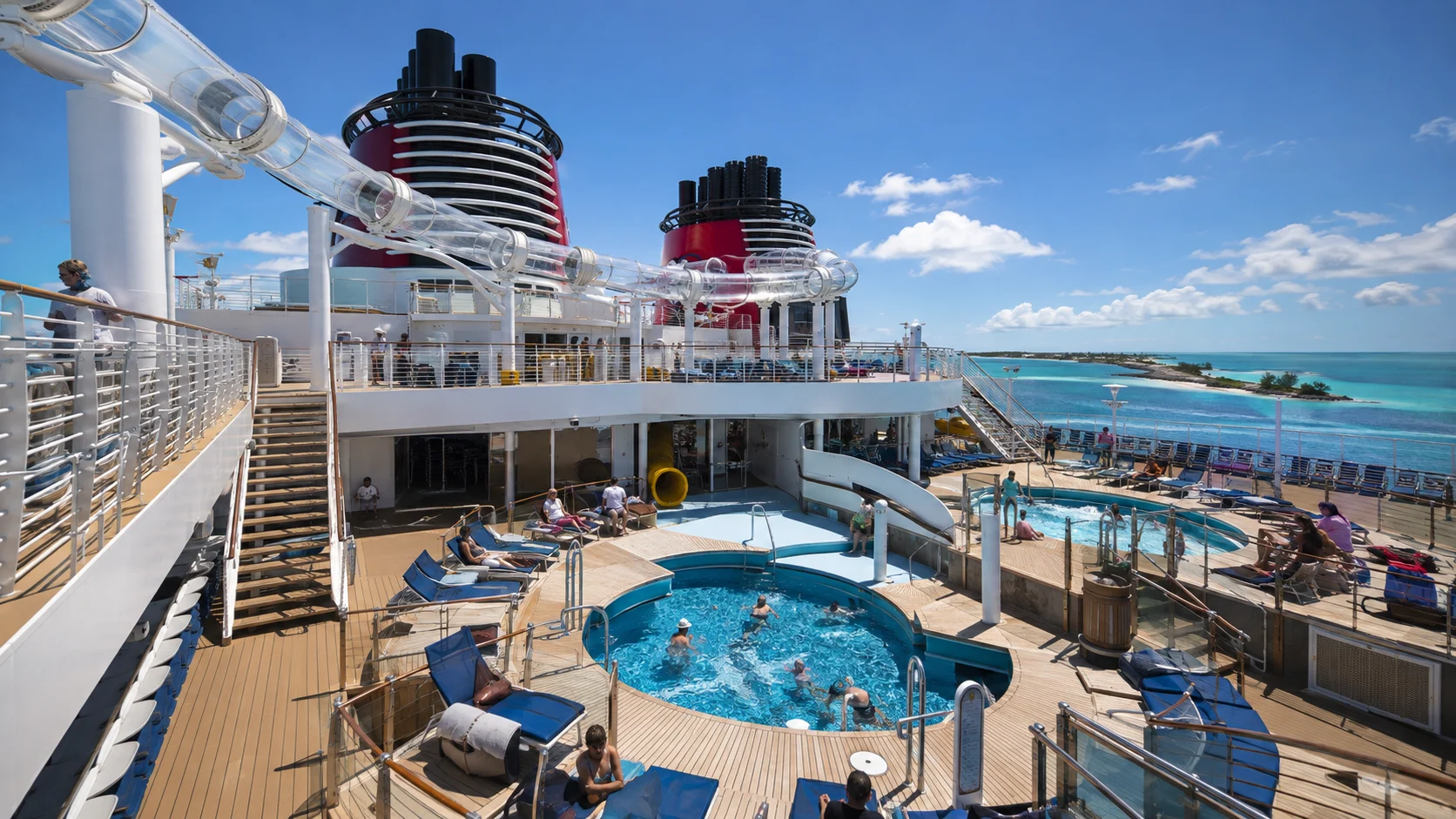
Treasure’s upper residential decks sit close to pools, Marceline Market, quick-service food, AquaMouse, and other daytime activity. That makes the space directly overhead more important than a blanket “high decks are noisy” warning.
Deck 11’s forward cabin block is better than it looks because much of the busiest pool and buffet activity sits farther aft. Book the forward section for a family that wants fast pool access and is awake early anyway.
Deck 10 needs a more careful room-by-room check because sections of Deck 11 public space sit directly above it. When you are a very light sleeper and the same category is available on Deck 8 or 9, take the lower residential stack.
AquaMouse itself is not a reason to delete half the upper ship from consideration. The ride runs through open upper-deck areas, so I care about what physically shares the room’s ceiling more than the fact that a water coaster is nearby on the map.
Rooms to not avoid just because somebody sees “aft” or “obstructed”
- 7194: It is a 7A Navigator’s Verandah, not a standard 5-series room. Judge the actual partial obstruction and fare rather than reject it for an imported stern-vibration rule.
- 7196: This is an accessible Category 5C verandah. It is not the same category as 7194 and should not be bundled into the same warning.
- 9182 and 9184: The extended verandahs are a real physical upgrade and are worth price-checking before moving into concierge just for more outdoor space.
- Deck 11 forward: The cabin block is not directly under the busiest pool areas, so you can book it for convenience rather than fear it because of the deck number.
- Category 6 at a real discount: A partially compromised sightline can be excellent value when you care more about having a private outdoor space than photographing a perfect horizon from the chair.
Quick answers
Which Disney Treasure cabin would I avoid first?
For a light sleeper, start with a room surrounded by cabins on Deck 7, 8 or 9; for a family that values the split bath, price a family oceanview before a standard inside, and for a balcony shopper choose a clear-view 5-series when the horizon matters more than the saving.
Is 7194 a standard verandah?
No, 7194 is a Category 7A Navigator’s Verandah. Cabin 7196 next door is a Category 5C accessible verandah, so compare the layout as well as the view before comparing them.
Are Treasure Navigator’s Verandahs enclosed?
No, Treasure’s Navigator’s Verandahs remain open balconies with a partial obstruction. Judge the individual view rather than picture the enclosed, porthole-style version on Disney Magic and Wonder.
Which rooms have the strongest balcony value?
Price 9182 and 9184 for their extended verandahs, then compare a discounted 7A or Category 6 against a clear-view 5B/5C before automatically paying more.
Continue planning with the things to do, pros and cons.
How this guide was researched: Category and location advice follows Disney’s Treasure plan, stateroom descriptions and accessible-room information. Obstructed views, altered accessible layouts and walking distances are physical room choices; they do not establish that an entire deck or aft section is noisy.
What to book on Disney Treasure
For two adults, take a 5B or 5C on Deck 7, 8, or 9 and let somebody else pay to move the same basic room higher. For five people, start with an 8B or 8C family oceanview unless private outdoor space is genuinely important.
If the price makes a 7A or Category 6 attractive, book it knowingly rather than reject the category on principle. The point of a cabin guide is to price the compromise correctly, not scare you away from every room with a symbol next to it.
Before paying, use my Disney Treasure deck-by-deck guide and Disney Treasure pros and cons to make sure the room location matches how you will actually use a seven-night cruise. A perfect cabin on the wrong part of the ship is still the wrong cabin.
Disney’s Treasure room guide is useful when family floor space competes with outdoor space, while the verandah descriptions explain the view compromise behind a lower fare. Choose the end of the ship nearest the places you will use daily on the Treasure deck plan, especially when repeated walks matter more than moving one deck higher.
Compare these warnings with the best cabins and the deck guide. The dining guide and ship tips can help you choose the most convenient end for your routine.