Disney Adventure Pros and Cons: Who Should Book It?
Disney Adventure is the strangest ship in Disney Cruise Line’s fleet, and I mean that as both a compliment and a warning.
It sails three- and four-night cruises from Singapore with no ports of call, packs seven themed areas and the longest roller coaster at sea onto a converted mega-ship, and keeps every passenger onboard all day, so choosing it requires a very different pros-and-cons calculation than choosing Disney Wish.
Short version
- Best reason to book: This is Disney’s most theme-park-like ship.
- Another strong point: Marvel Landing is genuinely unique, but Ironcycle can hijack your day.
- Biggest tradeoff: The layout can feel unintuitive and stitched together.
- Think twice if: Nobody leaves for port, so the ship never gets a quiet port day.
- Bottom line: Book Disney Adventure when its signature strengths sound exciting, not simply because it is newer or larger.
Before booking, browse the ship page, deck plan, and dining venues so the cabin and activities match your priorities.
The first thing to understand: this cruise goes nowhere on purpose
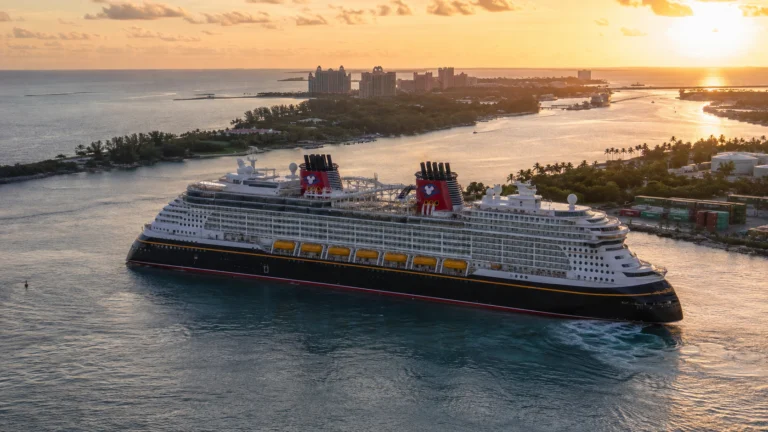
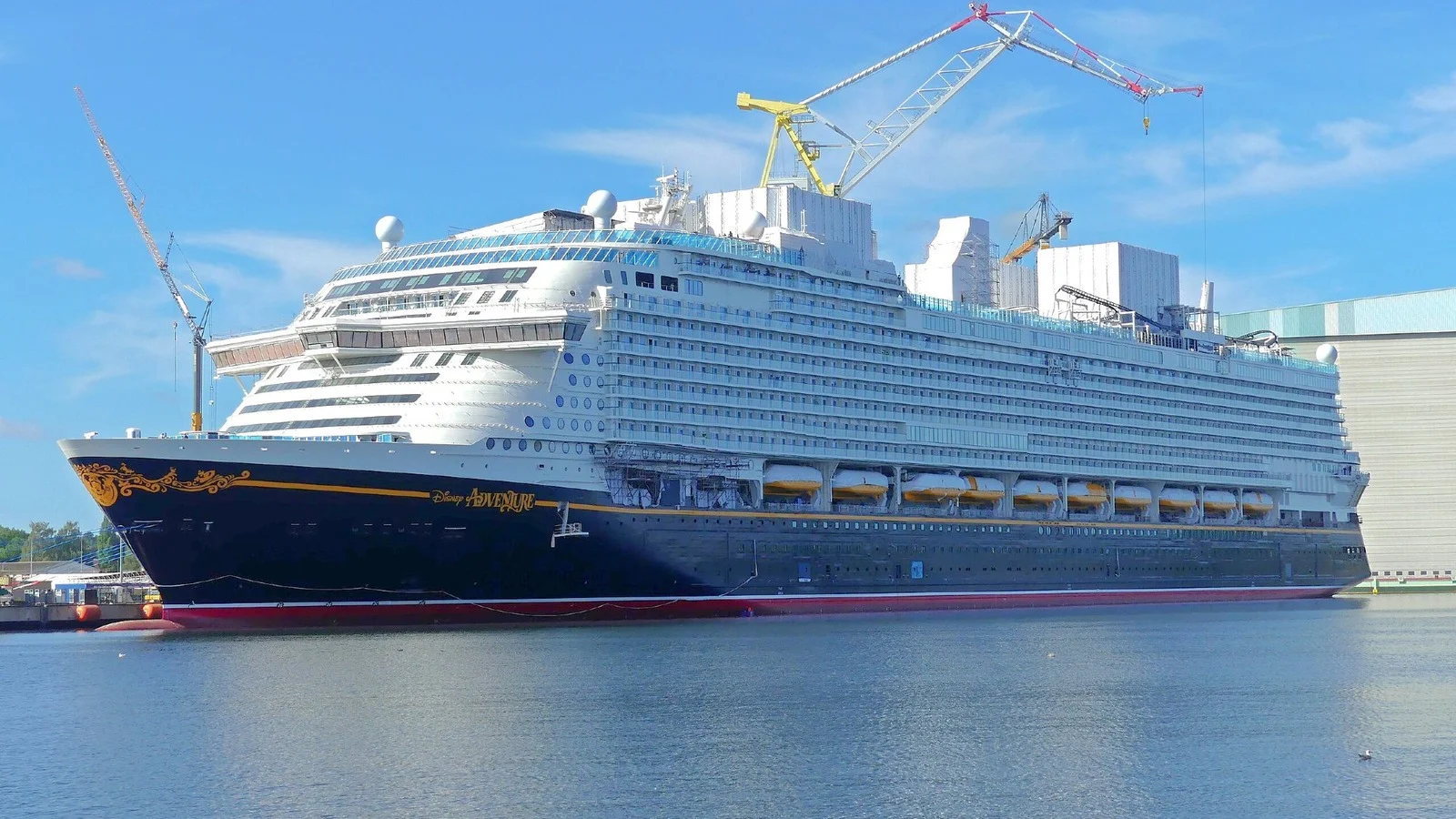
Disney Adventure is designed as a destination at sea. The three- and four-night itineraries leave Singapore, spend the entire voyage at sea, and return to Singapore without a single port call.
That is not a footnote. It is the most important pro and the most important con on the entire ship.
If your family hates waking up early for excursions, negotiating taxis, packing beach bags, or convincing a tired child that everyone paid good money to see a temple today, Adventure removes the problem completely. You unpack once and every morning begins with the whole ship available.
If you cruise because you want to wake up somewhere new, Adventure may feel bizarrely stationary. There is no “we can always get off tomorrow” safety valve when the pool deck is crowded, because nobody is getting off tomorrow.
For travelers already visiting Singapore, I think the concept can work brilliantly as a short family add-on. For an American family flying halfway around the world only to take a three-night cruise with no destinations, you need to be a serious Disney fan before the airfare math stops looking unhinged.
Pro: this is Disney’s most theme-park-like ship
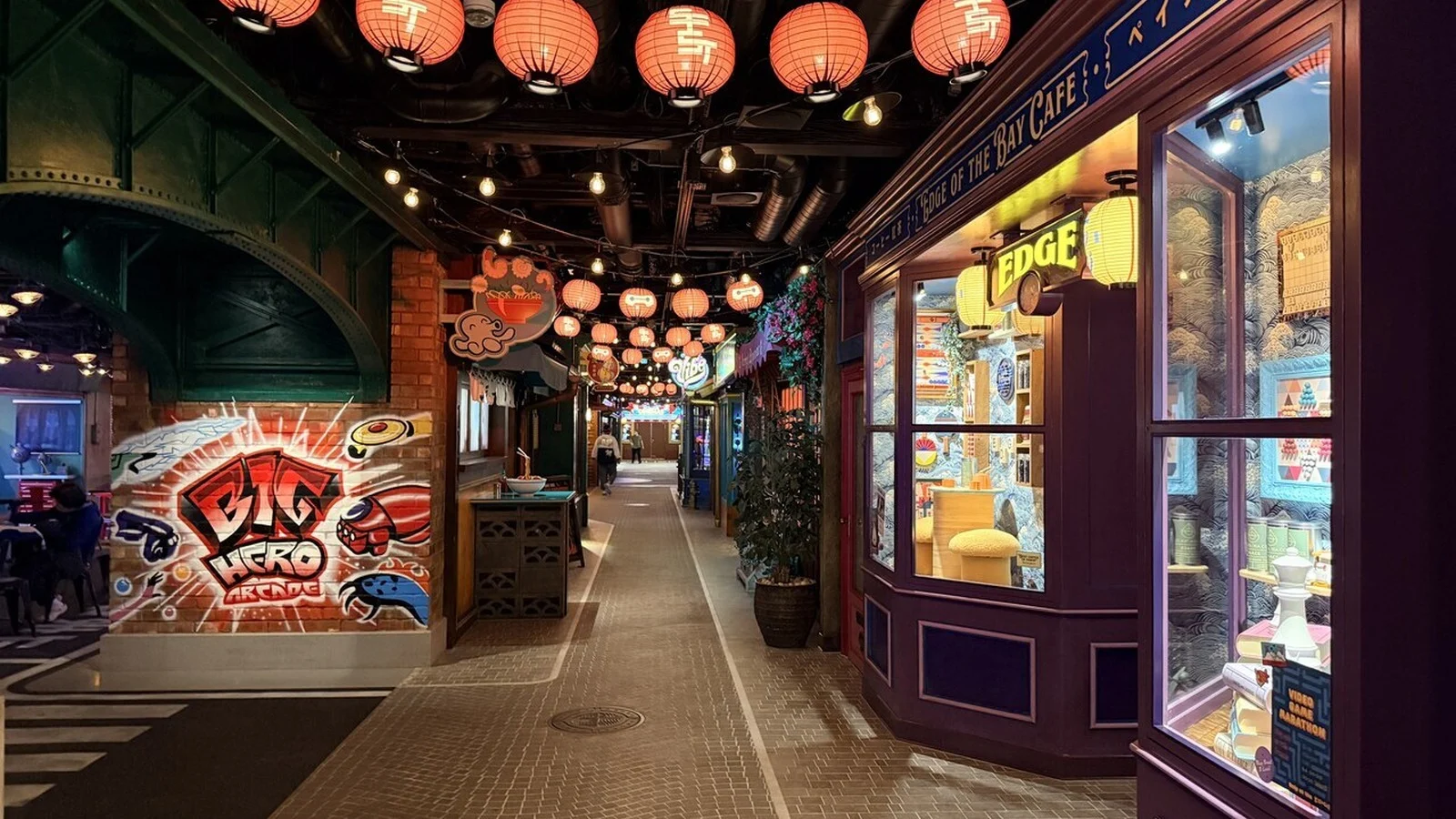
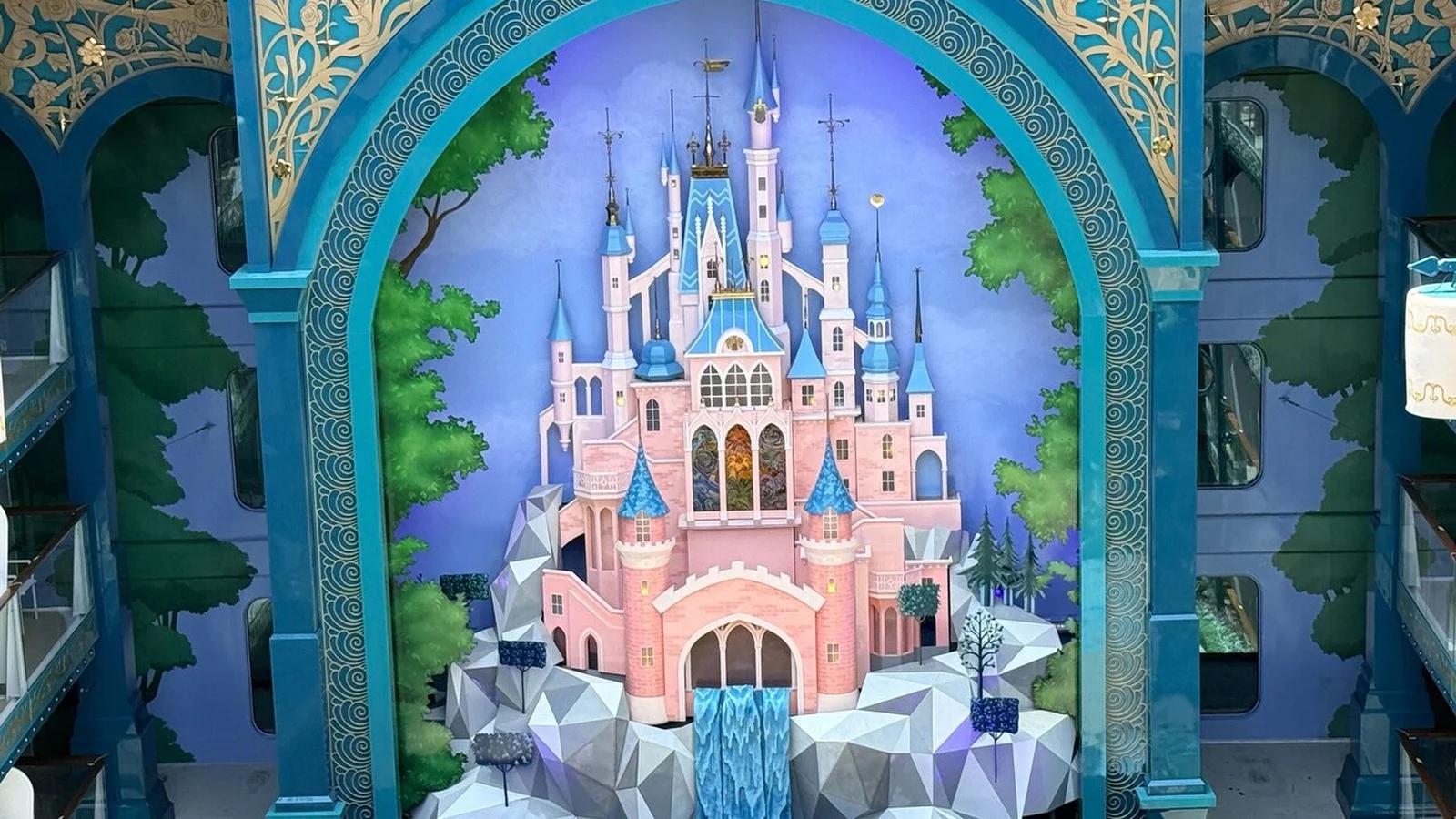
Adventure is organized into seven themed areas rather than feeling like a traditional Disney ocean liner with themed rooms sprinkled through it. Disney Imagination Garden, Disney Discovery Reef, San Fransokyo Street, Marvel Landing, Toy Story Place, Town Square, and Wayfinder Bay each have a clear visual identity and reason to visit.
That makes the ship especially strong for kids who like wandering into recognizable worlds rather than simply attending scheduled character events. San Fransokyo Street hides Edge and Vibe behind storefronts, Wayfinder Bay turns a Moana-inspired pool area into an entertainment venue, and Town Square leans hard into Disney princess storytelling.
Do not try to “complete” all seven areas in order. Pick the two your family is most excited about, learn them early, and let the others become discoveries instead of obligations.
Pro and con: Marvel Landing is genuinely unique, but Ironcycle can hijack your day
Marvel Landing is the attraction zone that most clearly separates Disney Adventure from every other Disney ship. Ironcycle Test Run is Disney Cruise Line’s first roller coaster and, at more than 820 feet, the longest roller coaster at sea, while Groot Galaxy Spin and Pym Quantum Racers add two more rides nearby.
If you have a Marvel-obsessed kid or teenager, this can be a legitimate reason to choose Adventure. It feels far closer to having a small theme-park land onboard than the usual cruise formula of one headline water ride and a sports court.
The problem is demand. Disney allows onboard reservations for the Marvel Landing attractions at select times and also operates some periods without reservations, which means the Navigator app becomes part of the strategy whether you enjoy vacation logistics or not.
Ironcycle can develop very long queues, including waits around two hours when operations slow or the ride pauses. Absolutely try it, but do not sacrifice half of a three-night sea day standing there if the line has already gone sideways.
Check the app as soon as your onboard booking options open and take a reservation if the ride matters. If the line becomes absurd later, go eat something and remember you are still on a ship with six other themed areas.
Pro: the food program actually feels built for Singapore and the regional market
Disney Adventure could have lazily copied a mostly American cruise menu and called the international setting “inspiration.” Instead, the ship mixes familiar Disney food with a much broader selection of regional and international dishes, including Indian, Pacific and Asian flavors across both quick-service and main dining.
Mowgli’s Eatery serves Indian and regionally inspired food, Gramma Tala’s Kitchen leans into Pacific and Asian flavors, Cosmic Kebabs adds Middle Eastern staples, and Pizza Planet and Stitch’s Ohana Grill cover the children who have filed a formal objection to culinary adventure. That variety is useful when the same passengers are onboard for every lunch.
The main dining food is a real strength, especially the Indian dishes and broader regional selection. Adventure is much more interesting when you eat around the ship instead of measuring every meal against what another Disney vessel served in Florida.
Use my Disney Adventure restaurant guide before sailing because this is one ship where knowing the quick-service options can save you from defaulting to the same crowded meal area every day.
Pro: rotational dining is unusually well suited to a cruise with no port days
Disney keeps its rotational-dining system on Adventure, but the venues are very specific to this ship. Hollywood Spotlight Club puts Mickey, Minnie, Donald, and Daisy into a Golden Age supper-club setting, while Animator’s Palate and Animator’s Table focus on Disney and Pixar animation.
Enchanted Summer Restaurant uses separate Tangled and Frozen dining rooms, and the ship also has other rotational configurations including Navigator’s Club and Pixar Market depending on the assigned rotation. You receive a preset dining schedule, so dinner becomes one of the few parts of the trip you do not need to reinvent each evening.
That structure works especially well when everyone is onboard all day. Your family can scatter to attractions and clubs, then regroup with the same serving team at dinner without needing another group chat about where eight people should eat.
The early dinner time is understandably popular with families and can fill. If bedtime matters, treat dining time as a meaningful booking decision rather than assuming an 8:15 p.m.
Meal will somehow turn your six-year-old into a sophisticated night owl.
Pro: Disney service and entertainment survive the unusual ship design
Even if Adventure’s layout frustrates you, the crew, cabin cleanliness, dining teams, and entertainment are strong enough to keep the ship feeling distinctly Disney. The hull may be unusual, but the service rhythm is what stops the experience from feeling like a licensed floating theme park.
The entertainment is spread through the ship rather than relying on one theater. Disney Seas the Adventure uses the Walt Disney Theatre, Imagination Garden hosts character and stage programming, San Fransokyo Street has Baymax-focused experiences and cinemas, and Wayfinder Bay doubles as a Moana-inspired performance area.
Identify the two shows or character experiences your family would actually be upset to miss and secure those first. The Navigator app can become a full-time hobby on this ship if you let every bookable event become a crisis.
Con: the layout can feel unintuitive and stitched together
Adventure’s circulation does not behave like Magic, Wonder, Dream, Fantasy, or Wish. Several major spaces were adapted into a very different mega-ship layout, so this is not a classic Disney hull simply enlarged to a bigger scale.
Some routes require going up or down a deck to reach a space that looks horizontally close. You can see where you want to go, walk confidently toward it, discover the path does not continue, and receive a free lesson in maritime humility.
The themed zones get easier once you stop thinking in terms of a normal forward-mid-aft layout, but even by the end of a four-night cruise you may still check directions occasionally. That is normal on a ship this large and this oddly organized.
Study the Disney Adventure deck-by-deck guide before choosing a cabin, then learn the routes from your room to dining, Marvel Landing, and the main family area on embarkation afternoon. You do not need to memorize the ship, just stop getting lost on the same trip.
Con: nobody leaves for port, so the ship never gets a quiet port day
This is the hidden consequence of the destination-at-sea concept. On a normal cruise, thousands of passengers disappear ashore for much of the day, which creates beautiful stretches when pools, lounges, and attractions suddenly belong to the people who stayed behind.
Adventure never gets that reset. Every family is choosing among the same onboard attractions, pools, character meetings, meals, and shows every day, so popular areas can stay busy through the afternoon instead of emptying after breakfast.
The main pools can get crowded, and popular or premium activities can be difficult to secure on a short sailing. That makes timing unusually important here, especially because there is no port day when half the ship disappears ashore.
Use meal times and major show times strategically. When half the ship is watching a production or eating early dinner, that can be your opportunity for an attraction that looked unbearable two hours earlier.
Con: three nights encourages theme-park behavior, not vacation behavior
A three-night Adventure sailing gives you just enough time to understand how much you are not going to do. That can make Disney fans behave exactly as they do during an overplanned park day, except now the spreadsheet is floating.
You have rotational dinners, Marvel Landing attractions, shows, pools, seven themed areas, character meetings, youth clubs, adult lounges, specialty dining, movies, and whatever your child suddenly discovers on the Navigator app at 4:17 p.m. Trying to maximize all of it is the fastest route to being exhausted on a cruise with literally nowhere else to go.
Choose four nights over three whenever the fare difference is reasonable. The extra day is more valuable on Adventure than a small cabin upgrade because it gives you permission to stop treating every missed activity as lost money.
Cabin warning: do not assume Adventure cabins work like the Disney cabins you already know
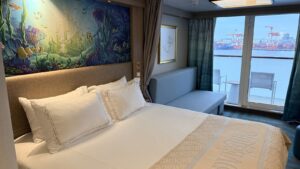
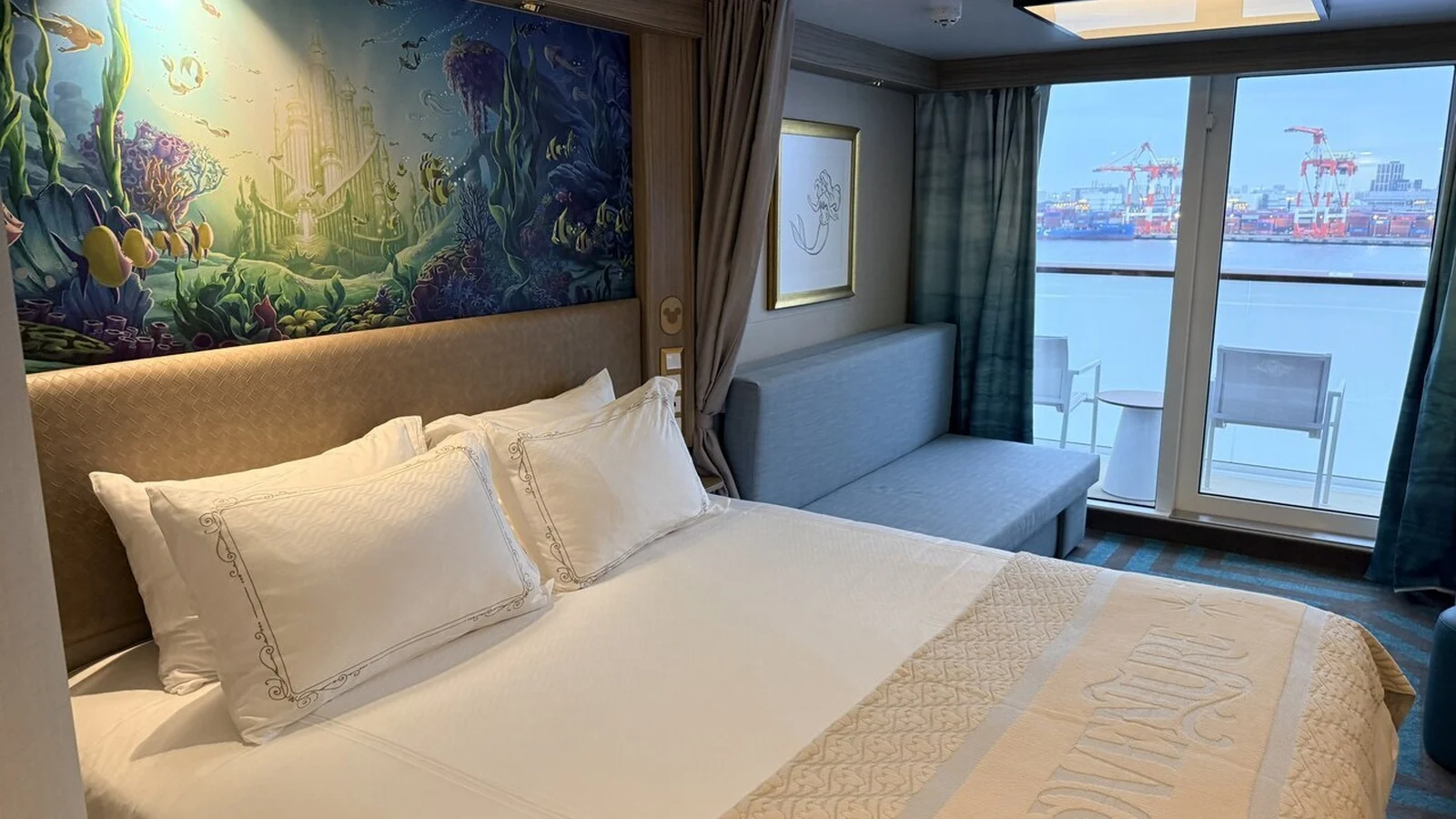
Repeat Disney cruisers should be especially careful here because Adventure’s cabin inventory came from a very different ship design. Sleeping arrangements can include pullout beds where you might expect the familiar Disney-style bunk setup from previous ships, so the exact configuration matters.
Check the exact sleeping configuration, bathroom arrangement, balcony style, and maximum occupancy for the specific category you are buying. “Disney family cabin” is not detailed enough when you are trying to figure out whether two children will happily sleep there for four nights.
Location matters just as much because the converted circulation can turn a poorly placed room into repeated detours. The Disney Adventure cabins to avoid guide and best cabins and suites guide cover the specific tradeoffs you should check before paying a deposit.
Adults can have a good trip, but do not oversell the adult escape
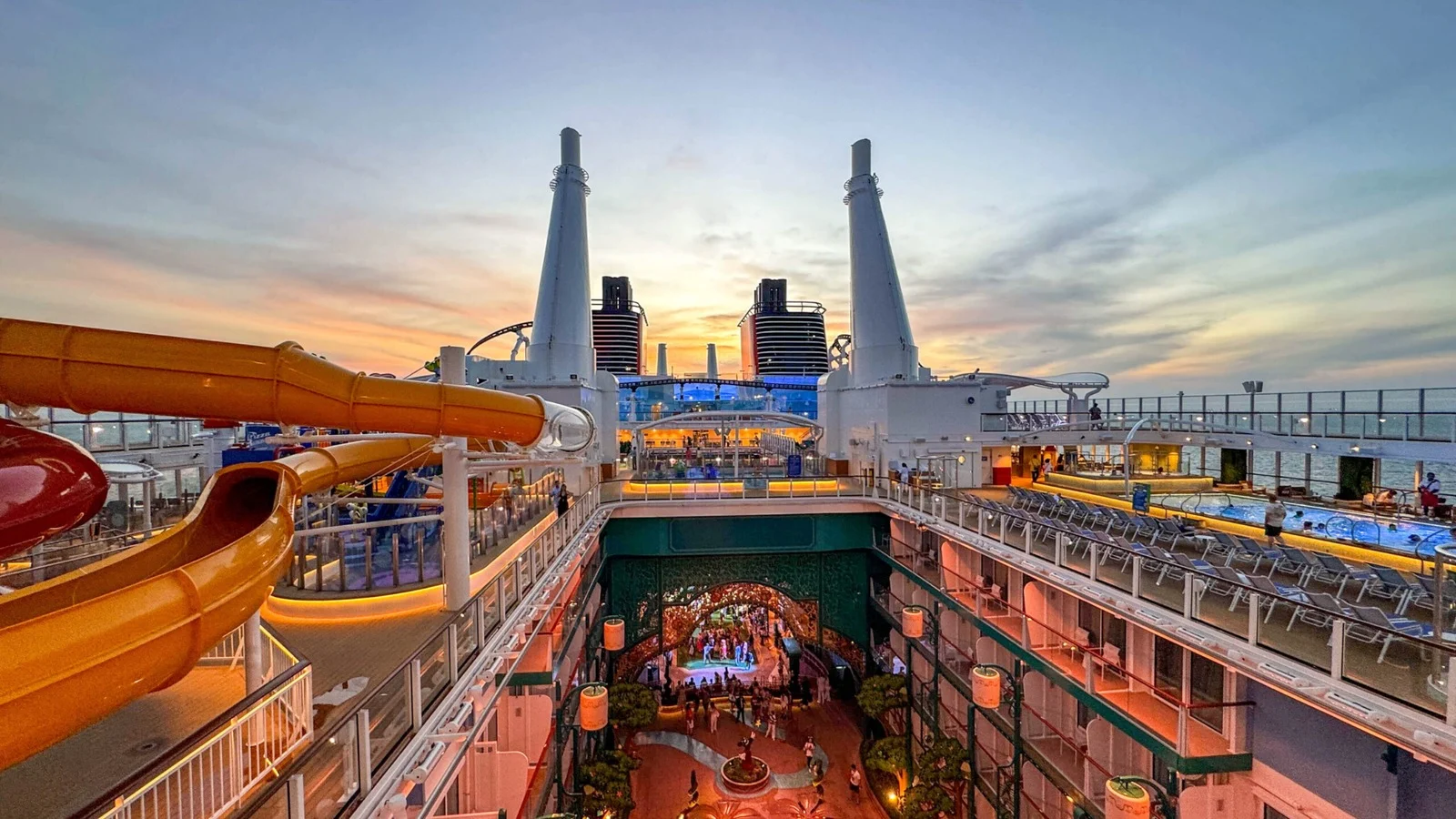
Disney Adventure is not only for children. Adults have Palo Trattoria, Mike and Sulley’s Flavors of Asia, an expansive spa and Rainforest area, and themed lounges including Spellbound, Tiana’s Bayou Lounge, Taverna Portorosso, and Buccaneer Bar.
Couples who genuinely like Disney can build a surprisingly sophisticated evening around specialty dining and lounges. There is also no casino, which is a major plus for travelers who dislike casino smoke and a minus for people who consider blackjack part of cruising.
The limitation is that every day remains a sea day on an enormous family ship, without a late-morning port-day window when most families head ashore and adults inherit the pool deck.
Book Adventure as a child-free couple only if the Disney theming and unique Singapore-based ship are part of the appeal. If you simply want a luxurious adult cruise in Asia, there are easier ways to avoid six thousand vacationing families.
The people I think Disney Adventure is perfect for
- Families already spending time in Singapore. Adventure adds a self-contained Disney resort experience without turning the whole trip into another destination transfer.
- Disney and Marvel fans who want attractions as much as cruising. Marvel Landing and the themed districts make this far more park-like than the older ships.
- Families who dislike port logistics. There are no excursion mornings, tender schedules, or debates about whether a tired child can handle eight hours ashore.
- Travelers who value Disney service and structured dining. Rotational dining and the crew provide familiar Disney rhythm inside a very unfamiliar ship.
- Repeat Disney cruisers who actively want something different. Adventure is fascinating precisely because it does not behave like Dream or Fantasy.
The people you should tell to book something else
- Destination-first cruisers. You are not visiting anywhere, and no amount of themed flooring changes that.
- American families flying to Singapore only for a three-night sailing. Unless Adventure itself is a bucket-list event, the travel time and total cost are hard to justify.
- People who hate lines and app-based booking. The most popular attractions and character experiences can require exactly the kind of planning you probably came on vacation to avoid.
- Disney traditionalists who love the classic ships’ layouts. Adventure is not a bigger Disney Fantasy, and expecting it to be one is a reliable way to spend the cruise comparing hallways.
- Travelers who need the ship to empty out during port days. It never will.
How to book Disney Adventure
Build the cruise into a larger Singapore trip rather than fly across the Pacific, board immediately, cruise for three nights, and fly home. Give yourself at least a couple of days in Singapore before embarkation so jet lag is not the unofficial eighth themed area.
Choose the four-night sailing unless the schedule or fare strongly favors three nights. Then, pick a cabin around the area your family expects to use most and check the exact sleeping arrangement before paying.
Once onboard, book Ironcycle and any high-priority character experience as soon as the app makes them available. Marvel Landing ride reservations and select character greetings are handled onboard, so open the app soon after embarkation to reserve the times your family most wants.
After that, put the phone away. Pick one major thing for the morning, one for the afternoon, let rotational dining anchor the evening, and accept that you are not going to complete a 208,000-ton Disney resort in four days.
Continue planning with the things to do, cruise tips.
How this guide was researched: This guide was checked against the cruise line’s current ship pages, deck plans, venue listings, and published policies. Details can change by sailing, so confirm booking-sensitive prices, hours, access rules, and cabin assignments before payment.
The final verdict
Disney Adventure is the least interchangeable ship in Disney’s fleet. The no-port itinerary, Singapore homeport, seven themed districts, Marvel Landing attractions, regional food, and converted mega-ship layout make it a completely different proposition from Disney Wish, Dream, Fantasy, Magic, or Wonder.
Book it for a four-night family add-on to Singapore, especially with Disney or Marvel fans who want the ship itself to behave like the destination. Skip it for a port-focused vacation, a low-planning escape, or an expensive long-haul trip where the only real goal is “try Disney Cruise Line.”
Plan your Disney Adventure cruise
Use the cabins to avoid, best cabins, and deck guide to turn the broad pros and cons into a confident room choice.