Disney Adventure Deck-by-Deck Guide: Best Decks and Easy Routes
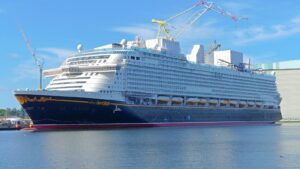
Disney Adventure is a wonderfully big ship, and the right cabin location can save your family a surprising amount of walking.
Use this guide to find a comfortable deck and learn the simplest routes between the places you will visit again and again.
Short version
- Best quiet starting point: Choose a residential cabin on Deck 12, 13, or 15, away from the main public spaces and elevator-lobby traffic.
- Best for motion sensitivity: Look for a lower cabin near the middle of the ship, then compare the spaces directly above and below it.
- Best for families: Deck 16 shortens the trip to Toy Story Place and the upper attractions without placing every room inside the busiest family zone.
- Best for Imagination Garden: Deck 10 is the most convenient choice, but Garden View rooms trade ocean privacy for a close connection to the activity below.
- Most important route tip: Choose the forward or aft elevator core that serves your destination before walking the length of this enormous ship.
First, Disney Adventure is not laid out like the Disney ships you may already know
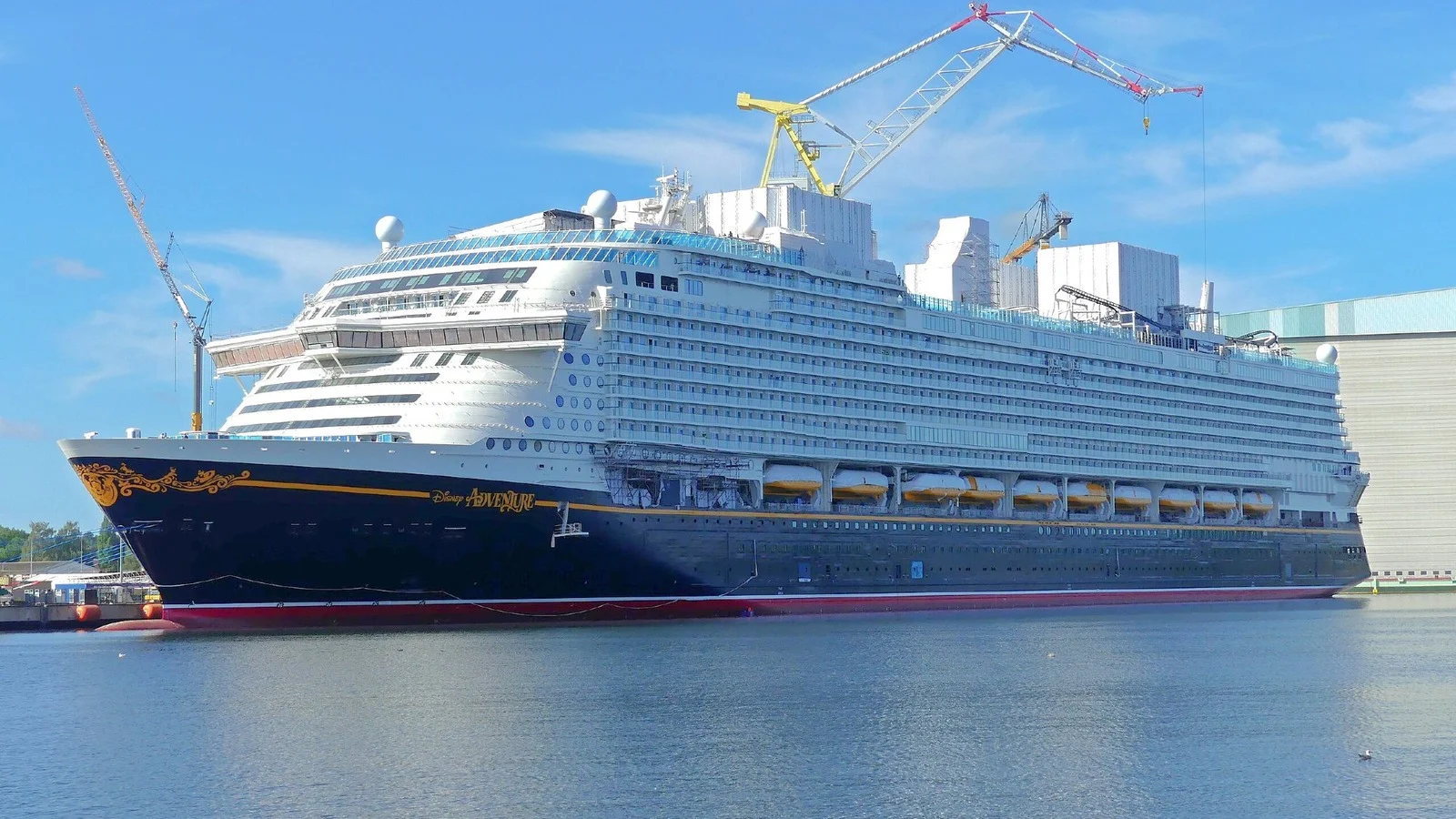
If you have sailed Disney Wish, Fantasy, Dream, Magic, or Wonder, do not assume your old mental map transfers neatly here. Disney Adventure is much larger, has more vertical layers, and spreads its major family, dining, entertainment, and adult spaces across a much taller stack of passenger decks.
The useful way to think about it is in four bands: lower entertainment on roughly Decks 5 through 8, the Imagination Garden transition around Deck 10, a big residential middle, and the resort-style upper decks from 17 upward. Once you know which band you are in, the ship stops feeling like somebody handed Disney a small city and told them to add elevators.
There are two main passenger elevator lobbies, forward and aft, rather than a magical elevator appearing every 100 feet of hallway. That makes the fore-and-aft location of your cabin unusually important on a ship this long.
Keep the Adventure deck plan open while comparing rooms. Looking at neighboring decks together makes it much easier to spot public spaces, long corridors, and the elevator core that best fits your routine.
Decks 1 through 4: operational levels without guest venues
Decks 1 through 4 do not contain the guest amenities or cabin neighborhoods that shape a normal day aboard Disney Adventure. You may be directed low for a port operation, but these decks are not useful shortcuts between the ship’s main public areas.
Follow the crew’s gangway directions instead of assuming the same exit will be used at every port. For daily navigation and cabin selection, the meaningful passenger map begins on Deck 5.
Decks 5 and 6: theater, dining, and Town Square
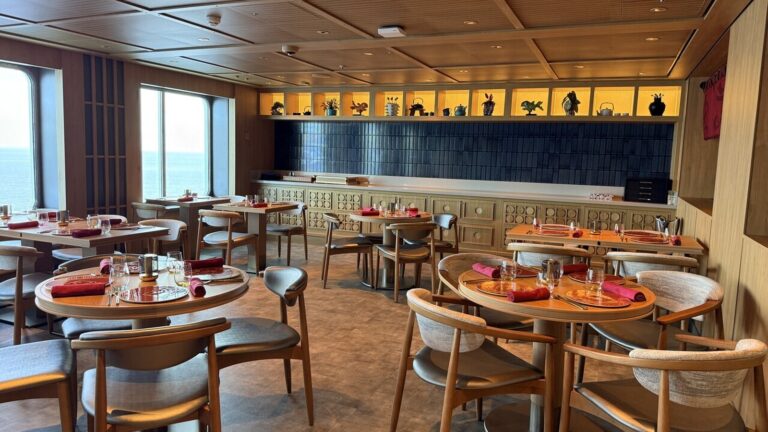
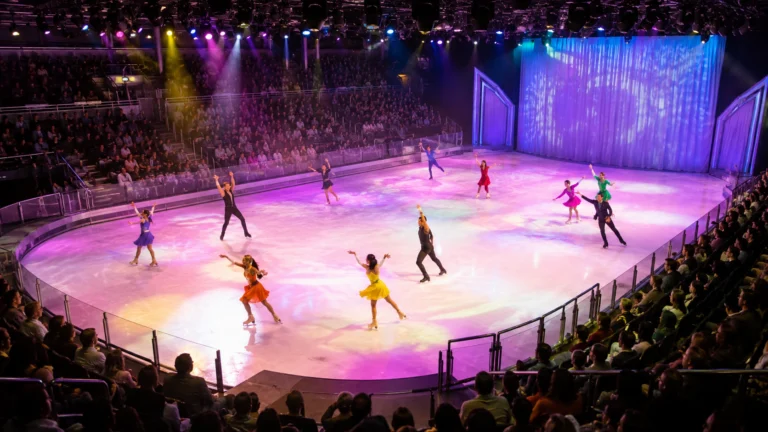
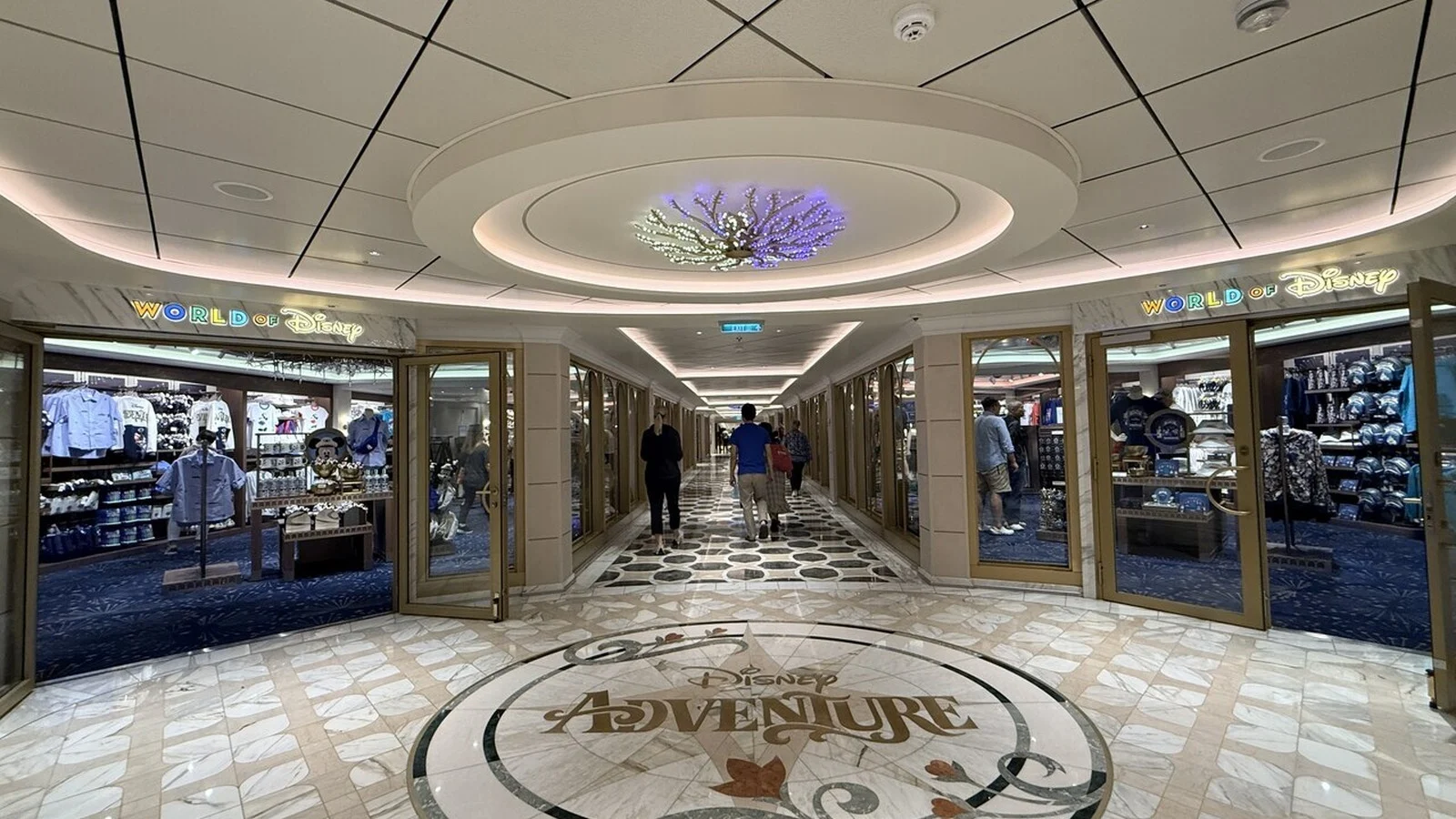
Deck 5 starts the Walt Disney Theatre and adds Animator’s Palate, Tiana’s Bayou Lounge, and shopping. Deck 6 continues the theater and brings together Town Square, Enchanted Summer Restaurant, Spellbound, Guest Services, Royal Court Lounge, Buccaneer Bar, Marvel Style Studio, and Navigator’s Club.
Use the forward elevator core for the Walt Disney Theatre and Town Square. Choose the aft core when your plans center on dining farther back, and allow a few extra minutes whenever a show release overlaps a meal.
Deck 7: San Fransokyo Street and teen spaces
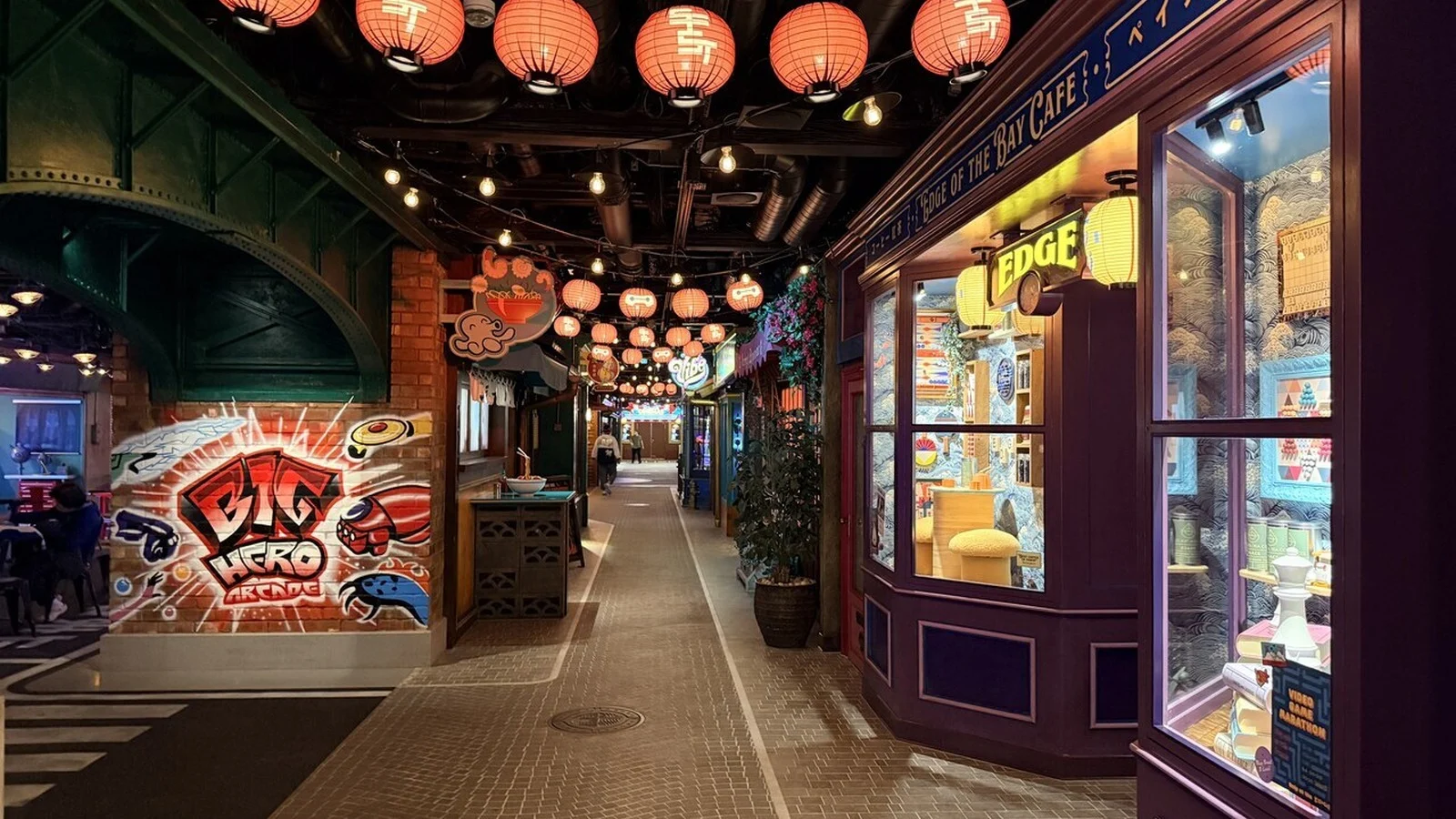
San Fransokyo Street makes Deck 7 especially relevant for families with tweens and teens. Edge, Vibe, Baymax Cinemas, Big Hero Arcade, Duffy and Friends Shop, and the surrounding activity give older kids several reasons to return.
Do not automatically book beside this zone just to make club visits easy. A family that makes only one pickup or movie stop each day can sleep more quietly in the residential middle and use the elevator.
Deck 8: Oceaneer Club and family activity
Deck 8 is the important lower destination for younger children because Disney’s Oceaneer Club, the nursery, and connected family spaces sit here. Hollywood Spotlight Club also adds dining traffic, so the deck serves more than one kind of family routine.
Where the lower location becomes appealing is for adults or families who hate elevator dependence and are happy using stairs for two or three decks at a time. If dinner, theater, lounges, and kids’ programming dominate your evenings, a lower-middle cabin can feel much more practical than one all the way up by the pools.
Deck 9 is the first cabin deck to consider for a lower-deck routine
Deck 9 gives you a useful compromise because you are above much of the lower entertainment cluster without being stranded high in the ship. It also contains the Medical Center and Animator’s Table, so compare the exact cabin with those public and working areas.
Still check what sits directly beside and below the exact room, because restaurants and working spaces extend into this part of the ship. “Deck 9 is good” is not specific enough when one cabin can sit over a quiet area and another can sit near a service route.
Deck 10: Imagination Garden is both a convenience perk and a cabin-location decision
Deck 10 is one of the most Disney Adventure-specific floors because Imagination Garden and Disney Discovery Reef create major open-air social and dining areas. The Garden Stage, quick-service food, specialty restaurants, and general circulation can bring you back repeatedly.
That makes nearby cabins unusually interesting. Some Imagination Garden-facing verandahs can let you watch portions of entertainment from your own balcony, which is a genuinely fun perk if you like the idea of seeing a show without negotiating a crowd every time.
The trade is privacy and atmosphere. A balcony facing an interior Disney neighborhood does not feel like an ocean balcony, and activity below can be part of the soundtrack rather than something happening elsewhere on the ship.
For kids who will adore that energy, treat it as a feature and compare Disney’s stateroom choices before booking. For quiet balcony mornings with an ocean view, book an outward-facing room instead.
Deck 11: close to the fun without living inside the busiest upper-deck zone
Deck 11 continues the aft neighborhood with Taverna Portorosso and Palo Café while also holding cabins. It is a useful transitional choice for travelers who want Discovery Reef and upper-deck access without sleeping at the top of the ship.
Choose it over Deck 10 for a light sleeper who likes the location but does not care about a Garden-facing balcony. You get much of the convenience while adding a little more residential separation.
Decks 12, 13, and 15: the quiet residential band to book first
Circle these decks first for a typical family or couple who wants a calm cabin and a balanced location. They are predominantly residential, which is exactly what works well immediately outside your stateroom at midnight.
Disney Adventure does not use the number 14, so the elevator buttons move directly from Deck 13 to Deck 15. Nothing is physically missing between them.
Decks 12 and 13 lean a little closer to the lower entertainment band, while Deck 15 starts shortening the trip to the family-heavy upper decks. Choose among them based on elevator proximity and what is directly above and below the individual cabin.
This middle residential band is also a good choice for anyone who says, “I don’t need a clever cabin, I just want to sleep.” There are cruise vacations where boring is not an insult, and your hallway at 11:30 at night is one of them.
Deck 16: Wayfinder Bay and upper-deck convenience
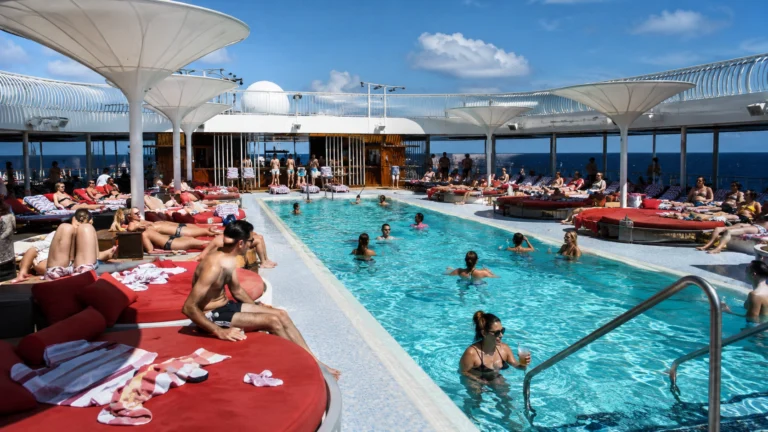
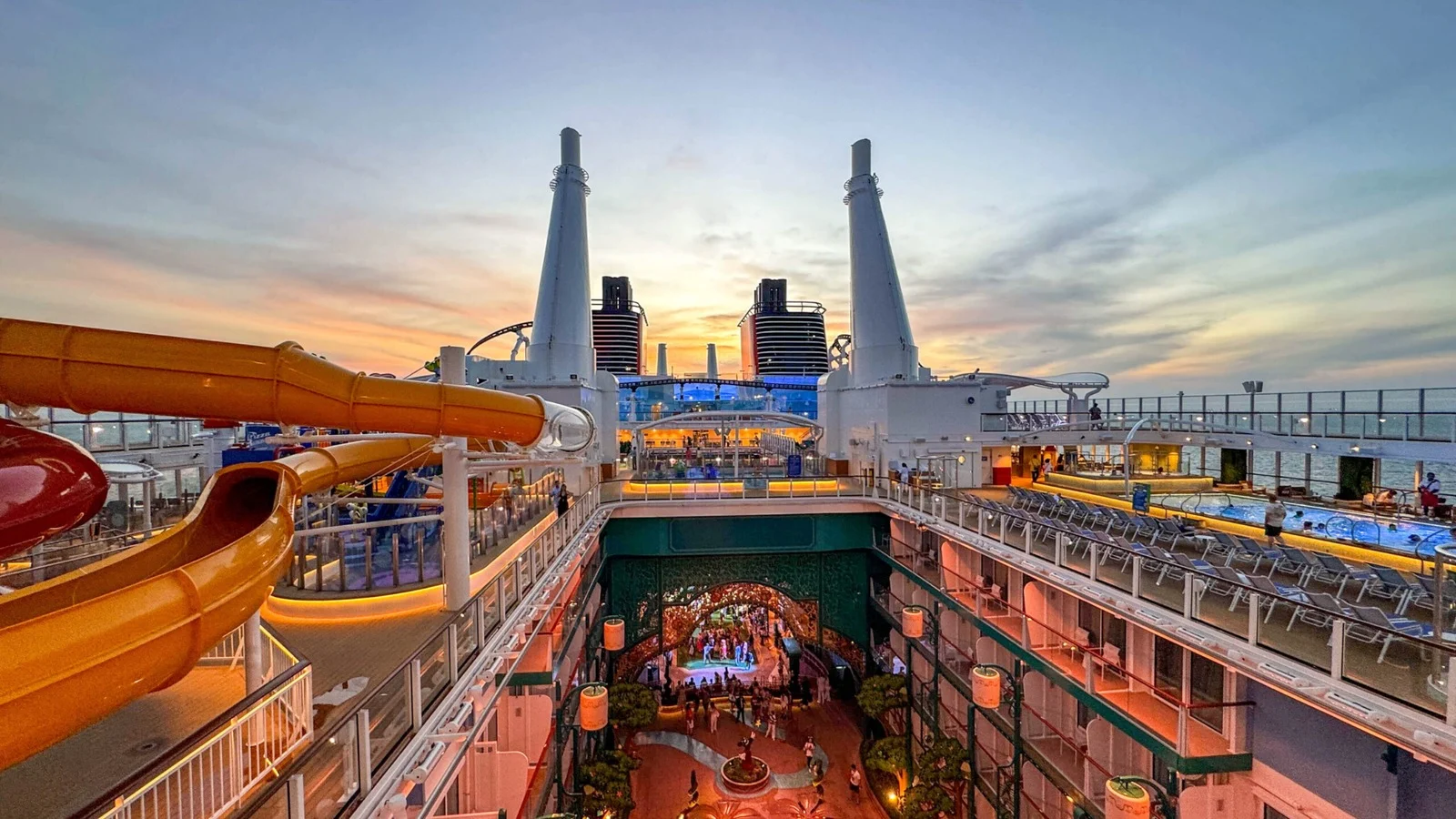
Deck 16 brings you to Wayfinder Bay, the Moana-inspired outdoor pool and entertainment area, while also keeping Deck 17’s food, pools, and family attractions close. This is a convenient level for outdoor-focused families, but public activity matters more than the high deck number.
Pay close attention to what sits overhead, especially for a room directly under a busy outdoor area. A cabin can be one deck from paradise or one deck from early-morning chair movement, and the deck number alone cannot tell you which version you picked.
Deck 17: Toy Story Place makes this the family-convenience deck
Deck 17 is where families who live in swimsuits may decide they never want to leave. Toy Story Place, pools, water play, casual food, and other upper-deck activity make it incredibly convenient with younger kids.
Do not choose it blindly for one simple reason: convenience attracts people. If you book here, it is better to be tucked into a cabin corridor than positioned where every wet, hungry family on the ship naturally passes.
For grandparents, guests with limited stamina, or parents doing repeated room runs for sunscreen, forgotten goggles, naps, and “the blue cup, not the red cup,” the location can be worth more than theoretical quiet. Saving three long elevator trips a day adds up quickly.
Deck 18: concierge and upper recreation
Deck 18 begins the highest recreation and concierge band, with private benefits sharing the upper ship with outdoor attractions. Your reason for staying high should match the spaces you plan to use because motion and wind are more noticeable here.
Concierge guests get the clearest benefit because private lounge, sun-deck, pool, and wellness access can concentrate a surprising amount of the day in one upper-deck bubble. If you use those perks heavily, the ship feels smaller because several recurring destinations are suddenly neighbors.
Deck 19: Marvel Landing and private spaces
Marvel Landing also pulls families high for Ironcycle Test Run and the other themed attractions. Visit this zone rather than choose a cabin solely to be near it, unless your children are the type who will ask to go back the second breakfast ends.
Concierge areas on the upper levels are restricted, so do not assume they create a public route across the ship. Follow the marked approach to Marvel Landing and use the nearest open elevator core instead.
Deck 20: no everyday guest destination
Deck 20 does not contain an everyday guest venue that needs to shape your cabin choice or daily route. Treat Deck 19 as the top destination level and follow onboard signs if access changes for a specific activity.
The forward versus aft question is more important than it looks
Disney Adventure’s two main elevator cores mean a cabin can be on the “right” deck and still be inconvenient if it is at the wrong end for your routine. Forward and aft are not tiny distinctions here, because elevators solve height much better than they solve a very long horizontal walk.
Map your two most repeated destinations before picking a room. Families focused on youth programming and lower entertainment may choose differently from a group whose days revolve around Toy Story Place, Marvel Landing, and the upper pools.
Discovery Reef is another useful aft-oriented mental anchor, while the theater complex helps orient the lower entertainment side of the ship. Learn one landmark at each end and you will stop staring at the app like it personally betrayed you.
The easiest elevator strategy on Disney Adventure
With thousands of people aboard, the worst time to learn your elevator habits is exactly when a theater empties or everyone decides dinner sounds good. Pick your cabin’s nearest elevator core on day one, then learn which major zones belong to the forward side and which belong to the aft side.
The escalators are a genuinely useful Disney Adventure quirk, not decorative overkill. They are one of the easiest ways to move between busy public levels without adding another elevator wait, especially when the main passenger lifts are absorbing a show-release crowd.
For able-bodied groups, walking one or two decks during show-release traffic can be faster than waiting. For anyone who needs step-free access, build a few extra minutes into theater, dining, and port transitions rather than treating the busiest elevator window as a surprise each time.
Where Disney Adventure is most likely to feel crowded
The ship’s size does not mean every area feels packed all day. Crowds tend to form around scheduled character appearances, theater start and end times, popular quick-service windows, the family pool zones, and the last few minutes before a movie or event begins.
One of the easiest tricks is using meal times against the crowd. Big attractions and public areas can become noticeably easier when a large chunk of the ship is sitting down for dinner.
Avoid trying to cross the entire ship immediately after a headline show. Give the crowd five minutes to disperse, grab a drink nearby, and let somebody else win the race to stand in front of a full elevator.
The best deck for different Disney Adventure travelers
- For a first-time family that wants the safest all-around answer: Deck 12, 13, or 15 near the elevator core that best matches your planned routine.
- For families with young kids who will live at the pools and Toy Story Place: Deck 16 or a carefully chosen Deck 17 cabin.
- For kids-club and theater-heavy families: Deck 9 through 12 can make the lower public decks much easier.
- For people who love the idea of watching Imagination Garden activity from the room: consider a Garden-facing location around Deck 10, accepting the privacy and noise trade.
- For light sleepers: prioritize the residential middle and cabins above and below over a flashy deck number.
- For concierge guests: upper-deck proximity becomes much more valuable if the private lounge, sun deck, pool, and wellness spaces will be part of your daily routine.
Continue planning with the things to do, dining guide, pros and cons.
How this guide was researched: This guide was checked against the cruise line’s current ship pages, deck plans, venue listings, and published policies. Details can change by sailing, so confirm booking-sensitive prices, hours, access rules, and cabin assignments before payment.
The practical Disney Adventure booking choice
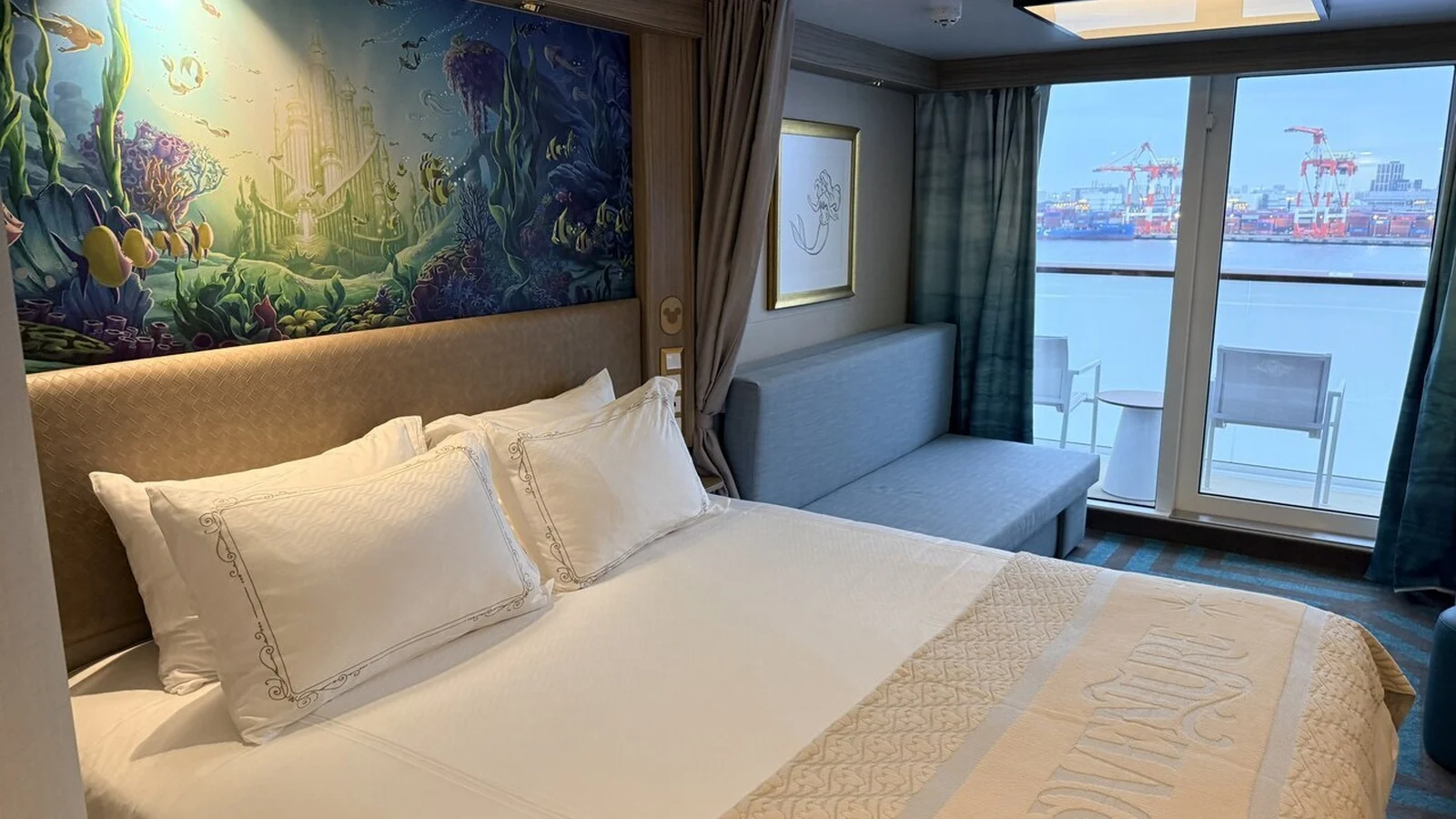
For a standard verandah at the same price, start on Deck 12 or 13 near one of the two main elevator cores. That gives you a residential hallway, reasonable access in both directions, and enough distance from the upper family frenzy that you are not hearing vacation happening outside your door.
For young kids who need midday naps and constant pool access, move higher to Deck 16. The extra convenience would probably beat the theoretical perfection of a quieter deck after the fourth time somebody forgot shoes.
Choose Deck 10 only because you specifically want the Imagination Garden experience, not because “lower is better” or “closer to the middle is better.” Disney Adventure is too unusual for generic cruise-deck rules to do all the thinking for you.
Once you are comparing actual room numbers, use the Disney Adventure best cabins and suites guide and the Disney Adventure cabins to avoid guide. Also read the Disney Adventure tips guide before boarding, because the best deck choice only helps if your first-day plan makes sense.