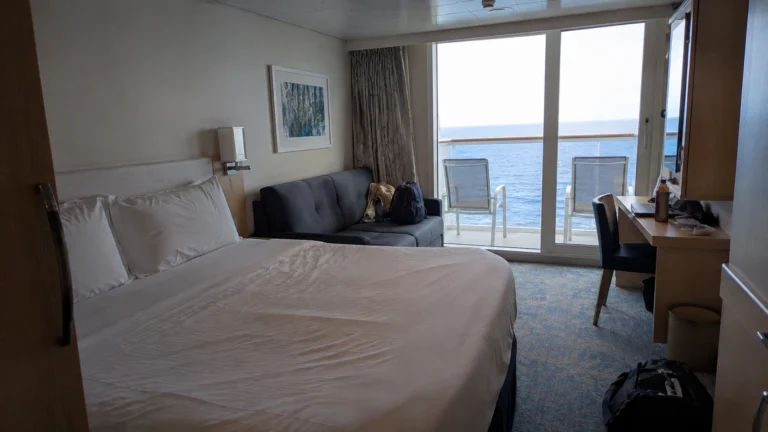
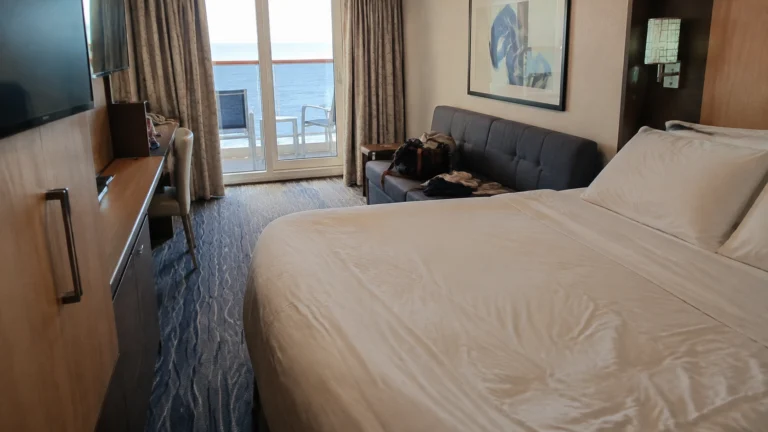
Carnival Dream Cabins to Avoid: Exact Rooms and Better Choices
On Carnival Dream, a balcony or low fare needs to suit the room’s view, beds and nearby public spaces as well as your budget.
Cove Balconies under the galley, Deck 6 rooms over evening entertainment, cabins under Lido, and balconies above the Lanai can all be great until the one thing you care about is sleep or privacy.
Short version:
- For sleep: choose a central Deck 7 or 8 room with cabins above and below; a Cove outside the galley directly overhead keeps the low-water balcony.
- For a clear view: exclude 1432, 1447, 2448, 2473, 9205 and 9206 when their obstruction would bother you.
- For privacy: compare a higher balcony with the lowest rows over the public Lanai.
- For family space: choose the actual beds and Deluxe Ocean View washroom, or two connecting rooms for separate bedtimes.
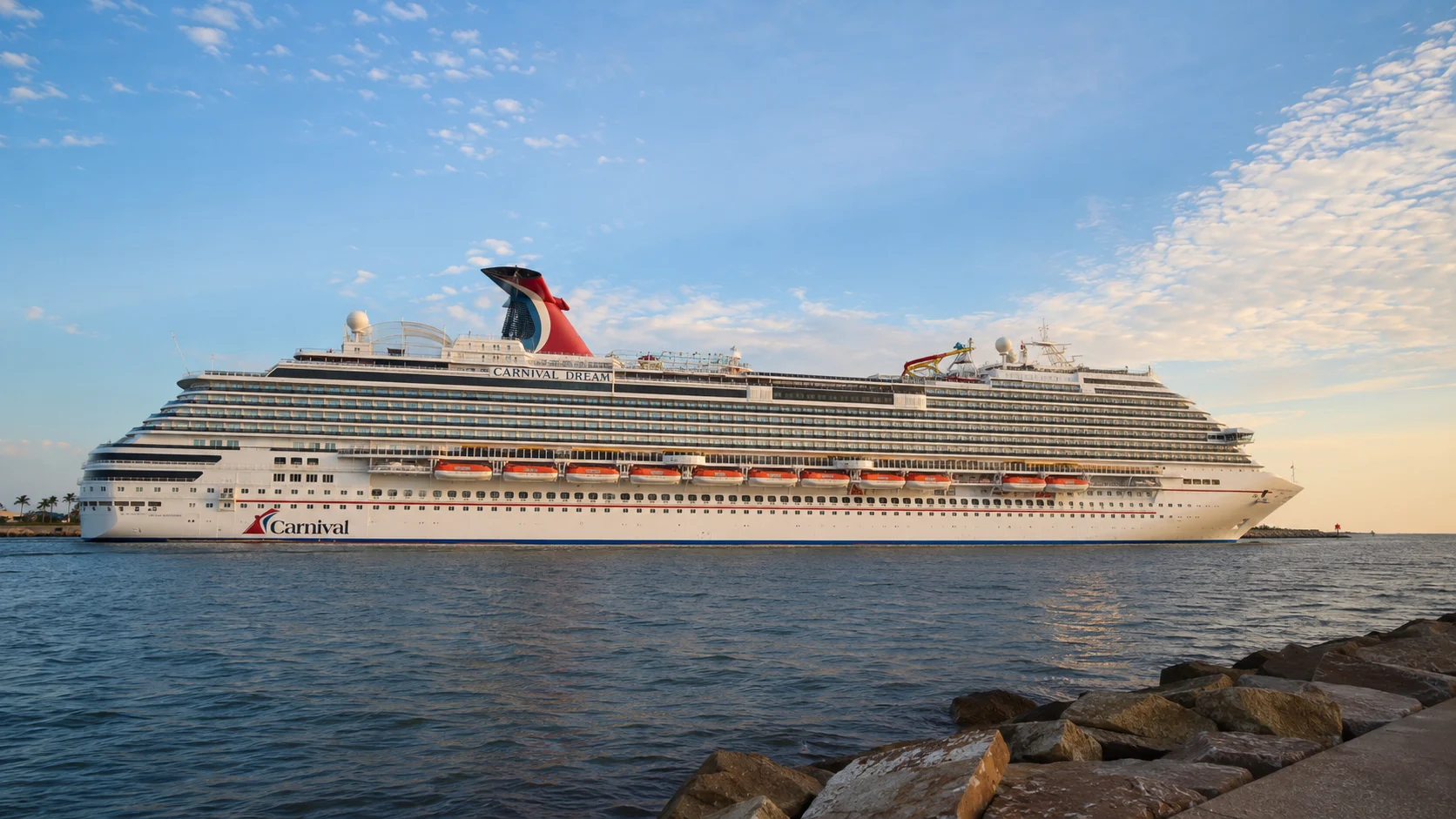
Cove Balconies beneath the galley: the sleep trade you should take seriously
A Cove Balcony sounds like exactly the sort of room you should enjoy: sheltered outdoor space and the water close enough to feel part of the trip. The catch isn’t being low on the ship; it’s sleeping beneath a working kitchen.
The Deck 3 galley occupies a substantial section between the dining rooms. Some Deck 2 rooms, including Cove 2408, sit beneath that working area.
Carts, dishes and cleanup can create impacts outside passenger dining hours, so a room without the working kitchen directly overhead is the stronger choice for someone who wakes easily.
Treat 2408 and nearby Coves cautiously beneath the kitchen without assuming every room has the same sound exposure. Choose another Cove outside the area beneath the galley when sleep matters more than location.
Better alternative: A Cove outside the area beneath the galley keeps the low-water balcony; a dining-room neighbor may be preferable, while a cabin deck overhead is the more conservative sleep choice.
When uninterrupted sleep matters more than that close-water balcony, you should compare a residential-deck room instead. A Deck 1 Ocean View is another option when daylight matters but private outdoor space doesn’t.
Rooms above evening entertainment: skip the convenient location if you turn in early
Deck 6 sits above Promenade, where Dream places Encore Main Lounge, Ocean Plaza, the casino and several other evening venues. For an early sleeper, the important question is which venue sits beneath the available room, not whether the whole deck is bad.
A room directly above a performance space has a different potential soundtrack from one above a quieter part of the deck. Music and bass are the concern here, rather than the rolling kitchen sounds described above.
Be especially cautious with a toddler’s early bedtime or an afternoon nap that could overlap rehearsals. Closing a balcony door isn’t a dependable fix for sound traveling through the ship’s structure.
Better swap: Keep the same general location and room type but compare Deck 7 or 8. That adds a passenger-cabin buffer without turning the decision into a suite upgrade.
A discounted Deck 6 room could still work for someone who expects to be at the entertainment until it finishes. You should accept the compromise deliberately, not pay extra for convenience and discover that your bedtime was the expensive part.
Cabins beneath Lido: breakfast convenience can come with an early wake-up
Parts of Deck 9 lie beneath the pools, seating and food-service areas on Deck 10. Furniture movement, cleaning and public-deck activity are the reasons you can look elsewhere for a light sleeper.
The forward section is different because Deck 10 begins with cabins before opening into Lido. Don’t reject a forward Deck 9 room for a pool ceiling it doesn’t actually have.
Make this choice around your cabin hours. Being close to the pool is useful when you’re upstairs all day, but less appealing when the room is where a child sleeps after lunch.
Better alternative: A comparable Deck 8 room with cabins above and below, or a forward Deck 9 room beneath Deck 10 cabins when pool convenience matters and the forward position suits you.
The pool, buffet and service spaces do not share one cleaning schedule or sound level, which is why a whole-deck warning would hide useful forward options.
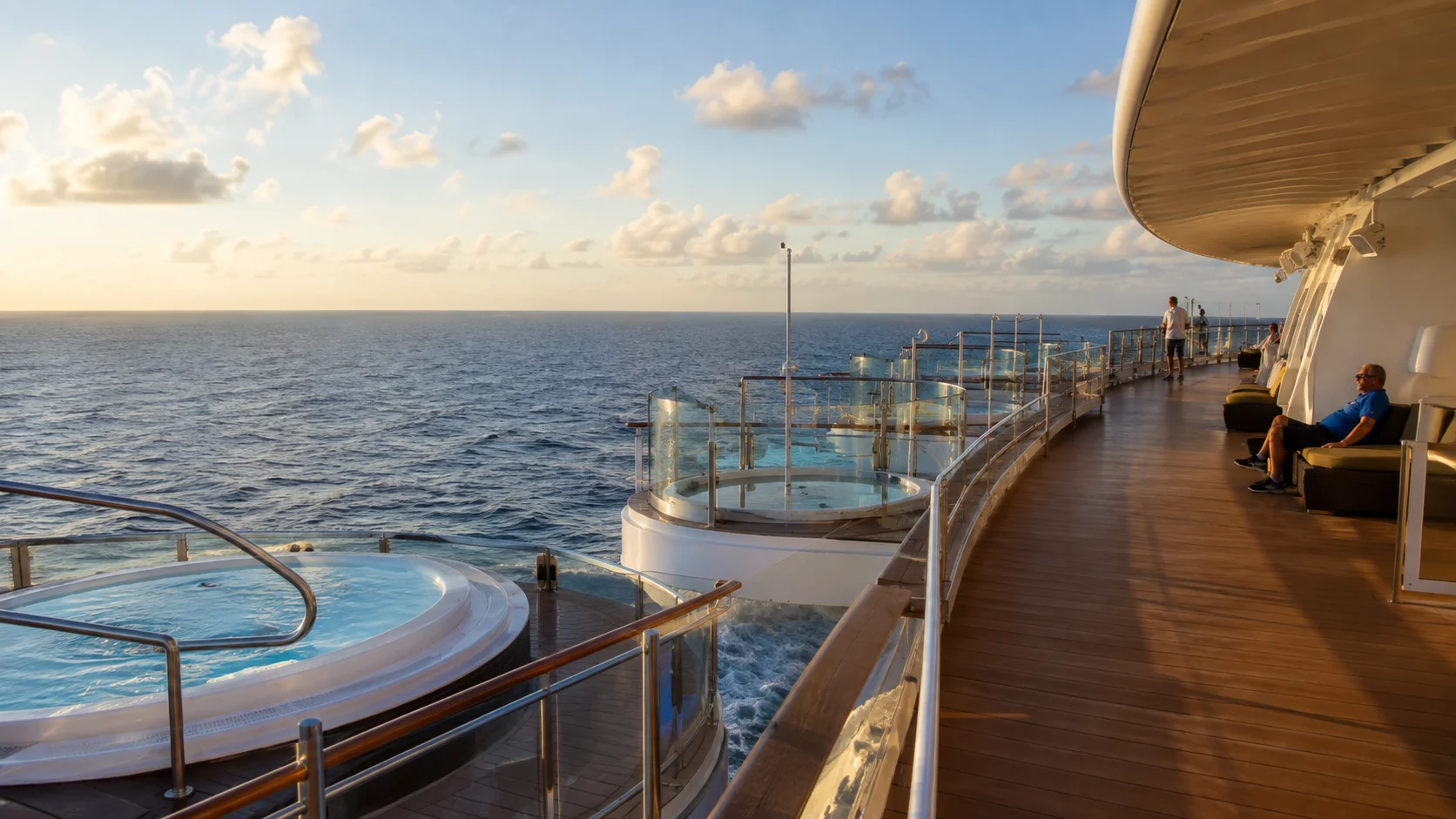
Balconies above the Lanai: not the first pick for secluded coffee time
Dream’s outdoor Lanai runs around Deck 5, with public promenade space and whirlpools below some side balconies. That means the view down can include people enjoying their own vacation rather than an uninterrupted drop to the sea.
If your balcony daydream involves a quiet chair and nobody nearby, you can look carefully at the lowest balcony rows above that area. The issue is the outdoor experience, which is separate from whether the bedroom is comfortable.
Compare a room-specific photo showing the railing, public deck below and any nearby hot tub. A generic balcony photo taken facing straight out can leave out the very detail that bothers you.
Better alternative: A higher side-facing balcony, with its position checked against the Lanai. More separation can help, but do not promise complete privacy simply because you move up a floor.
For someone who enjoys seeing the activity below, this may be a perfectly acceptable discount. Do not pay a privacy premium for a room whose outdoor setting works against that priority.
1432, 1447, 2448, 2473, 9205 and 9206: check the obstruction before upgrading
These six staterooms and suites have obstructed views. They aren’t one uniform room type, so try to check the individual category and outlook rather than assume every obstruction looks the same.
Junior Suites 9205 and 9206 deserve particular care because extra indoor space and an unobstructed balcony are separate things to buy.
At a similar fare, an otherwise suitable unobstructed room is the better scenery purchase; at a worthwhile discount, an obstructed room can still work when daylight or space matters more.
Natural light may be enough for a family buying a larger window room. Someone paying specifically to sit and watch the sea has a different reason to hold out for the cleaner outlook.
My Dream cabin and suite comparisons are useful once you’ve eliminated the view compromises you dislike. There’s no need to buy a larger room just to escape one flagged window.

Walkway-view windows: daylight doesn’t mean a private ocean view
Dream’s Picture Window Interiors look toward an outside observation area, with an obstructed outlook. Carnival also describes its Cloud 9 Spa Ocean View rooms as having a walkway-view compromise.
Treat these as daylight rooms with a specific outside neighbor, not as ordinary clear-view Ocean Views. Curtains matter when people can use the deck beyond your window, particularly with your cabin lights on.
That can be a sensible purchase near an interior fare. It’s a much less attractive surprise when a private window view was the entire reason you upgraded.
Better alternative: A standard Ocean View with the outlook you want, or an ordinary interior when daylight is not worth the fare difference.
Rooms that fit your head count but not your sleeping arrangements
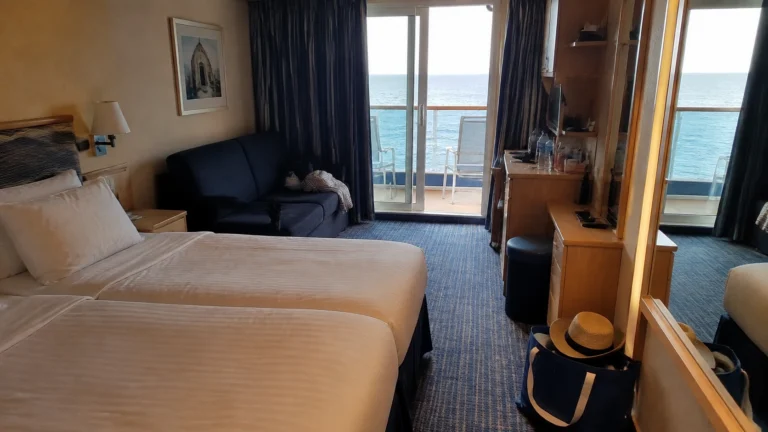
Settle the beds before comparing balcony sizes. An Interior Upper/Lower doesn’t give a couple the usual two lower beds that combine into one shared bed.
That layout can work for a solo traveler or two people happy to sleep separately. It’s the wrong saving when your non-negotiable is sleeping together.
Some five-person Deluxe Ocean Views have a different catch: the lower twins cannot convert into a king while both upper Pullmans are in use. Confirm the symbols for the exact room and the arrangement for your actual party.
A Deluxe Ocean View’s extra washroom helps a family get ready, but it does not provide a second toilet or a separate bedroom.
Better alternative: A confirmed bed arrangement that works without a nightly compromise you dislike. For different bedtimes or two bathrooms, compare a genuine connecting pair rather than assuming one larger room solves both problems.

High-forward upgrades and long walks: avoid the wrong fit, not the whole area
For someone sensitive to motion, start lower and closer to midship rather than letting spa access steer the booking toward a high-forward room.
Likewise, a beautiful aft balcony may be a poor fit when repeated corridor walks are difficult. A short route to an elevator can matter more than a larger balcony you won’t use comfortably.
Neither warning makes every forward or aft cabin bad. They simply change which compromise you can accept for the person actually sleeping there.
Carnival’s Guest Access team can match the accessible bathroom, doorway and transfer space to your needs; a larger ordinary suite is not automatically a substitute.
The Dream deck-by-deck guide handles the walking routes. Here, you can use distance only to rule out a cabin that would make your daily routine harder.
Guarantee fares: don’t surrender a choice you already know matters
A guarantee works for a flexible traveler who accepts its possible assignments; selecting a room is the better choice when avoiding a galley overhead or having an unobstructed balcony is essential.
Read the conditions of the specific Carnival offer, since some guarantees allow obstructed assignments. Paying for a category isn’t the same as selecting a room number.
Do not count on a free upgrade or an easy move after boarding. Choose the fare on the room you’re entitled to receive, not the one you hope somebody will find later.
Continue planning with the things to do, pros and cons.
How this guide was researched: I used Carnival Dream’s official deck plan and room descriptions to match the view, bed arrangement and nearby public spaces. A venue’s location supports a cautious choice for a light sleeper, while individual experiences can vary by room and sailing.
This guide was checked against the cruise line’s current ship pages, deck plans, venue listings, and published policies. Details can change by sailing, so confirm booking-sensitive prices, hours, access rules, and cabin assignments before payment.
The room you can choose after crossing off the wrong ones
For sleep: Start with a side-facing Deck 7 or 8 room surrounded vertically by cabins. That removes the direct galley, entertainment-floor and Lido-ceiling relationships without requiring an expensive category.
For a lower-cost window room, start on Deck 1 with the beds and view you need; for a Cove, favor a location outside the galley area if sleep is a priority.
For families: The right sleeping arrangement wins before a suite label or extra outdoor space. For balcony lovers, you can settle privacy and the actual sightline before paying more.
Already booked a flagged room? Weigh the price of changing against your own sleep, view or bed requirement rather than treating the warning as a reason to cancel a good-value cabin.
My simplest Dream booking remains an individually selected residential-deck room with the right beds and view. The other ship-specific cabin guides use the same principle: rule out the compromise you dislike, not every room somebody could possibly dislike.
Before booking, open the deck plan, ship page, and accessibility guide. Use them to confirm the exact category, nearby spaces, and any access needs tied to your room.
Compare these warnings with the best cabins and the deck guide. The dining guide and ship tips can help you choose the most convenient end for your routine.