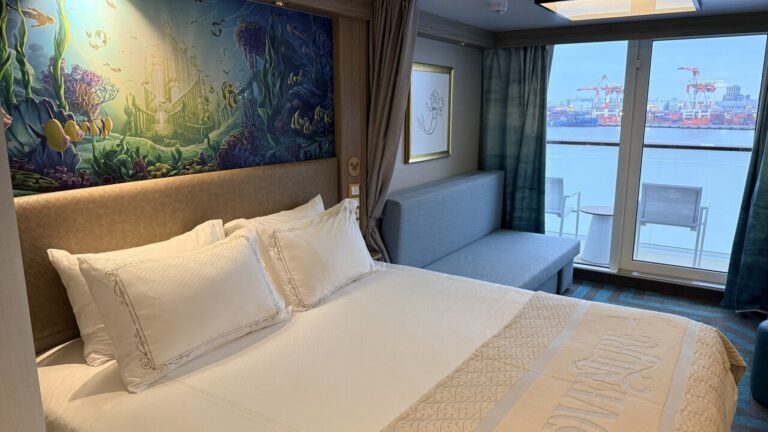
Arvia Cabins and Suites: How to Choose the Best Room
For most couples on Arvia, start with a standard balcony on a cabin-heavy part of Deck 10, 11, 12, or 14, with cabins above and below.
Choose an inside for savings, a Conservatory Mini-suite for its extra sitting area, or connecting rooms when a family needs more separation.
Short version:
A cabin between other cabin decks is the safest default for most travelers. Compare distinctive balconies and suites by exact layout, view, location, and included benefits rather than assuming a higher category solves every tradeoff.
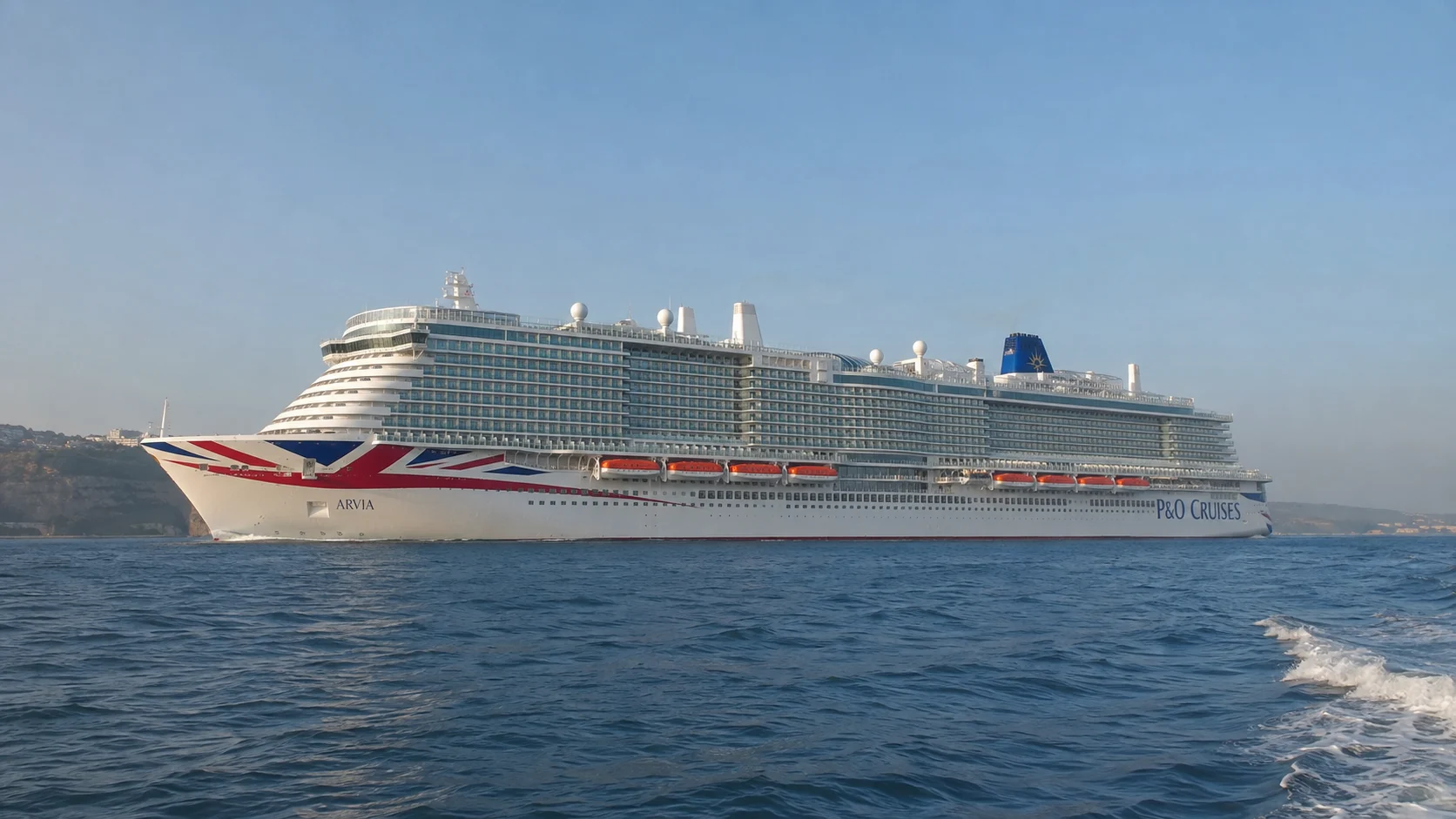
Arvia cabin choices at a glance
- Best simple value: a standard inside or balcony on a cabin-heavy deck, away from elevator lobbies and service doors.
- Best for natural light on a tighter budget: a sea-view cabin on Deck 4 or 5, after checking obstruction and boarding-area context.
- Best distinctive upgrade: a Conservatory Mini-suite on Deck 8 or 9, if you will genuinely use its enclosed conservatory space.
- Best for families: a cabin marked for the correct occupancy, or properly linked interconnecting cabins, near the elevator bank that serves The Reef.
- Best for quiet: a room with cabins directly above and below, several doors from elevators, stairs, launderettes, and crew access points.
- Most important check: study the exact cabin number on P&O Cruises’ current deck plan, not only the category label.
How the cabin categories differ
Arvia offers inside cabins, sea-view cabins, balcony cabins, Conservatory Mini-suites, standard suites, a Family Sea View Suite, accessible options, single cabins, and connecting rooms. Inside cabins appear across many accommodation decks.
Standard sea-view rooms are concentrated on Decks 4 and 5. Balcony inventory dominates the higher cabin decks and also appears on the Promenade Deck and Lido Deck.
The Arvia deck plan separates “larger” inside rooms from standard inside rooms and identifies balcony grades with details such as a sofa, a smaller balcony, an obstruction, a steel front, or an unusual sight line. You can pay more only when the extra space or position solves a problem for your group.
A lower-priced balcony can be an excellent buy when its limitation does not bother you, but a poor buy when privacy, an open view, or long periods outdoors are central to your vacation.
Occupancy matters as well. The standard triple uses a single sofa bed, while a marked quad combines that sofa bed with a pull-down berth.
P&O notes that pull-down beds in twin cabins are reached by ladder. Families should verify the sleeping arrangement, not merely that the booking engine accepts the party.
Floor space, nighttime bathroom access, and whether a ladder works for your children can change how comfortable the room feels.
Inside cabins for best value
An inside cabin is often Arvia’s most rational choice for travelers who expect to spend their days at the SkyDome, Altitude, ports, restaurants, and shows. You still receive the same access to included ship facilities, and the saved money may deliver more value when directed toward specialty dining, Mission Control, spa time, or shore experiences.
The tradeoff is not just the lack of a view. Inside rooms can make it harder to judge the time of day, and a full family occupancy can feel compressed.
“Larger” inside grades appear on selected parts of Decks 4, 5, 9, 11, and 14, according to the official plan. Compare the exact grade and layout if extra floor area is the reason for upgrading.
A midship inside cabin on a deck dominated by rooms is a strong default for motion-sensitive travelers. Avoid assuming that low and central automatically means silent, however.
Deck 5 includes a launderette and sits near embarkation functions on lower levels, while upper accommodation corridors can still be close to stair landings or housekeeping work areas.
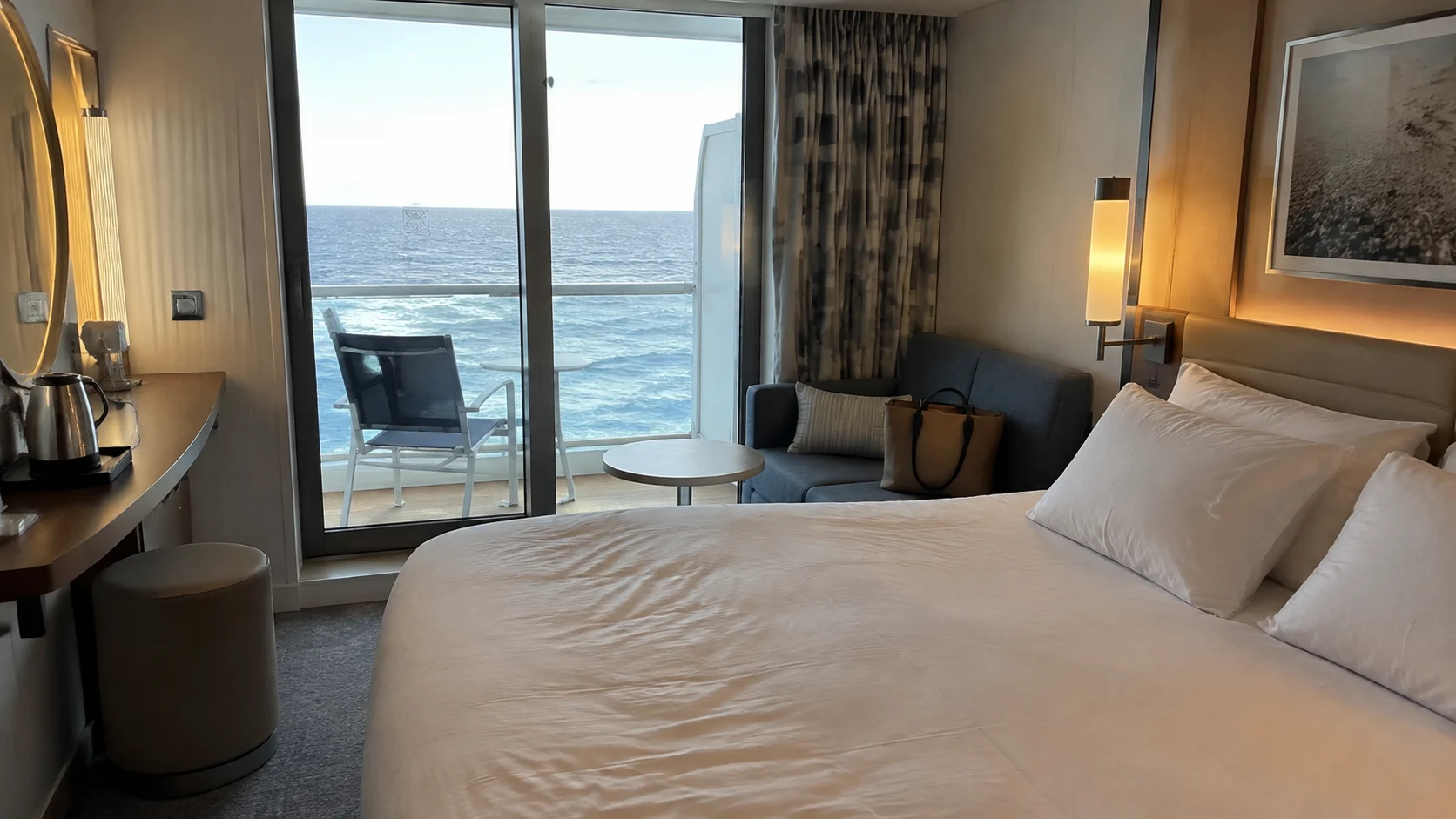
Sea-view cabins for natural light
Standard sea-view cabins are on Decks 4 and 5. They suit travelers who want daylight and an outside reference but do not expect to sit privately outdoors.
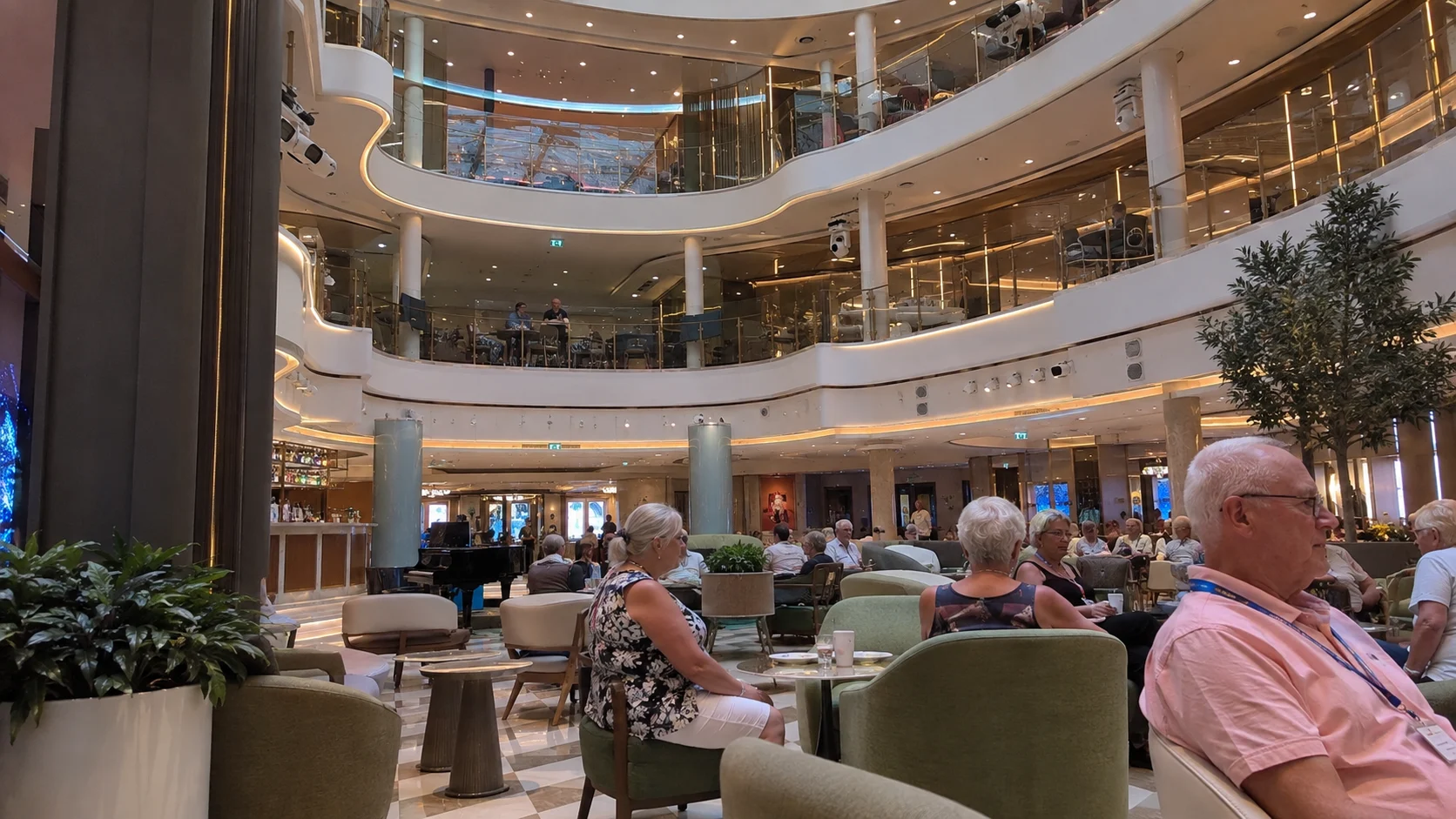
You can consider their lower position for motion sensitivity and for reaching the Grand Atrium levels, Headliners Theatre, Ocean Studios, and the main dining rooms without starting every trip at the top of the ship.
Check the window and obstruction notation for the exact room. Also consider the sailing pattern.
On a cool-weather trip with many indoor days, the window may add more perceived value than it does on a port-intensive itinerary where you leave early and return late. Conversely, travelers who like room-service coffee in fresh air should go directly to a balcony rather than treating a sea view as a near substitute.
Balcony cabins for outdoor space
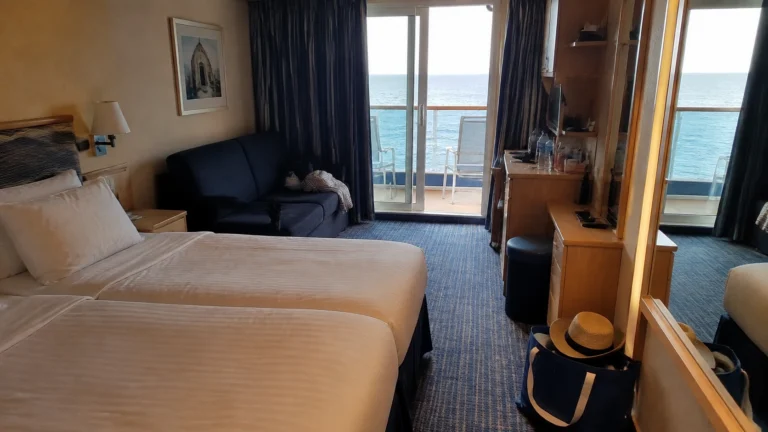
Balcony cabins are spread through the Promenade, Lido, and upper accommodation decks. The standard-with-sofa grades can work well for couples who want a sitting area or families using the sofa as an extra berth.
Deluxe balcony categories add space, but the practical value depends on party size and how much time you spend in the room.
The official plan flags several situations worth checking before payment. Some balconies have obstructed views.
Some have steel fronts rather than clearer lower panels. Forward balconies may have access restrictions in high winds, and the bridge can overlook certain forward rooms.
Other balconies are visible from above, from neighboring positions, or from the Promenade Deck. These are cabin-number issues, not reliable assumptions about an entire category.
Promenade Deck balcony cabins deserve special attention. Their location can make Deck 8 dining and outdoor spaces extremely convenient, but the public walkway changes the privacy equation.
If you like leaving curtains open or sitting outside in a secluded setting, study the plan’s visibility symbols. If quick access to The Quays, Sindhu, The Club House, and the wraparound outdoor deck matters more, the location may be a feature rather than a flaw.
Conservatory Mini-suites on Decks 8 and 9
Arvia’s CV, CW, CY, and CZ Conservatory Mini-suites offer about 274 square feet including the balcony. Their defining feature is a glazed sitting area between the main cabin and the balcony.
The conservatory is ventilated but not temperature-controlled, so do not buy it expecting the same temperature as the main cabin in strong sun or cold weather.
The category appears on Deck 8, the Promenade Deck, and Deck 9. Deck 8 provides exceptionally easy access to restaurants and evening venues, but some balconies in this area have public sight-line concerns identified on the official plan.
Deck 9 removes you from the promenade itself, yet your exact room may sit over active Deck 8 spaces. Compare what is directly below, including dining, bar, outdoor, and entertainment zones.
A Conservatory Mini-suite is worth considering when two people want a genuinely separate place to read or sit without paying for a larger suite, or when the enclosed area makes the balcony usable in a wider range of weather. It is less compelling when you choose it only for status, rarely spend time in the room, or expect full-suite space and benefits from the “mini-suite” name.
Do not confuse this category with a “SkyDome-area” cabin. The SkyDome and its pool are on Deck 16, while Conservatory Mini-suites are on Decks 8 and 9.
Travelers prioritizing the SkyDome should instead compare cabins on Decks 15 through 17 for vertical convenience, then weigh possible pool-deck activity and elevator demand.
Full suites and family suites
Full B4, B5, and B6 Suites appear on several upper accommodation decks. They are the right upgrade when separate living space and a more generous bathroom arrangement will materially improve the trip, especially for longer sailings or travelers who spend substantial time in their room.
The B4, B5, and B6 full Suites have the bathtub exception on the plan; Conservatory Mini-suites have showers, and adapted cabins are shower-only regardless of grade.
The BA Family Sea View Suite is on the Promenade Deck. Two specific BA rooms, 8.109 and 8.110, do not have balconies, as the official plan states.
The category name can therefore be more informative than an assumption based on the word “suite.” Families should confirm the exact room, bed setup, view, and balcony status before paying the final balance.
A suite is not automatically the best value on a ship with so many public spaces. Pay for it when your party needs separation, when one person sleeps while another stays awake, or when private room time is a major part of the vacation.
For an active couple using the cabin mainly to sleep and shower, a well-placed balcony plus a controlled extras budget can deliver more enjoyment.
Single, connecting, and accessible cabins
Arvia has single inside cabins on Decks 5, 8, 9, and 12, plus single balcony cabins on Decks 9, 11, and 14. Solo travelers should compare the total fare, not only the cabin label, because promotions and single supplements change.
A full-size double-occupancy room can occasionally be competitive, while a purpose-built single may win on location or price.
Interconnecting rooms can give families privacy and a second bathroom, but only choose cabin numbers carrying the official connecting symbol. Nearby rooms are not the same as internally connected rooms.
Accessible cabins are also clearly marked, with separate notes for wheelchair accessibility and compact mobility-aid storage. Travelers with specific access needs should confirm door, bathroom, transfer, and equipment requirements directly with P&O rather than relying on a generic category summary.
How to find a quieter cabin
The most dependable quiet-room formula is a cabin surrounded by other cabins above, below, and on both sides. Decks 10, 11, 12, and 14 offer many such stretches, but every candidate still needs a vertical check.
Stay several doors away from elevator foyers, stair entrances, launderettes, and blank plan areas that may hide service functions.
Upper cabins shorten the trip to the SkyDome, pools, Horizon Restaurant, and Altitude, but can inherit chair movement, music, family activity, or early setup from open decks. Lower cabins improve access to Headliners Theatre, the Grand Atrium, the casino, Ocean Studios, Mission Control, and the main dining rooms.
They also reduce dependence on busy elevators after a show.
Motion sensitivity usually favors lower and more central positions. A dramatic forward or aft view may be worth accepting more movement for some travelers, but it should be a deliberate trade.
No deck-plan choice guarantees a motion-free sailing.
Quick Answers
Are Arvia Conservatory Mini-suites near the SkyDome?
No. Conservatory Mini-suites are CV, CW, CY, and CZ cabins on Decks 8 and 9.
The SkyDome is on Deck 16. Choose the mini-suite for its enclosed conservatory and lower-ship venue access, not because it is next to the SkyDome.
Which Arvia deck is best for a quiet cabin?
There is no single quietest deck. A cabin-heavy section of Deck 10, 11, 12, or 14 can be a good starting point when the exact room has cabins above and below and is away from circulation and service points.
Do all Arvia suites have a balcony?
No. The official plan specifically notes that Family Sea View Suites 8.109 and 8.110 do not feature a balcony.
Always verify the exact cabin number.
Is a balcony worth it on Arvia?
It is most worthwhile for scenic itineraries, travelers who value private outdoor time, and parties that benefit from a separate place to sit. An inside cabin can be better value for activity-focused travelers who will use Arvia’s extensive public spaces.
Upgrades worth pricing separately
A full Suite includes butler service, which is a meaningful distinction from buying the Conservatory lounge alone. Compare that help and the extra living space against the actual fare difference, without assuming drinks, Wi-Fi, spa access, or every specialty meal are included.
Start with Deck 9 if you want a Conservatory Mini-suite above the promenade, then check what sits below the exact room. A higher grade may improve location without creating a larger bedroom.
Selected Conservatory Mini-suites can accommodate five people on eligible cruises. Confirm the exact sailing, cabin number, and five-berth bed arrangement before comparing the fare with two connecting rooms.
That fifth berth does not create a second bathroom or another private bedroom, and bedding can change how the sitting area works at night. For five people with different bedtimes, two connecting cabins can earn their extra cost through a second bathroom and a door between the sleeping spaces.
For families of three or four, the main question is whether the extra guest can manage the sofa or ladder berth comfortably. The cabin-type comparison helps weigh a larger shared room against two genuinely connecting cabins, rather than two rooms that happen to be nearby.
For a wheelchair user, you can follow P&O’s accessibility process and confirm an adapted cabin that matches the equipment. The plan’s partially adapted PB–PF Inside grades are intended for guests using nonmotorized upright walking aids, not wheelchair or scooter users; compact-aid storage symbols are a separate feature.
For a light sleeper, you can trade a higher grade for an ordinary balcony in a better vertical position. The cabins-to-avoid guides explain the ceiling and privacy checks that matter before paying for a larger advertised room.
Keep fare benefits separate from the room hardware when comparing operators or offers. The cruise-line guide gives useful context, but you can base this booking on Arvia’s actual room and the inclusions written into the selected fare.
Which Arvia cabin should you choose?
For most couples, choose a standard balcony in a cabin-heavy midship section, after checking sight lines and what sits above and below. Budget-focused travelers should not hesitate to choose a well-positioned inside.
Families should prioritize verified occupancy, bed access, and bathroom practicality. The Conservatory Mini-suite is the most interesting upgrade when its enclosed lounge solves a real need, while a full suite earns its price mainly for parties that will use the added separation.
Practical final checks
Confirm the exact category diagram, occupancy symbols, bed arrangement, bathroom setup, view, and included benefits before payment. A familiar room name can cover several layouts or locations, and the most expensive choice is not always the best fit.
Compare the upgrade against a well-located standard cabin on total cost. Spend more when the extra space or benefits will be used daily, not simply because the higher category sounds safer.
Continue planning with the cabins guide, pros and cons, dining guide.
Before you book: Keep the official ship page, dining guide, entertainment guide, access guide handy while planning. Confirm your exact cabin, reservations, and inclusions before paying.
How this guide was researched:
I checked P&O Cruises’ current ship information against the article’s cabin, venue and layout claims. Schedules, prices, access rules and assignments can change by sailing, so confirm booking-sensitive details before payment.