Disney Dream Deck-by-Deck Guide: Best Decks and Easy Routes
Disney Dream has an easy rhythm once you know where dinner, pool time, and the kids’ clubs pull you during the day.
Choose a cabin that fits that routine and the ship quickly feels friendly instead of enormous.
Short version
- Best all-around deck: Deck 8 is residential and balanced between the lower entertainment decks and the pool deck.
- Best for quiet: Deck 7 keeps cabins above and below while leaving the youth spaces and restaurants within a manageable walk.
- Best for motion sensitivity: Choose a lower, midship room on Deck 2 or 6 rather than a high cabin near the bow or stern.
- Best for pool families: Deck 9 is close enough for quick stair trips to Deck 11 without putting your ceiling directly below the pool area.
- Most important route tip: Use the forward bank for the theater and Quiet Cove, midship for the atrium, and aft for Cabanas and adult dining.
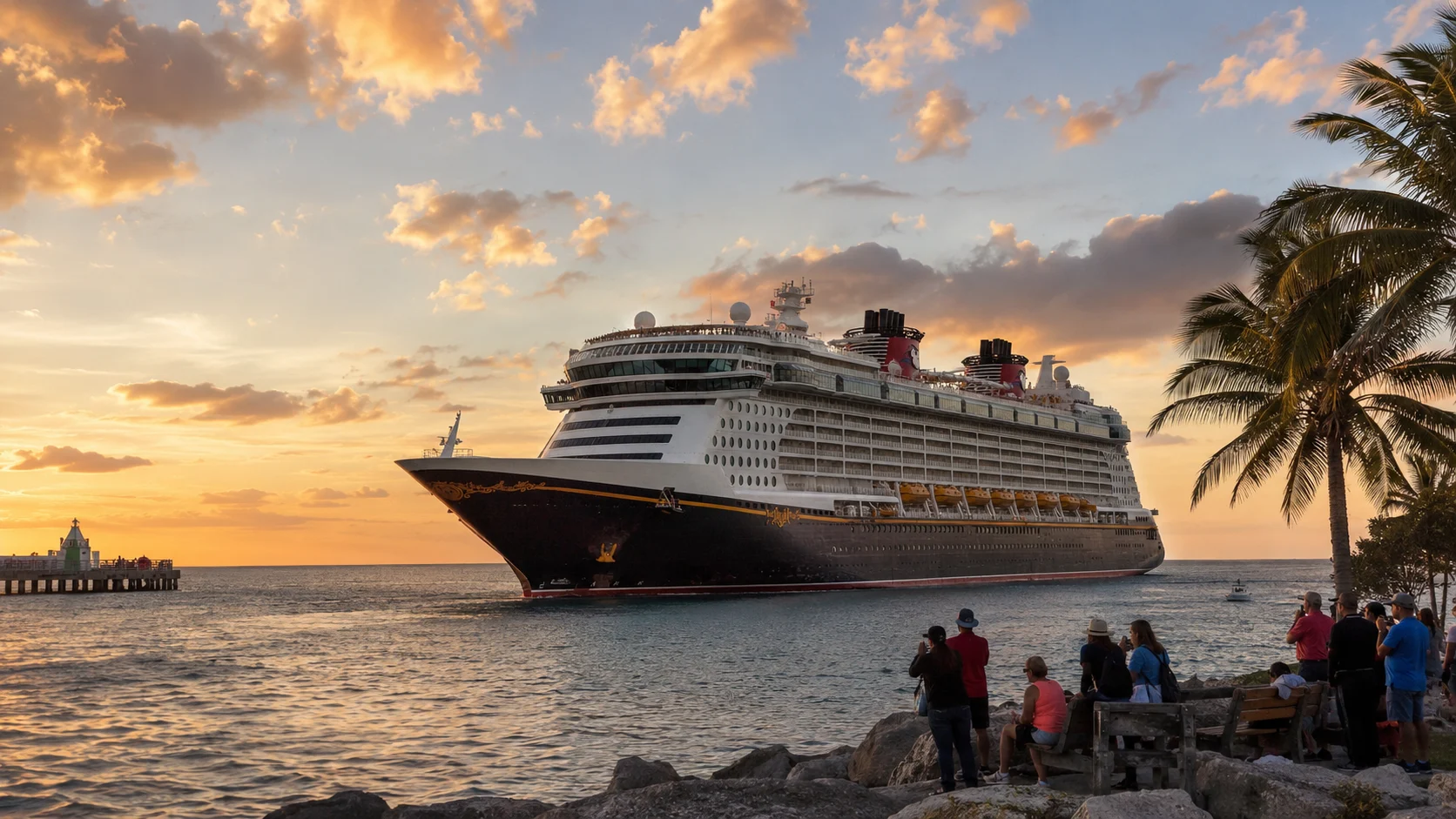
The Dream layout is basically dinner below, bedrooms in the middle, vacation upstairs
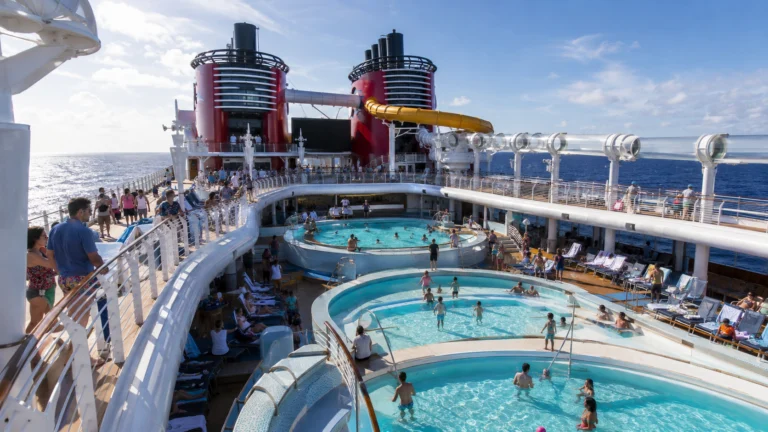
Disney Dream’s layout is pleasantly traditional compared with Disney Wish. The atrium, Walt Disney Theatre, rotational dining, shops, lounges, and adult nightlife sit low, the largest run of cabins fills decks 6 through 10, and family pools and adult outdoor space begin on Deck 11.
That makes the middle residential decks unusually useful because you are not choosing between wildly separated neighborhoods. The question is mostly whether your family will walk downstairs for clubs and shows more often or upstairs for pools and Cabanas.
Learn four anchors on the Disney Dream deck plan: Walt Disney Theatre forward on Deck 3, the atrium midship on Deck 3, Cabanas aft on Deck 11, and Quiet Cove forward on Deck 11. Forward, midship, and aft elevator banks make your choice of end almost as useful as your choice of floor.
Deck 1: port access and the Health Center
Deck 1 has the Health Center forward and tender lobbies used for port operations, rather than a normal passenger cabin neighborhood. Use the announced gangway and crew directions for your particular port; an embarkation route is not a promise that the same doorway will be open tomorrow.
Deck 2: low cabins are a real option for motion-sensitive cruisers
Deck 2 holds inside and oceanview cabins, with Enchanted Garden midship and no verandahs to compare. Use the midship bank for dinner here and choose a lower, central cabin if minimizing motion matters more than pool proximity.
Families who spend every afternoon swimming will feel the distance because Deck 11 is nine floors above. Adults or port-focused families may barely care, especially when evening dining and theater routes are much closer.
Lower-midship remains the best geometry for a traveler who already knows rough water bothers them. It is better to ride an elevator to AquaDuck than spend the night discovering exactly how much a high-forward cabin can pitch.
Deck 3: the atrium makes this your easiest low-deck landmark
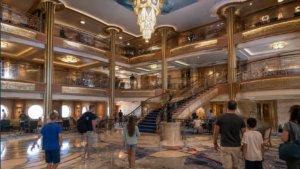
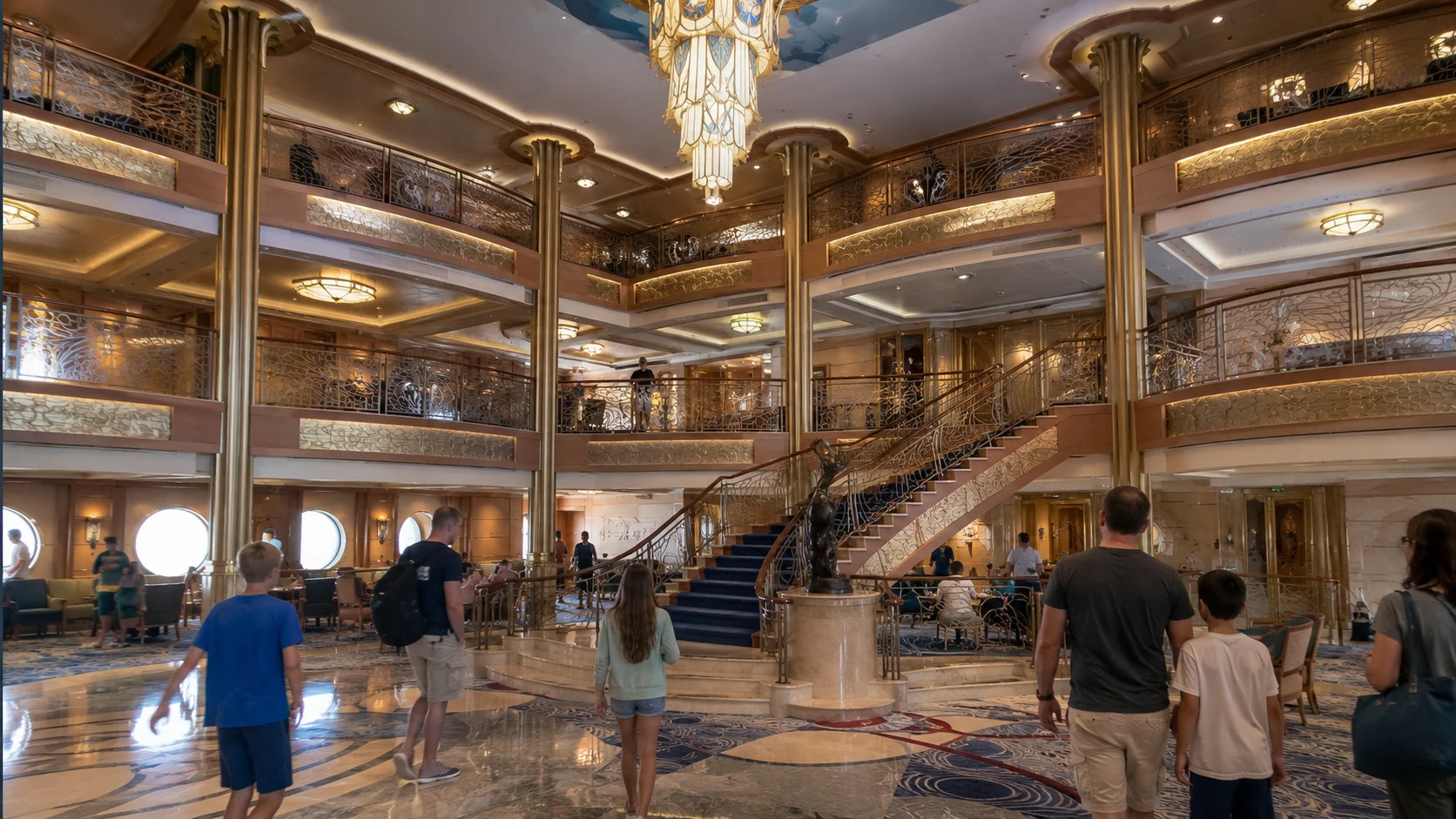
Deck 3 puts Walt Disney Theatre and Preludes forward, shops and the lobby atrium with Guest Services and Bon Voyage midship, Royal Palace behind the atrium, and Animator’s Palate aft. This is the main dining-and-show deck, with the theater’s balcony one level up on Deck 4.
Use the atrium as an orientation point, but do not tell a large group simply to “meet in the atrium.” Name the deck level or a nearby venue unless you want one person waiting below the chandelier while another is leaning over a railing one floor up.
Royal Palace and Animator’s Palate are separate dining rooms, so use the name on your dining rotation rather than following whichever dinner queue looks shortest. For Animator’s Palate, the aft bank is the useful arrival point; for Enchanted Garden on Deck 2, aim midship instead.
Deck 4: theater balconies, the promenade, and The District
Deck 4 has the Walt Disney Theatre balcony forward, Buena Vista Theatre farther aft, and the atrium overlook, Vista Café, Shutters, and D Lounge around the central public area. The outdoor promenade is a different route from the interior lounges, so use it for a walk when conditions and posted access permit.
The District aft groups Pub 687, District Lounge, Pink, Skyline, and Evolution. Memorize the aft bank for these evening venues, then use the forward bank for a show rather than expecting to cut straight through the theater or a dining room.
From Deck 7 or 8, returning from Deck 4 means three or four flights of stairs. That is a useful option if everyone is comfortable with the climb, but choose a convenient elevator bank for a stroller or tired knees.
Deck 5: Oceaneer Club is the family-navigation wildcard
Deck 5 combines youth spaces with inside, oceanview, and verandah cabins, so it is worth judging by section rather than calling the whole deck quiet. Oceaneer Club and Oceaneer Lab occupy the midship-to-aft public area, with “it’s a small world” nursery and Bibbidi Bobbidi Boutique also on this level.
Buena Vista Theatre’s balcony is on Deck 5, above its Deck 4 main seating, and Port Adventures is near the atrium. Leave the theater exit and youth-club check-in doors clear while waiting for the rest of the family, since those are natural points for groups to collect.
Choose a Deck 7 cabin over sleeping directly beside the kids club unless proximity is essential. Two flights of stairs keep pickup close while giving you a more residential hallway.
Edge is on Deck 5 forward, alongside the forward Vibe teen area. Their indoor and outdoor areas are youth-club spaces with controlled access, so learn the actual entrance with the kids instead of treating the bow deck as a general family shortcut.
Deck 6: the first big residential deck and a strong budget location
Deck 6 is mostly cabins and puts you close to the lower public spaces without sleeping on the same level. Consider it for families who expect more club, theater, and dining time than pool time.
Deck 6 has inside, oceanview, and verandah choices, but Deck 5’s youth and theater spaces mean the floor underneath still deserves attention. Favor an exact room above other cabins if sleep matters, rather than promise that every forward or midship room is quiet.
Deck 6 loses only because Deck 7 and 8 balance the upper and lower ship slightly better. If the fare is meaningfully lower here, take the savings rather than pay just to move one floor.
Deck 7: the quiet deck for light sleepers
Deck 7 is one of the easiest recommendations on Disney Dream because cabins sit above and below and public foot traffic has very little reason to wander down the hallway. It is close enough to Deck 5 for club pickup and close enough to Deck 11 that the pool is not a giant project.
Look for cabins above and below the exact room before giving extra weight to a forward location. Forward cabins can involve more pitching in rough seas, and a corridor end alone does not establish that the room is quiet.
A cabin a few doors from a useful elevator bank can reduce walking without putting your door directly on the lobby. Still consider hallway voices and nearby service doors before treating any specific room as a sleep-first choice.
If sleep is the first priority, this is the deck to choose before getting clever.
Deck 8: the best all-around location
Deck 8 keeps almost all of Deck 7’s quiet-cabin advantages while shifting one floor closer to the pools. That makes it the best compromise for a family that does a little of everything.
Decks 3 through 5 remain walkable for adults and older kids, while Deck 11 is only three flights up. You can use stairs often enough that the elevators stop controlling the schedule.
Choose a verandah near the stair tower your family will use most, with another cabin directly above and below. Deck 8 avoids sitting immediately under the main pool deck, though neighbors and hallway activity still vary.
For a first Disney Dream cruise where nobody has a special mobility or motion requirement, Deck 8 is the first place to search.
Deck 9: the best pool-family compromise
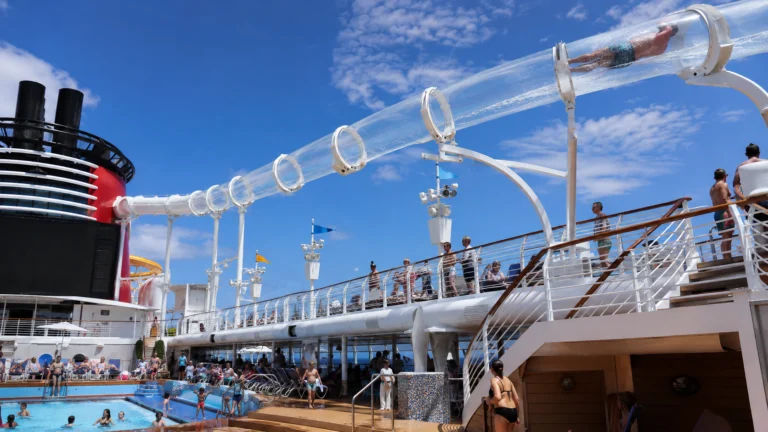
Deck 9 is two floors below Cabanas, the family pools, Flo’s Café, and the beverage stations on Deck 11, with inside, oceanview, and verandah options. AquaDuck boarding is on Deck 12, so add another floor for the water coaster rather than expecting its entrance beside the pools.
Families with younger kids can walk up two flights for breakfast or swimming instead of waiting for elevators. That convenience becomes especially nice on short Dream itineraries where you want to spend less time moving and more time actually doing things.
Deck 9 midship is one of the strongest choices for exactly this balance. Choose it over Deck 10 for a light sleeper unless the Deck 10 cabin had a very favorable overhead location.
Deck 10: this deck is a ceiling map, not a yes-or-no answer
Deck 10 sits directly below Deck 11, which is why it attracts both fans and horror stories. A midship cabin under the family pool area can hear chairs, running, cleaning, and outdoor activity, especially during daytime and setup hours.
Forward Deck 10 has a different overhead mix, including the spa and fitness area, but do not select it from a broad room-number band. Compare the exact room against Deck 11, including treatment rooms, gym equipment, public paths, and any adjoining cabin layout.
Aft Deck 10 under Cabanas trades a short breakfast route for possible restaurant preparation and furniture noise. Compare that area with the pool seating overhead farther forward, rather than rank one entire section as quieter.
The lesson is simple: book Deck 10 only after looking at the exact area of Deck 11 over the room. “One deck below the pool” is too vague to be useful.
Deck 11: the family pool deck and adult retreat share a floor
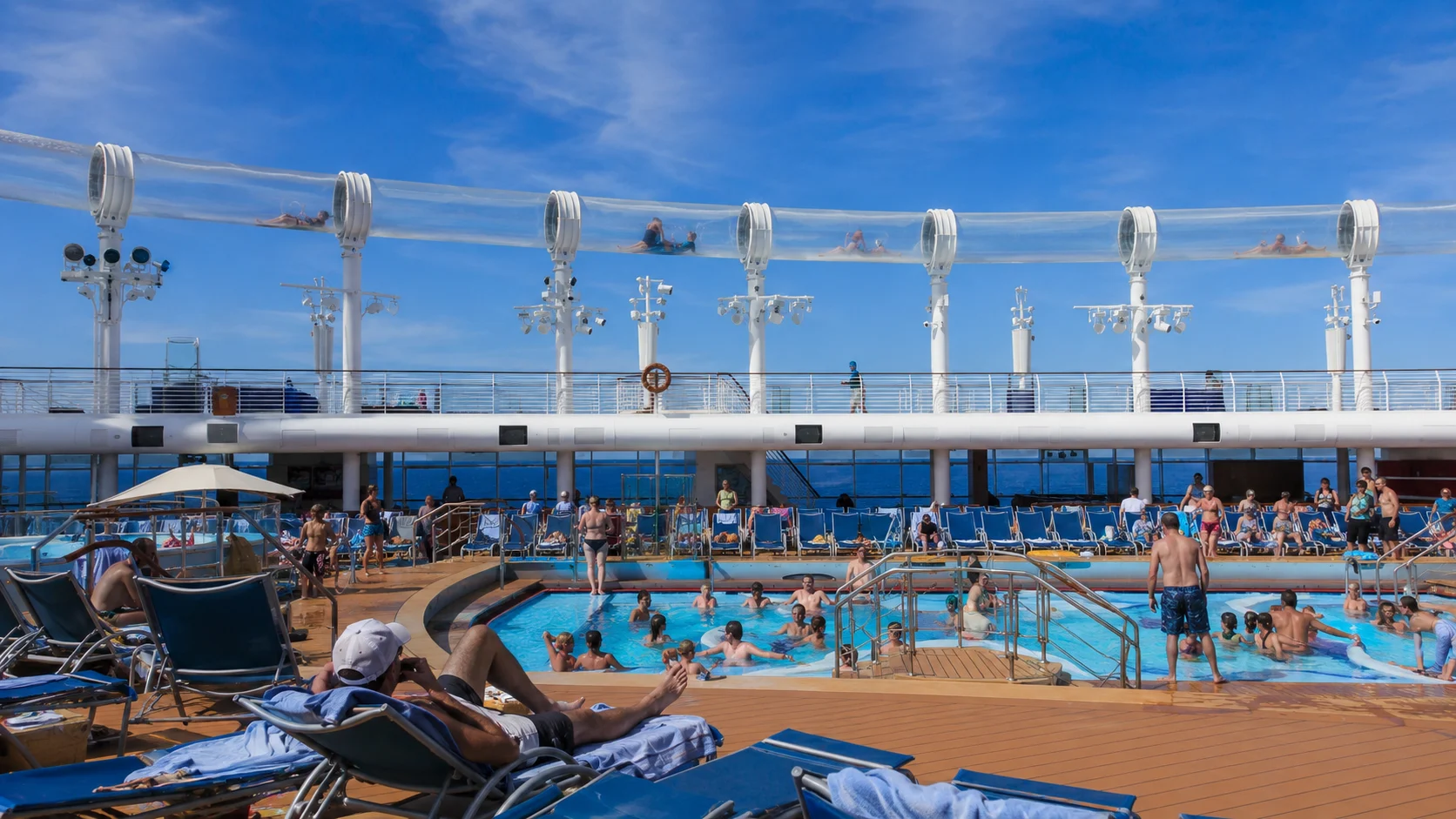
Deck 11 runs from Senses Spa and the fitness area forward to Quiet Cove and Cove Café, then the family pools, Nemo’s Reef, and Flo’s Café farther aft. Cabanas anchors the stern, with Vanellope’s Sweets & Treats nearby; Ramone’s Cantina adds another casual-food stop in the pool-deck area.
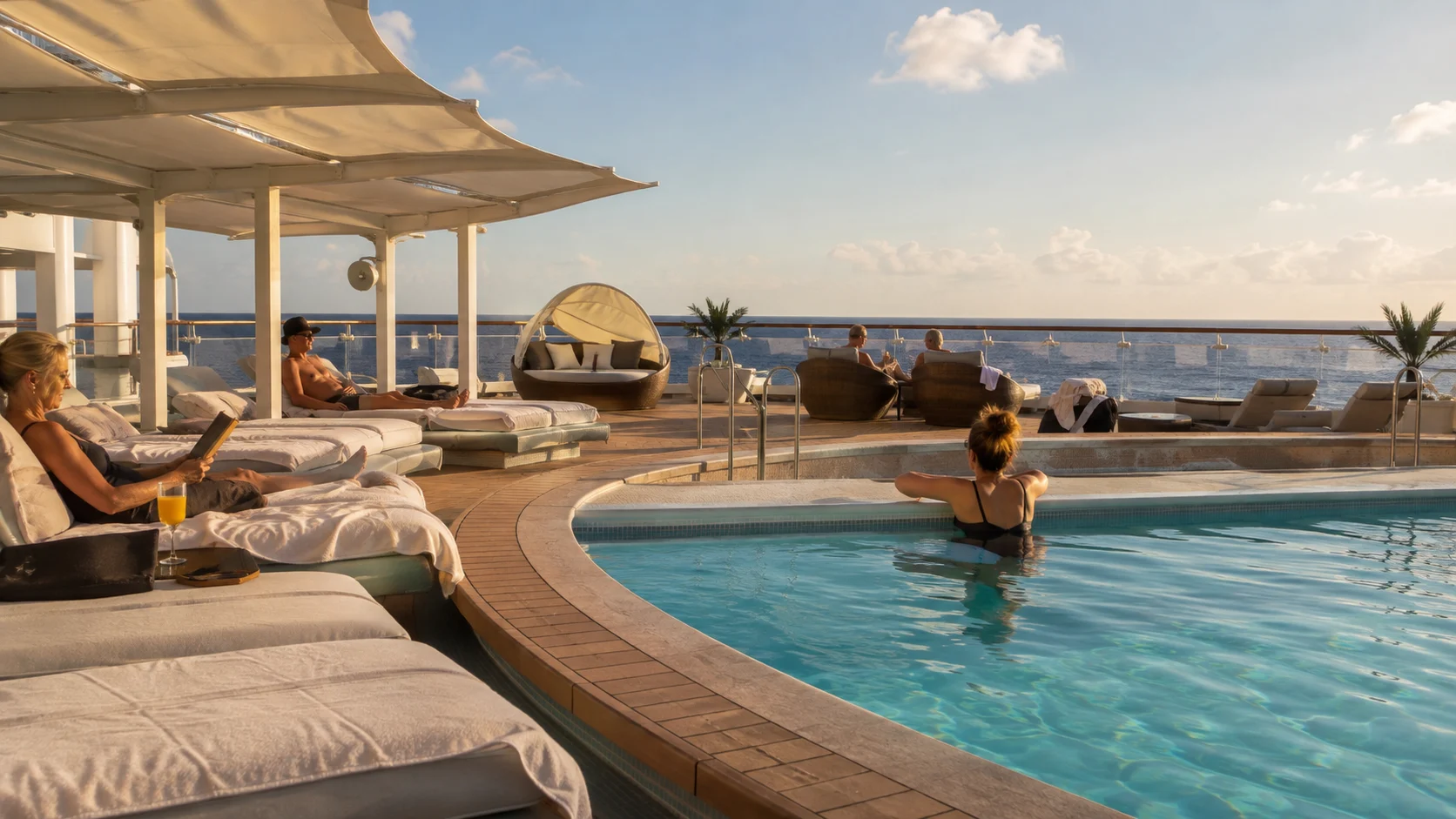
Families naturally concentrate around the middle and aft food-and-pool areas, while adults can move forward toward Quiet Cove and Cove Café. That forward adult area is one of the best reasons to learn which end of the ship you are on instead of saying “the pool deck” as though it is one giant rectangle.
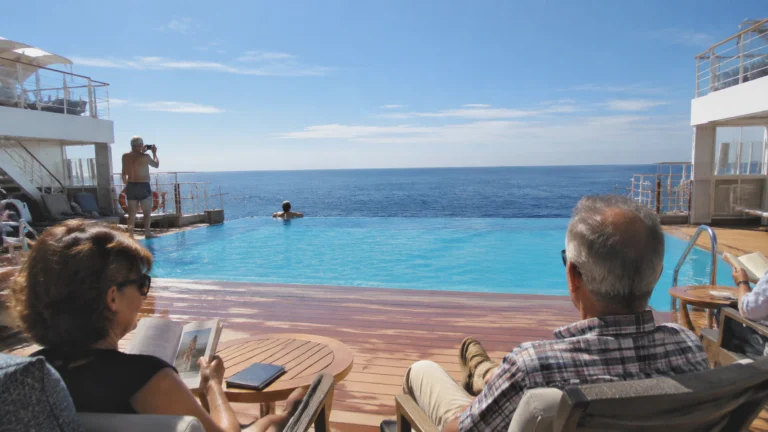
Quiet Cove is calmer than the family pools but not magically empty on sea days. If every adult onboard independently decides to escape the children at 1 p.m., the adult pool discovers crowds too.
For cabin planning, Deck 11 is mostly something to keep close, not directly over your cabin. Deck 9 gives you almost all the convenience with far less ceiling anxiety.
For families, Nemo’s Reef on Deck 11 is the designated splash option for children ages 4 and younger, including those in swim diapers. The pool and slide rules keep swim diapers out of the main pools, and reserve Quiet Cove and Satellite Falls for adults ages 18 and older.
Deck 12: Palo and Remy make this the adult dinner deck
Deck 12 has concierge cabins and the Concierge Lounge forward, Funnel Puddle above the forward pool area, and the AquaDuck entrance farther aft. Waves Bar and the aft dining cluster of Palo, Remy, and Meridian give this level several distinct destinations.
Use the aft bank for Palo and Remy, where adult-only dining requires reservations and an extra charge. Allow time to arrive dressed for dinner, since the outdoor route past swimmers and the AquaDuck queue is a different experience from simply coming up at the aft lobby.
Concierge accommodation also occupies upper forward sections, including Deck 11, while the private lounge and sun deck are restricted benefits. Pay for those facilities because you expect to use them, not because a higher room number makes a standard cabin better.
Decks 13 and 14: sports, Satellite Falls, and the Dream Tower Suite
Deck 13 puts Satellite Falls and Currents forward and Goofy’s Sports Deck aft. The private concierge sun deck is a separate restricted area, so general passengers should follow the public route to the sports area or adult sun space rather than assume the entire upper deck connects freely.
Wind is much more noticeable this high, especially when the ship is moving. If Satellite Falls feels like a leaf blower with ocean views, Quiet Cove on Deck 11 is the more protected adult alternative.
The Dream Tower Suite spans high forward space on decks 13 and 14 and is a special-category experience rather than a normal deck recommendation. Anyone paying for that level of suite is choosing the suite itself and its concierge ecosystem, not simply “Deck 14.”
Forward, midship, or aft on Disney Dream
Forward favors Walt Disney Theatre, Senses Spa, Quiet Cove, Cove Café, and Satellite Falls. Aft favors Cabanas, several dining and entertainment spaces, and quicker access to the back of the pool deck.
Midship gives the best motion profile and balanced average walk, so it is usually the best choice when prices are equal. Prefer being a few doors from a stairwell over being mathematically centered halfway between two elevator banks.
For motion-sensitive cruisers, lower-midship wins. For pool-focused families, midship or aft on Deck 9 wins; adults may reasonably drift forward to shorten the Quiet Cove and spa route.
The best Disney Dream decks by traveler
- Best overall: Deck 8 near a useful stair and elevator bank.
- Best for light sleepers: Deck 7 with cabins directly above and below.
- Best for pool-focused families: Deck 9.
- Best high-deck gamble: Deck 10 only after matching the exact room to Deck 11 above.
- Best for motion sensitivity: lower and midship on Deck 2 or 6.
- Best for adults: Deck 8 or 9 as a base, with the forward bank for Quiet Cove and the aft bank for Palo and Remy.
Continue planning with the things to do, cruise tips, dining guide.
How this guide was researched: This guide was checked against the cruise line’s current ship pages, deck plans, venue listings, and published policies. Details can change by sailing, so confirm booking-sensitive prices, hours, access rules, and cabin assignments before payment.
The easiest way to learn Disney Dream before the first dinner
For breakfast from Deck 8 or 9, walk aft on your cabin deck and take the aft bank to Cabanas on Deck 11; this avoids arriving at Quiet Cove forward and crossing the length of the pool deck. For club pickup, use the midship bank to Deck 5 for Oceaneer, while Edge and Vibe call for the forward end of Deck 5.
For dinner followed by a show, leave Royal Palace or Animator’s Palate on Deck 3 and allow time to reach Walt Disney Theatre at the forward end, rather than going back to your cabin between venues. From Enchanted Garden, come up from Deck 2 midship to Deck 3 first; allow extra time when your dinner exit overlaps theater arrivals.
Use the best cabins and suites guides for room-selection priorities and the cabins-to-avoid guides for the pitfalls worth checking on an exact plan. If you are still comparing ships, the pros and cons help you compare the walking and elevator routines each layout creates.
If step-free travel matters, use the elevator bank serving your destination and plan the route before a busy dinner or show transition. Disney’s accessibility guide is useful for arranging assistance, and its gangway and tender limitations matter more than an elevator symbol on a deck plan.