Star of the Seas Deck-by-Deck Guide: Best Decks and Routes
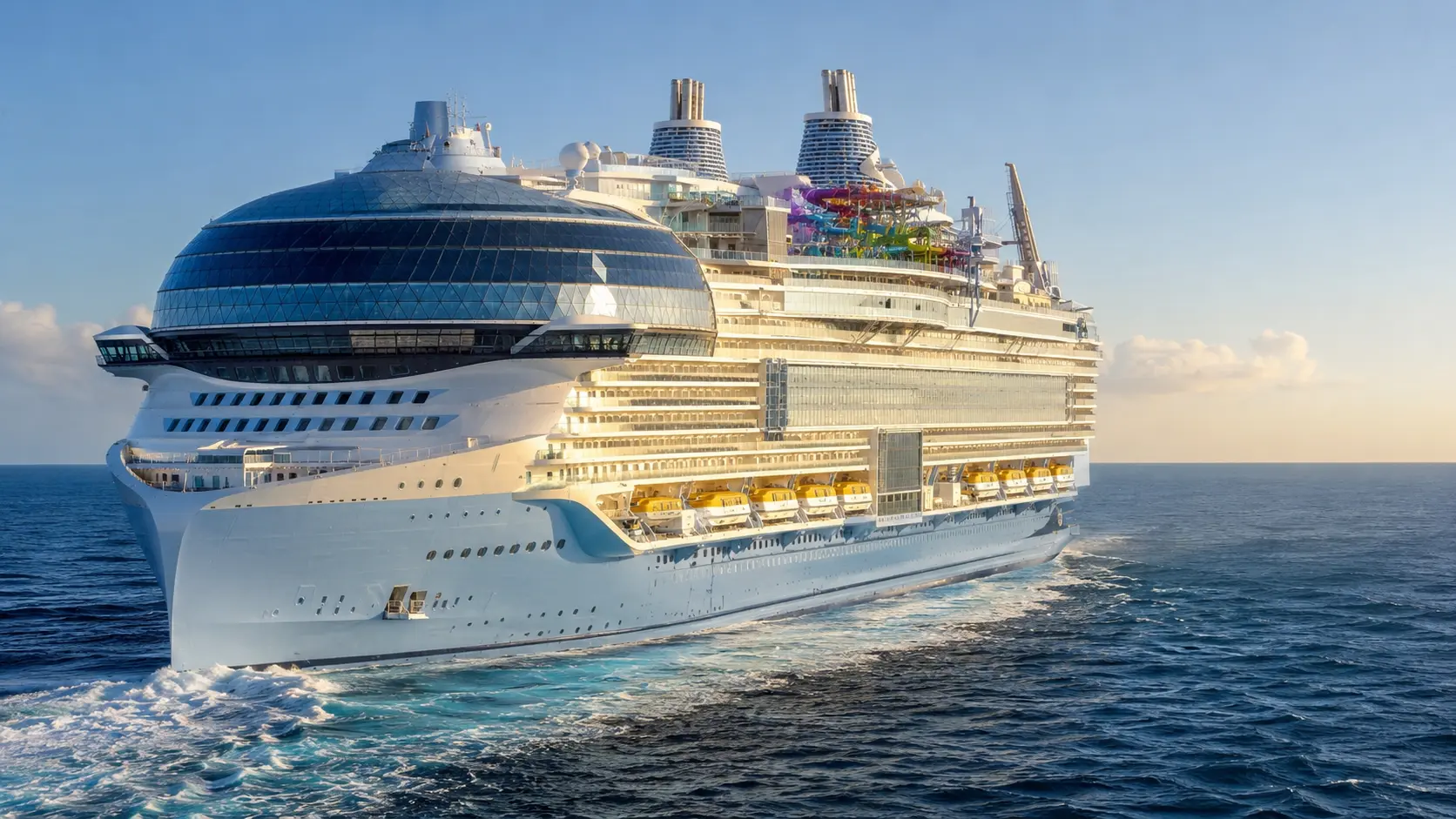
Star of the Seas feels enormous until you begin treating each neighborhood as its own little destination.
Choose the right home base and learn a few dependable routes, and the ship quickly becomes fun instead of overwhelming.
Short version:
- Best all-around cabin decks: Decks 9 through 11 are a useful residential shortlist between the lower entertainment and upper attractions.
- Best for families: Deck 7 aft keeps Surfside close, while higher decks favor families focused on pools and thrills.
- Best for Central Park: Deck 8 near the aft elevators makes the park, Surfside, and Royal Promenade easy to reach.
- Best for motion sensitivity: Choose a lower, central cabin and avoid the highest rooms near the bow or stern.
- Most important route: Match your destination to the forward or aft elevator area before leaving your cabin.
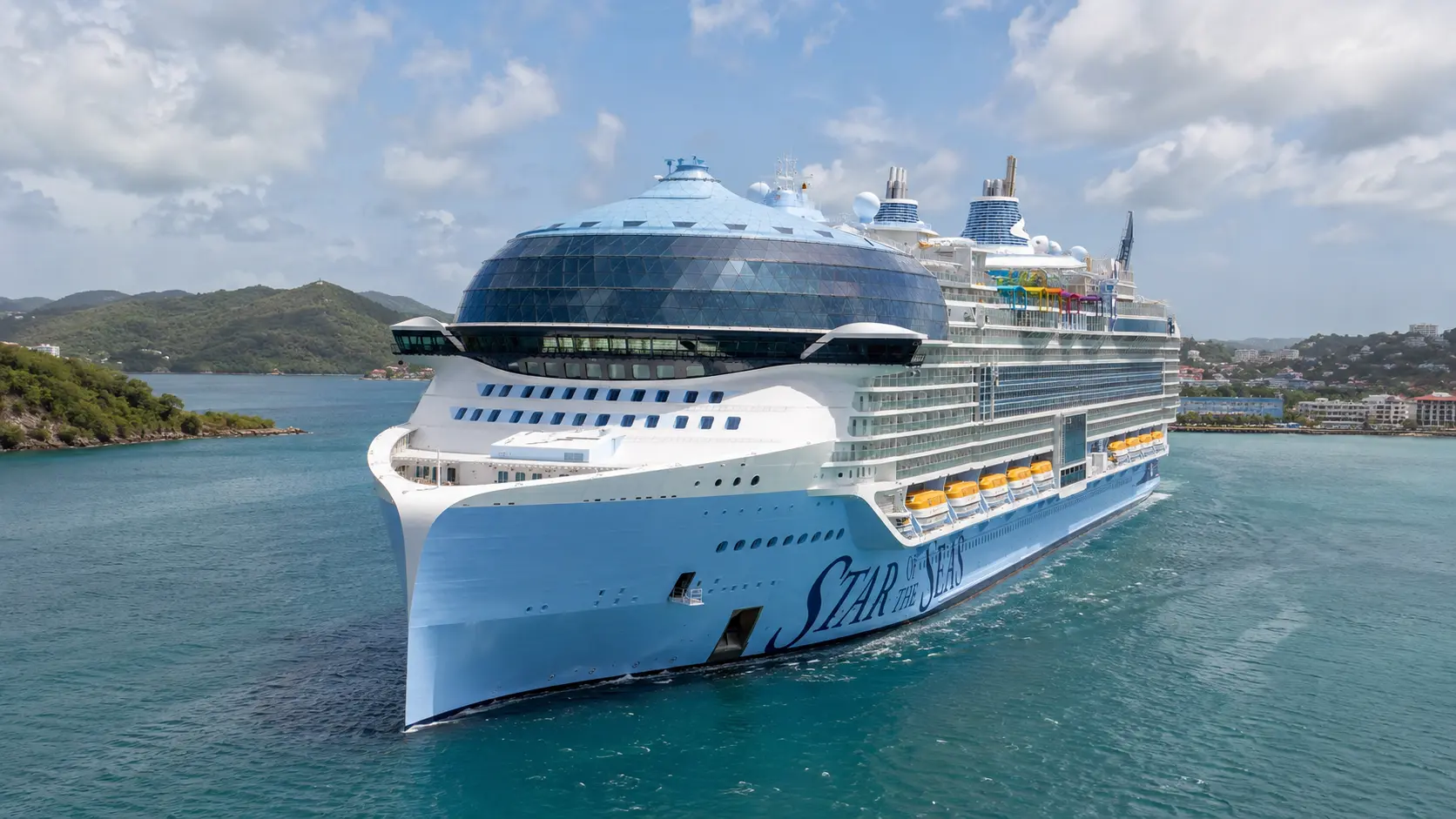
The Star layout in one sentence: nightlife low, neighborhoods in the middle, resort life high
Think of Decks 3 through 6 as the main indoor dining and entertainment levels, Deck 7 as Surfside, and Deck 8 as Central Park. Cabins fill much of Decks 9 through 14, but the forward spa and Overlook areas break up that residential pattern before the pools and AquaDome above.
The ship is also long enough that horizontal location matters just as much as vertical location. An elevator can move you ten decks quickly, but it cannot make a cabin halfway down a giant corridor suddenly become close to the aft neighborhood you visit six times a day.
Keep the Star deck plan open while comparing cabins so you can see the public spaces directly above and below each room.
Review Category 6 and Crown’s Edge before deciding whether upper-deck convenience will genuinely improve your family’s routine.
The lower decks are where your evenings keep returning
The Main Dining Room spans Decks 3 through 5, while the Royal Theater, Music Hall, casino, and Absolute Zero draw evening traffic through the lower decks. Check the venue’s entrance level in the app rather than assuming every part is reached from the same floor.
That distinction matters for cabin placement. Stay a few decks above the show-and-casino cluster and come down when you need it instead of choosing a room around one venue you visit briefly each night.
Show endings create the predictable problem. The venue empties, everyone reaches the elevator lobby together, and suddenly it appears that every passenger on Star independently decided Deck 8 sounds lovely.
If stairs work for you, go up one or two decks before calling an elevator. If not, waiting a few minutes after the crowd surge is usually more pleasant than joining the first wave just to stand in a different line.
Decks 5 and 6: use Royal Promenade as your indoor compass
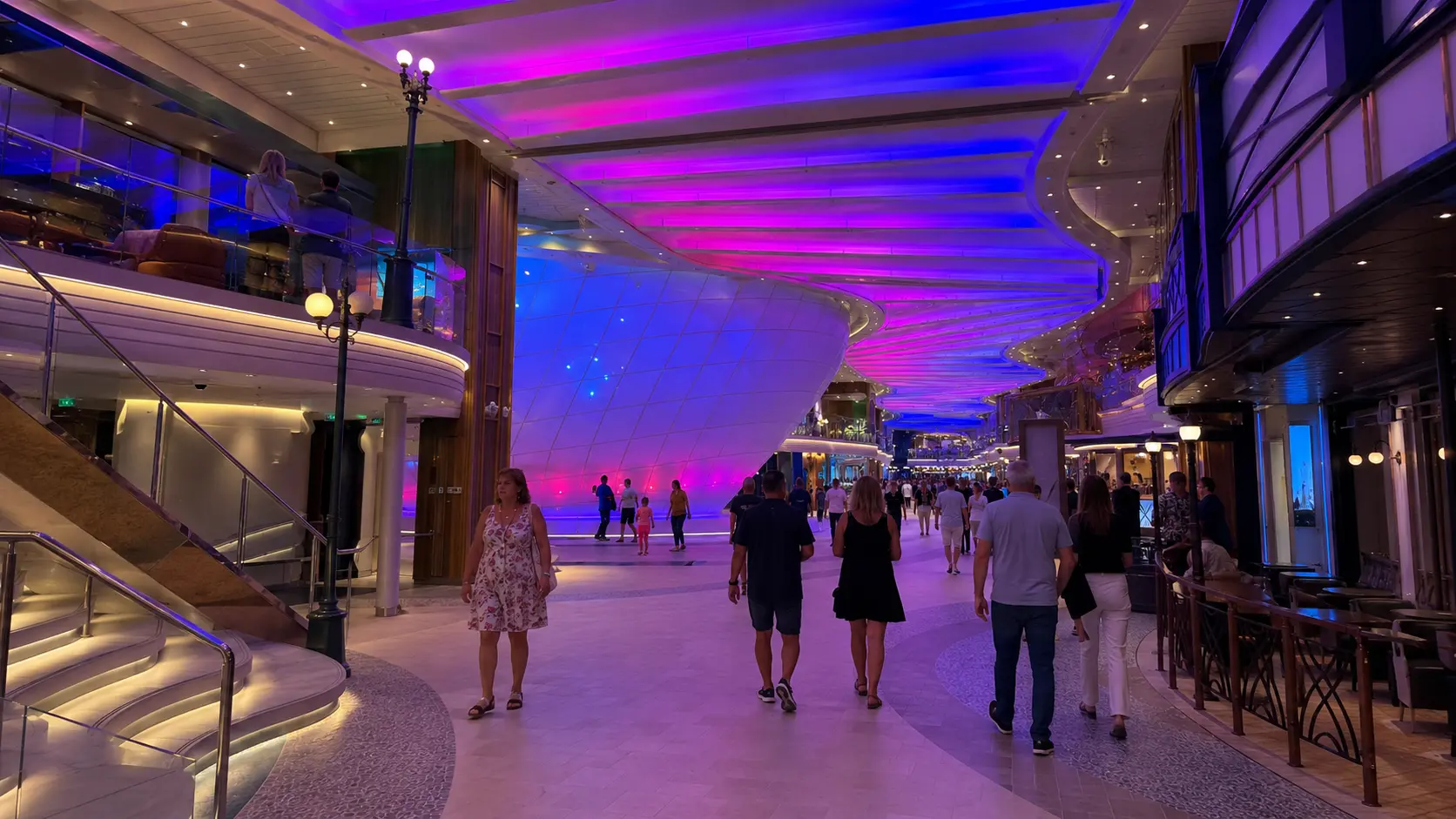
The Royal Promenade spans two levels and becomes the easiest place to orient yourself when weather pushes everyone indoors. Shops, bars, snacks, entertainment, and the Pearl area make it a natural evening crossroads even if you did not intentionally plan to spend time there.
Learn the Promenade before worrying about every cabin hallway. Once you know where the forward and aft elevator areas land relative to the Pearl, the rest of the lower ship starts making much more sense.
Deck 7 aft: Surfside can shrink the ship for families
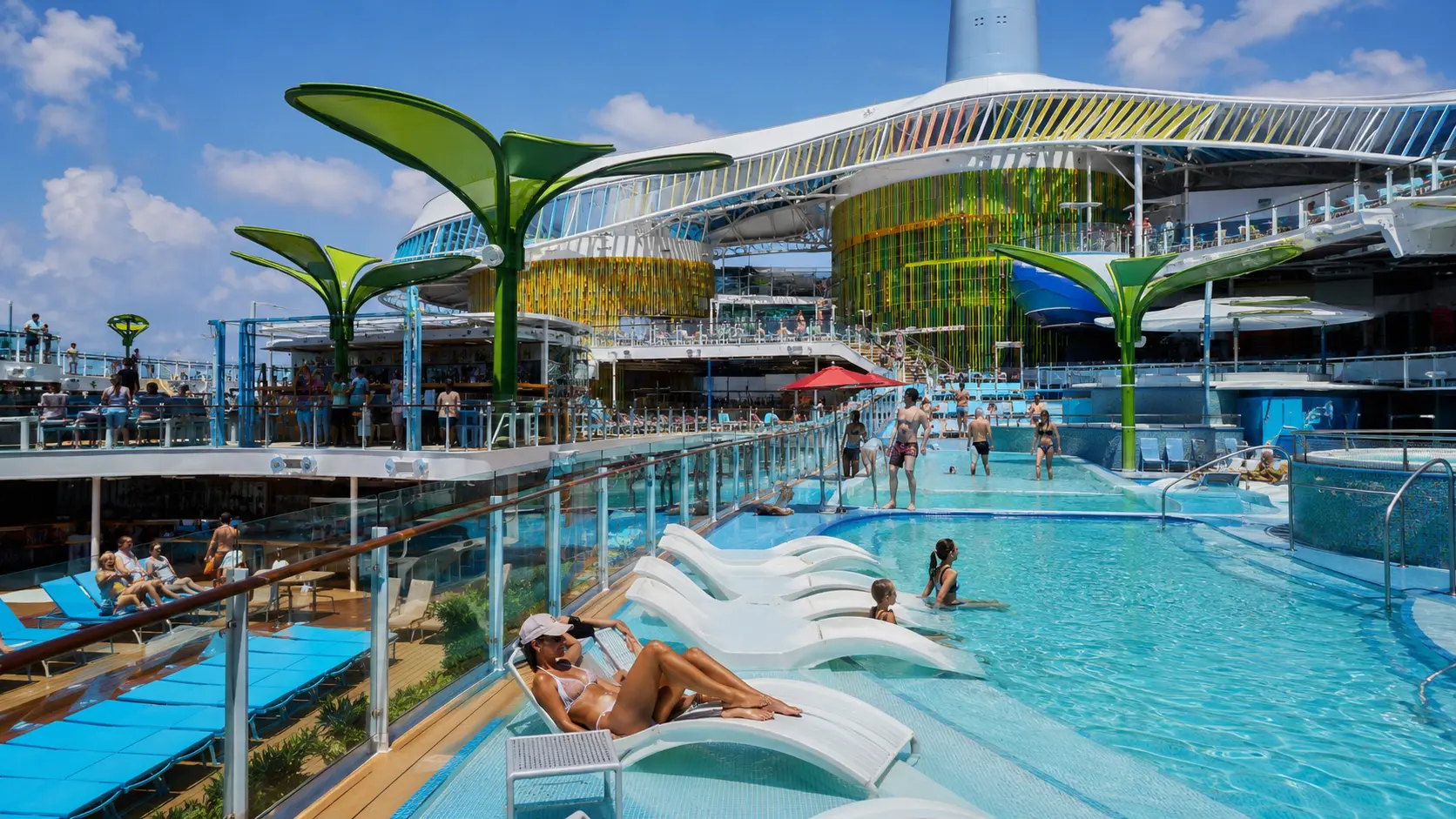
Surfside is the most important reason a family with young children might choose a lower-middle cabin instead of a quiet Deck 10 room. Pools, Splashaway Bay, the carousel, Surfside Eatery, Surfside Bites, Pier 7, Lemon Post, and kid-focused activity are all concentrated aft.
If your child is young enough that every pool session involves room breaks, dry clothes, snacks, sunscreen, or a nap, Deck 7 aft is genuinely smart. One floor of stairs can replace a surprising number of elevator trips.
A cabin facing Surfside and an ocean-facing room on the same deck offer different levels of privacy and exposure to neighborhood activity. Compare the view and the spaces above and below instead of treating all of Deck 7 as one product.
Adults without children can move up. Surfside is fun to see, but there is little reason to build your cabin location around a splash pad you are unlikely to use.
Deck 8 is the Star location worth considering first
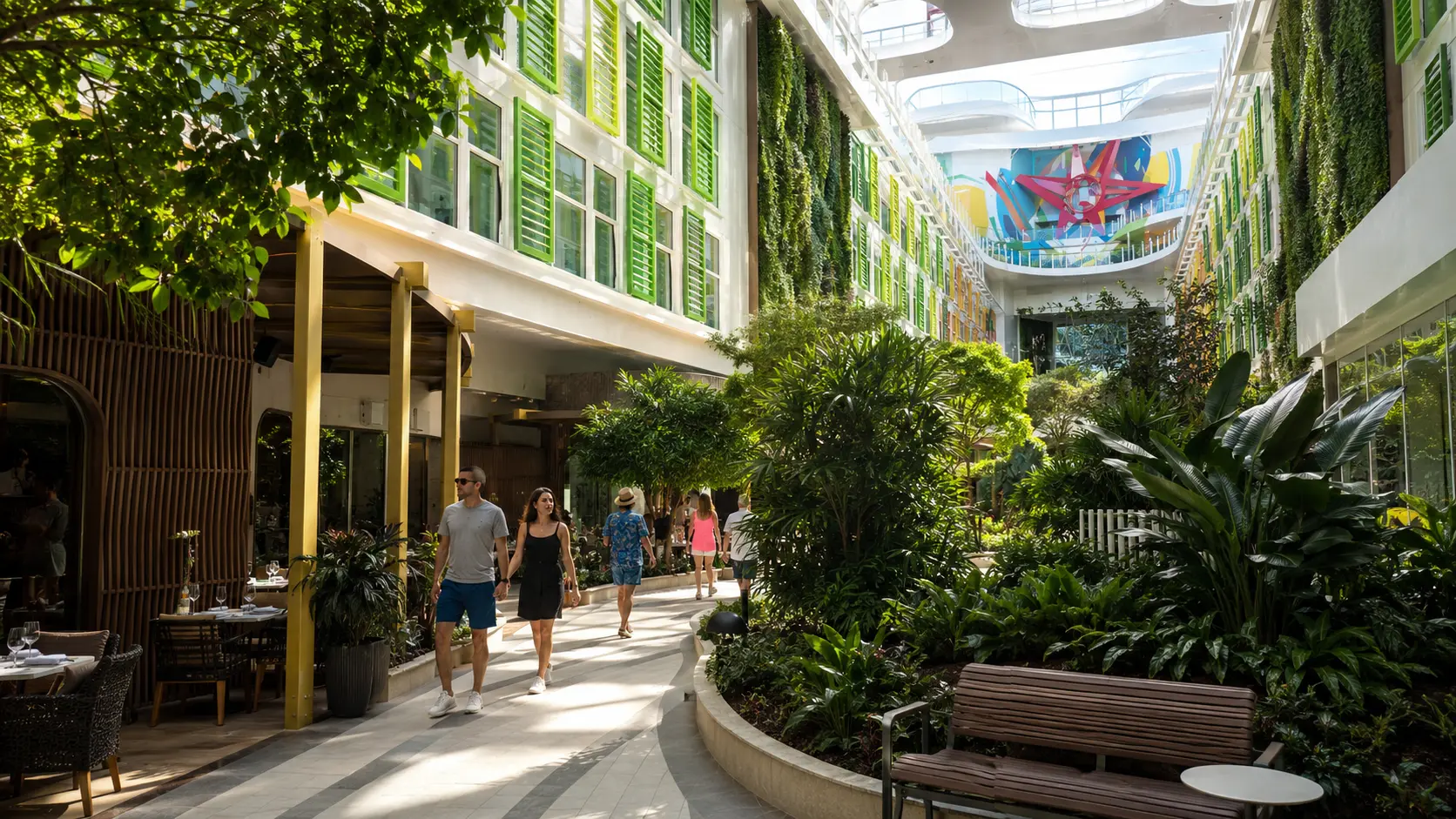
Central Park makes Deck 8 feel like a real neighborhood rather than another accommodation floor. Park Café, dining, bars, greenery, live music, and the Lincoln Park Supper Club area give you useful reasons to cross it from morning through evening.
An ocean-facing cabin near the aft elevator bank can be convenient for Central Park and trips down to Surfside. Check its exact corridor position, connecting doors, and overhead spaces before choosing it for sleep quality.
This location is especially useful if meals in Central Park and family time in Surfside will repeat every day. If most of your plans are forward, choose the other elevator bank instead.
Central Park-facing balconies remain a different product from ocean-facing balconies. They can be peaceful and attractive, but other cabins face you across the park, so do not book one while imagining private open-ocean mornings.
Decks 9 through 11: a useful residential shortlist
These decks have long stretches of cabins between the lower neighborhoods and upper resort areas. Look for rooms with accommodation above and below rather than assuming every room on a residential deck is quiet.
Deck 10 is a practical starting point because it sits between residential decks and is close to Central Park. Your exact room, connecting doors, and neighbors still matter more than the deck number alone.
Choose Deck 9 to stay slightly closer to Central Park and the Promenade, or Deck 11 if your days will revolve more around the pools. The difference is small enough that the exact cabin and elevator position matter more than the number itself.
Being close to an elevator is usually a feature on Star
Star does not have a magical central passenger elevator bank that solves every route. The main forward and aft elevator areas do the heavy lifting, which means a cabin halfway between them can create a surprisingly long hallway walk before you even start going anywhere.
It is better to be close to one bank and cross the ship through Central Park, the Promenade, or another public area when needed. Walking through a park with a coffee is much nicer than walking the same beige cabin corridor for the sixth time before lunch.
For wheelchair users or anyone with limited stamina, shorter corridor routes can make a real difference. Check step-free access to your chosen venues and ask Guest Services about any route that is unclear.
Decks 12 and 14: a useful upper-middle compromise
Decks 12 and 14 bring some rooms close to the forward spa, whose Deck 12 entrance is through Deck 14. Deck 14 also has the Vitality Café, To Dry For, and part of The Overlook, so check nearby public spaces as well as what sits overhead.
Deck 14 needs an exact overhead check because the pool and AquaDome areas are just above. A room below cabins is a different proposition from one below a busy public space, even within the same category.
Deck 15: AquaDome forward and pools farther aft
AquaDome and the AquaTheater anchor Deck 15 forward, with Chill Island pools and Windjammer farther aft. The Hideaway pool is aft on Deck 15 with its entrance through Deck 16, so name the venue and meeting level when arranging to meet.
AquaDome is the first landmark to memorize because it is visually unmistakable and useful both day and night. The Hideaway gives you the opposite-end anchor, which makes the giant upper deck much easier to understand.
At this height, the end of the ship that fits your routine matters more than a mathematically midship location. There is no prize for perfectly centering yourself if every destination is still far away.
Deck 16 and above: this is where thrill-seeking families justify a higher cabin
Thrill Island, Category 6, Crown’s Edge, FlowRider, Lost Dunes, sports, more pools, and suite spaces make the highest decks a repeated destination for families who actively use Star’s headline attractions. For that group, a higher cabin can save a shocking amount of vertical travel.
Couples planning Central Park breakfast, a quiet pool hour, dinner, live music, and a show do not need to chase this height. Proximity to a waterpark has very little value if you ride the slides once for evidence that you did it.
The upper Suite Neighborhood includes Coastal Kitchen on Decks 16 and 17 and The Grove on Decks 18 and 19. Sky and Star guests have access privileges; a Sea-tier Surfside Family Suite does not bring the same sun-deck access.
The destination elevators are worth learning before your first dinner
Star uses destination elevators. You select the deck on a screen outside, receive an assigned elevator letter, and board that car rather than pressing the destination after you get inside.
The system looks odd for about ten minutes and then becomes normal. It works best when everyone in your group is entered correctly rather than one person tapping once for a party of five and hoping the software can sense family togetherness.
At peak times, the practical strategy is still common sense. Use stairs for short hops if you can, avoid demanding an elevator the exact second a major show empties, and stop bouncing between forward and aft banks without a reason.
The best Star deck depends on who is actually in your cabin
- Couple or first-time cruiser: Deck 8, 9, or 10 near the elevator bank that best matches your dining and evening routine.
- Family with young children: Deck 7 or 8 aft, because Surfside can become your second living room.
- Family with older kids who love slides and thrills: Deck 11, 12, or 14 can shorten the trip upward, but check the exact overhead spaces.
- Light sleeper: Deck 9 through 11 with cabins above and below.
- Mobility-limited traveler: prioritize elevator-bank proximity and repeated destinations over the abstract idea of midship.
- Neighborhood-balcony shopper: Central Park for the calmer atmosphere, Surfside for kid convenience, and an ocean balcony for privacy.
An easy first-hour route
Find your cabin’s nearest elevator bank, go to the Royal Promenade, walk up through the middle neighborhoods to Central Park, and then ride to AquaDome. Those three anchors tell you whether you are low, middle, or high and which end of the ship you are dealing with.
When traveling with children, physically walk from Central Park down to Surfside. That route is so useful that learning it early can eliminate a surprising number of unnecessary elevator trips for the rest of the cruise.
Continue planning with the dining guide, things to do, pros and cons.
About this guide: Recommendations combine cabin layouts, deck plans, venue details, and published access rules. Details can change by sailing, so confirm booking-sensitive prices, hours, access rules, and cabin assignments before payment.
A practical Star cabin area to shortlist
Start with an ocean-facing balcony on Deck 8 near the aft elevators. It gives you Central Park, quick coffee, easy access to Surfside below, short trips to the lower Promenade, and a location that does not require walking half the ship before every elevator ride.
If that location costs more, move to Deck 9 or 10 near the same elevator bank and be perfectly happy. Spend the cabin premium on something you can eat, drink, or do instead of paying a lot just to be one floor closer to a ficus tree.
Once you have specific room numbers, compare the best Star cabins with the cabins to avoid. Read the Star tips guide next so the deck plan becomes part of an easy onboard strategy.
How this guide was researched:
I checked Royal Caribbean’s current ship information against the article’s cabin, venue and layout claims. Schedules, prices, access rules and assignments can change by sailing, so confirm booking-sensitive details before payment.