Legend Of The Seas Pros and Cons: Who Should Book It?
Legend of the Seas is the kind of ship that can make the vessel itself feel like half the vacation.
You get Icon-class scale, multiple neighborhoods, a huge waterpark, seven pools, Surfside for families, the AquaDome, Absolute Zero, Central Park, a large dining lineup, and enough entertainment that a sea day can disappear very quickly.
Short version
- Best reason to book: The family activity lineup is genuinely hard to outgrow.
- Another strong point: The entertainment is big enough to compete with the attractions.
- Biggest tradeoff: The ship is enormous, and the walking is real.
- Think twice if: The base fare is only the beginning if your group wants everything.
- Bottom line: Book Legend Of The Seas when its signature strengths sound exciting, not simply because it is newer or larger.
Before booking, browse the ship page, deck plan, and onboard guide so the cabin and activities match your priorities.
Why Legend of the Seas is such a different cruise experience
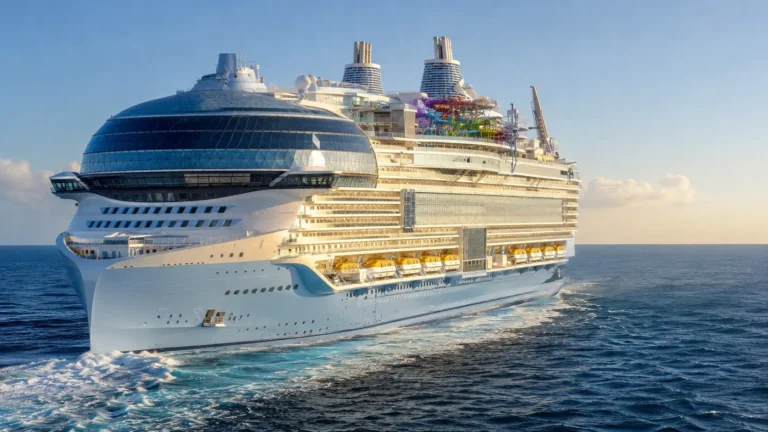
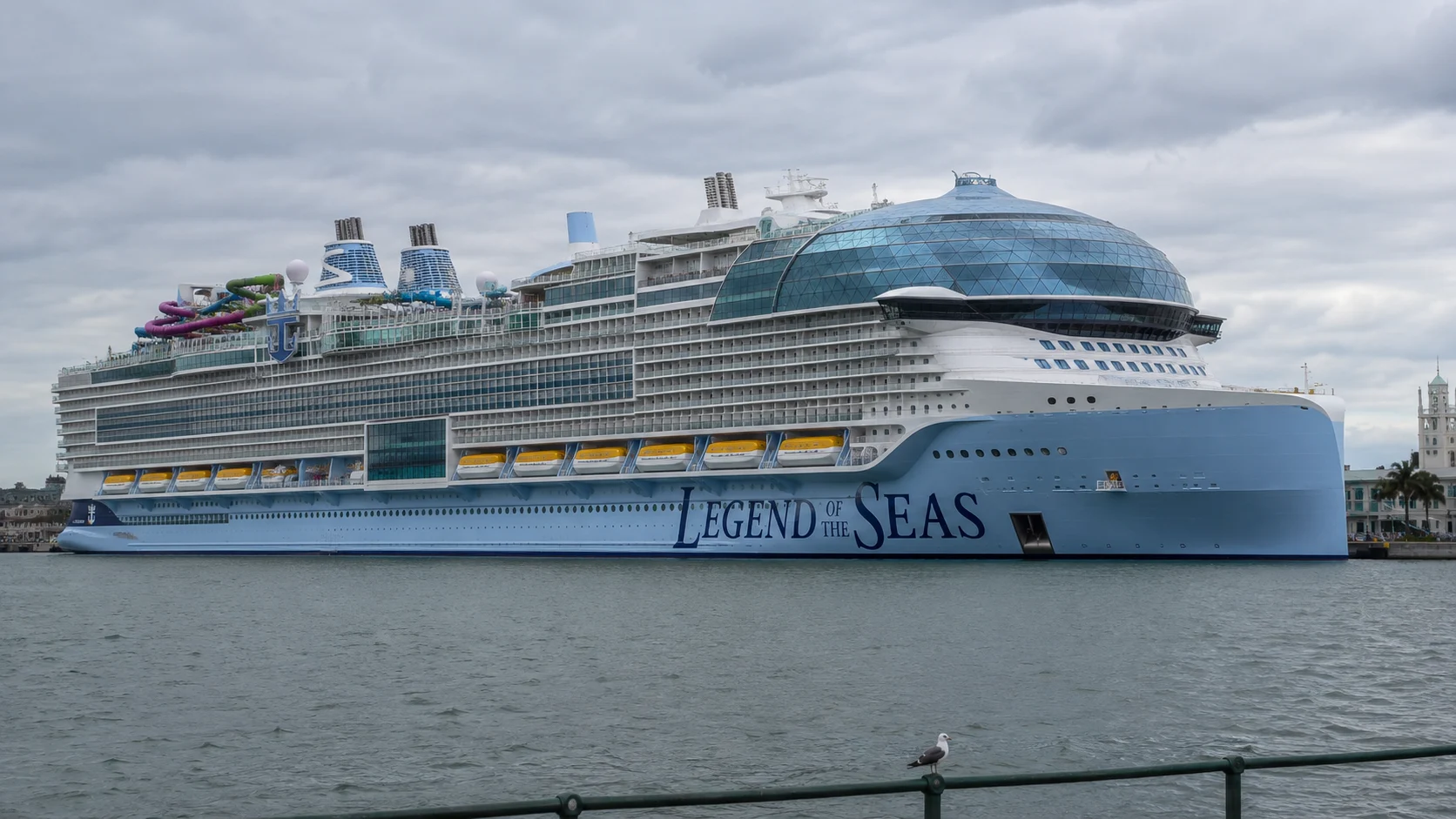
Legend belongs to Royal Caribbean’s Icon class, which means the ship is organized more like a resort made of distinct neighborhoods than a traditional vessel built around one atrium and a few main decks. The scale is not subtle, but it is used to separate different kinds of fun rather than simply making everything larger.
Surfside concentrates family spaces, Central Park provides a calmer open-air break, the AquaDome combines views and entertainment, and the Royal Promenade remains the busy social spine. The Hideaway, pools, sports spaces, and entertainment venues create other daily centers of gravity depending on who is traveling.
That is a good reason to never reduce Legend to a list of attractions. The real question is whether your group benefits from having several completely different ways to spend the same afternoon.
For the right family, the answer is absolutely yes. For travelers who mostly want a quiet balcony, dinner, and a destination the next morning, much of what makes Legend special can become expensive background scenery.
Pro: the family activity lineup is genuinely hard to outgrow
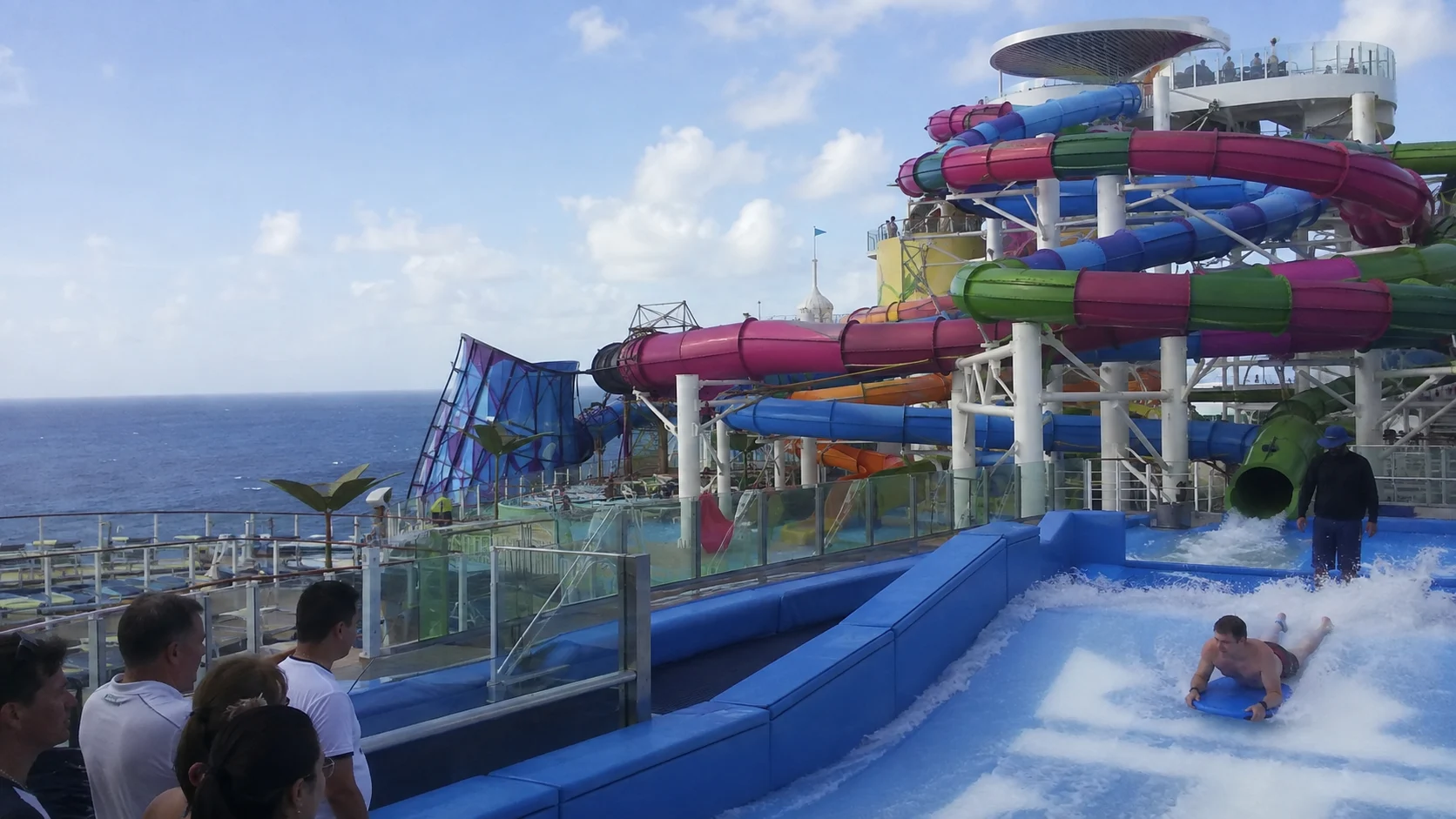
Legend’s biggest strength is that families with very different interests can separate without anyone feeling as though they received the leftover version of the vacation. Category 6 brings a major waterslide complex, while FlowRider, rock climbing, mini golf, laser tag, skating, sports, Splashaway Bay, and the carousel fill in the gaps.
Younger children have Surfside and dedicated water play, teens can gravitate toward more active spaces, and adults do not have to follow them into every attraction. That makes the ship especially useful for multigenerational groups that need more than one definition of fun.
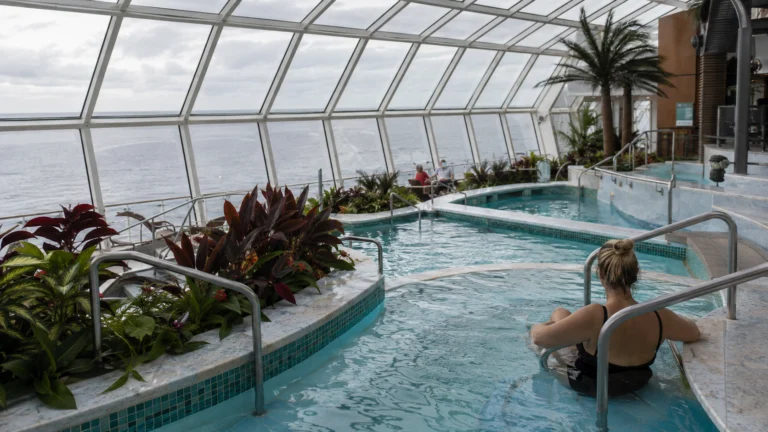
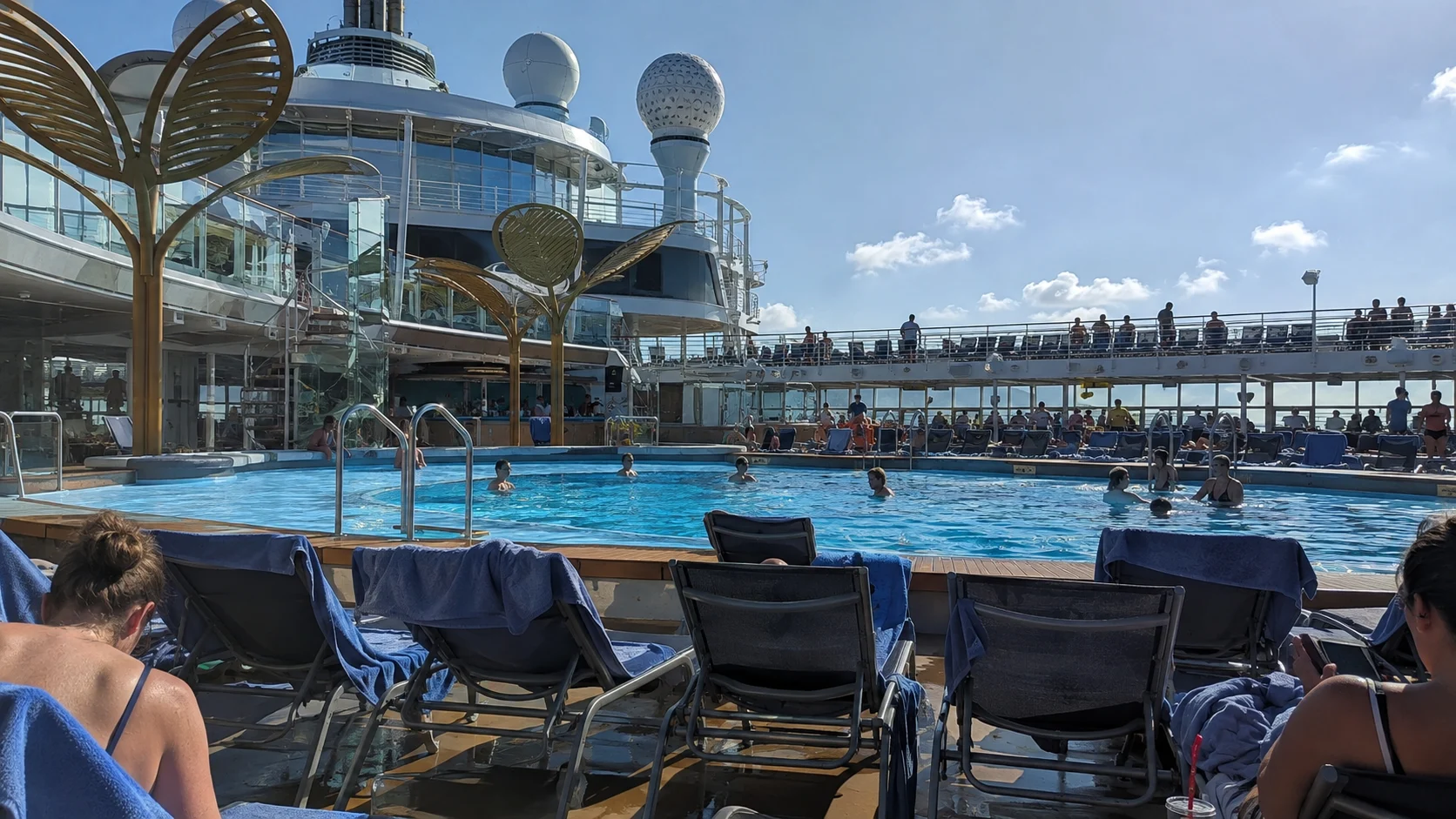
The seven-pool setup helps too because the outdoor experience is not built around one main rectangle. Different pools and neighborhoods spread people around the ship and give families more choices when one area is busy.
The important catch is eligibility. Slides, Crown’s Edge, and other attractions can have height, weight, health, clothing, or operational restrictions, so never make one ride the entire reason to book without checking that everyone who cares about it can actually participate.
Pro: the entertainment is big enough to compete with the attractions
One of Royal Caribbean’s best tricks on Icon-class ships is giving non-riders something equally substantial to look forward to. Legend combines major theater productions with AquaTheater entertainment, Absolute Zero ice shows, live music, Dueling Pianos, and smaller programming throughout the ship.
That matters because a large family ship can otherwise become repetitive after dinner. Here, one night can revolve around a theater production, another around the AquaDome, and another around music or skating without every evening feeling like a variation of the same lounge show.
Protect the one or two productions that matter most and keep the rest flexible. A ship with this many options does not need to be scheduled like a conference.
Weather can still affect outdoor or technically complex productions, and popular shows can create predictable crowd surges before and after performances. The entertainment is a real strength, but it works best when you leave transition time around it.
Pro: dining variety makes it easy for different travelers to eat differently
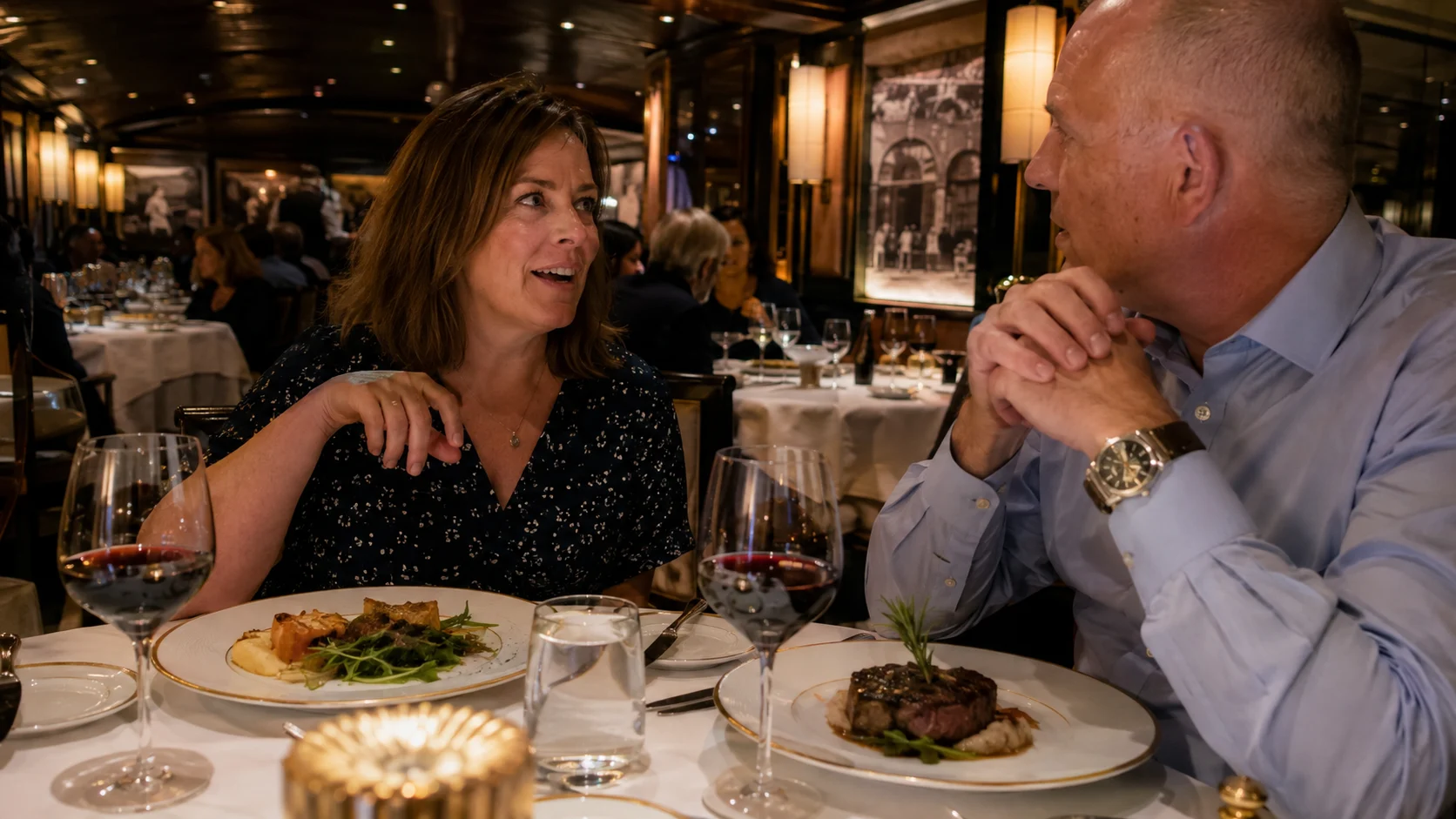
Legend has enough complimentary dining that you do not need to build the trip around specialty restaurants. The main dining room, Windjammer, AquaDome Market, El Loco Fresh, Park Café, Pearl Café, Sorrento’s, Surfside dining, and other casual options cover a surprisingly wide range of moods.
That is particularly useful for families because the person who wants a proper dinner does not always have to negotiate with the child who wants pizza immediately. The ship gives groups room to split up for a meal and meet again later.
Specialty dining adds more ambitious choices, but treat it as optional rather than necessary. Chops, Giovanni’s, Hooked, Izumi, supper-club concepts, and other paid venues make sense when that specific meal excites you, not because the included food somehow fails without them.
The cost can add up fast when a family buys multiple premium dinners. My dining guide is the better place to decide which venues are worth paying for.
Con: the ship is enormous, and the walking is real
Legend’s size creates all of that choice, but it also means cabin location matters much more than it does on a compact ship. A room that is convenient for the pool deck may be a long trip from another venue your family uses several times a day.
This becomes more important for anyone with limited stamina, small children, mobility devices, or a strong dislike of crossing a ship just to retrieve something from the cabin. “Midship” helps, but it does not magically put every neighborhood next door.
Elevators can also become busy at predictable moments, especially after shows, around major meal transitions, and when passengers are returning from port. Travelers who cannot use stairs should treat that as a quality-of-life consideration rather than a minor annoyance.
Use the deck plan before choosing a room. Repeated daily routes are more important than chasing the highest deck or the most impressive category name.
Con: the base fare is only the beginning if your group wants everything
Legend includes a lot, but Royal Caribbean is not an all-inclusive product. Drinks beyond basic included choices, specialty dining, Wi-Fi, spa services, excursions, arcade play, gratuities, premium experiences, and some activities can all sit outside the base fare.
The problem is not that any one add-on is unreasonable. The problem is that a family can say yes to several appealing extras and end up with a final vacation price far above the number that originally made the sailing look attractive.
Build the realistic total before deciding whether Legend is good value. Include the cabin, gratuities, drinks, Wi-Fi, specialty meals you actually want, excursions, transportation, spa, and paid activities rather than comparing only the advertised cruise fare.
This matters even more on port-heavy itineraries. If you plan to leave early and return late most days, expensive onboard packages and private spaces can become things you paid for but barely had time to use.
Con: cabin choice is more complicated than the category names suggest
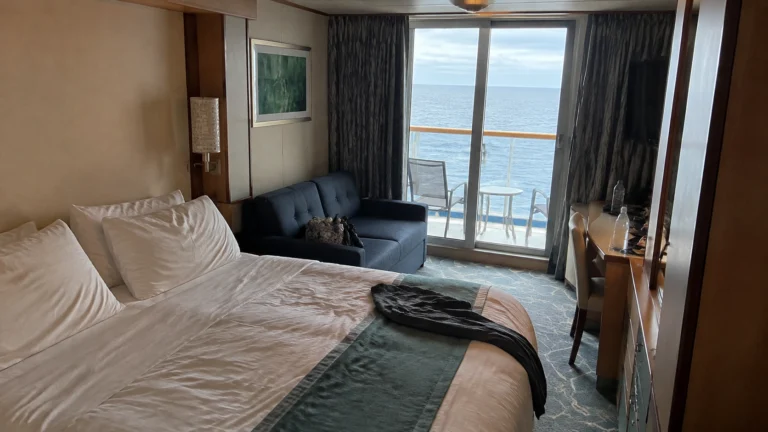
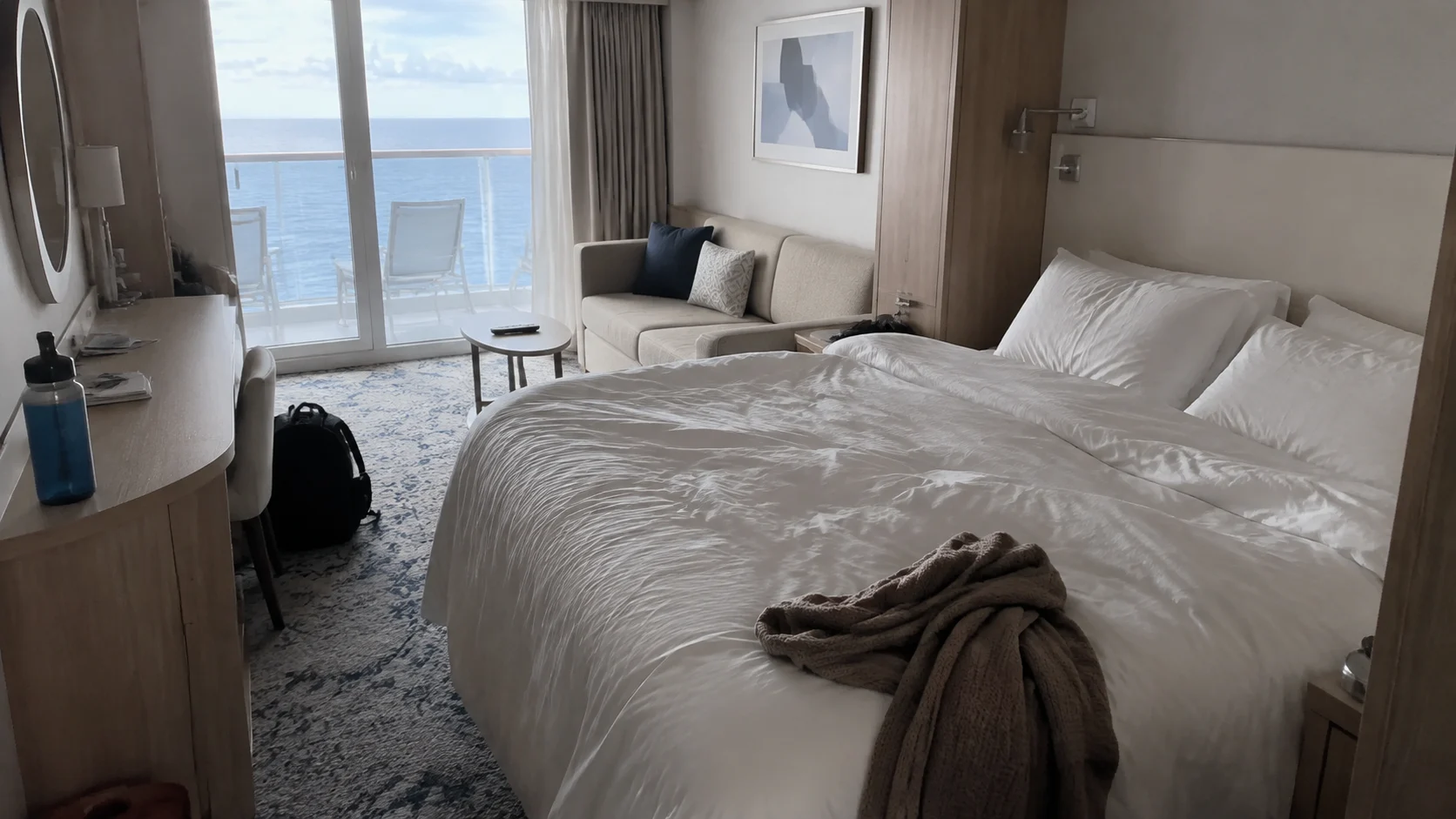
Legend offers a huge mix of room types, including neighborhood views, family-oriented layouts, standard ocean-facing balconies, infinite-style balcony concepts, suites, and more compact choices. That variety is useful, but it also makes it easier to book the wrong thing by assuming every “balcony” behaves the same way.
The exact outlook matters just as much as the room label. A neighborhood-facing balcony can be fun for people-watching but gives up some privacy and the uninterrupted ocean feeling that many travelers expect when they hear the word balcony.
Noise exposure also changes dramatically by location. Cabins beneath active decks, near connecting doors, around service areas, or along heavily used family routes deserve more scrutiny from light sleepers.
Use my cabins to avoid and best cabins before surrendering location control with a guarantee rate. Saving money is not a bargain when the possible assignment conflicts with something your group genuinely needs.
Pro: the ship can work unusually well for multigenerational groups
Legend is at its best when a group does not all want the same vacation. Grandparents can use quieter lounges, Central Park, dining, and shows while kids disappear into water attractions, sports, youth programming, or Surfside.
Adults traveling without children can still build a very adult trip around dining, entertainment, bars, the Solarium, spa time, and calmer neighborhoods. You do not need to participate in the family attractions for the ship to make sense.
The key is not forcing everyone to stay together all day. Legend earns its size when people can follow different interests for a few hours and reconnect for the experiences that actually matter to the whole group.
This is one of the clearest advantages over a smaller ship. Choice becomes a practical tool rather than just a marketing number.
Con: the busiest moments can feel very busy
No neighborhood design can completely hide the number of people onboard when everyone wants the same thing at once. Buffet breakfast, show exits, elevator banks, popular pool periods, gangways, and major events are the moments when Legend’s scale becomes most obvious.
Do not treat the whole ship as constantly crowded because large sections can feel surprisingly calm. The issue is that the choke points are predictable, and ignoring them can make the ship feel much more stressful than it needs to be.
Shift breakfast earlier, give yourself more time after shows, and use alternative dining venues rather than defaulting to the busiest option at the busiest hour. Small timing changes matter more on a ship this large.
Travel dates matter too. A sailing packed with families using third and fourth berths can feel different from one with fewer children and fewer rooms filled to maximum occupancy.
Who should book Legend of the Seas
- Families who want water attractions, pools, sports, youth spaces, and major entertainment on the same ship.
- Multigenerational groups whose members want different things during the day.
- Active couples who like shows, dining, nightlife, pools, and large-resort energy.
- Travelers with enough sea time to enjoy several neighborhoods rather than simply pass through them.
- Groups willing to plan a few priorities while leaving the rest of the schedule flexible.
Who should probably choose another ship
- Travelers who value intimate scale and easy movement more than variety.
- Anyone who strongly prefers a mostly bundled fare with fewer tempting add-ons.
- Port-first travelers who expect to spend nearly every day ashore from early morning until dinner.
- Guests who dislike reservations, popular-event crowds, or large-resort energy.
- Travelers whose must-do attraction is unusable because of eligibility or mobility restrictions.
How to book Legend of the Seas
Begin with the cabin, not the drink package. Map the room against the two or three places your group will use most often and make sure the view, balcony style, berth layout, and noise exposure actually fit the travelers.
Next, check attraction eligibility for every person who cares about a headline feature. A family should know before paying whether the child dreaming about a slide, climbing attraction, or other experience can actually use it.
Then, price the complete vacation with realistic extras included. If the final total starts approaching a more inclusive line or a much better cabin elsewhere, the comparison becomes more interesting than the original cruise fare suggested.
Finally, reserve only the true must-do show, restaurant, or premium experience and leave space around it. Legend has enough going on that an unscheduled evening can easily become one of the best nights of the trip.
Continue planning with the cruise tips, things to do.
How this guide was researched: This guide was checked against the cruise line’s current ship pages, deck plans, venue listings, and published policies. Details can change by sailing, so confirm booking-sensitive prices, hours, access rules, and cabin assignments before payment.
The final verdict
Legend of the Seas is a fantastic fit when you want the ship to function as a destination in its own right. Families and multigenerational groups get the most obvious benefit because the range of neighborhoods, pools, attractions, dining, and entertainment lets different travelers build different versions of the same vacation.
The weaknesses are the mirror image of those strengths. The ship is large, the pricing can grow quickly, popular moments can feel crowded, and all of that hardware is less valuable when your itinerary keeps you ashore most of the day.
Book Legend when several of its specific features are genuine priorities and the cabin location keeps the daily logistics reasonable. Choose something smaller or more inclusive when the group mainly wants destinations, quiet, and simplicity.
Plan your Legend Of The Seas cruise
Use the cabins to avoid, best cabins, and deck guide to turn the broad pros and cons into a confident room choice.