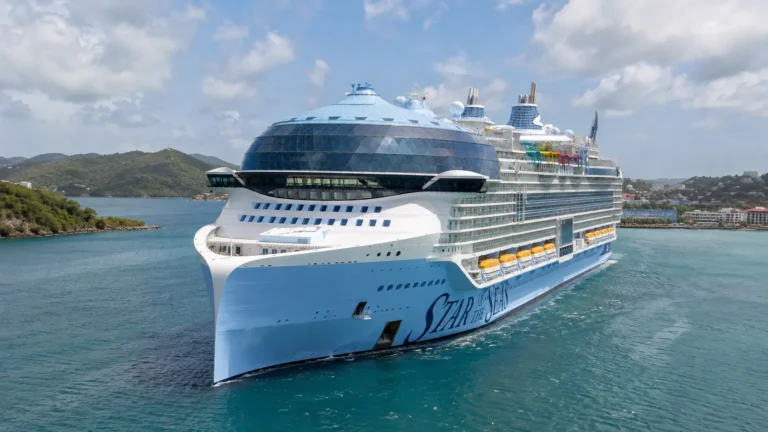
Star of the Seas Tips, Secrets & Things to Know: The Advice That Actually Helps
Star of the Seas can swallow an entire week if you try to conquer every show, restaurant, pool, and attraction.
Pick the experiences that feel special to your group, then use these tips to make the enormous ship feel surprisingly manageable.
Short version:
- Best first move: Do not sail Star as if it is “Icon, but from Port Canaveral”.
- Worth planning: Back to the Future deserves the first entertainment reservation.
- Easy win: Torque is the AquaDome show to see for the spectacle, not the plot.
- Important tradeoff: AquaDome Market is where to send a group that cannot agree on lunch.
- Cabin strategy: Choose a Star of the Seas cabin near the spaces you will repeat, then check the rooms and venues directly above and below it.
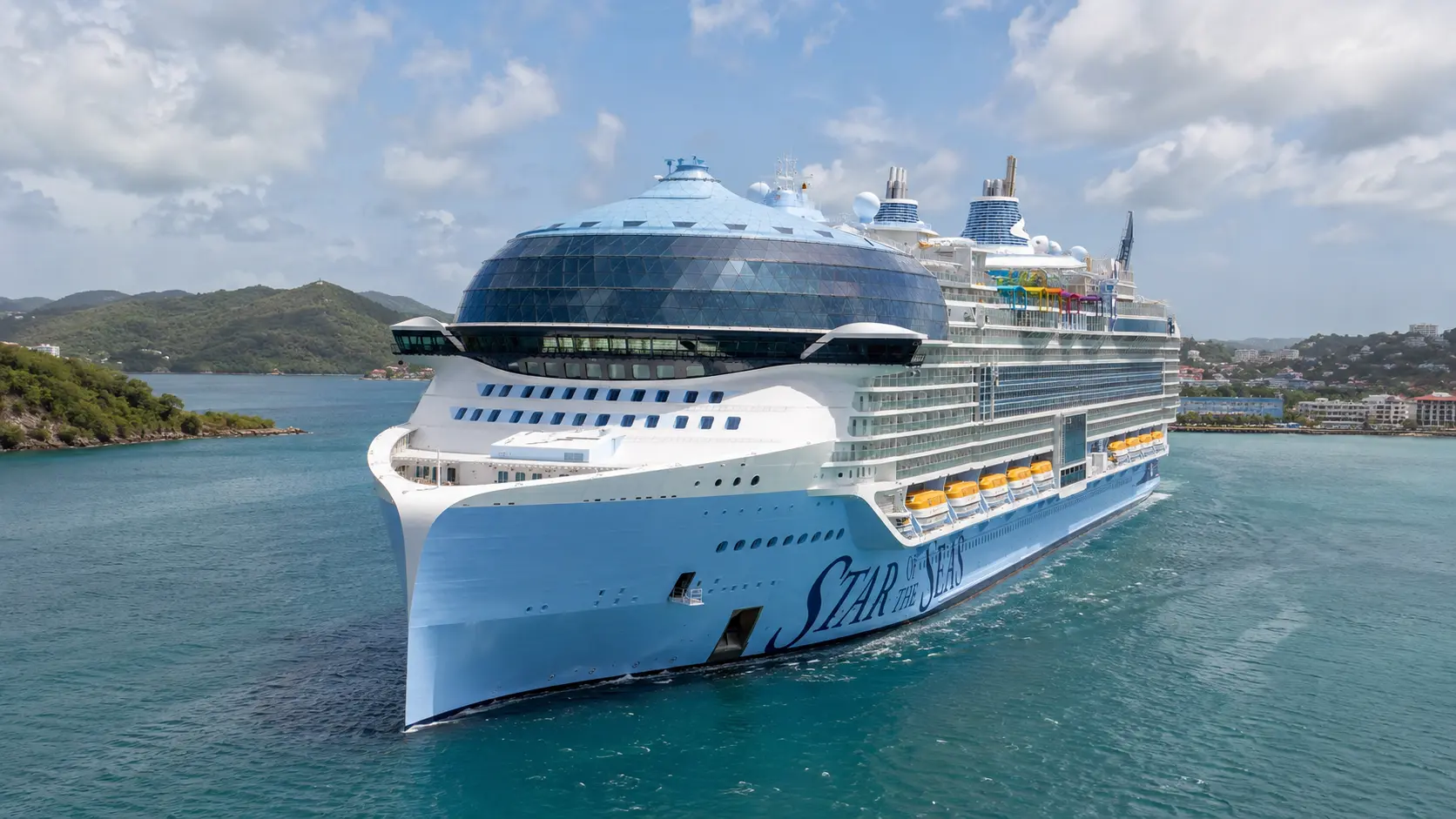
Do not sail Star as if it is “Icon, but from Port Canaveral”
Star and Icon share the same basic neighborhood concept, destination elevators, AquaDome, Surfside, Thrill Island, Central Park, Royal Promenade, and huge menu of included food. That means plenty of Icon advice transfers, but the moments worth organizing the week around are not identical.
On Star, you should build the entertainment plan around Back to the Future: The Musical first, then decide whether Torque, the ice shows, and other productions deserve fixed times. Also decide before sailing whether Lincoln Park Supper Club sounds like your kind of expensive evening or an easy place to save money.
That is the important distinction. You do not need to “complete” an Icon-class ship; you need to identify the things that make this particular one worth choosing.
Back to the Future gets your first entertainment reservation
Back to the Future: The Musical is the Star show you should protect before you start fussing with smaller activities. It is one of the ship’s strongest headline productions, and the scale, staging, and recognizable story make it the easiest entertainment reservation to prioritize first.
Pick a performance that does not require a cross-ship sprint from dinner. Royal Caribbean’s theater productions are much more enjoyable when nobody arrives irritated because the elevator took four minutes longer than the spreadsheet allowed.
If you are traveling with children, think about attention span as much as seat quality. A perfect center seat is less useful than an aisle seat if somebody announces an emergency restroom need twenty minutes into Hill Valley.
Do not leave the show until the final night if it is a must-see. Technical issues happen in live theater, and one earlier opportunity gives you room to recover if plans change.
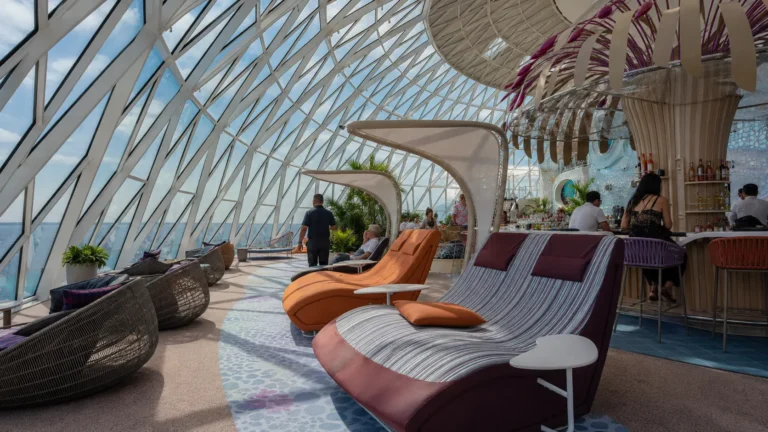
Torque is the AquaDome show to see for the spectacle, not the plot
Approach Torque as Star’s high-energy AquaDome spectacle. Diving, aerial work, music, and visual effects are the reason to make time for it.
That is fine. Go expecting a high-energy spectacle rather than a Broadway narrative and let it be good at the thing it is actually trying to do.
Book it earlier in the sailing if possible. Aqua productions involve water, specialized equipment, and complex staging, so an earlier slot leaves more recovery options if something changes.
Arrive with time to choose a sightline, but do not make the evening miserable over a particular seat. The AquaDome is impressive enough that “good seat with happy family” beats “perfect seat after forty minutes of tactical warfare.”
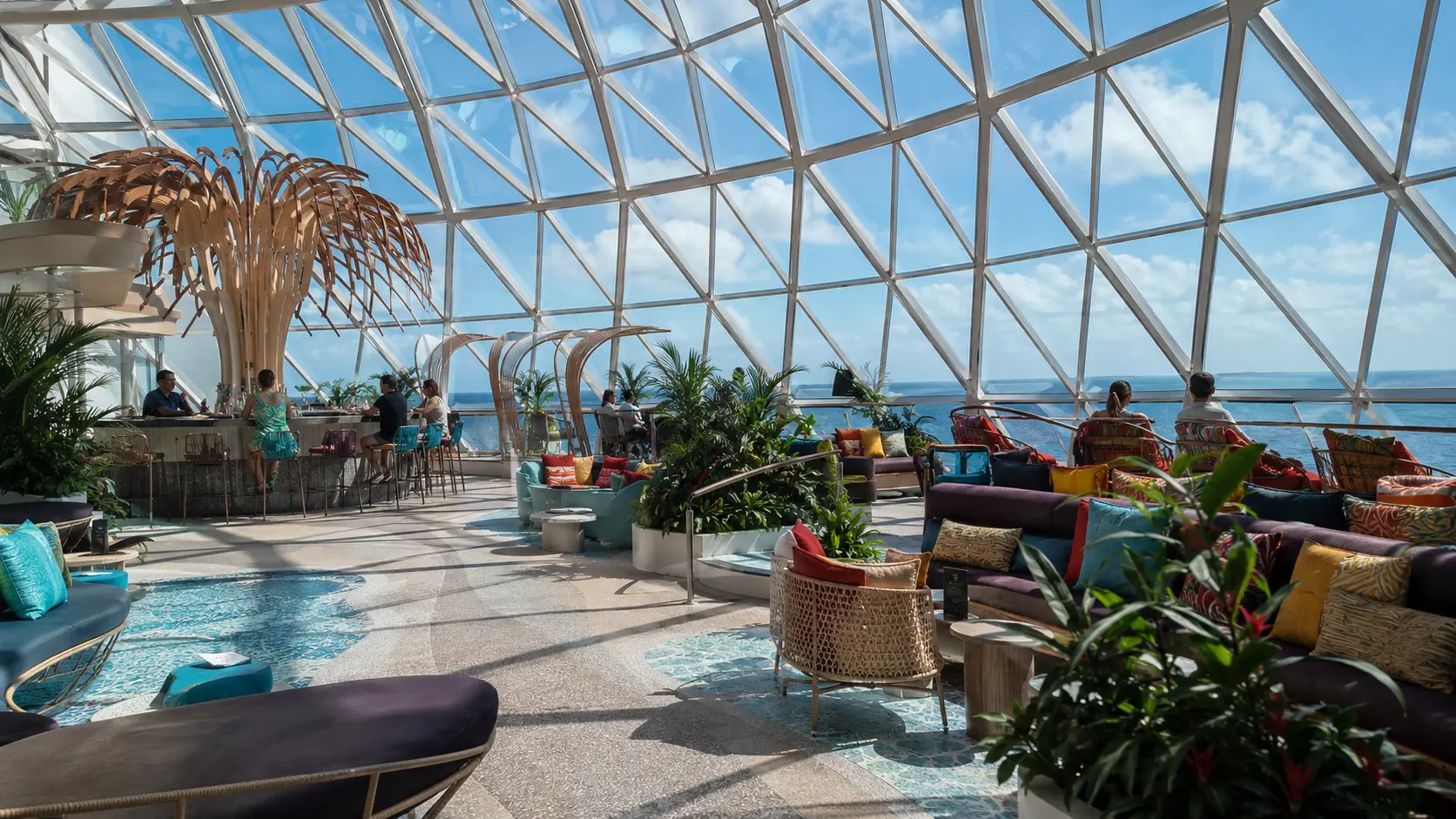
AquaDome Market is where to send a group that cannot agree on lunch
Star’s AquaDome Market is included and gives you five different counters in one food-hall setup. Offerings include barbecue, Thai-inspired dishes, Latin American food, Mediterranean food, and crepes, so this is one of the easiest places to solve the “everybody wants something different” problem without separating the group.
Walk the entire market before ordering. Stopping at the first counter and then discovering the dish you actually wanted after you are carrying lunch is a surprisingly common form of cruise regret.
AquaDome Market works especially well on embarkation day because it avoids the instinctive Windjammer migration. Pearl Cafe and Park Cafe are other included options worth learning immediately.
Star has enough good included food that you should not buy a specialty package out of fear. Read the Star of the Seas dining guide, choose the paid restaurants that genuinely excite you, and let the free food do the rest of the work.
Lincoln Park Supper Club is not a normal specialty restaurant
If you are considering Lincoln Park Supper Club, think of it as dinner, cocktails, and live entertainment sold as one long evening. The Chicago-inspired experience is expensive enough that you should never book it simply because somebody called it a Star “must-do.”
The attentive service, live jazz, paired drinks, and overall theatrical feel are the reason to book Lincoln Park Supper Club, but the price is substantial. That makes it a perfect splurge for a couple who loves tasting menus and live music, and a very easy skip for a family that would rather spend the money on excursions or a dozen other things.
Do not assume the reservation window will open at the same moment as every other restaurant. If it is not available before sailing, keep checking and ask onboard, but do not build the whole cruise around a rumored release date from somebody else’s trip.
If you book it, do not schedule another major activity immediately afterward. The entire point is lingering through the courses and music, not watching the clock because you promised a teenager you would be at Thrill Island in ninety minutes.
Use the destination elevators correctly once and your week gets easier
Star uses destination elevators, which means you select the deck on a touchscreen outside the elevator and the system assigns you a lettered car. There are no normal floor-selection buttons inside, so entering a random open elevator and planning to decide later does not work.
Pay attention to the assigned letter and make sure everyone in the group understands the system before walking away from the screen. The first attempt can feel strange, and then it becomes easier than repeatedly stopping at every floor because somebody pressed every shiny button.
Star’s forward and aft banks are huge, with multiple lettered cars, but peak events can still create crowds. When Back to the Future or another large production ends, wait five minutes if possible rather than joining the exact moment thousands of people decide to change decks.
If you require step-free access, the system is one reason to learn the closest practical bank to your cabin on day one. If you can use stairs, one or two decks at peak times can be faster than participating in the post-show elevator convention.
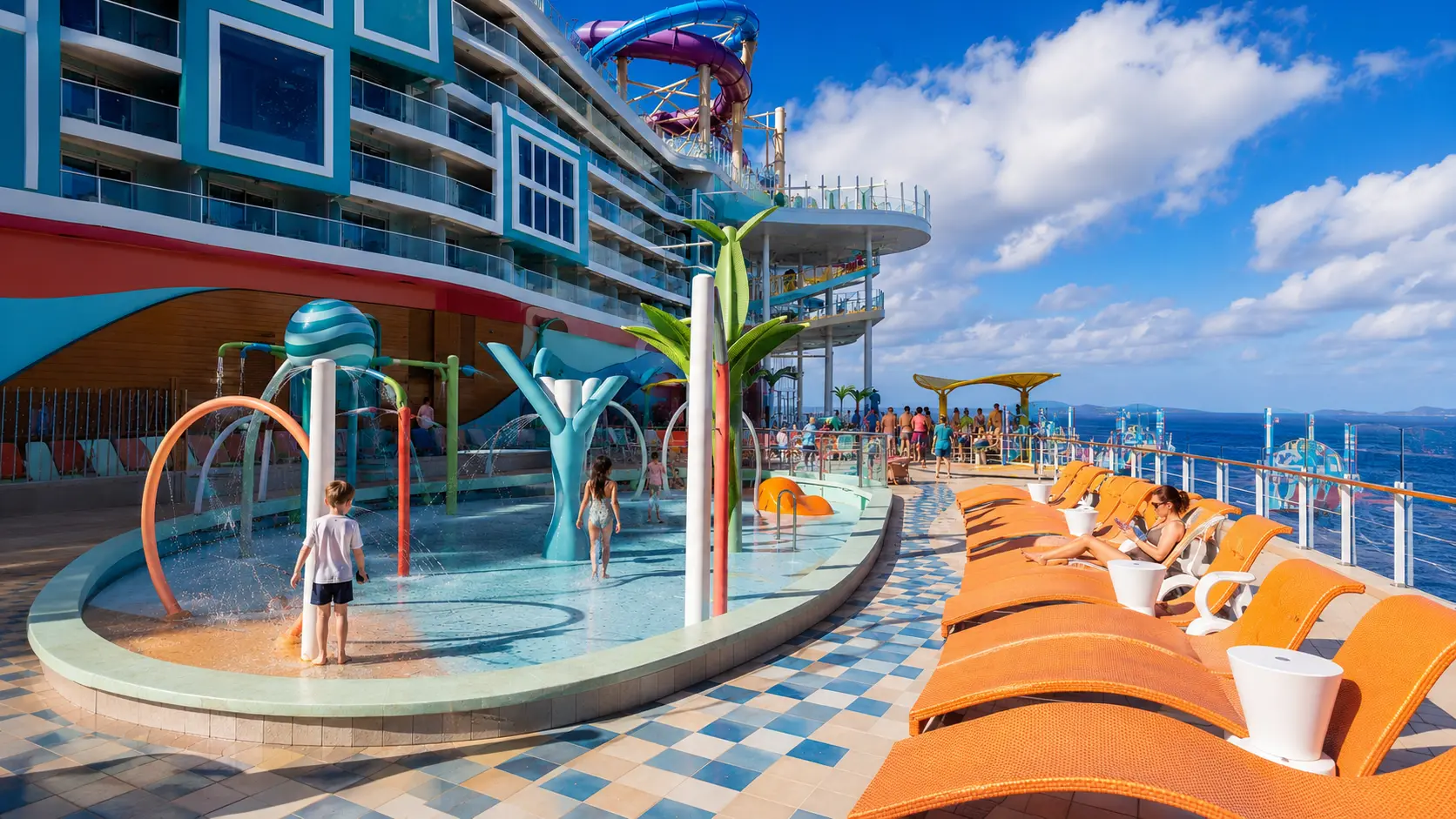
Surfside is a family logistics tool, not just a children’s attraction
Parents of young kids should think of Surfside as a neighborhood where you can stop moving for a while. Water play, family activities, food, and seating being close together can eliminate the constant cross-ship migration that makes a giant vessel exhausting.
If the kids are happy there, eat there. Surfside Eatery and Surfside Bites exist partly so you do not have to dismantle a functioning family afternoon every time somebody asks for lunch.
The Lemon Post also gives adults and kids a shared bar concept, with drinks designed for both groups. Use the neighborhood as intended rather than treating every venue as an item to check off separately.
Parents relying on Adventure Ocean or nursery services for an adult dinner should handle registration and availability before building the entire evening around childcare. “We assumed there would be space” is not a romantic dinner plan.
Adults who think Star is “for kids” should avoid the kid magnets instead of blaming the ship
Star is extremely family-friendly, and the family energy can feel overwhelming during school breaks. You can influence how much of the day you spend in the loudest kid-focused zones by choosing your neighborhoods and timing deliberately.
Central Park is one of your first retreats when the pool decks are busy. The Overlook is another good scenic break, while Lou’s Jazz ‘n Blues, Dueling Pianos, Boleros, and Music Hall give adults very different kinds of nightlife after dinner.
The Hideaway is for ages 18 and older, but do not translate that into “quiet.” It is designed more like an energetic adult pool scene, so go there when you want music and social energy rather than when you want to read forty pages without interruption.
If you prefer quiet, find it in timing and venue choice. An Icon-class ship can carry an enormous number of families without every square foot feeling like a splash pad.
Dueling Pianos and Lou’s are the nights you should leave unscheduled room for
One danger of prebooking Star is that the giant productions crowd everything else off the calendar before you even know what you enjoy. Reserve the scarce headline shows, but keep at least two evenings loose enough to wander into live music.
Dueling Pianos can be rowdy and interactive, while Lou’s Jazz ‘n Blues is the better fit when you want live music without turning the night into a singalong competition. Music Hall is where to look for a bigger band-and-dance atmosphere.
Check the Cruise Compass or app each day because lineups vary. The best live-music night is often the one you discover at 7:00 PM, not the one you tried to schedule four months earlier.
This is also how Star starts feeling less like an attraction inventory and more like a vacation. Wandering into a great set because you heard music down the hall is allowed.
Category 6 should fit around your day, not become your day
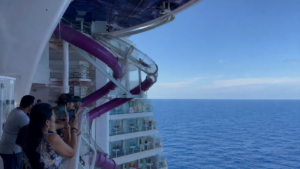
The waterpark is a major family draw, and sunny sea-day afternoons produce predictable demand. Check opening times and try near opening, around a meal period, or while other passengers are absorbed in a big event.
If the wait for your favorite slide is terrible, leave and come back. Star gives you too many alternatives to spend an hour being annoyed at a staircase in swimwear.
Start with the slide you would be disappointed to miss. Weather or maintenance can change operations, so do the priority ride first and treat repeats as bonus fun.
Keep swimwear in your embarkation carry-on if the waterpark matters. The first afternoon can be one of your better chances before everybody has fully unpacked and entered vacation mode.
Basecamp is useful because it prevents unnecessary migrations
Basecamp’s food is included on Star, making it a handy lunch stop while your group is using Thrill Island. Drinks follow their own pricing, so check the menu or your beverage package separately.
This is a small point with a big effect. On a ship this large, staying in the same zone for lunch can save more vacation time than chasing a supposedly superior burger across several decks.
The same principle applies everywhere. Eat near the pool when you are at the pool, use AquaDome Market before an AquaDome show, and pair Central Park dinner with Central Park music instead of designing routes that look like a connect-the-dots puzzle.
The Star of the Seas deck guide is most useful when you use it to group plans by neighborhood, not when you try to memorize twenty decks.
The best crowd trick is recognizing the event that caused the crowd
Star can feel spacious in one neighborhood and packed in another at the exact same time. The ship distributes guests well until thousands of people intentionally gather for the same show, meal, parade, or pool afternoon, so crowding is usually an event-and-location problem rather than a whole-ship condition.
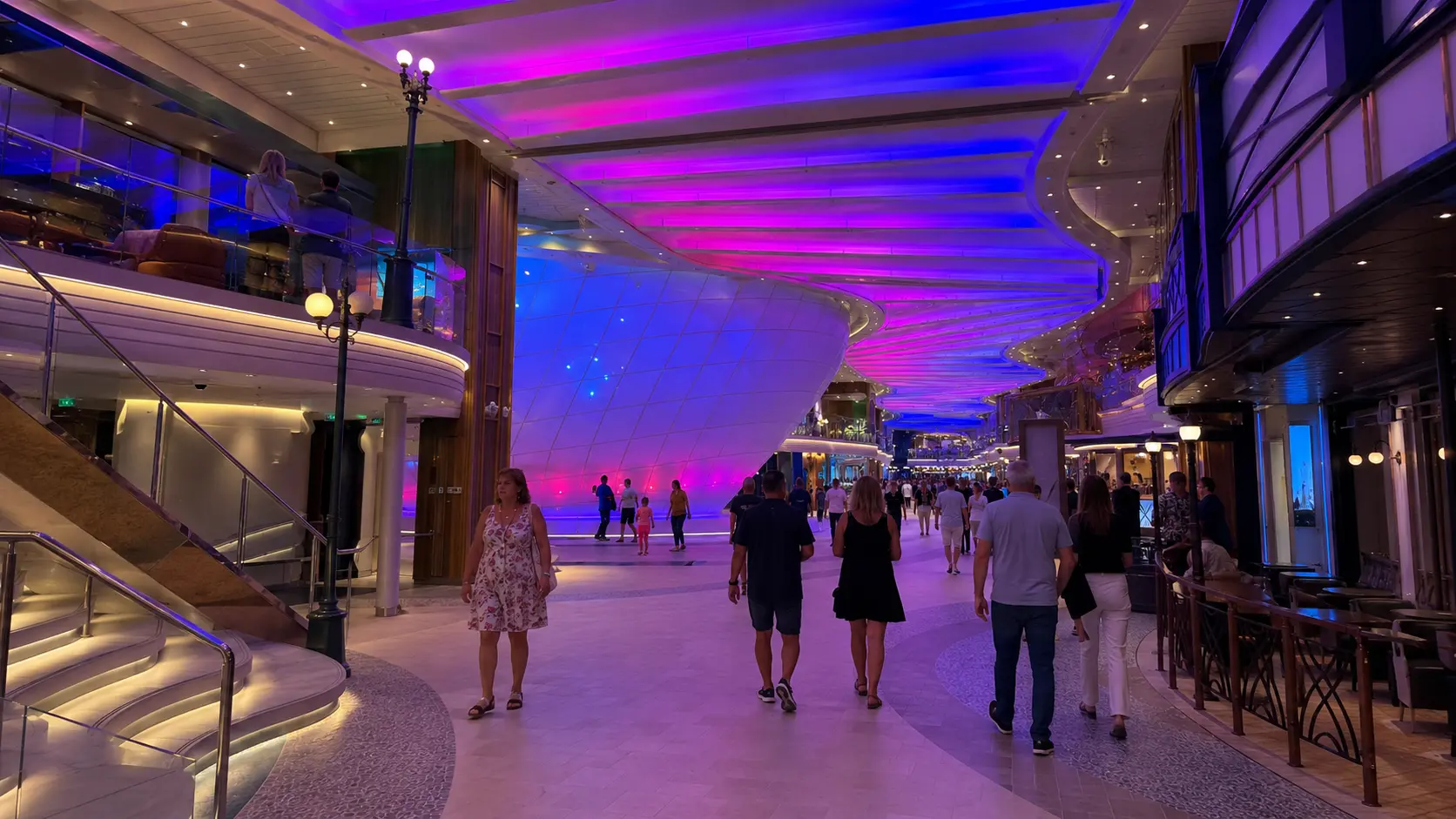
When the Royal Promenade is hosting a major event, it will feel busy. When a theater empties, the nearby elevator lobby will feel busy.
Instead of concluding that the entire ship is overcrowded, move one neighborhood away or wait fifteen minutes. Central Park can feel wonderfully calm while the Promenade is packed below it.
For breakfast, use Pearl Cafe, Park Cafe, the main dining room, or another option when Windjammer looks rough. The buffet is not a mandatory daily referendum on cruise capacity.
Cabin placement should follow the neighborhood you will actually use
Star is too large for “midship is best” to be enough guidance. If your family will live in Surfside and the pool decks, you may prioritize differently from adults who spend every evening between Central Park, the Promenade, and the theater.
Check the exact cabin against the decks above and below, connecting doors, public-space traffic, and the nearest elevator bank. A category name cannot tell you whether chairs move overhead at sunrise.
Use the Star of the Seas cabins to avoid guide for specific risk areas and the best cabins and suites guide if you are still choosing. The goal is not the fanciest room you can afford; it is the room that makes your daily routine easier.
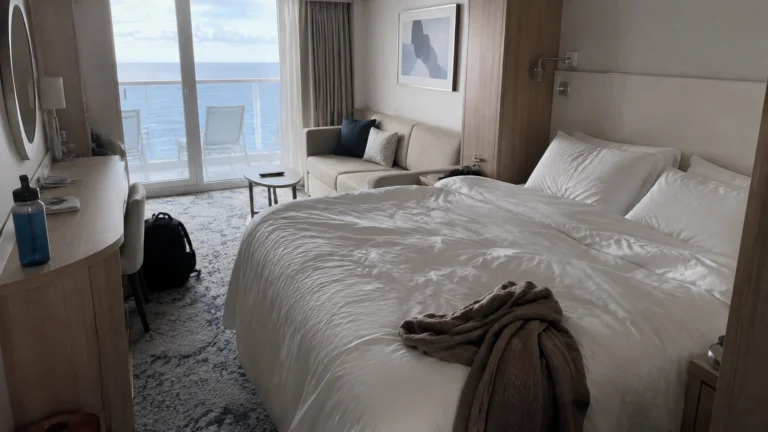
Neighborhood-facing balconies are also a distinct product from ocean-facing balconies. Decide whether you want activity and people-watching or open water before assuming “balcony” answers the view question.
About this guide: Recommendations combine cabin layouts, deck plans, venue details, and published access rules. Details can change by sailing, so confirm booking-sensitive prices, hours, access rules, and cabin assignments before payment.
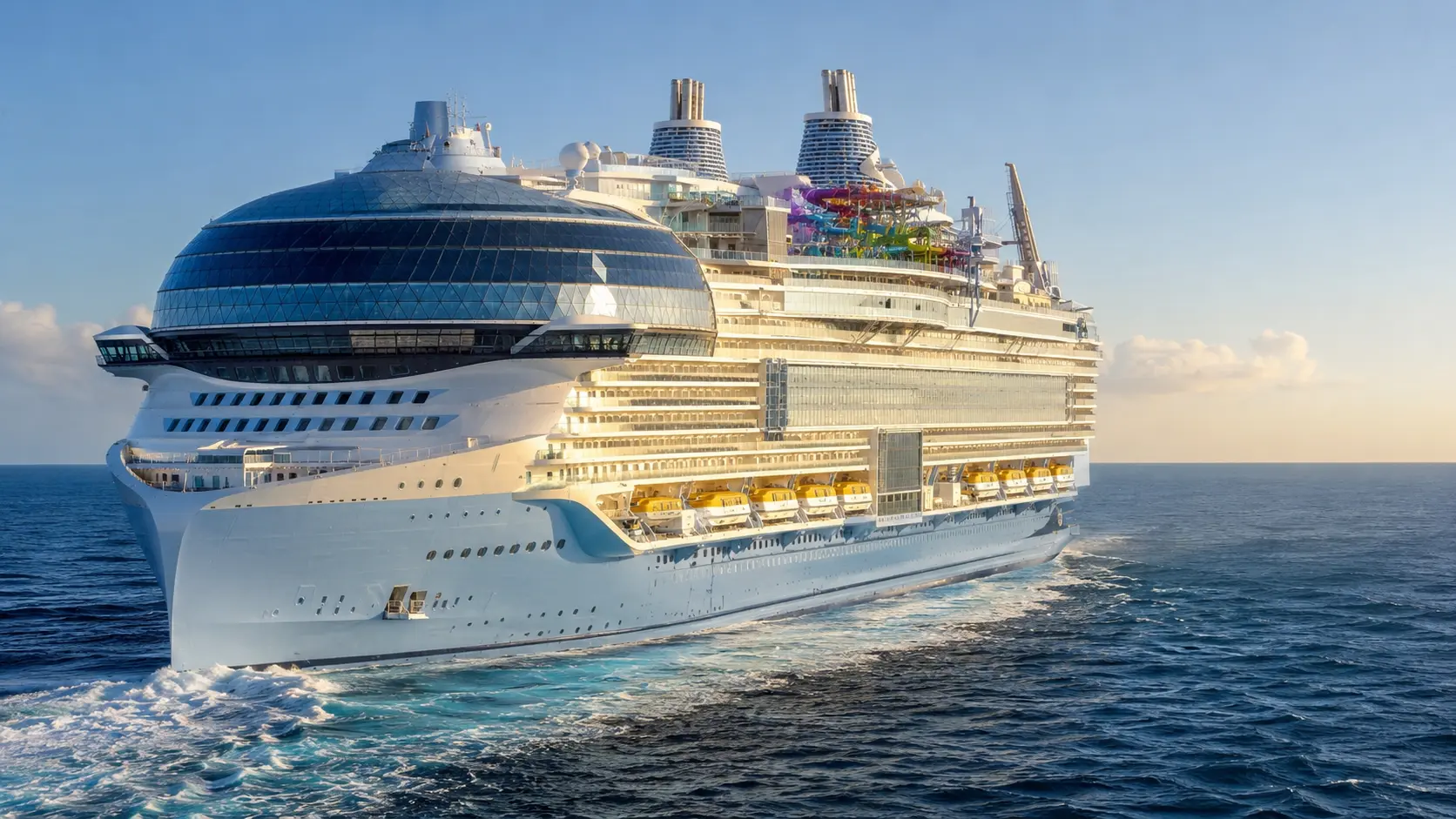
The Star of the Seas week you should actually plan
Before sailing, you should reserve Back to the Future and an early-ish Torque performance, decide whether Lincoln Park Supper Club is worth your money, and ignore the temptation to reserve every dinner. Also identify AquaDome Market, Pearl Cafe, and one easy breakfast option before boarding.
On day one, you should learn the destination elevators, walk Central Park and the AquaDome, and show younger kids Surfside before the first drop-off. Keep swimwear handy and use any reasonable early waterpark window rather than saving every outdoor activity for the busiest sea day.
During the week, you can build nights by neighborhood. AquaDome Market plus Torque makes sense, Central Park dinner plus Lou’s makes sense, and dinner near the theater before Back to the Future makes sense.
Do not judge the ship from the Windjammer at noon or the Promenade during a party. Star works because it has enough neighborhoods to leave a crowd, and the fastest way to make it feel small is to stop insisting on being wherever everybody else now is.
For the activity details, use the Star of the Seas entertainment guide. Then leave at least a few hours unclaimed, because the best proof that Star is not just Icon with a new name is discovering what you personally end up doing differently.
Keep planning with the Star pros and cons, cabins to avoid, and Star dining guide.
How this guide was researched:
I checked Royal Caribbean’s current ship information against the article’s cabin, venue and layout claims. Schedules, prices, access rules and assignments can change by sailing, so confirm booking-sensitive details before payment.