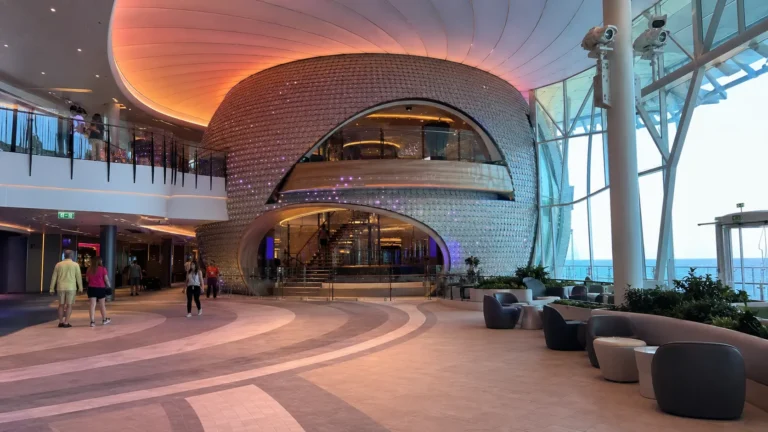
Navigator of the Seas Cabins to Avoid (and the Safer Locations)
If you sleep lightly, start your Navigator of the Seas cabin search on Deck 8 or 9 and choose a room with cabins above and below.
Be more selective about Deck 10, inward-facing Promenade rooms, and the popular aft corners, because their convenience or extra space comes with compromises you’ll notice every day.
Short version
Choose a nonconnecting, ocean-facing room on Deck 8 or 9 for a straightforward sleep-first option. Inspect Deck 10 ceilings and Promenade windows carefully, and buy an aft corner only when its view is worth the movement and longer walk.
Skip a guarantee when location really matters
The cheapest balcony fare isn’t always the cheapest way to get the vacation you want. A guarantee leaves Royal Caribbean to assign an eligible room, so it can put you farther from your favorite venues or beneath public space.
Book an assigned cabin if poor sleep, long walks, or an inward-facing view would disappoint you. Use a guarantee only when you can comfortably accept the eligible locations and the saving is meaningful.
Navigator has several different room experiences within its interior and balcony inventory. Use the room descriptions to separate an inward Promenade window, an ocean-facing balcony, and an aft balcony before comparing their fares.
Before accepting an assignment, open the official deck plans beside the booking screen. Match the actual room number, the neighboring rooms, and the floors above and below rather than relying on a category photograph.
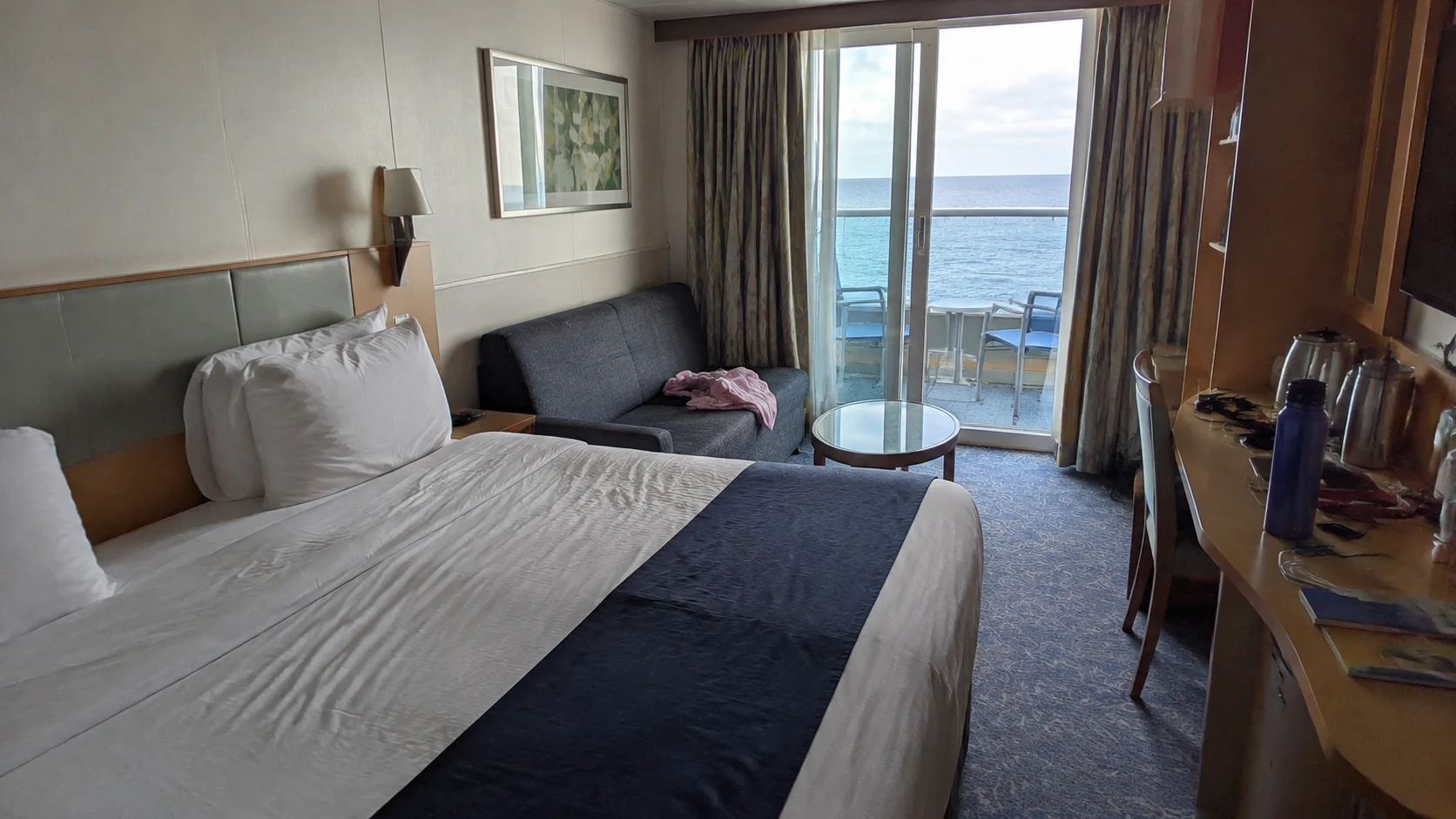
Be picky about Deck 10 beneath the pool and restaurants
Deck 10 sits below a busy public deck, but the space overhead changes as you move along the ship. Deck 11 contains forward cabins, the Solarium and main pool areas, casual food counters, specialty restaurants, and Windjammer aft.
That makes a blanket warning against Deck 10 unhelpful. The real question is whether your particular room lies under accommodation, an outdoor seating area, a restaurant, or a service boundary.
If you’re easily woken by footsteps or furniture movement, favor a side-facing room on Deck 8 or 9 instead. Cabins above and below give you a more sensible starting point than hoping the pool or buffet follows your sleeping schedule.
Deck 10 can still make sense for an early-rising family that expects frequent trips to the pool and Windjammer. Choose it for that short route, then inspect the ceiling carefully rather than paying extra simply because the room is higher.
The spa and fitness center aren’t interchangeable with the Deck 11 restaurant footprint. Navigator’s spa is forward on Deck 12 and its fitness center is farther aft on that deck, so compare actual outlines before blaming either for a Deck 10 room.

Avoid a Promenade View if you want daylight or early nights
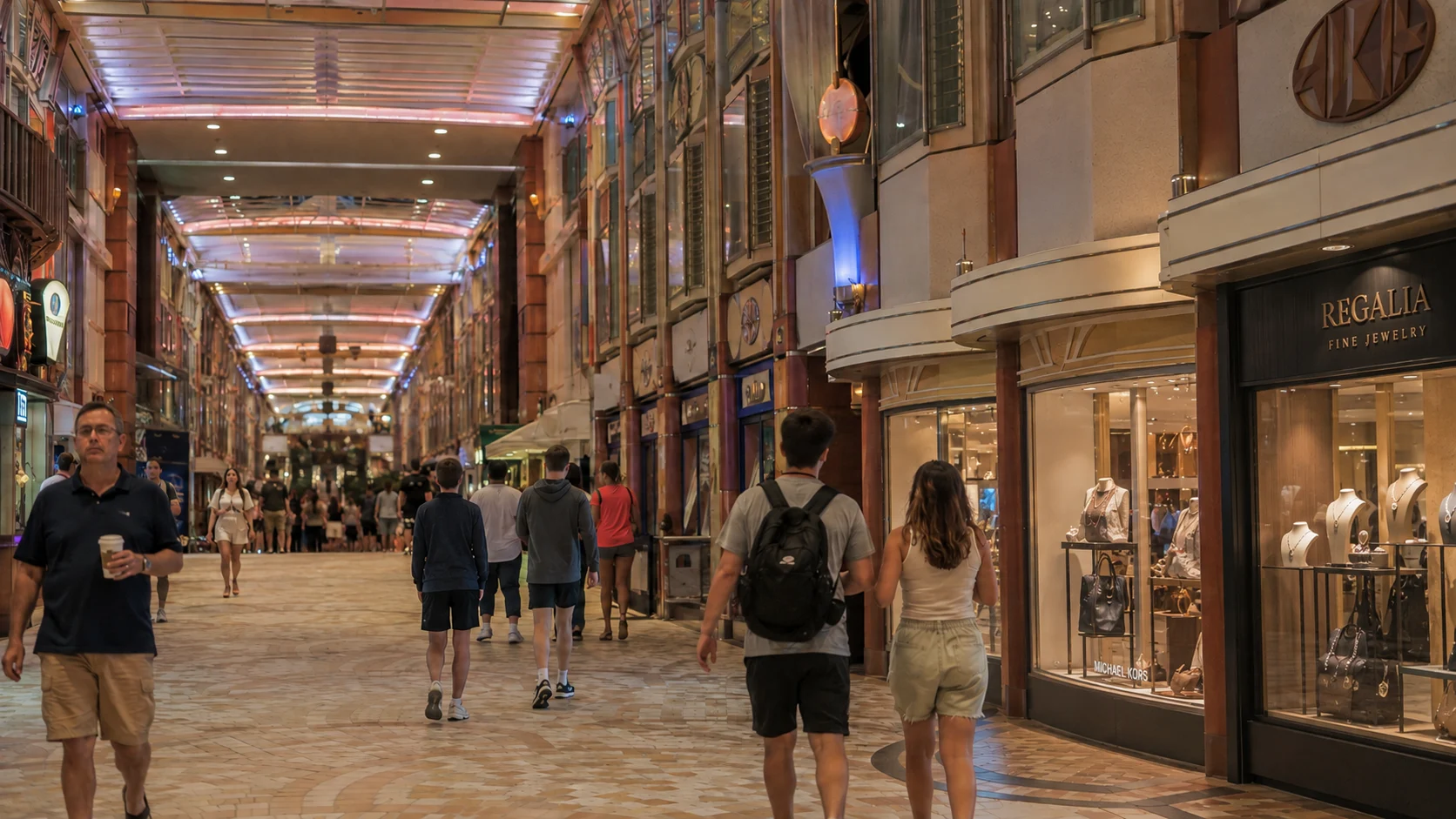
Promenade View Interior rooms look into the Royal Promenade on Deck 5. Their windows give you people-watching and an indoor scene, rather than ocean scenery or natural daylight.
These rooms appear on Decks 6, 7, and 8, with cabins across the promenade able to look toward your window. Keep the curtains closed while changing, even if the room feels tucked away from the action.
Choose one if you enjoy the ship’s social atmosphere and the fare is attractive. Skip it if your idea of a good evening is getting into bed early while the public street is still hosting music or a party.
An ordinary interior is the simpler budget alternative when you don’t care about a window. A true Ocean View is the better upgrade when daylight is the reason you’re spending more.
Going up one deck within the Promenade category doesn’t turn that window into an ocean view or guarantee silence. Decide whether you want the inward-facing experience before comparing the remaining room numbers.
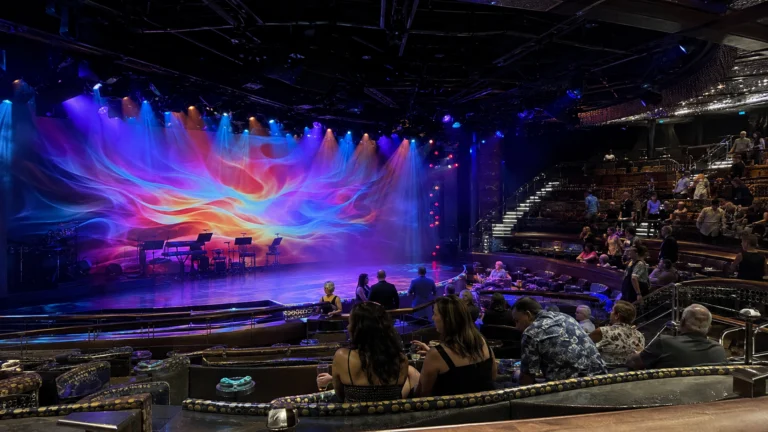
Check lower cabins against the theater and Studio B
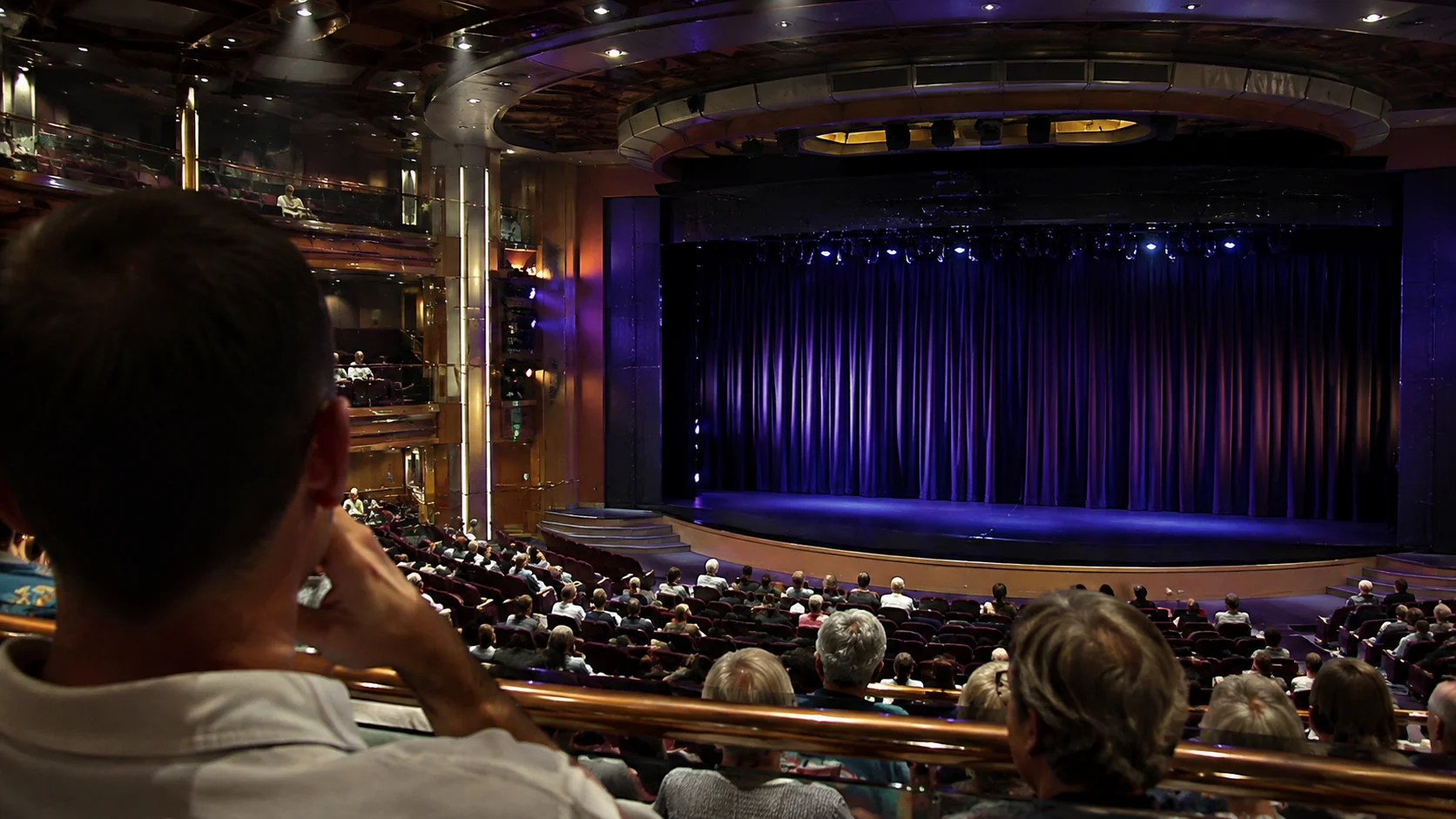
Navigator’s Royal Theater occupies the forward ends of Decks 3 and 4, while Studio B and its ice rink are on Deck 3. The main dining room is aft across Decks 3, 4, and 5.
A lower room near a performance space deserves a different conversation from one near dining. Don’t reject every Deck 2 or Deck 3 cabin just because entertainment also takes place on those levels.
For a light sleeper, look for a room removed from the actual theater or rink boundary and compare the equivalent location higher in the accommodation stack. The deck guide helps you follow those relationships without memorizing every venue.
If you expect to attend evening shows and sleep late, being close to entertainment can be convenient. It still pays to distinguish your cabin’s wall or ceiling from an elevator route that merely passes nearby.
Deck plans show the physical relationship, not the volume you’ll hear during a particular performance. A room between other cabins is a reasonable preference for sleep, rather than a promise that no neighbor will ever make noise.

Don’t book 7388 or 7688 for an open-glass panorama
Cabins 7388 and 7688 sit at the aft corners of Deck 7. They’re worth considering for the stern perspective, but choose them knowing that Navigator’s aft structure forms part of the view.
The appeal is a different outdoor experience from a standard side balcony. The mistake is imagining the completely open stern of a much newer ship and feeling disappointed when structural framing appears in your photographs.
Skip these rooms if limited walking stamina or motion sensitivity is already a concern. They sit beyond the aft elevator area, so a forgotten jacket or charger means another trip along the corridor.
A central side-facing balcony on Deck 8 or 9 is the easier alternative for those priorities. Our best cabins guide compares the aft choice with ordinary balconies and suites.
If a wake view is the feature you most want, the compromises may be perfectly worthwhile. Just compare the fare with nearby categories before paying a premium for a cabin number that other cruisers love.
Inspect 1388 and 1688 as individual rooms
Cabins 1388 and 1688 are the aft-corner alternatives on Deck 10. Their unusual shapes make the ordinary balcony-category photograph a poor substitute for photographs of the actual room.
A 1388 passenger report describes a support pole inside the cabin. Treat that as a reason to inspect room-specific photographs, especially if you need clear transfer space or dislike an obstacle in the sitting area.
That report reflects an individual stay, rather than proving that every guest will find the room awkward. Someone who values the corner layout can reach a very different conclusion from someone who wants an uncomplicated rectangular room.
For either corner, consider the Deck 10 position, stern movement, and long walk together. Extra space doesn’t cancel the location, and the location doesn’t automatically make the room a bad purchase.
Compare an ordinary balcony first if your priorities are easy movement and predictable layout. If space is the main goal, price a Junior Suite as well and look at the bathroom arrangement before deciding which upgrade helps.
Keep the connecting door only when it helps your group
Connecting rooms can be excellent for parents traveling with children or friends who want separate bathrooms. They make less sense for a couple who won’t use the connection and has a comparable nonconnecting room available.
Check the connecting symbol for the exact room, because neighboring cabin numbers aren’t necessarily connected. Request confirmation that both rooms have the internal doorway if that feature is essential to the booking.
For light sleepers, choose a nonconnecting cabin when the fare and location are otherwise similar. A connecting door can add a possible path for sound, but it doesn’t prove that the neighboring guests will be loud.
Two connecting standard cabins can work better than one larger room when four people need different bedtimes. Compare the total fare for everyone rather than treating a suite label as the only sensible family upgrade.
Don’t confuse elevator convenience with a noisy room
Navigator is long enough that the elevator area you choose affects your daily routine. The forward area is useful for the theater, while the aft area serves the dining room, Windjammer, and many upper-deck activities.
Stay a few doors away from a lobby if passing conversations bother you. That usually keeps the practical route without placing your door immediately beside the busiest gathering point.
There’s no good reason to reject every room near an elevator. A convenient room can be the better purchase for someone with limited stamina, especially when the alternative is a far-aft balcony chosen mainly for its reputation.
Trace the journey to breakfast, your usual evening venue, and the pool before choosing. Our Navigator tips explain how those routes fit an ordinary onboard day.
Check the beds and bathroom before upgrading
A room that sleeps four isn’t automatically comfortable for four adults. Ask which guests use a sofa bed or Pullman, how the setup affects floor space, and whether everyone can reach the bathroom easily at night.
Choose two rooms if a second bathroom and separate sleeping spaces solve the main problem. Choose one larger room when your group actually wants to share the space and the bed arrangement works.
For mobility needs, start with a confirmed accessible stateroom. A larger suite doesn’t automatically provide a roll-in shower, appropriate doorway width, or the transfer space your equipment requires.
For most couples, the sensible shortlist remains a selected, nonconnecting ocean-facing balcony on Deck 8 or 9. Move away from that starting point for a feature you’ll enjoy, such as an aft view, extra family space, or a shorter route, and make sure you can explain why the compromise works for you.
How this guide was researched
Royal Caribbean’s current Navigator venue and room information was checked alongside the official deck plans, including visual checks of the cabin and public-deck layouts. Cabin position supports a recommendation, not a guarantee of silence; live prices, opening hours, and onboard instructions can change.
A passenger report for cabin 1388 was also checked for its unusual interior support pole; that detail is presented as a reason to inspect the exact room.