Oceania Vista Tips: Dining, Cabins & Fare Benefits
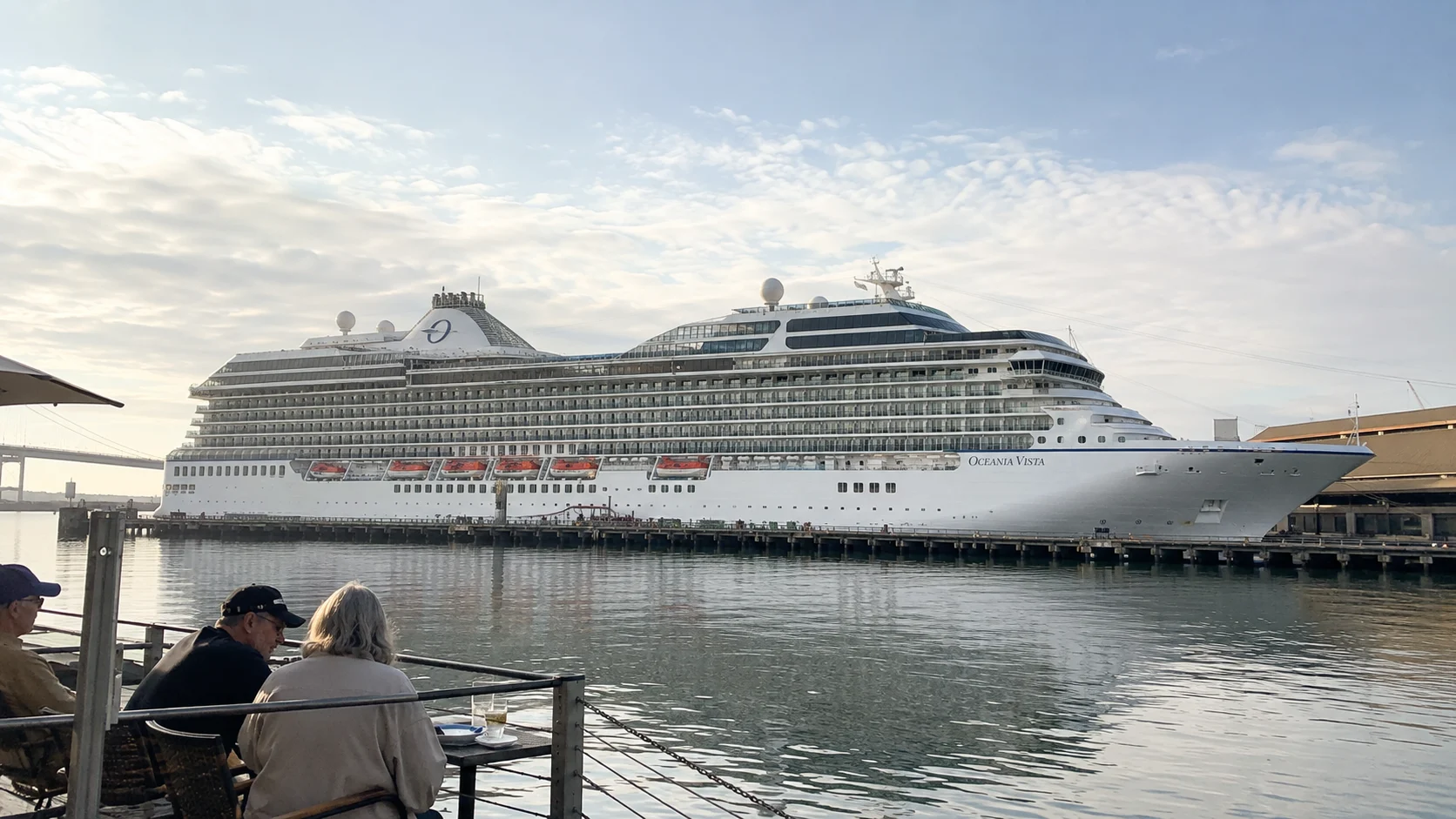
The best Oceania Vista preparation is to sort your restaurant window, fare benefits and cabin details before you start planning every hour onboard.
Then leave yourself enough flexibility to enjoy a late lunch, a good view or an unexpectedly interesting class without feeling behind schedule.
Short version
Put your restaurant opening date in the calendar, choose the fare amenity from the tours or drinks you actually want, and use the laundry already included. Learn both ends of Deck 14, choose a walkout balcony deliberately and protect any legacy family-booking conditions before changing rooms.
1. Read your own invoice before buying extras
Vista’s current fares include ordinary specialty dining, shipboard gratuities, standard Wi-Fi, specialty coffee, several nonalcoholic drinks and self-service laundry. Check your reservation before paying separately for something you already have.
An older booking or a particular promotion may have different conditions. Keep the invoice and promotional terms together, because the current marketing page doesn’t automatically replace the offer you booked.
Gratuity inclusion applies under the booking and departure thresholds in the ticket terms. If yours is an older reservation, ask Oceania which arrangement applies rather than adding a remembered daily rate from a previous cruise.
Paid drinks, spa treatments and private experiences can still have extra charges or service charges. Ask for the final amount before booking so a headline price doesn’t surprise you on the onboard account.
2. Choose the fare amenity you will actually use
For eligible bookings under the newer fare arrangement, the amenity choice is wine and beer or shore-excursion credit. Decide from your normal habits and the excursions available on your exact route, rather than assuming one is universally better value.
The current fare conditions require the same choice for eligible guests in a room by final payment. Guests three and four aren’t covered in the same way, so don’t multiply a couple’s benefit by the full room occupancy.
Wine and beer applies to eligible selections during lunch and dinner operating hours, including qualifying service at other venues and room service. It isn’t unrestricted all-day drinking or a package covering every cocktail you see on a bar menu.
For shore credit, compare the tours you want before choosing it. A credit is useful when it helps buy experiences you would have booked anyway, rather than persuading you into an excursion that doesn’t suit you.
3. Book the excursions you want early
If you choose the shore-excursion amenity, aim to reserve the tours you care about well ahead of departure. Popular trips and smaller groups can fill even when the credit itself remains available.
Reserve the tours you most want at least 14 days before departure, leaving more time for small groups that may sell out. That also avoids relying on the more flexible wording found in some benefit descriptions when your own booking terms use a deadline.
Don’t assume missing that date automatically destroys the benefit or that every unused dollar will be refunded. The current arrangement allows remaining eligible credit to be used as shipboard credit during the voyage, with unused amounts forfeited at its end.
Check whether the credit on your reservation is per stateroom or subject to a solo or single-occupancy exception. What looks generous on a summary page still needs comparing with the number of people paying for the tour.
4. Set the specialty-dining reminder for your cabin grade
You need to have paid in full before making advance specialty reservations. Current restaurant booking windows begin 75 days ahead for Penthouse, 60 for Concierge and 45 for other ordinary categories.
Owner’s, Vista and Oceania Suite access begins with final payment due and received, with the timing varying by voyage length. Ask for the date attached to your reservation rather than applying a single suite window to every grade.
The advance window ends seven days before departure, and onboard requests are another opportunity to ask. Mark the opening date in your calendar if an early table or particular night matters to you.
Book the dinner you want most first, then work around port times and shows. A reservation after a demanding excursion may be less enjoyable than the same meal on a quieter evening.
5. Separate early access from extra reservations
The advance dinner allowance is a different rule from the opening window. Concierge and ordinary standard rooms each receive one advance reservation per specialty restaurant on Vista, regardless of trip length.
Penthouse gets one each on voyages up to 17 days and two each on longer voyages. Owner’s, Vista and Oceania Suites get one each up to seven days, two each for eight through 17 and three each for 18 days or more.
Additional onboard requests depend on space. An earlier booking window can help with timing, but it doesn’t turn a Concierge upgrade into unlimited advance dining.
Our Vista dining guide helps you choose between Jacques, Red Ginger, Toscana and Polo Grill. Choose Jacques for French cooking; older Ember recommendations refer to the previous restaurant.
6. Keep a dinner without a reservation
Leave at least one evening open for the Grand Dining Room, Terrace Cafe or Waves’ nighttime pizzeria. It’s useful to have a good meal available when a shore day leaves you tired or your plans change.
Look at the Grand Dining Room menu before treating it as a fallback. An included open-seating dinner can be exactly what you want without another booking to protect.
Check the casual venues’ actual hours in Currents. The lunch grill and evening pizza service don’t mean Waves is continuously open with the same menu all day.
7. Reserve cooking for a subject you want to learn
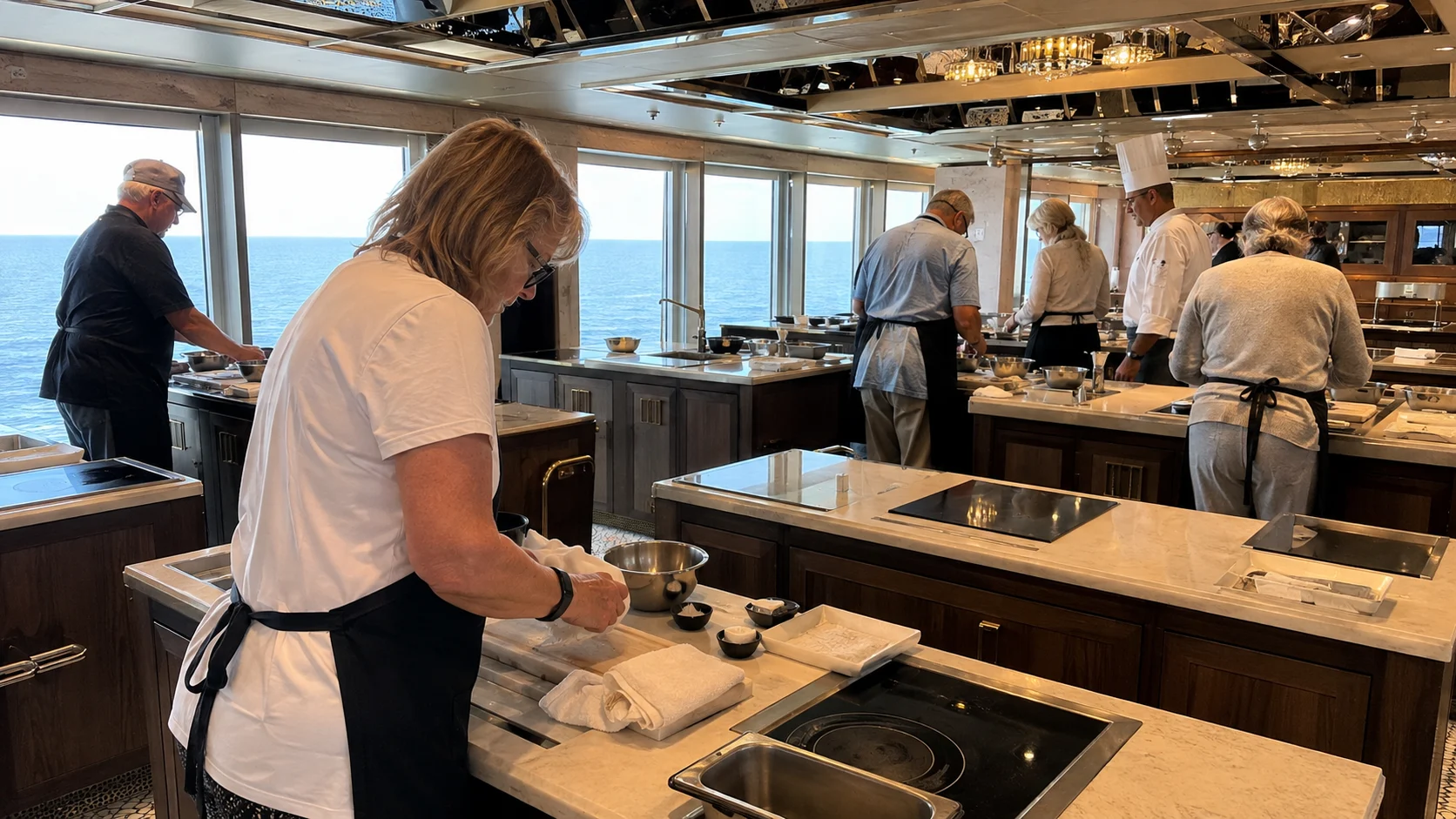
The Culinary Center on Deck 14 offers hands-on classes that can carry an extra charge. Choose a regional cuisine or technique that interests you, then check the duration and cancellation terms.
Ask whether the session is hands-on or demonstration-style, because the experience can differ. Give it enough time in the day’s plan rather than treating it as a quick stop between two other appointments.
Artist Loft and LYNC offer different kinds of learning, including creative and digital sessions. Look at the actual program before buying a class merely to fill a sea day.
Our Vista activities guide helps you distinguish a paid reservation from an easier scheduled activity. The right session is the one you will enjoy, not the one with the most impressive title.
8. Check the balcony before choosing the cheapest room
French Veranda rooms have opening glass and a railing, without a walkout platform. If you’re picturing a chair outside for morning coffee, choose a standard Veranda or higher category with actual outdoor seating.
French Veranda totals are published at about 240 square feet, compared with about 291 including the veranda for standard rooms. Don’t treat the difference as entirely extra indoor space.
Our Vista cabin cautions compare French Veranda 7068 with walkout Veranda 8068. Make that outdoor-seat decision before chasing a bargain, because opening glass will not give you somewhere to put a chair.
9. Pay for Concierge or Penthouse with a purpose
Concierge’s ordinary double rooms are about the same published size as a standard Veranda. Buy the upgrade for benefits such as terrace access, expanded meal delivery, lounge access and laundry service.
Penthouse increases the total to about 440 square feet and adds features such as a walk-in closet, dual vanities and butler service. Price it if you spend enough time in the room to enjoy the extra space.
Check the exact number even after choosing a category. A Penthouse beneath a public footprint can be a different sleep-risk choice from one with cabins above and below, and a grade change may change the quote.
The Vista cabin choices guide explains those tradeoffs without promising a room will be silent. The useful upgrade is the one that improves your actual routine.
10. Use free laundry to pack less
Self-service laundrettes are available free to all guests. Pack a repeatable set of clothes rather than assuming a long cruise requires an outfit for every day.
Concierge and eligible suite service benefits include up to three bags per stateroom, with a maximum of 20 garments per bag and exclusions. Check which items qualify and the turnaround before sending anything you need soon.
Keep a spare outfit and essential items available while laundry is being processed. Sending everything at once can make a convenient service less convenient the following morning.
11. Pack dinner clothes you will enjoy wearing
Oceania’s current dinner dress rules allow dressy jeans and fashion sneakers, and don’t require a jacket. Athletic shoes and flip-flops aren’t the evening restaurant choice.
Shorts and T-shirts have an evening exception at Terrace Cafe and Waves Grill. Use those options for a relaxed meal rather than packing formal clothes because you assume every dinner requires them.
Take a cover-up for moving from the pool into dining areas. Pack for the weather and walking requirements ashore too, because comfortable port-day clothing may do more work than an extra dinner outfit.
12. Learn both ends of Deck 14
Horizons, the Culinary Center, Artist Loft and LYNC are forward on Deck 14. The Library, Baristas, Bakery, Toscana and Polo are in the aft cluster.
Learn those separate areas early so a coffee meeting or dinner doesn’t turn into a last-minute walk in the wrong direction. The open Sun Deck between them may also make weather relevant to your preferred route.
The spa is forward on Deck 15, while the track is aft on Deck 15 and putting and paddle tennis are aft on Deck 16. Don’t assume all the upper recreation spaces sit together beside the gym.
Our Vista deck guide covers the routes in more detail. Check the correct destination before calling an elevator or setting off along a corridor.
13. Prepare for Wi-Fi and arrival-day travel
Download documents, maps and entertainment before you leave home. Included standard Wi-Fi helps with ordinary browsing and messages, but it isn’t a streaming or remote-work guarantee.
The current standard arrangement generally gives two logins per room, with one for a solo room and one device active per login at a time. Check your reservation and any upgrade before relying on several simultaneous devices.
Don’t assume flights or airport transfers are included in every fare. Verify whether your particular offer contains air and whether transfers apply to your actual arrival and departure dates.
If you choose to arrive before embarkation day, include the hotel and independent transfer in the comparison. A useful travel buffer still needs to be paid for and planned.
14. Confirm legacy family bookings in writing
New reservations are for guests aged 18 and over. If your existing booking includes a minor, keep written confirmation that the guests and sailing remain covered by the legacy exception before changing it.
A room or date change can matter to a grandfathered reservation, so settle that question before accepting an upgrade. Keep the answer with the booking instead of relying on an assurance about the brand in general.
Don’t plan around supervised youth clubs, because that isn’t the service model on Vista. Adult multigenerational groups should compare walking needs, rooms and dining preferences before booking together.
15. Plan around the real port times
Read arrival and departure times alongside the destination names. A short call, a tender operation or a distant berth can change what you can comfortably do ashore.
Keep a reasonable margin between your planned return and the ship’s required all-aboard time. Confirm the local arrangements and ship time before relying on an independent transport plan.
Use your first evening to pick the next day’s important booking and leave some space around it. A well-prepared Vista trip should give you more time to enjoy the ship, rather than a schedule that makes every hour feel like another obligation.
How this guide was researched
Restaurant booking windows, cabin benefits, fare conditions and daily routes were compared with the ship’s maps. Advice keeps legacy-booking and shore-credit conditions attached to the reservation instead of treating every guest’s benefits as identical.