Oceania Vista Cabins to Avoid: Exact Rooms & Better Picks
Skip Oceania Vista’s French Veranda 7068 if your balcony day means coffee in an outdoor chair, and compare walkout Veranda 8068 instead.
For a Penthouse with more cabin space around it, compare 10036 before accepting higher 11034 beneath the central public deck.
Short version
For a walkout balcony, compare 8068 with French Veranda 7068; for a more residential Penthouse position, compare 10036 with 11034. Then let the required beds, daily walking route and any legacy family-booking conditions settle the choice.
Skip a French Veranda if you want to sit outside
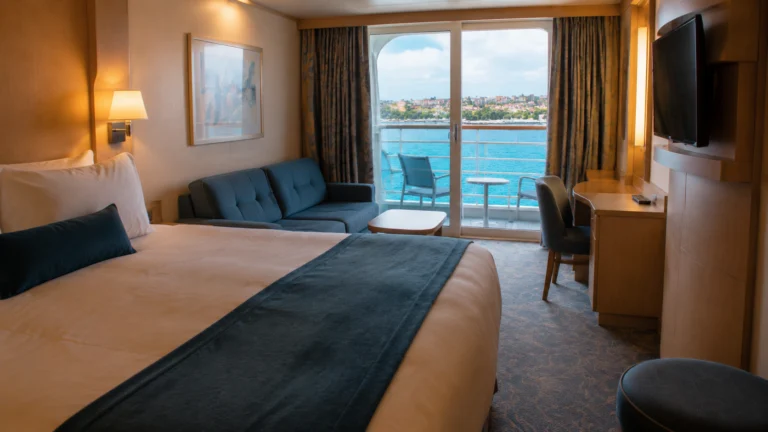
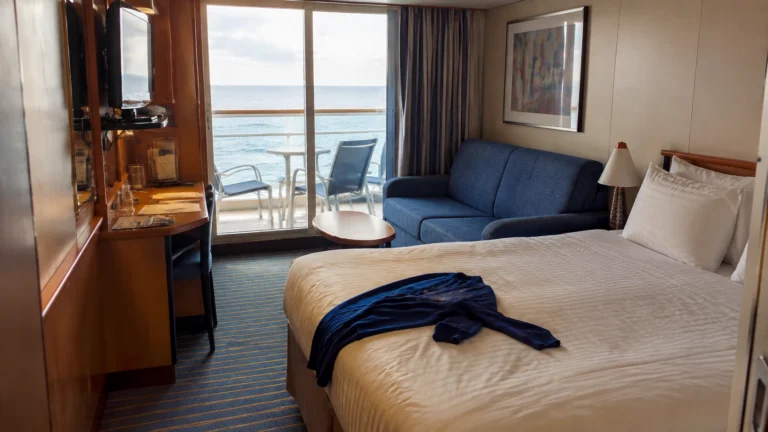
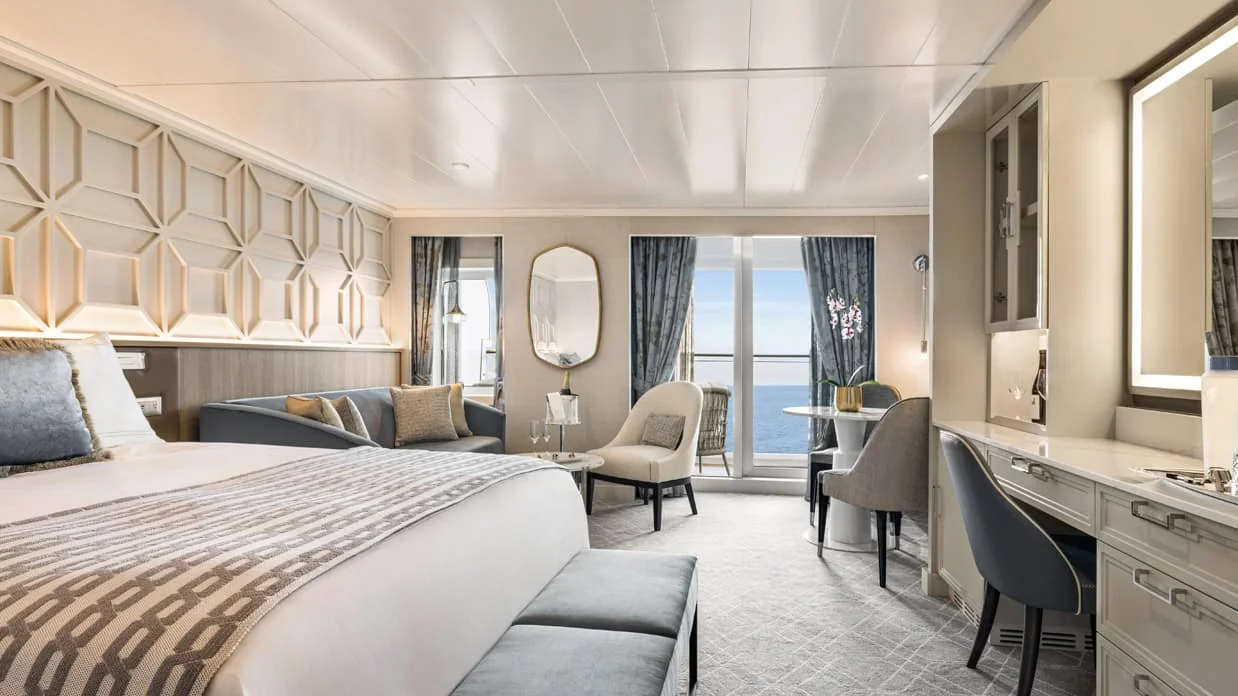
French Veranda rooms are a useful lower-priced choice only when you understand what you’re buying. Their opening floor-to-ceiling glass reaches a railing, without a walkout platform for balcony chairs.
That means no private outdoor breakfast, no stretching out in a balcony chair and no stepping outside while your companion stays in bed. If any of those moments are why you want a balcony cruise, book a standard Veranda or a higher category with an actual outdoor platform.
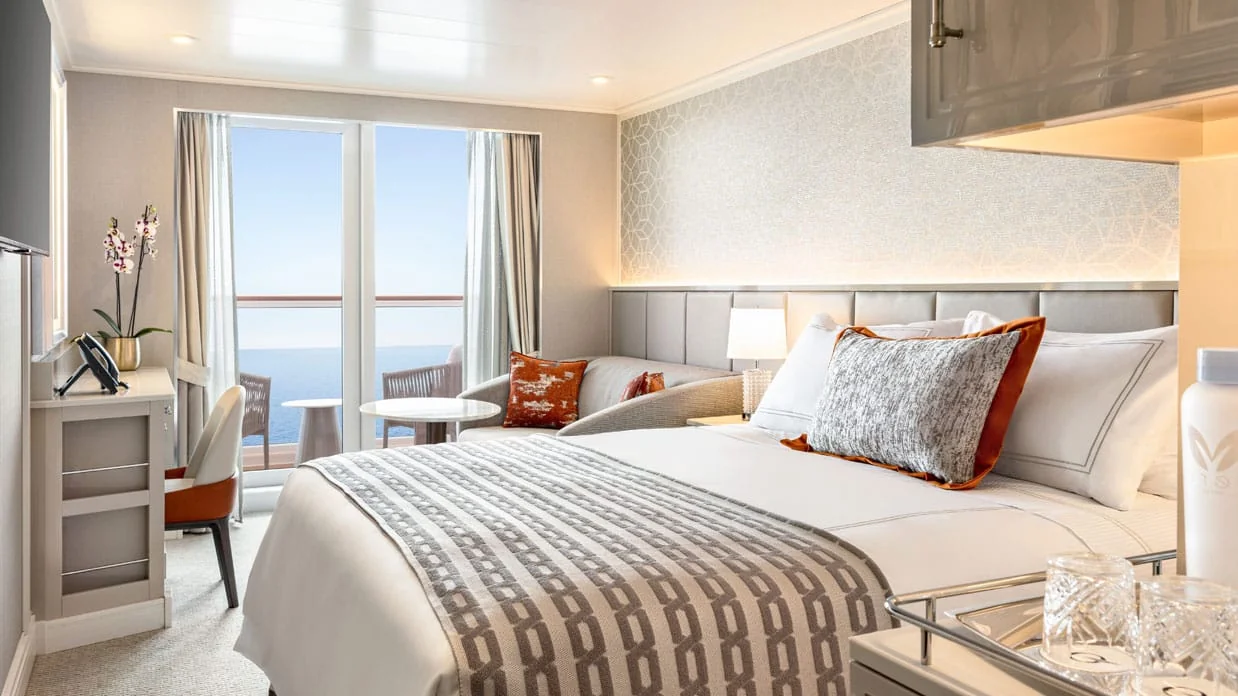
The difference also changes how much living space you’re comparing. French Veranda rooms are published at about 240 square feet, while standard Veranda rooms total about 291 square feet including their outdoor veranda.
Don’t read the larger total as 51 extra square feet inside the bedroom. Published cabin measurements include the relevant veranda, and individual layouts can vary.
French Veranda 7068 is a B5 room on Deck 7. B1 8068 on Deck 8 adds the walkout platform and a cabin deck beneath the room, making it the more straightforward choice for private outdoor time.
Choose 7068 when daylight and the lower fare matter more than sitting outside. Choose 8068 when a private outdoor seat is one of the reasons you are booking Vista.
Don’t buy Concierge for a larger ordinary room
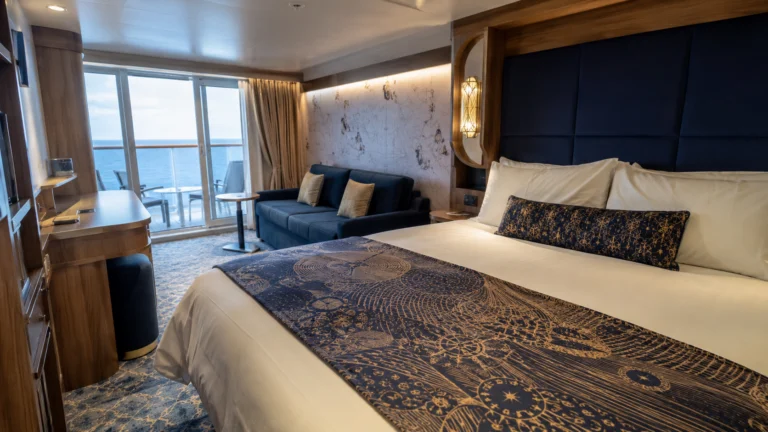
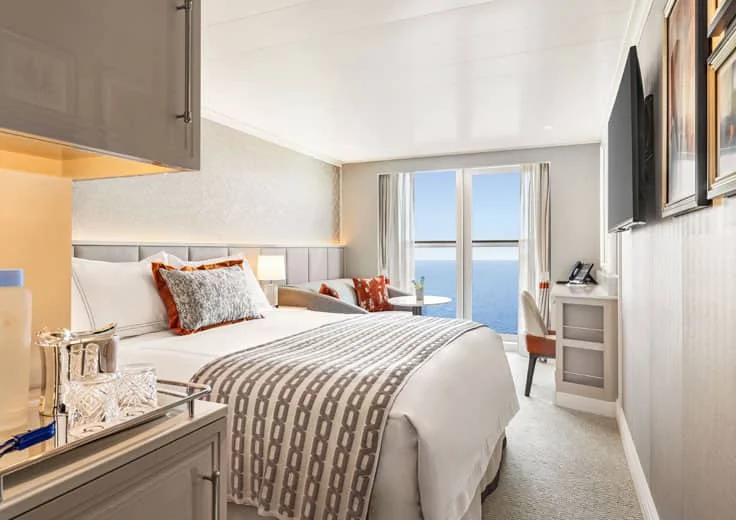
A Concierge Level Veranda has roughly the same total area as a standard Veranda. The main difference is the package of benefits, not a bigger sofa area or a dramatically different bedroom.
Pay the extra if you’ll use the Concierge Lounge, included Aquamar Spa Terrace access, laundry service or earlier specialty-dining booking. Keep the standard Veranda if a comfortable room and private outdoor seating cover your needs.
Compare the upgrade per night, especially on a long voyage. A modest-looking total difference can still be expensive if your only planned benefit is one visit to the lounge.
Earlier restaurant access doesn’t mean an unlimited number of advance dinner reservations. Check the allowance for your cabin grade and voyage length before treating a Concierge upgrade as a solution to every dining preference.
Our Vista cabin choices guide separates space upgrades from service upgrades. Use that comparison before ruling out a well-placed standard room in favor of a less convenient Concierge location.
Inspect Deck 7 against the public rooms below
Deck 7 is the lowest main accommodation level, with public areas on Deck 6 underneath. Depending on the position, you’re looking toward the footprint of bars, the casino, lounges or dining spaces rather than another full deck of bedrooms.
Deck 7 sits over the dining, lounge and casino level, so two rooms on that floor can have different neighbors beneath them. For an early sleeper who does not need the lower location, Deck 8 is the simpler first comparison.
This is a precaution for a light sleeper, especially if you go to bed before the evening program ends. It isn’t evidence that every Deck 7 room is noisy or that a particular bar can be heard through a particular ceiling.
If the quote is close, choose a room with cabins directly above and below before paying for a public-room-adjacent position. You’ll reduce one obvious uncertainty without needing to rely on an anonymous review describing a different cabin.
A room over a daytime shop has a different setting from one over an evening lounge. Keep that distinction attached to the actual address instead of treating every Deck 7 fare as the same gamble.
Check Deck 11 one room at a time
Deck 12 combines forward accommodation, the central pool area and food venues farther aft. That makes the space above a Deck 11 cabin depend on its position along the ship.
Don’t reject Deck 11 wholesale, because some forward rooms have accommodation above. Equally, don’t assume that a Penthouse label protects a more central cabin from public-deck activity overhead.
Early setup, daytime movement and evening clearing can matter as much as music. If you sleep late or spend afternoons resting in the room, think about the public space’s daytime use as well as its closing time.
PH1 Penthouse 11034 is beneath the central public area on Deck 12. PH2 10036, one floor lower with accommodation above and below, is the stronger starting point when naps or an early bedtime matter more than pool convenience.
Both belong to the published 440-square-foot Penthouse family, but they are different grades and need separate quotes. Don’t assume a switch will cost the same or that another room with a similar number has the same neighbors.
These are different surroundings, not measured sound ratings. The useful choice is whether you prefer another cabin or a public space over your ceiling, with the grade and full fare compared alongside that preference.
Look above Deck 12 suites before paying for the high deck
Vista doesn’t have a passenger Deck 13, so the next level above Deck 12 is Deck 14. Its forward spaces include Horizons and enrichment venues, which are important neighbors to examine when you’re comparing premium forward accommodation.
A high-deck suite can give you a view and substantial living space without being the most conservative location for a sensitive sleeper. Check the footprint above before treating height as an automatic improvement.
Ask when the relevant lounge or class venue is normally active, while remembering that its program changes by sailing. If an answer matters to your booking, keep it in writing with the room number attached.
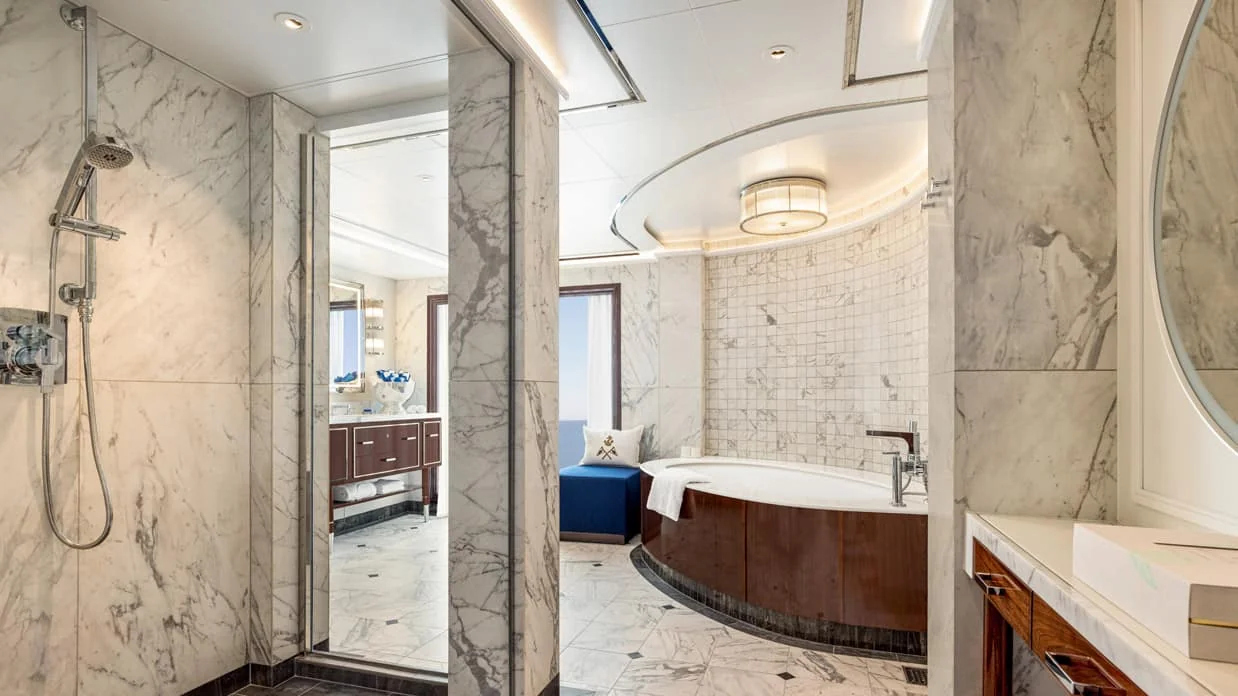
For an expensive suite, request the exact plan rather than using one representative photo for the entire category. The range of sizes shows that even rooms carrying the same broad label can differ.
You can compare the general location patterns in our Vista deck guide. Use the operator’s numbered map for the final choice, especially when the quote includes a room near the bow or an unusual corner.
Avoid extreme ends if movement worries you
Some of Vista’s most striking suites sit at the bow or stern. Book them for their layout and views only after deciding that their position suits your tolerance for ship movement.
If you’re prone to seasickness, begin with a central location rather than paying extra for an end-of-ship view and hoping the weather stays calm. A lower, more central room is a sensible starting preference, although no cabin eliminates motion.
An itinerary with several open-sea stretches deserves a different conversation from one with frequent short port-to-port legs. Your route and time of year matter alongside the cabin number.
Don’t describe all aft rooms as vibration problems on the strength of one report. If you’re considering a particular stern-facing suite, look for information about that exact room and sailing conditions rather than applying a blanket label.
Check walking distances against your daily routine
A room far from your favorite venues can be comfortable and still be the wrong choice for you. Think about the meals and lounges you’ll use twice a day, especially if fatigue or mobility limits how much corridor walking you want.
Solo Concierge rooms are aft on Deck 9, while the Concierge Lounge is forward on that deck. The included lounge benefit doesn’t mean these rooms are next door to it.
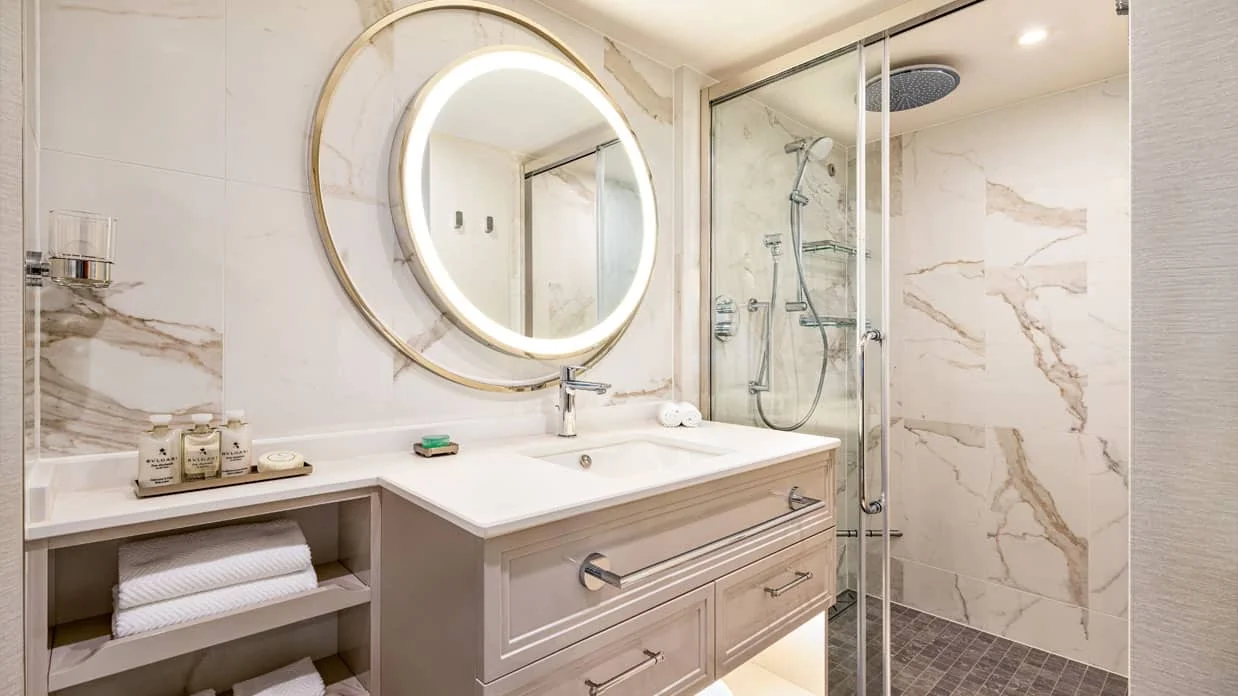
For a solo guest, compare the dedicated room’s price and layout with a standard double offered for single occupancy. The Solo Concierge category has its own benefits, but the location and about 270-square-foot total still deserve a practical comparison.
Pick a recognizable elevator or stair landmark when you first arrive so your daily route becomes familiar. If stairs suit your mobility, they can help with short trips when elevators are busy, but they aren’t a substitute for a suitable accessible route.
Our Vista dining guide helps you identify where you’ll actually eat. That makes “near the restaurants” a more useful request than it sounds, because Vista’s meals are spread across several decks and areas.
Don’t assume a standard room works for three adults
Check the passenger capacity on the exact room quote before choosing a sofa-bed arrangement or adding a third person. A larger category name doesn’t mean every room in it has an extra berth.
Ask what furniture changes when the extra bed is made up. A room that feels generous to a couple may have less walking space and less usable seating once three people are getting ready for dinner.
If two travelers need separate beds, confirm the arrangement before payment. The largest Owner’s, Vista and Oceania suites have king-size beds that aren’t convertible, so the biggest room isn’t automatically the best answer to a bed preference.
Accessible rooms require another level of care: request the actual layout and the measurements relevant to your equipment. General square footage doesn’t tell you whether a bathroom, threshold or maneuvering space meets your needs.
Use the current room specifications to narrow the options, then get the personal requirements confirmed on your reservation. This is where an exact answer is worth more than another glossy cabin photo.
Be cautious about a guarantee booking
A guarantee can make sense if the saving is meaningful and you’re happy with every location that could be assigned within the offer. It is less appealing when your main booking requirement is a particular overhead neighbor, a short walking route or a room away from the ship’s ends.
Read the category promised by the guarantee and the actual assignment terms. Don’t assume the line will give you a location upgrade or solve a personal preference after the room is assigned.
Compare the guaranteed price with a numbered cabin that passes your important checks. The cheaper option is only better value if the uncertainty won’t spoil the way you use the room.
Check change and cancellation costs before accepting an offer that might need fixing later. A hopeful plan to swap onboard can leave you with neither the room you wanted nor the saving you expected.
Confirm older family bookings before changing rooms
New Oceania reservations require guests to be at least 18. That rule matters when checking occupancy, rather than merely when deciding whether the atmosphere will suit children.
Earlier reservations involving minors have a legacy exception that must remain attached to the booking. Get written confirmation for the same guests and departure before changing a room or buying further nonrefundable travel.
Also ask whether a cabin change would alter the status or conditions of that reservation. Don’t assume a move to another room is harmless when the original booking qualifies under an older policy.
Vista has no supervised youth program to build a family day around. If a legacy reservation is honored, plan meals, rest and shore days around the family’s actual needs rather than importing expectations from a Disney or Carnival cruise.
How this guide was researched
Numbered cabin plans, room layouts and booking conditions were compared to distinguish view, bedroom and public-deck compromises. Location cautions describe the physical setting; they do not predict every passenger’s sleep or motion experience.
Deck plans, room details and onboard activities provide the ship information behind these choices.