MSC Seashore Deck-by-Deck Guide: Best Decks and Easy Routes
MSC Seashore makes the ocean part of the ship, with waterfront spaces that are every bit as tempting as the pools up top.
A smart cabin location and a few easy routes will help you enjoy that design without spending half the day retracing your steps.
Short version
- Best all-around cabin decks: Decks 10 and 11 offer a comfortable residential buffer while keeping the Waterfront Boardwalk close.
- Best for motion sensitivity: Look for a lower midship cabin and favor position over a dramatic high-deck view.
- Best for dining and nightlife: Deck 9 gives you quick stair access to the atrium, restaurants, bars, and outdoor promenade one level below.
- Best for pools: Decks 14 or 15 shorten the trip to Jungle Pool and Long Island Pool, but check the exact ceiling above your room.
- Best for families: Choose a cabin near the elevator bank that serves the upper pools, Pirates Cove, and the kids’ areas.
How MSC Seashore is organized
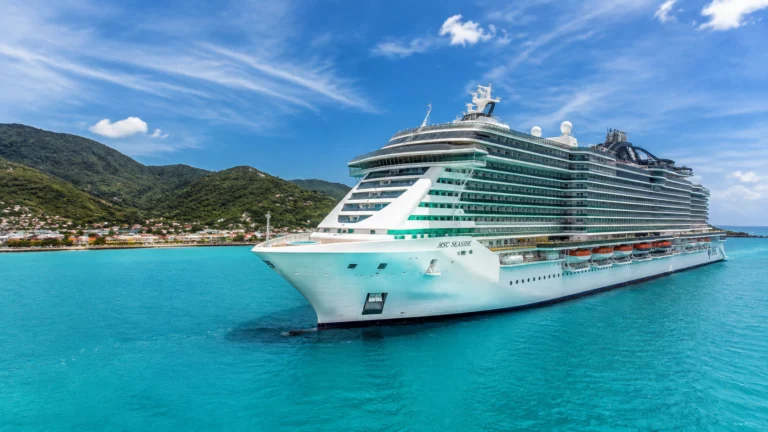
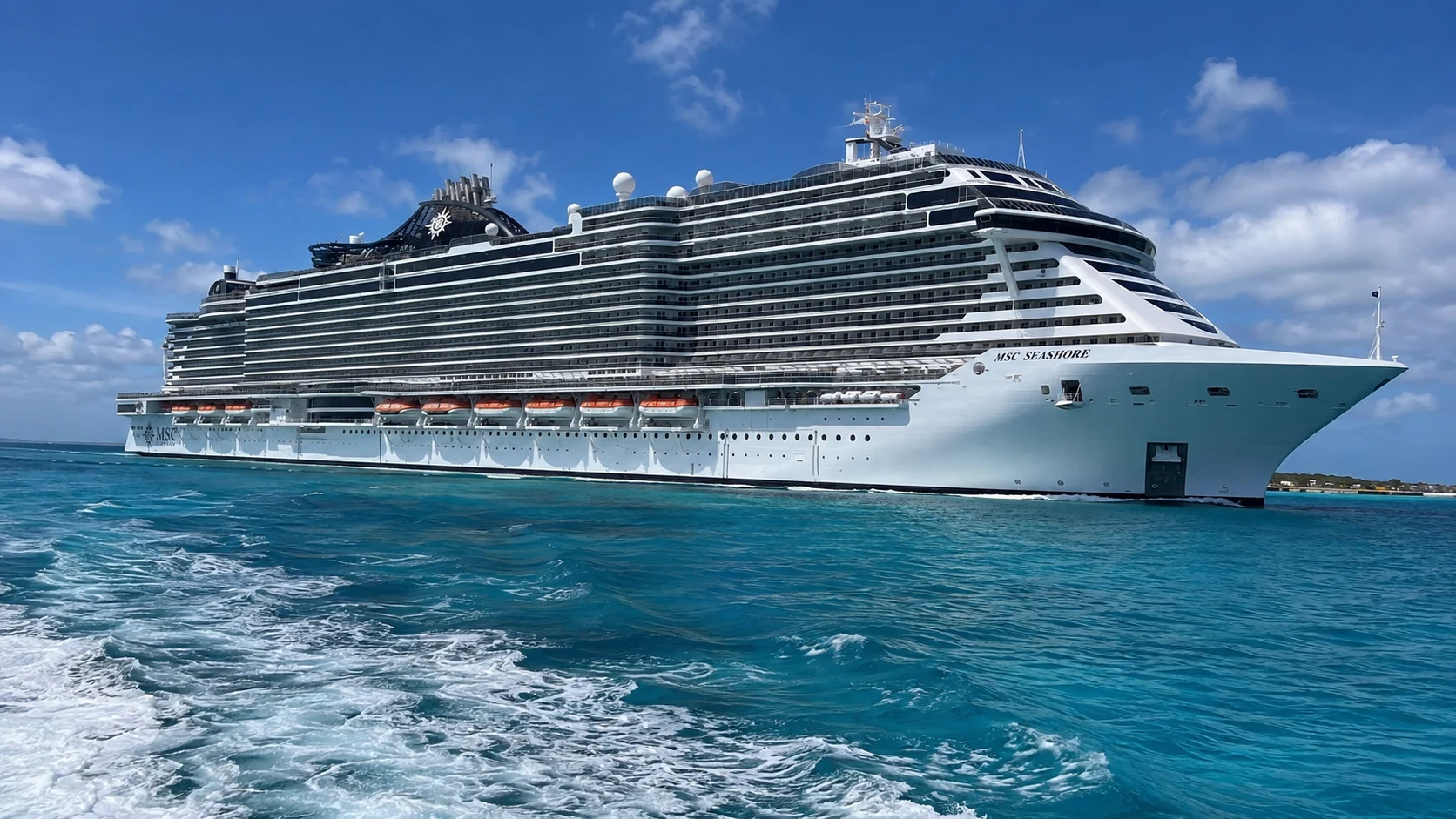
Seashore is a Seaside EVO-class ship, and the whole design is obsessed with getting passengers outside near the water. That is why Deck 8 matters so much more here than it would on a traditional ship where all the serious outdoor space lives high above the ocean.
Above that public band, decks 9 through 15 carry much of the standard cabin inventory before the ship shifts back into pools, buffet traffic, aquapark activity, and Yacht Club. The result is a very understandable vertical sandwich once you stop trying to memorize the deck names.
The simplest map is Deck 8 for waterfront evenings, Deck 10 or 11 for sleeping, Deck 16 for Jungle Pool and buffet access, and Deck 18 for the big outdoor family pool. That covers a remarkable amount of the actual vacation.
Deck 5: useful for port days but far from the pools
Deck 5 sits in the lower public and operational part of the ship, which makes it relevant when guests are boarding, going ashore, or moving toward lower entertainment spaces. It also gives motion-sensitive travelers the advantage of being lower in the hull.
Do not choose a low cabin just because “lower is quieter,” though. The pools, buffet, family attractions, and outdoor spaces are many floors above, so a pool-focused group will spend a lot of time waiting for elevators.
For port-intensive cruisers or anyone who gets seasick easily, the lower-middle part of the ship can still be a smart trade. You are choosing stability and embarkation practicality over instant access to the resort deck.
Decks 6 and 7: this is where the atrium and evening traffic build
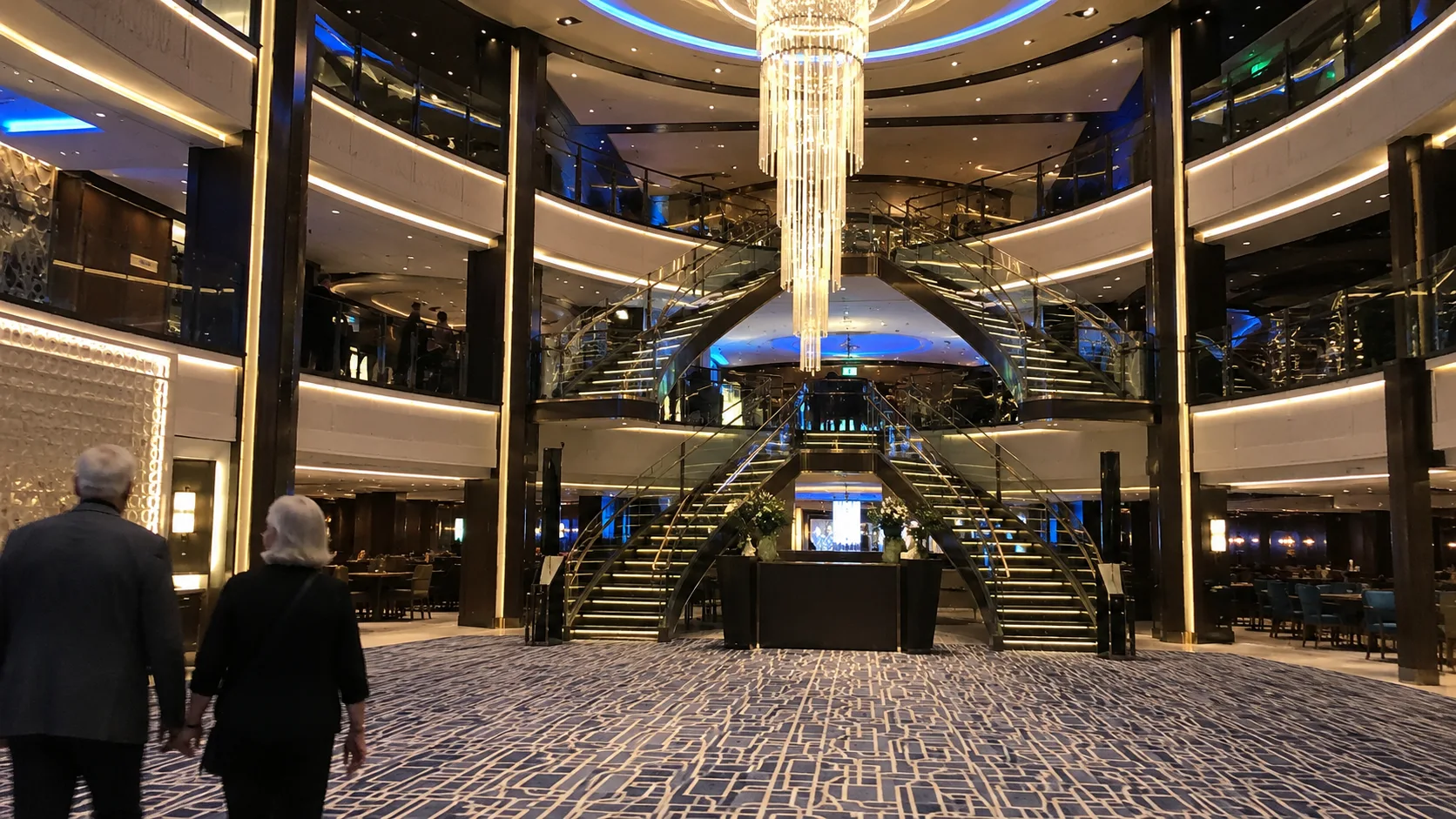
The lower public decks carry the atrium, theater traffic, dining, casino activity, lounges, and the indoor social flow that takes over after dinner. Seashore’s glassy multi-level atrium is beautiful, but it also acts like a giant magnet when live music or scheduled entertainment starts.
Crowding here is highly time-dependent. A corridor that feels almost empty before a show can become packed when hundreds of people leave at once and all decide an elevator sounds like a fresh new idea.
It is better to sleep two to four floors above this band and walk down when you want it. The nightlife stays convenient without becoming part of the room soundtrack.
Deck 8: Seashore’s best public-space deck
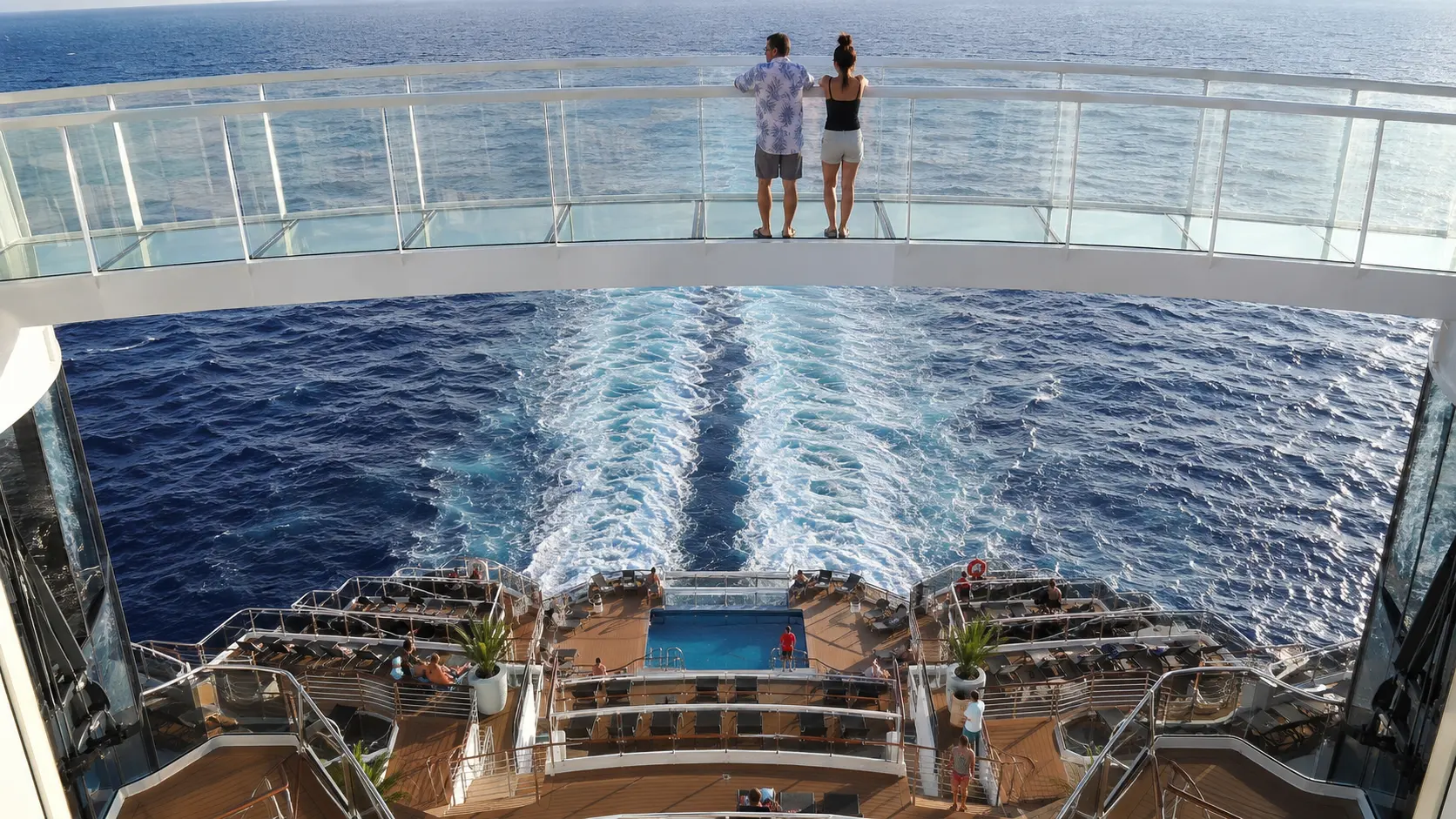
Deck 8 is where Seashore’s waterfront design starts paying off. The aft Infinity Pool, outdoor promenade space, bars, restaurants, and open views make this one of the few mega-ship decks where going low to relax makes sense rather than automatically heading upward.
The aft Infinity Pool is especially worth finding before the first sea day. It has a wake view and often feels calmer than the big family pool zones, so adults who do not need waterslides have a very good reason to stay down here.
Brooklyn Café and nearby bars also make Deck 8 useful when drink lines elsewhere get frustrating. This is the sort of practical little thing that turns a deck from “nice promenade” into somewhere you actually repeat every day.
There is also designated outdoor smoking on Deck 8, so smoke-sensitive cruisers should look carefully at cabin placement directly above those exterior sections. One Deck 9 balcony can be fine while another sits over an area you would rather not smell every time you open the door.
Deck 9: the deck where “what is underneath?” matters most
Deck 9 is tempting because you are directly above the waterfront public deck and can use stairs for most evening activity. It is also the deck where you should be most cautious about choosing a cabin without checking the exact location below.
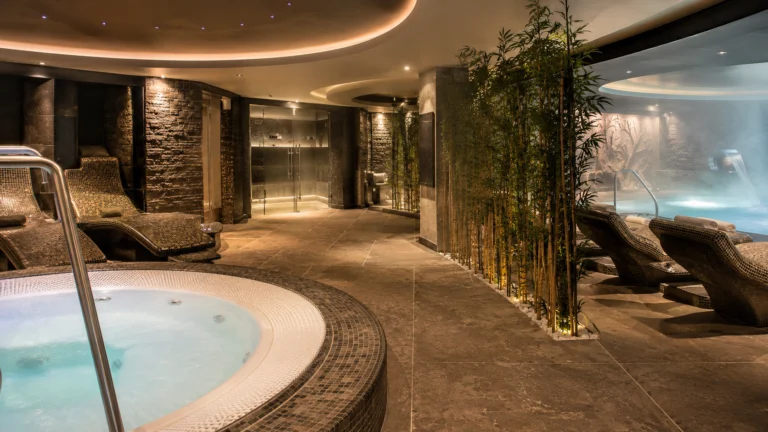
Deck 9 changes dramatically by location. Cabins above louder Deck 8 public spaces can pick up music late into the evening, while forward rooms over the spa can be extremely quiet.
The terrace-style and extended balconies can also have privacy quirks. Some are visible from outdoor areas above, and dividers may not feel as enclosed as a standard balcony, so do not book one assuming “bigger balcony” automatically means “more private balcony.”
Cabins above the outdoor whirlpools are not necessarily noisy all night because those facilities close, but loud groups can still make themselves heard. If your spouse can identify a neighbor turning a page through two walls, choose Deck 10 instead.
Deck 10: the best standard cabin starting point
Deck 10 is the best place to start for a normal balcony because the public-space noise below has another layer of separation and you are still low enough that Deck 8 feels close. Cabins surround most of the deck, which is exactly the boring setup that helps at midnight.
Midship works well for motion and balanced walking, but do not obsess over being dead center. Seashore is long enough that being near a useful elevator bank can save more footsteps than being mathematically perfect on a diagram.
Deck 10 is a particularly smart move when you want distance from the mixed-use Deck 8 and 9 zone without giving up easy stairs downward. For a light sleeper who still wants the waterfront close, the location makes a lot of sense.
Decks 11 through 14: the quiet middle band that makes the most sense for most people
Decks 11, 12, 13, and 14 are predominantly residential and keep you between the two big public bands. For a low-risk cabin without any special priorities, begin somewhere in this stretch.
Deck 11 is especially good for light sleepers because it stays far enough from both the Deck 8 nightlife and the upper pool zones. It is high enough for a nice view without making the ship’s movement feel unnecessarily amplified.
Deck 12 and 13 shift you gradually closer to the daytime spaces, while Deck 14 is still buffered from the busiest top-deck activity. Choose among them based on elevator proximity, cabin category, and view rather than assigning magical status to one number.
This residential band also suits anyone who says, “I just want to sleep.” You do not need your cabin deck to entertain you; the rest of the ship already volunteered for that job.
Deck 15: convenient, but check the ceiling
Deck 15 moves you close enough to the upper pool and buffet areas that overhead noise starts becoming more relevant. The space directly above matters more than the deck number.
If your room sits beneath a quieter section, the convenience can be excellent. If it sits under outdoor furniture or a high-traffic route, you may hear the crew getting the ship ready at an hour when you are still deeply committed to sleeping.
Choose Deck 14 over 15 at the same price if you are a light sleeper. A pool-focused family may reasonably make the opposite choice.
Deck 16: Jungle Pool is the bad-weather secret weapon
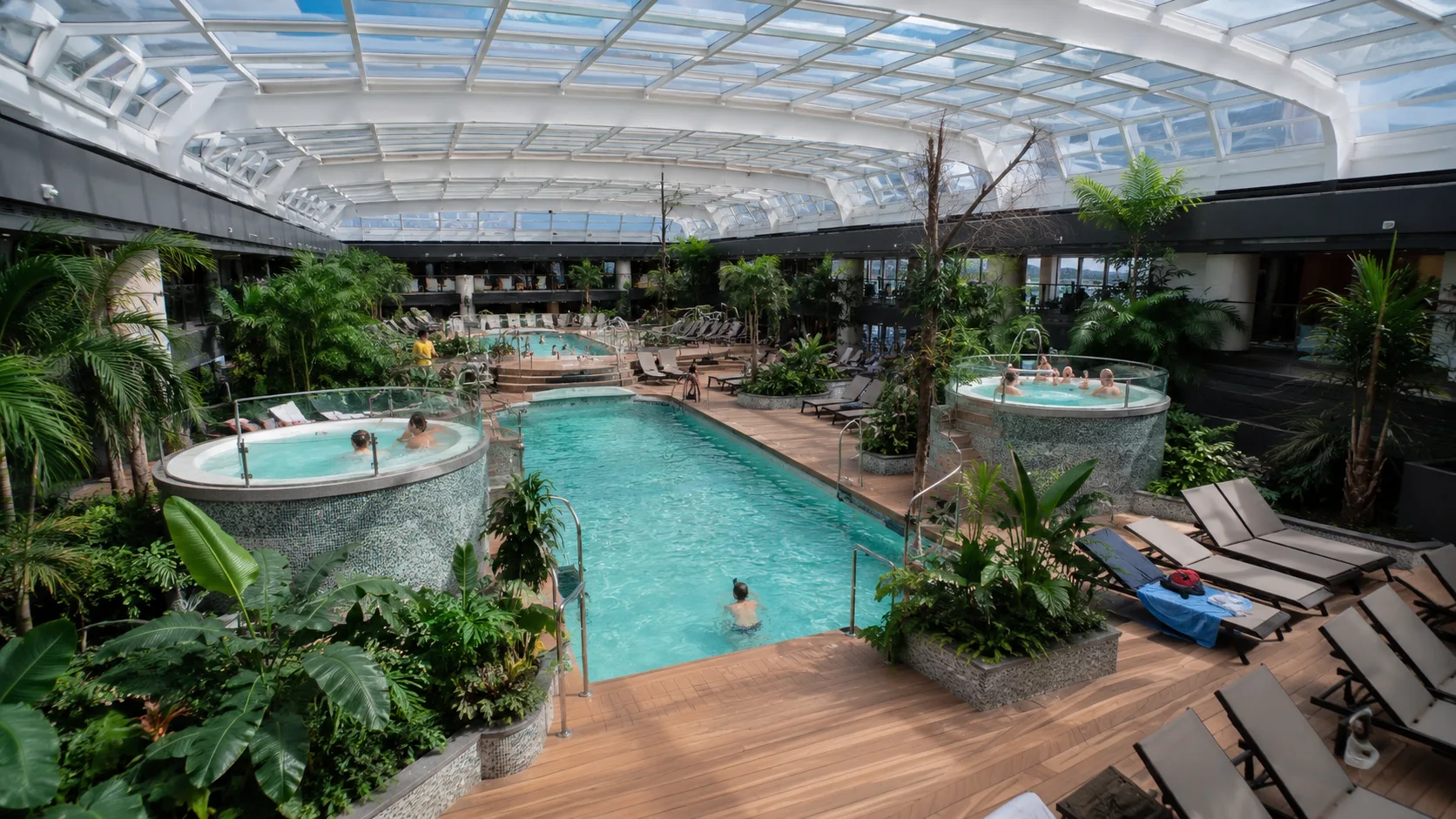
Jungle Pool is one of Seashore’s most useful ship-specific features because the magrodome can be opened or closed depending on weather. Wind, rain, or a cooler day does not automatically ruin the pool plan.
The buffet is also close, so Deck 16 becomes a major daytime traffic zone even when nobody is swimming. Families and casual diners naturally flow through the same broad area from breakfast through afternoon.
For adults, the covered-pool setup is useful without necessarily being relaxing. When bad weather pushes everyone indoors, Jungle Pool becomes popular for the exact reason you wanted to go there.
Deck 18: Long Island Pool is the family daytime center
Long Island Pool on Deck 18 is the big outdoor family pool with multiple depths and the fountain island, and it connects naturally into the upper recreation areas. Families with kids old enough for pool-and-slide days can spend a huge amount of time up here.
If that describes your group, a higher cabin cuts down elevator trips. If you are an adult couple who prefers the aft Infinity Pool, there is very little reason to choose a cabin simply because it is closer to Deck 18.
The pool itself can feel busy on sunny sea days, but the upper-deck space spreads people across more than one attraction. Still, arrive earlier if you care about a particular lounger location.
Deck 19 and Pirates Cove: families should check what is operating before promising anything
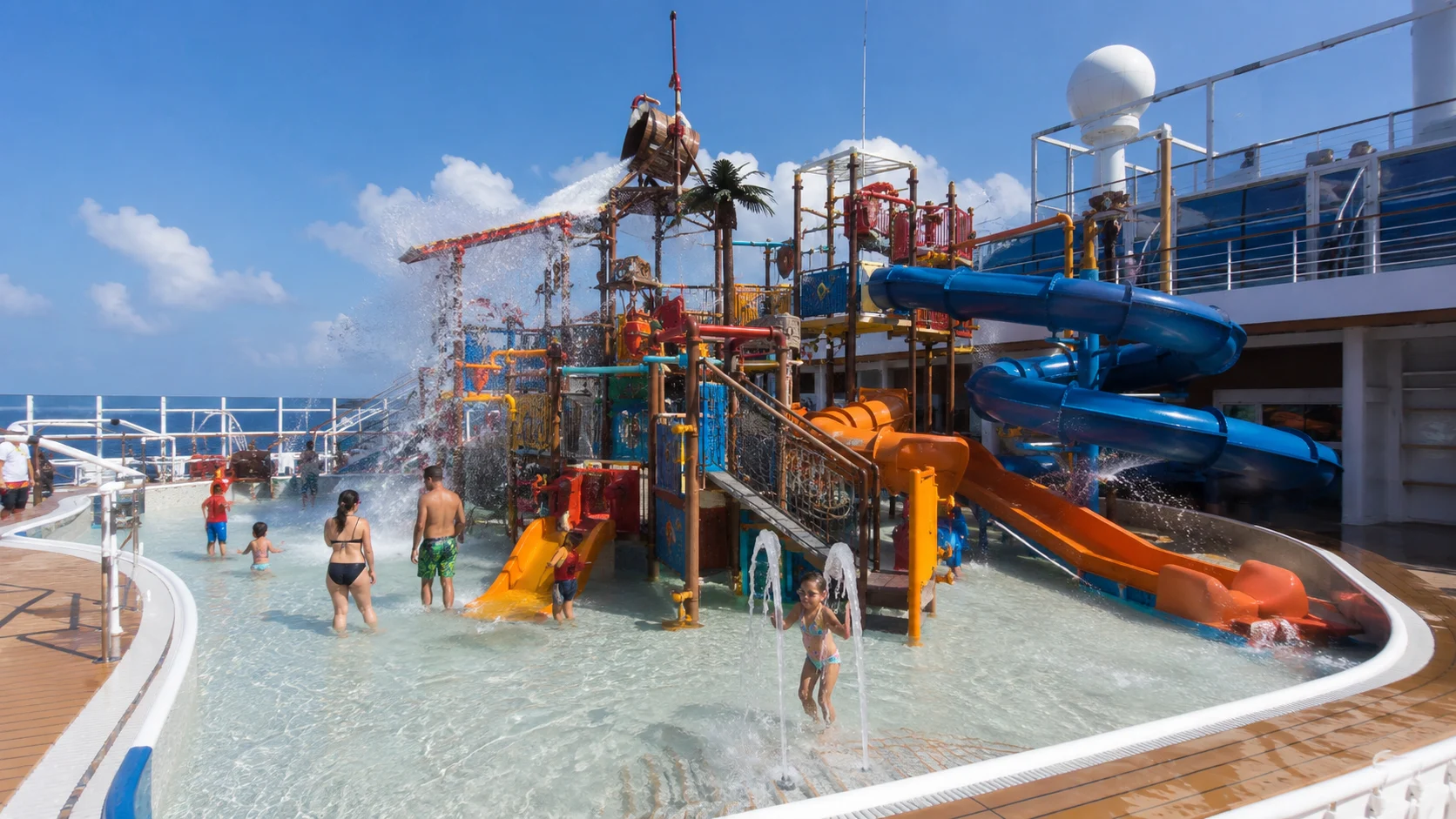
Pirates Cove Aquapark adds slides and water play near the upper family area. It is one of the biggest reasons families keep moving toward the top of Seashore.
Individual water-play features can occasionally be unavailable for maintenance even when the main slides and pool remain open, so never promise a child that every single splash feature will definitely be running. Cruise-ship plumbing has no respect for carefully managed parental expectations.
For cabin planning, the larger lesson is that families will repeat the upper-deck route far more than adults. That can justify Deck 14 or 15 in a way it would not for a couple who spends afternoons by the aft Infinity Pool.
Decks 16 through 19: Yacht Club changes the whole location equation
MSC Yacht Club occupies prime high-forward space and functions as a genuine ship-within-a-ship. Private lounge, restaurant, pool, sun deck, butler service, and concierge support mean Yacht Club guests can spend a surprising amount of the cruise without leaving the neighborhood.
That is why the usual “stay lower and midship” cabin advice matters less here. Yes, the high forward position can feel more motion, but the convenience of having so many premium facilities concentrated around your suite is part of what you paid for.
If motion sensitivity is severe, think carefully before booking Yacht Club solely for luxury. For everyone else, the private geography can make an enormous ship feel almost comically manageable.
The easiest elevator strategy on Seashore
Seashore’s elevators work hardest because so many people move vertically between Deck 8 and the upper pool zones. Shows, meals, port mornings, and bad-weather sea days are the times when patience gets tested most.
If you can use stairs, choosing Deck 10 or 11 lets you walk down to Deck 8 without waiting. Save the elevator for the big jump up to 16 or 18 rather than using it for every two-floor trip.
Being close to a useful elevator bank often matters more than being perfectly midship. The elevators themselves are usually not what you hear from inside the cabin; the much larger quality-of-life issue is walking a long hallway every time you leave the room.
The best Seashore decks by traveler
- Best overall standard cabin: Deck 10 or 11 near a useful elevator bank.
- Best for light sleepers: Deck 11 or 12 with cabins above and below.
- Best Deck 9 location: forward over the spa rather than directly over louder Deck 8 entertainment.
- Best for families: Deck 14 or 15 if quick access to Jungle Pool, Long Island Pool, and Pirates Cove matters more than possible overhead noise.
- Best for adults: a middle residential deck with easy stairs down to the Deck 8 Infinity Pool and waterfront.
- Best premium setup: Yacht Club high forward if you will actually use its private restaurant, lounge, pool, and sun deck.
How to learn MSC Seashore on embarkation day
Start at the atrium, then walk Deck 8 all the way aft to the Infinity Pool to understand the low waterfront route. After that, ride to Deck 16 for Jungle Pool and continue to Deck 18 for Long Island Pool and the family attractions.
That gives you the three versions of Seashore that matter: evening ship below, quiet cabin tower in the middle, and resort deck above. Once those are fixed in your head, the rest is much easier.
Continue planning with the pros and cons.
How this guide was researched: This guide was checked against the cruise line’s current ship pages, deck plans, venue listings, and published policies. Details can change by sailing, so confirm booking-sensitive prices, hours, access rules, and cabin assignments before payment.
Finish planning MSC Seashore
Keep MSC’s deck plan open while comparing rooms, and browse the ship overview when choosing which neighborhoods deserve the shortest route from your cabin. The cabin choices explain the room categories, while the Yacht Club benefits help you decide whether the private forward enclave fits your vacation.
Next, compare the cabins to avoid with the best cabin picks. Then use the dining guide, things to do, and ship tips to match your room to the way you will actually spend the cruise.