Disney Magic Best Cabins and Suites: Exact Rooms Worth Booking
Disney Magic has a few cabins worth checking before you pay for a higher category, especially 7120 and 7620 for balcony value and 5020 and 5520 for daylight on an inside-room budget.
Start with the feature your family will use every day, then choose the room that delivers it without adding an expensive compromise.
Short version: Try 7120 or 7620 for an open verandah sold as Category 7A, 7060 or 7560 for a central Deck 7 location, and 5020 or 5520 for an obstructed porthole at a Deluxe Inside fare. Move to a family room or connecting pair for the beds you need, and buy Concierge for separate space and useful service.
7120 and 7620: the balcony-value rooms to look for first
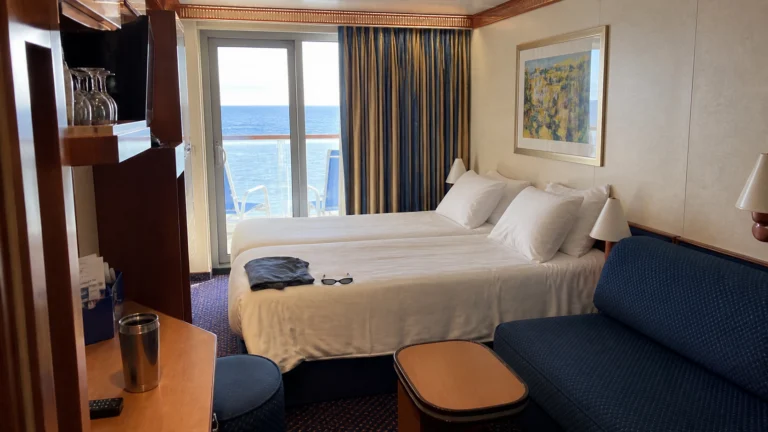
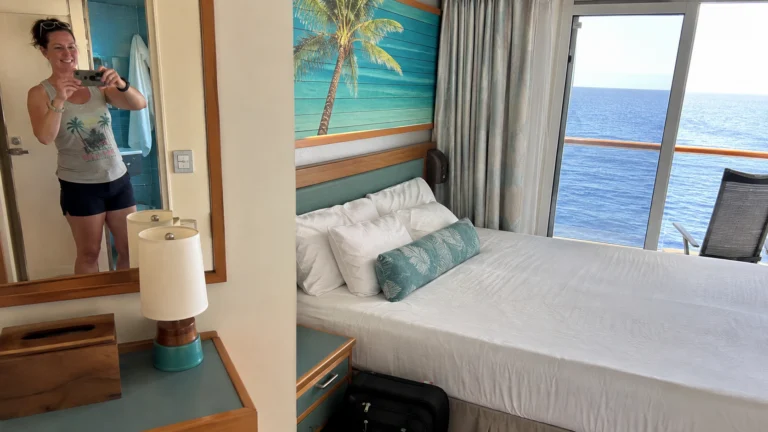
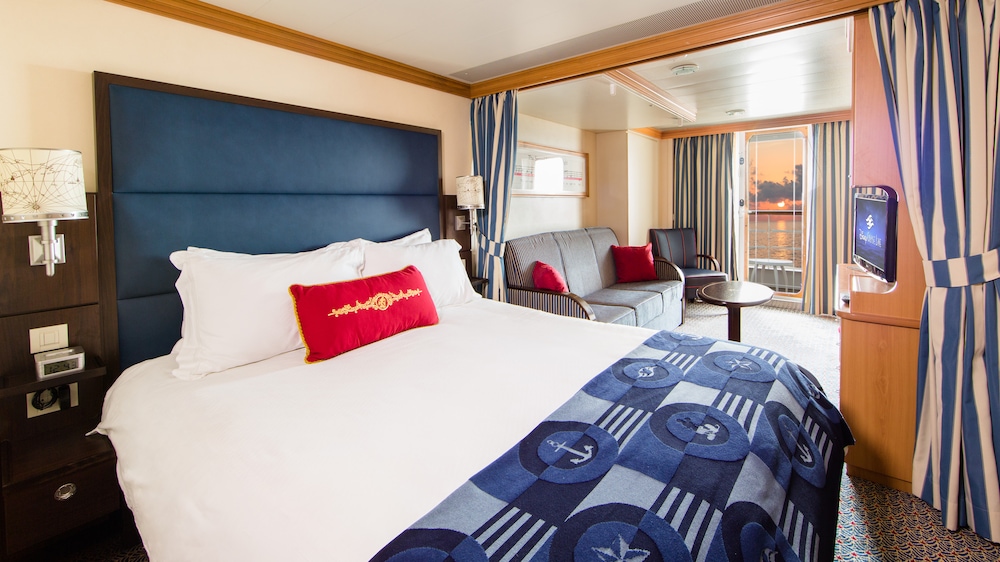
Rooms 7120 and 7620 are two of Magic’s unusual Category 7A verandahs. They have a clear-front, open balcony with a partial structural obstruction rather than the traditional Navigator’s design with a large porthole-style opening.
That is the attraction: you can get a more open balcony experience without necessarily paying the conventional verandah fare. Price both numbers against the clear-front rooms offered on your sailing before deciding that a higher category is the better buy.
They are aft on Deck 7, so this is a good fit for someone who wants balcony time and is comfortable staying toward the stern. It is less compelling for a traveler whose first priority is a lower, central position.
The obstruction is still part of the room, even when a past guest found it easy to overlook. Use the actual balcony photo to decide whether the corner framing will bother you while sitting outside.
My starting choice for a balcony-loving couple is one of these rooms when the saving is meaningful. For a family, the exact occupancy comes first, because a good balcony deal cannot create an extra bed.
6134 and 6634: the Deck 6 alternatives to that balcony bargain
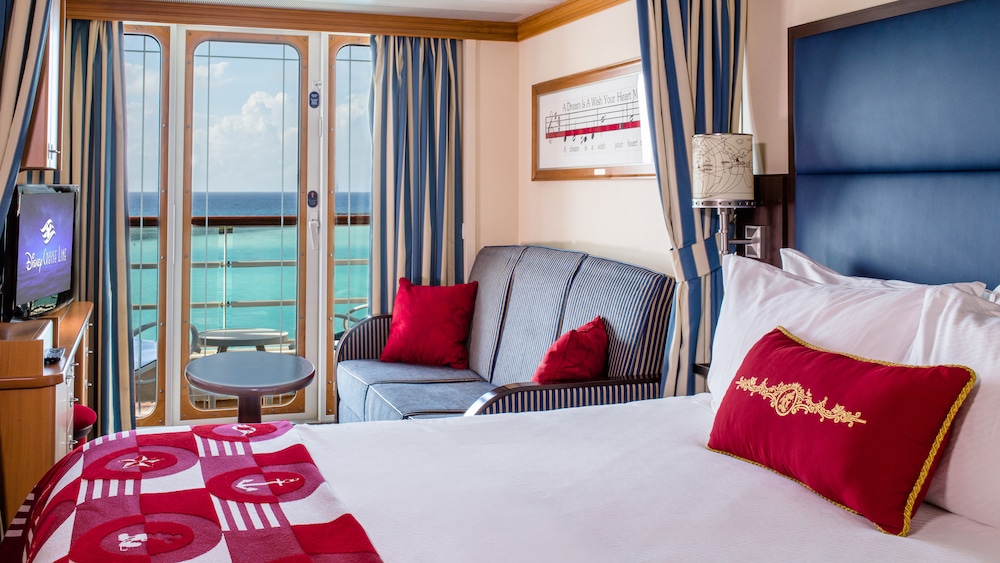
Rooms 6134 and 6634 belong on the same value shortlist. They also offer an open, partially obstructed verandah within Category 7A, so they deserve a separate look from the enclosed Navigator’s rooms.
Deck 6 puts you closer to the younger-child spaces on Deck 5 and one level lower than 7120 and 7620. That can suit a family making frequent club trips, provided the particular room’s beds work for everyone.
Keep the comparison simple: look at the total fare, the balcony opening, and whether Deck 6 or Deck 7 better matches your daily route. There is no reason to pay a large premium simply to win one famous room number.
If you dislike the partial framing, a conventional clear-front verandah is the cleaner purchase. A saving is useful only when you are happy with what you will look at every morning.
The verandah styles explain the broad designs, but these four exceptions are why the room number matters as much as the category label.
7060 and 7560: straightforward Deck 7 rooms for a central routine
Use 7060 and 7560 as starting points for a central Deck 7 verandah search. Their position in the cabin stack, with accommodation above and below, is the useful feature rather than an unusual balcony or suite benefit.
They make sense for a couple splitting time between forward shows, the atrium, aft restaurants, and the pool deck. You are choosing a balanced starting location instead of staying close to one favorite venue and far from another.
That residential setting reduces your exposure to public spaces immediately overhead. It does not guarantee silence from neighbors, passing guests, or the normal workings of a ship.
For most first-time Magic guests who do not need a special layout, this kind of Deck 7 room is where to stop upgrading. Keep the difference for the shore day, nursery time, or meal that will matter more to your family.
Our Magic deck guide helps you choose the more useful elevator area when a different Deck 7 room is available.
5020 and 5520: daylight without the ordinary oceanview price
Rooms 5020 and 5520 are two of Magic’s secret porthole rooms on Deck 5 forward. They are sold as Deluxe Inside even though they have a real porthole, because equipment outside interrupts the view.
These are the first two to compare when several secret porthole rooms cost the same. Their outlook is less obstructed than 5024 and 5524, making them appealing when you want natural light without buying a regular oceanview.
They are still obstructed rooms. Buy them for daylight and value rather than the expectation of a completely clear horizon from every spot in the cabin.
Rooms 5022 and 5522 are other candidates, especially if you need a connection: 5022 connects with 5024, and 5522 connects with 5524. For a couple who doesn’t need the door, 5020 or 5520 is a simpler starting pick.
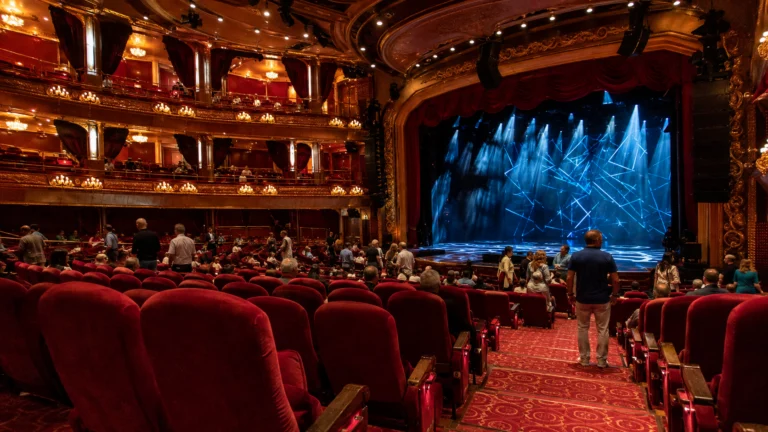
The forward Deck 5 setting is convenient to family facilities, but sound from shows or rehearsals can reach some rooms near the theatre footprint. If you are unusually sensitive to sound, a residential-deck inside may be the more comfortable saving.
Deluxe Inside: spend on the bathroom before the window
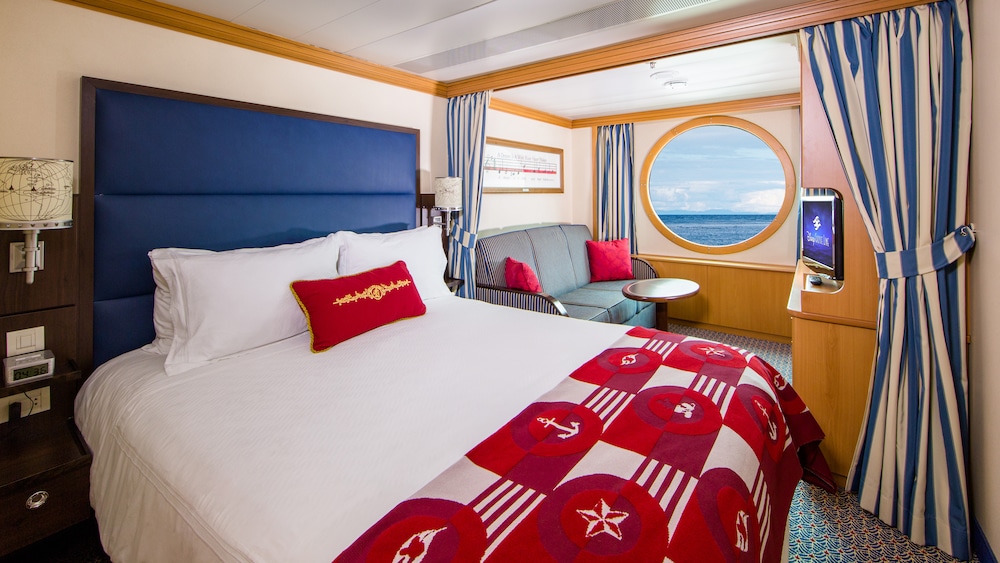
For a family on a tighter budget, compare Deluxe Inside before moving straight to an oceanview. The standard layout generally gives you more room and the split bathroom that can make getting ready much easier.
Standard Inside is roughly 184 square feet, while Deluxe Inside is roughly 214 square feet. The usual split arrangement separates the toilet and one sink from the bathing compartment and second sink.
That is a useful improvement when one person needs the toilet while someone else helps a child bathe. A window adds daylight, but it does not solve that morning queue.
A couple who keeps different schedules may be perfectly happy in Standard Inside. Choose the cheaper room when the bathroom sharing and smaller floor area will not interfere with the way you travel.
Accessible layouts can have a single adapted bathroom instead, so the exact room description takes priority over the general category picture.
A lower oceanview: the practical choice when a balcony is unnecessary
A lower oceanview can be a sensible step between an inside room and a verandah. You get daylight while using the public decks for the outdoor time that a balcony would otherwise provide.
Start nearer the middle if motion is a concern, and pay attention to the window arrangement. Magic’s oceanviews can have one large porthole or two smaller openings, which feel different even when the room category sounds similar.
The daily compromise is the longer trip to Deck 9 pools and casual food. For a port-heavy vacation that may be easy to accept; for a family returning to the room repeatedly, an upper residential room can be more useful.
For two adults who mainly want somewhere comfortable to sleep and get ready, an oceanview can be where the spending stops. You still enjoy the same shows, main dining rooms, and public outdoor spaces.
For five guests, settle the beds before chasing the deck
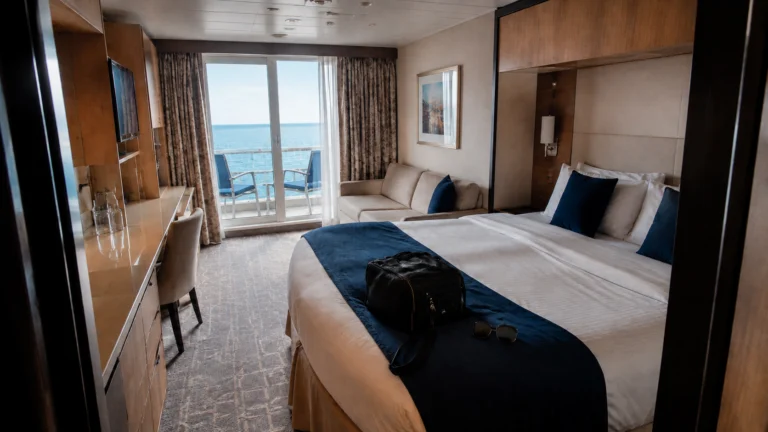
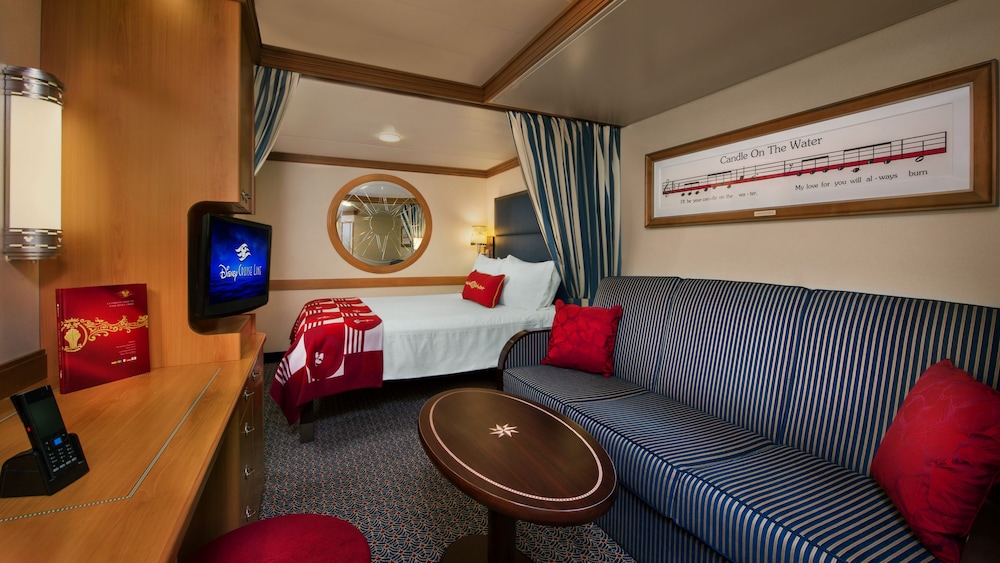
A Deluxe Family Oceanview with Verandah can accommodate five in designated rooms, but an ordinary verandah is not automatically an equivalent substitute. Start with the actual beds your party will use.
The sofa, upper berth, and wall-bed arrangement changes the room at night. Picture the walk to the bathroom and balcony with every bed prepared, especially if someone will be up before the rest of the family.
For adults or teenagers with different bedtimes, two confirmed connecting rooms deserve a price comparison. Two bathrooms and a door between sleeping spaces can make a bigger difference than one larger open cabin.
Use the total fare for everyone when comparing those options. A family room can be the better value, while two rooms can be the better everyday experience when sleep schedules are the problem.
The connecting rules distinguish an interior door from adjacent room numbers, and restricted fares cannot guarantee the connection.
Concierge: pay for separate space and service you will use
Magic’s one-bedroom, two-bedroom, and Royal Suites can give you living space that a standard family room cannot. Compare the actual bedroom doors and bathrooms before deciding how much the upgrade improves your trip.
That extra separation is the strongest reason to consider a suite for a family celebration or adults sharing. A title and a bigger area figure are less useful than knowing who can sleep while someone else watches television.
The Deck 8 location puts those rooms beneath a changing mix of Deck 9 spaces. A premium room is still worth choosing for its layout and services rather than assuming the fare guarantees a quiet ceiling.
Concierge also carries a higher recommended nightly gratuity under the gratuity guidance. Include that difference when comparing the full trip, along with the extras your group expects to buy.
If the separate rooms and Concierge support are features you will use throughout the voyage, the suite can be a lovely purchase. If you mainly want a clearer balcony and better bathroom routine, a much less expensive room may already solve both.
Choose the room for the cruise you are actually taking
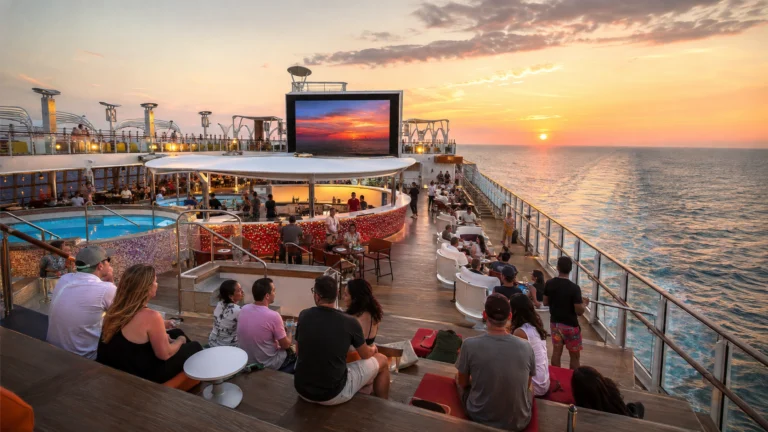
On a short sailing packed with characters, meals, and shows, a well-placed inside or oceanview can be plenty. On a sea-day-heavy trip, private balcony time has more opportunity to earn its price.
Adults without children may prefer a forward residential location for Quiet Cove, the spa, and the theatre route. Families frequently using AquaLab and aft dining may find an aft room more convenient.
For mobility needs, choose the designated accessible room for its actual doorway, bathroom, transfer space, and balcony threshold. A larger ordinary cabin is not a substitute for the adaptations you require.
Our Magic planning tips help you picture those daily routines before paying for more space. Then use the cabin cautions to rule out a compromise that would genuinely bother your group.
The shortlist I’d start with
For balcony value, look for 7120 or 7620, with 6134 and 6634 as the Deck 6 alternatives. Keep a conventional clear-front verandah in the comparison when its price is close.
For a balanced everyday location, start around 7060 or 7560 on Deck 7. For daylight at a Deluxe Inside fare, compare 5020 and 5520 while accepting the obstructed window and forward position.
For the family bathroom routine, price Deluxe Inside before paying for a view. For five guests or separate bedtimes, compare the real beds and a confirmed connecting pair before choosing a prettier balcony.
Once a room gives you the features you need, it is fine to stop upgrading. The best cabin is the one that makes your family’s cruise easier at a price you are happy to pay.
How this guide was researched: Cabin layouts, balcony designs, room benefits, and connecting-room rules were checked alongside room-specific photos and guest accounts. Recommendations explain the physical features worth buying without treating a past stay as a promise of present noise, condition, or price.