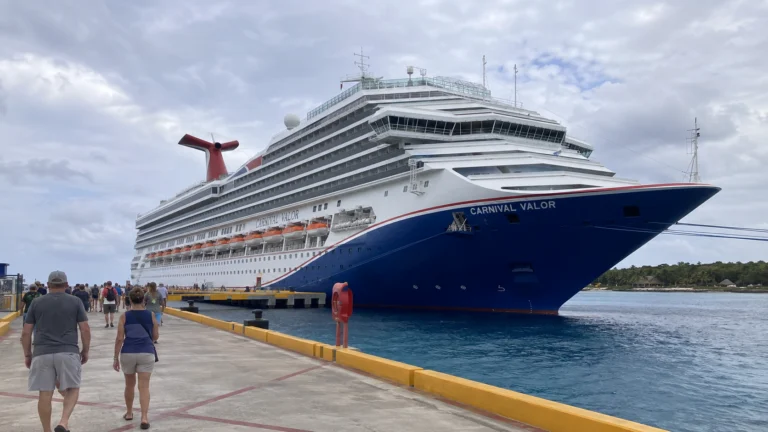
Carnival Valor Cabins to Avoid and Better Alternatives
On Carnival Valor, the cabin compromises worth screening first are an obstructed window, a working galley overhead, entertainment below, and a bed layout that doesn’t suit your group.
Start with the room number and compare a nearby alternative before paying for a category upgrade that leaves the actual problem unsolved.
Short version
Start with a suitable Deck 7 room for a light sleeper. Check 2446 and 2449 for obstructed views, Deck 2 against the galley, Decks 6 and 8 against public venues, and every booking for the beds and access your group needs.
For a light sleeper, compare Deck 7 before Deck 6
Compare standard balconies 7340 and 7344 on Deck 7 when you want accommodation immediately above and below. They provide an ordinary side-facing alternative to the aft Premium Vista corners, without paying for a suite to move away from public venues.
Deck 6 sits directly over Promenade Deck 5, but that doesn’t make every Deck 6 room the same choice. The forward Ivanhoe Theatre, central Shogun Club Casino, and aft nightclub, piano bar, and Eagles Aft Lounge create different downstairs neighbors.
A room over a shop deserves a different assessment from a room over a performance space. If two comparable rooms cost roughly the same, a light sleeper has a good reason to choose the one without a direct entertainment footprint below.
Night owls can reasonably prefer Deck 6’s quick route to Promenade. Our Valor activity guide helps you judge whether those evening venues will be part of your regular routine.
The Valor deck plan identifies the relationship, but it can’t tell you how much sound will reach a particular pillow. Use it to avoid a location you’re uncomfortable with, without treating an entire deck as proven noisy.
Deck 8 needs an overhead check, especially farther aft
Avoid selecting a Deck 8 room purely because it’s close to breakfast. Lido Deck 9 above includes Argonaut Pool, Rosie’s Restaurant, food-service areas, and the aft Prometheus Pool, alongside a forward cabin section.
The public areas raise different questions from nighttime music: furniture movement, foot traffic, and preparation in working food spaces. If those are the things that wake you, compare a Deck 7 room before paying for one-flight Lido access.
Forward Deck 8 rooms can have accommodation above rather than the pool or buffet. They deserve their own check instead of inheriting a warning based on a room far aft under an outdoor area.
For a pool-focused family, the shorter route can be worth the compromise. Choose the exact room after looking at what’s overhead, and ask whether the convenience will matter several times a day or only once.
Don’t assume a higher category fixes the location. Upgrading from one Deck 8 room to another directly under the same public footprint can buy more space while leaving your main concern in place.
Cabins 2446 and 2449 aren’t clear-window ocean views
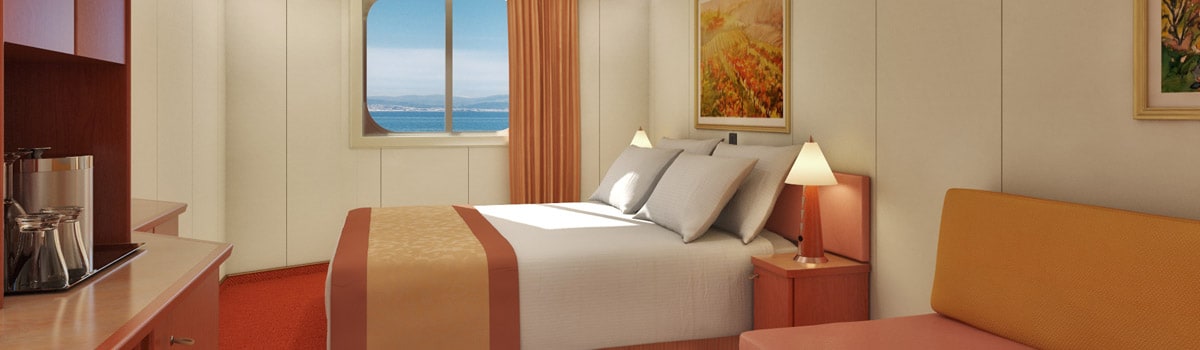
Decline Ocean View cabins 2446 and 2449 if you’re paying extra for an uninterrupted outlook. Carnival specifically marks these two Category 6B rooms as having obstructed views.
They can still make sense when you want daylight and the fare reflects the compromise. The useful comparison is an unobstructed lower-deck Ocean View, rather than a jump straight to a more expensive balcony.
Ask for a recent photograph of the exact window from inside the cabin if either room remains on your shortlist. A generic Ocean View photograph can’t show the obstruction you’re agreeing to accept.
Consider the normal seated outlook as well as the best standing camera angle. A room can admit plenty of light and still fail the particular reason you wanted a window.
When the prices are close, choose the confirmed clear-view alternative with an appropriate overhead space. There’s little value in accepting a limitation you care about for savings too small to change the trip.
Check Deck 2 rooms below the working galley
If you’re sensitive to overhead activity, compare a Deck 2 cabin against the working galley on Deck 3. It occupies a substantial area between the Lincoln and Washington dining-room sections.
A restaurant seating area and its neighboring galley aren’t equivalent overhead spaces. The concern is the food-preparation and service footprint above the room, rather than a claim that every cabin below a dining room is unsuitable.
A comparable Riviera Deck 1 Ocean View can be a useful alternative because Deck 2 accommodation is above it. Check its exact position too, especially if you’re also trying to avoid the far bow or stern.
This is a good example of fixing one issue without abandoning the original goal. You can keep a lower, more central location for motion concerns while looking for a different overhead neighbor.
Our Valor deck guide helps with the routes once you’ve narrowed the room. Lower cabins are farther from Lido, so choose a useful elevator bank as well as an appealing fare.
A 4J picture-window interior needs a privacy check
Don’t confuse an Interior with Picture Window, Category 4J, with Valor’s Scenic Ocean View categories. The 4J window faces an observation walkway, and Carnival describes its view as partially obstructed.
Avoid that arrangement if you want to leave the curtains open without thinking about people using the space outside. A standard Ocean View with a suitable clear window is the more straightforward comparison for daylight and privacy.
For a budget traveler who expects to use the room mainly for sleeping, a 4J can still be worthwhile. Price it as a room with daylight and a compromise, rather than imagining the broad glass of a Scenic room.
The Valor room descriptions distinguish walkway-view, porthole, Scenic, and ordinary Ocean View accommodations. Match the exact category before comparing photographs or accepting an upgrade.
Motion-sensitive travelers should question high-forward upgrades
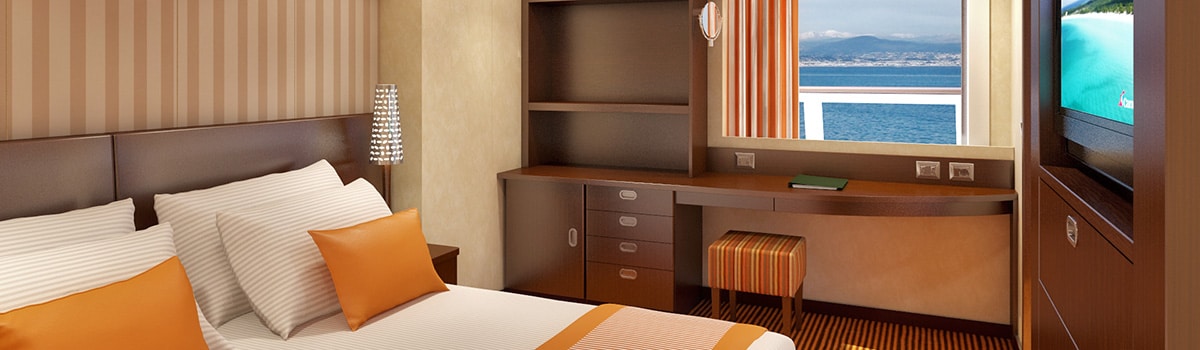
Junior Suites 9205 and 9206 and Captain’s Suites 9202 and 9203 are high and forward on Deck 9. Don’t let a suite label override a position you already know doesn’t suit you.
The forward Scenic Ocean View and Scenic Grand Ocean View rooms also put large glass ahead of a central location. They’re attractive view-first choices, but a lower midship Ocean View is the more sensible starting point if motion is your main concern.
Lower porthole rooms provide daylight at a potentially appealing fare, yet they’re also toward the bow. A low deck alone doesn’t make a very forward room equivalent to a lower central one.
Compare the benefit you’re actually buying: panoramic glass, extra space, or a smaller fare. If avoiding a high-forward position matters more, a conventional lower Ocean View or a more central suite can solve the right problem.
Motion depends on conditions, so no room can promise that you’ll feel none. The point is to avoid spending extra on a location that conflicts with your priorities.
Premium Vista corners have three different deck trade-offs
For a balcony enthusiast who sleeps lightly, compare Deck 7 Premium Vista cabins 7440 and 7445 first. Their aft corners offer wraparound outdoor space with cabin decks above and below.
The same category also includes 6452 and 6483 on Deck 6, and 8448 and 8455 on Deck 8. Check the aft Promenade entertainment beneath the lower pair and the aft Lido public area above the higher pair.
Choose the Deck 6 pair when the price and evening convenience outweigh your concern about the downstairs venue. Choose Deck 8 when quick Lido access matters more than having accommodation overhead.
All three pairs are aft, so moving between them doesn’t remove the longer route to forward venues. If walking distance is the real problem, a regular side-facing balcony near the elevator bank you use most is a better alternative.
Don’t assume a larger balcony means a larger bedroom or a better sleeping arrangement. Our Valor best cabins guide compares the benefits worth paying for before you settle on one of these special rooms.
Upper/Lower cabins can be the wrong bargain for a couple
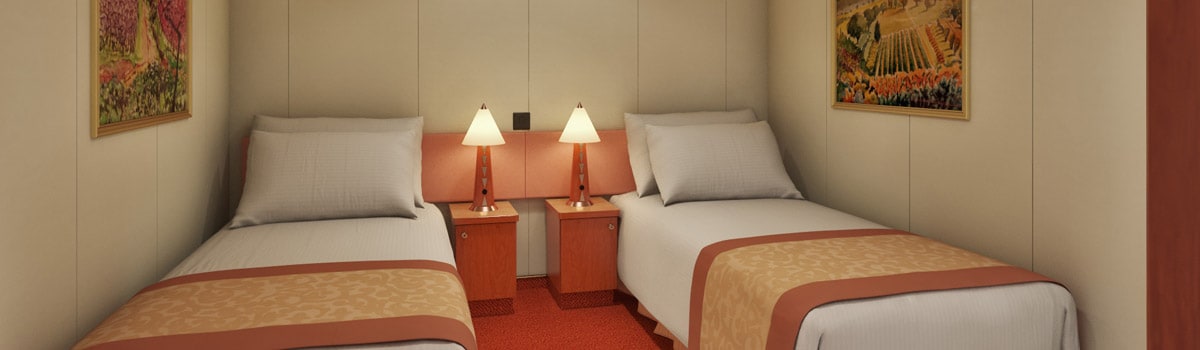
Reject an Interior Upper/Lower if a shared bed is essential and the exact arrangement doesn’t provide it. Valor’s descriptions specify one twin bed plus an upper Pullman or sofa bed, rather than the usual convertible pair of twins.
That can work for a solo traveler or companions happy with separate sleeping arrangements. It isn’t a suitable substitute for a regular room simply because both bookings list space for two guests.
The deck-plan legend also distinguishes a fixed king that doesn’t separate and twins that don’t convert to a king. For friends needing separate beds or a couple wanting one shared bed, settle that detail before payment.
With three or four guests, identify who will use a sofa or upper berth. Ask about the nighttime setup if someone can’t climb comfortably or needs a clear route to the bathroom.
Connecting rooms and accessible rooms need exact confirmation
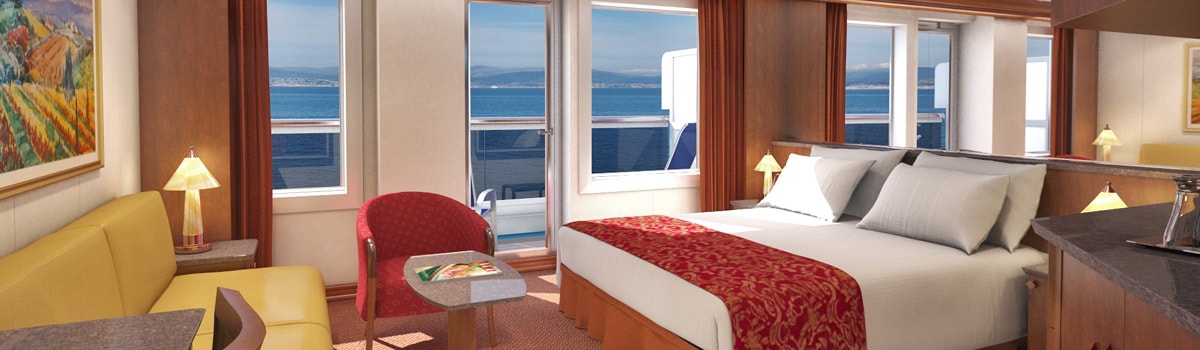
For a family wanting separation, compare two confirmed connecting rooms with one larger cabin. Two bathrooms and a real internal door can be more useful than putting everyone into a single room with additional berths.
Use the connecting symbol on the plan and the actual assigned pair. Adjacent cabin numbers, rooms opposite each other, and a request to be near friends don’t establish an internal connection.
For mobility needs, begin with the accessibility information and confirm the exact room’s features. A large ordinary suite doesn’t automatically provide the bathroom access, transfer arrangement, or clearances you need.
Check the accessible route to the venues you’ll use regularly as well as the cabin. Valor’s lower dining layout makes the correct elevator bank useful even when the destination looks nearby on a map.
Accept a guarantee only when the eligible compromises are acceptable
Choose your exact cabin when a clear view, particular bed arrangement, or distance from public venues is essential. A guarantee gives up location control, so compare its terms and eligible accommodation with what you’re genuinely willing to accept.
For an uncomplicated balcony choice, compare 7340 and 7344 with the more expensive corner rooms. For a lower room with daylight, compare central Ocean Views using both the view mark and the overhead footprint.
A discounted cabin can be the right choice when its drawback barely affects your trip. Keep the saving when that is true, and pay for an alternative only when it fixes something you actually care about.
How this guide was researched
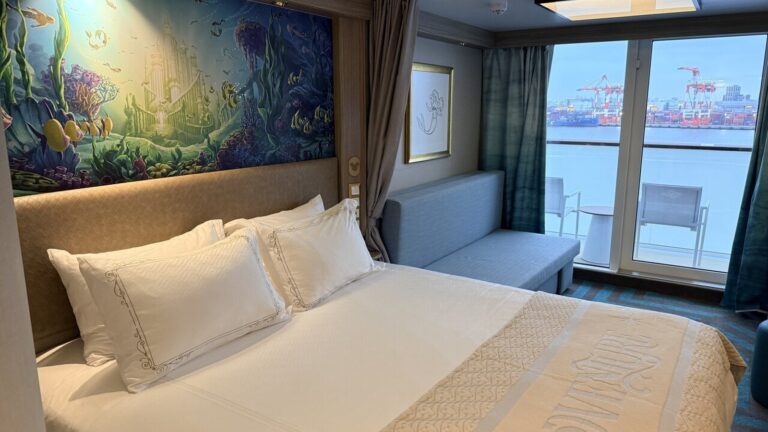
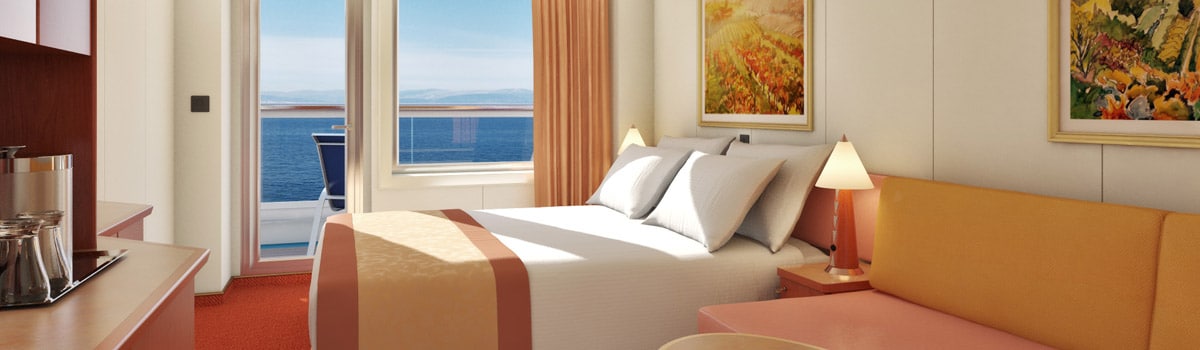
Room comparisons use Carnival’s accommodation descriptions, accessibility guidance, and the numbered deck plan. The photos are representative category images; advice about public-deck neighbors describes the layout rather than measured sound levels.