Disney Dream Pros and Cons: Who Should Book It?
Disney Dream is strongest for families who will use AquaDuck, its grouped adult nightlife, practical staterooms and Disney stage shows throughout the cruise.
Choose another ship for a giant waterpark vacation or a mostly port-focused trip where the Disney infrastructure will spend more time waiting for you than you spend using it.
Short version
- Best reason to book: Classic circulation is easier for some families than Wish class.
- Another strong point: AquaDuck is still one of Disney’s best family attractions.
- Biggest tradeoff: Youth-club ages and uneven cabin updates can change the value.
- Think twice if: The Disney premium is especially painful on short sailings.
- Bottom line: Book Disney Dream when its signature strengths sound exciting, not simply because it is newer or larger.
Before booking, browse the pool rules, activity guide, and dining guide so the ship, cabin, and fare match your priorities.
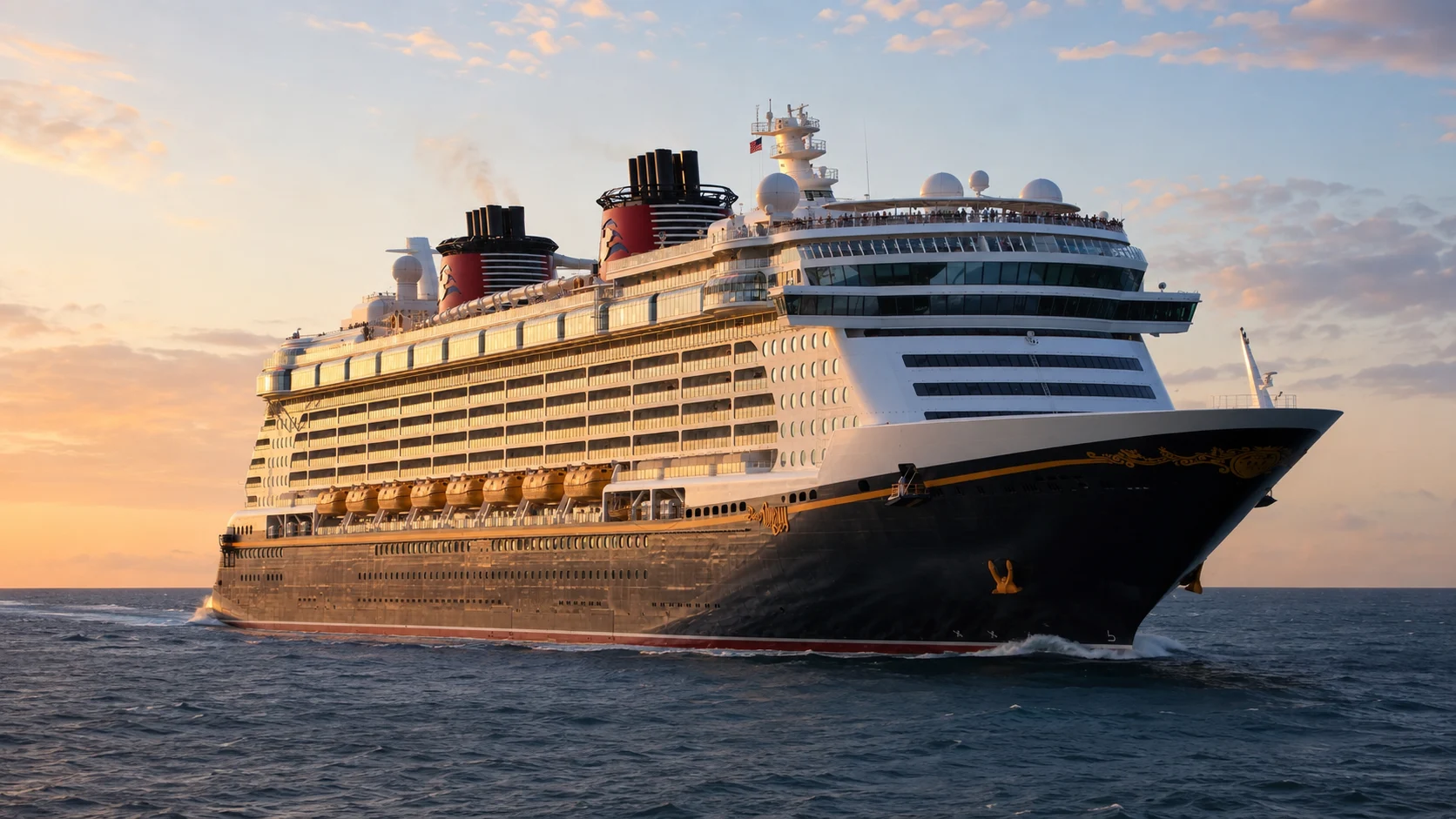
Pro: classic circulation is easier for some families than Wish class
Dream has forward, midship and aft elevator banks, giving your family three starting points for daily routes between cabins, dining and activities. Prefer that arrangement when your regular destinations are spread out, while a family focused on Wish’s particular restaurants and character settings may value those more.
The useful question is which elevator bank connects your room with the places your family expects to visit most. Compare that route on the deck plan before paying for a category upgrade, because a familiar-looking layout cannot remove every detour or peak-time wait.
Choose Dream over Wish when cabin price is similar and you care more about ease, adult spaces, and the familiar Disney cruise rhythm than about the shiniest themed lounges. Choose Wish when its specific restaurants, character spaces, or short Port Canaveral itinerary are the whole reason for going.
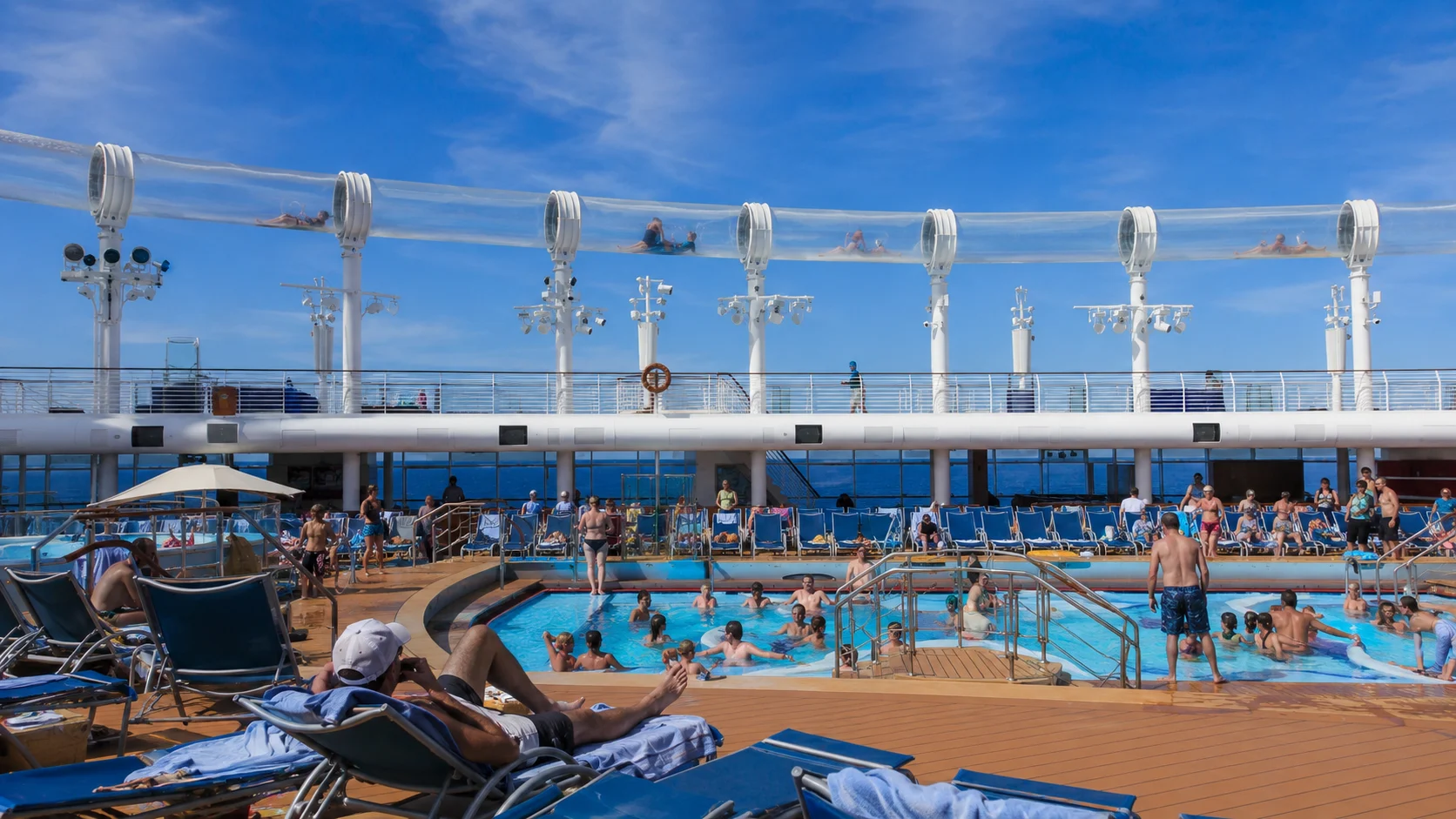
Pro: AquaDuck is still one of Disney’s best family attractions
AquaDuck is a water coaster rather than a standard drop slide, carrying riders through an elevated transparent tube that runs around the top deck and briefly extends over the side of the ship. It is fun without being so intense that only thrill-seeking teenagers care about it.
AquaDuck is included, but riders must be at least 42 inches tall; riding solo requires 54 inches, and children under seven must ride with someone at least 14. Check those conditions in Disney’s pool and slide rules before making the water coaster the deciding feature for a child.
There are stairs involved in reaching the loading area, so travelers with mobility limitations should review Disney’s accessibility information rather than assuming every top-deck attraction is step-free. Never make AquaDuck the sole reason to book if someone in the family may not be able to use it.
Pro: Dream’s adult district is more useful than one scattered lounge at a time
Dream’s adult entertainment area groups Skyline, Pink, District Lounge, Evolution, and Pub 687 into one part of the ship. That clustering creates an actual adult night out because you can move from cocktails to music to dancing without repeatedly crossing family spaces.
You prefer this to Wish-class ships, where excellent adult venues exist but feel more scattered. Dream lets a couple finish dinner, wander into Skyline, catch adult programming, then move to another bar almost as naturally as they would in a small entertainment district on land.
The spaces themselves are not huge, and Pub 687 or other popular venues can fill during trivia, sports, or late programming. Arrive early for one must-do event and stay flexible about the rest instead of treating a bar seat like a limited-edition souvenir.
Pro: Quiet Cove feels like a genuine adult retreat
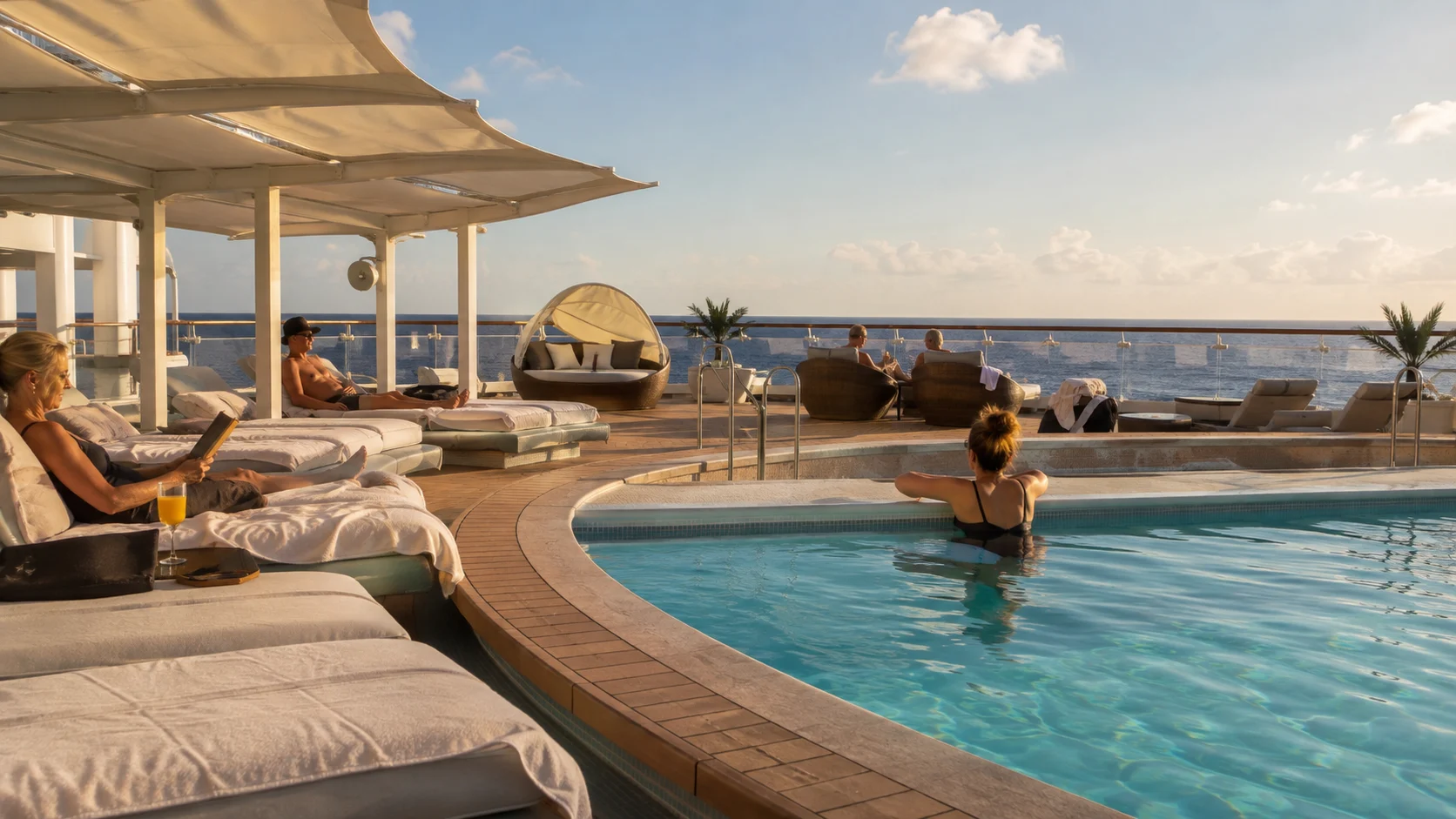
Quiet Cove is an included retreat for guests 18 and older, separate from the family pools, and Dream also has Satellite Falls on Deck 13. That second shallow adult water area is shared with Fantasy, so it is a reason to consider this class rather than an advantage exclusive to one sister.
Cove Café nearby makes the space more practical because you can spend several hours there rather than treating the pool as a quick visit. Adults traveling without children can build a sea-day routine around coffee, Quiet Cove, spa time, Palo or Remy, and the evening district without feeling like they accidentally booked summer camp.
The best loungers still fill, especially on warm sea days. Arrive earlier or use port hours rather than assuming “adults only” means nobody else over eighteen knows the place exists.
Pro: Palo and Remy give adults two very different splurge meals
Palo and Remy remain two of Dream’s strongest adult reasons to spend extra. Palo is the easier recommendation for brunch or an elevated Italian dinner, while Remy is the serious fine-dining event where the meal itself becomes the evening.
Both restaurants require reservations, charge extra, and admit guests 18 and older under Disney’s adult-dining rules. Check the selected experience’s menu, dress code, and cancellation terms before booking, and coordinate any paid nursery care needed while the adults dine.
Book Palo before Remy for a first Dream cruise because it is easier to fit into the week and less of a time commitment. Remy makes sense for adults who genuinely enjoy long formal meals, not for parents rushing through several courses because bedtime logistics are waiting.
Rotational dining is still one of Disney’s best family conveniences
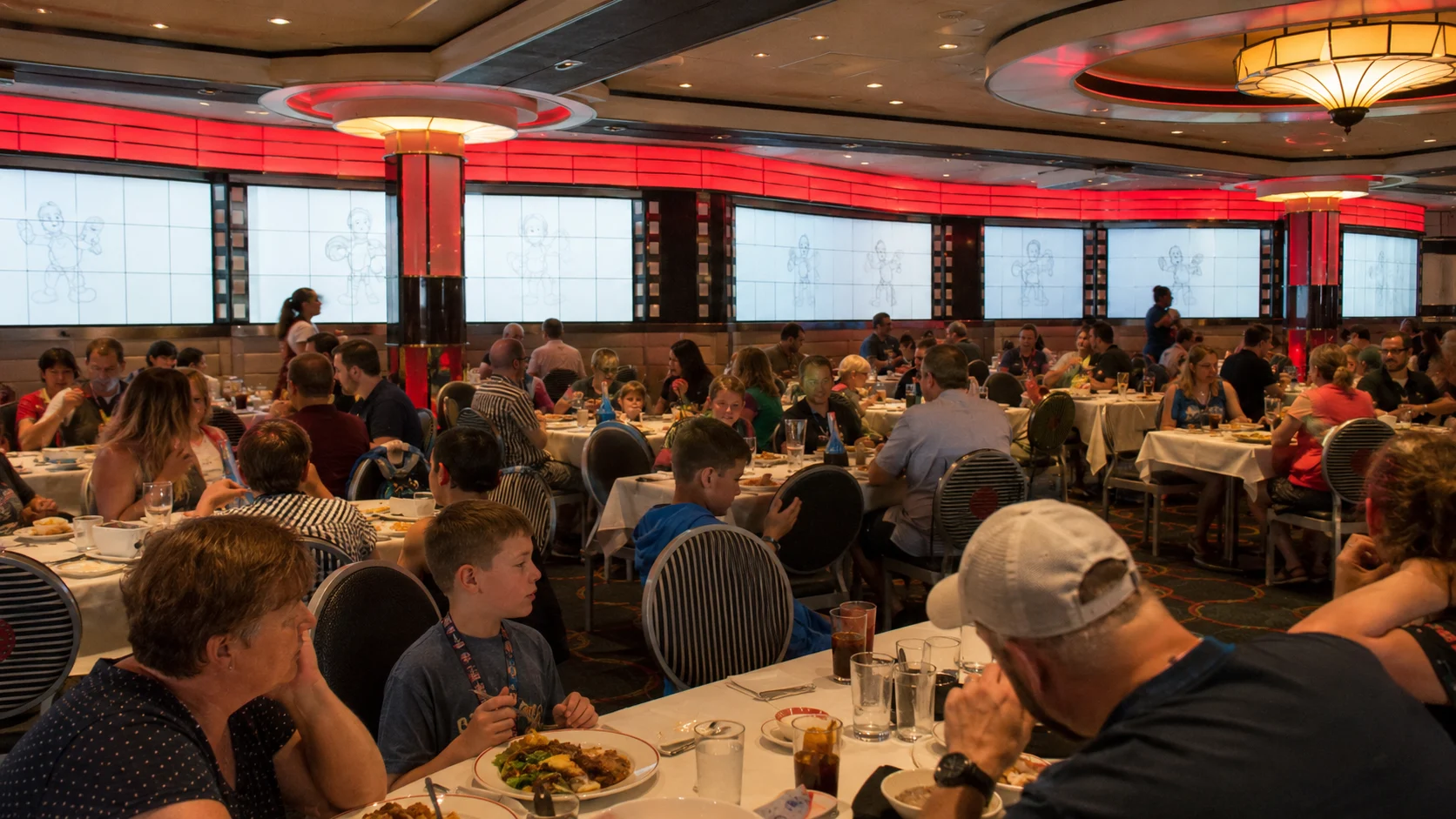
Animator’s Palate, Enchanted Garden, and Royal Palace rotate your family through different settings while the same serving team follows you. That consistency becomes valuable after the first night because the team already knows allergies, drink preferences, booster-seat needs, and which child has entered a lifelong feud with sauce.
I like Dream’s rotational lineup because the restaurants feel themed without every dinner becoming a full-scale show. Animator’s Palate is the most overtly Disney, while Royal Palace and Enchanted Garden provide calmer evenings where adults can actually have a conversation.
The included service pattern and changing settings are the dining advantages you should pay attention to, while individual dishes and preferences vary. Our dining guides help compare that regular dining value with the additional cost of Palo or Remy rather than treating all restaurant names as fare inclusions.
Pro: the theater entertainment still justifies part of the Disney premium
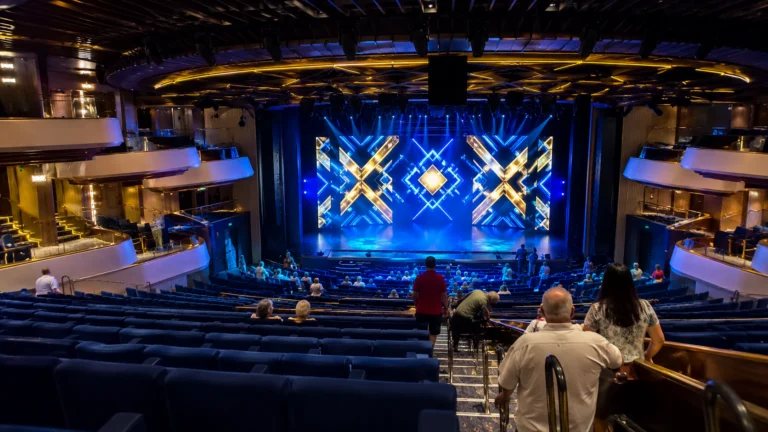
Dream’s Disney stage productions are one of the easiest parts of the fare to defend. Full productions such as Beauty and the Beast and Disney’s Believe use familiar characters, music, sets, costumes, puppetry, and live performers at a level that families would pay to see separately on land.
Protect the one or two shows your family truly cares about and let the rest of the evening program stay flexible. A child who has already swum, used Oceaneer Club, eaten a three-course dinner, and met characters may not need a late-night lesson in vacation optimization.
The theater also gives multigenerational groups a rare activity requiring no swimming ability, height minimum, or willingness to discuss where everyone wants to sit at the pool. Grandparents, parents, and children can all regroup for the same show without pretending they wanted the same afternoon.
Pro: Dream’s family staterooms are still unusually practical
Many Deluxe cabins have a split bathroom, separating the toilet and one sink from the bath or shower and another sink, which helps families get ready together. Standard Inside rooms have a single bathroom, and accessible layouts differ, so confirm the exact category rather than assume every Disney room provides the same arrangement.
A privacy curtain separating the main bed from the sofa and bunk area also helps parents avoid ending every night whispering in total darkness at 8:45 p.m. The design remains one of Dream’s strongest quiet advantages even as newer ships add flashier public attractions.
Inside cabins with virtual portholes add another Dream-class quirk, displaying a real-time exterior view with occasional Disney character animations. Still choose a real ocean view when the price difference is modest, but this is one of the few interior-cabin gimmicks I actually find charming.
Use our cabin-location guides to compare surrounding decks and daily routes before choosing the room. A guarantee rate leaves assignment to Disney under its terms, and a solo traveler needs an explicit single-occupancy total rather than the per-person price advertised for two sharing.
Con: youth-club ages and uneven cabin updates can change the value
Dream has received targeted updates to youth spaces, concierge areas, the spa and premium accommodations, but do not treat that as proof every original cabin was rebuilt. The useful question is whether the layout, room condition and family features work for this trip.
For families, the useful question is which children can use the clubs: secured Oceaneer programming is for toilet-trained ages 3 to 10, with Edge serving tweens and Vibe teens. Disney’s youth-club eligibility matters more than a general promise that supervised activities suit every child in the family.
The nursery is a separate paid option for younger children, so include that cost and availability when planning adult meals or spa time. Refurbished public rooms and premium suites can improve particular experiences without establishing the condition of the standard cabin you are considering.
Con: the Disney premium is especially painful on short sailings
Add gratuities, Wi-Fi, alcoholic drinks, specialty coffee, spa services, adult dining, nursery care and shore activities to the cabin fare. The included shows, regular dining and eligible youth programming can justify a premium when you use them, but an impressive list is not value if you spend most of the trip ashore.
Choose four or five nights over three when the additional evenings and port time are worth the total cost to your family. On a brief cruise, boarding, unpacking and leaving consume a larger share of the break, but extra nights are not automatically a better purchase than the room or dates you really need.
If Dream is operating a port-heavy European itinerary, make a different calculation. Spending all day in Rome, Florence, Athens, or another major destination can leave very little time to use the Disney clubs, pools, shows, and adult spaces that helped create the premium fare.
For Europe, Disney makes the most sense to you for multigenerational families who value the childcare, service structure, and familiar onboard environment after complex port days. Port-first adults without children may be paying a lot for infrastructure they barely touch.
Con: the family pool deck still gets chaotic at the exact times you expect
Dream’s family pools are not enormous, and sea-day afternoons can feel busy even though the ship is smaller than today’s mega-ships. AquaDuck demand, deck chairs, splash activity, food traffic, and families all concentrate on the same upper decks.
Use the pools when the schedule allows and mix in clubs or theater time rather than make the central deck carry the whole afternoon. Swim diapers are restricted to designated toddler areas such as Nemo’s Reef, not the swimming pools or AquaDuck, which changes the plan for a child who is not toilet trained.
Adults should use Quiet Cove when they want a genuinely different atmosphere. Remaining beside the family pool while repeatedly observing that it contains families is a surprisingly common self-inflicted cruise problem.
Dream versus Fantasy versus Wish class
Choose Dream over Wish when you prefer the older layout, larger-feeling adult district, classic rotational restaurants, and more intuitive circulation. Wish wins when its specific themed spaces, newer interiors, or itinerary are more important.
Dream and Fantasy both have Satellite Falls, Quiet Cove, AquaDuck, Palo and Remy, so choose between them primarily on ports, dates and room availability. Their adult lounges and theater lineups differ: Dream’s Beauty and the Beast may matter more to your family than Fantasy’s Frozen and Aladdin productions.
Treasure is the Wish-class ship to compare most carefully because seven nights give that newer hull time to breathe. Dream still wins when you strongly prefer the classic Disney layout and do not need the shiniest storytelling spaces.
Who should book Disney Dream
- Families who want classic Disney Cruise Line. Dream delivers the clubs, rotational dining, AquaDuck, theater, characters, and family cabins without Wish-class circulation.
- Disney cruisers who dislike Wish’s layout. The conventional elevator banks and adult district are real quality-of-life improvements.
- Adults who genuinely like Disney. Quiet Cove, The District, Palo, Remy, spa time, and theater can create a very adult week inside a family ship.
- Multigenerational groups. Kids programming and familiar navigation make it easier for several generations to separate and regroup.
- Families willing to use the ship heavily. The Disney premium works much better when clubs, shows, meals, AquaDuck, and character programming all get used.
Who should choose another ship
- Travelers who want a brand-new cabin. Targeted ship updates do not mean every original standard room was rebuilt.
- Families paying an extreme per-night price for three nights. Compare a longer Disney sailing before assuming the weekend is good value.
- Port-first European cruisers. A cheaper line may visit the same cities while you spend less on unused Disney infrastructure.
- Adults indifferent to Disney. Premium dining and Quiet Cove are good, but there are more adult-centered ships for the money.
- Families whose children mainly want giant water parks. AquaDuck is fun, not Category 6.
How to book Disney Dream
Choose four or five nights over three whenever the total still makes sense, then compare Dream with Fantasy and one Wish-class option for the same vacation window. The older layout should be something I actively value, not something I accept because the ship happened to be available.
Choose the exact cabin based on quiet surroundings and your family’s most-used elevator bank, then decide whether the premium for a verandah is worth it compared with Disney’s already-good ocean-view and inside options. A virtual porthole can make an interior more fun, but do not pay almost-balcony money for the novelty.
Reserve Palo or Remy only when the adults want that meal, then protect the stage show the family most wants to see. Leaving some unplanned time works better for your family than assuming the ship’s layout makes every dinner, club pickup and performance connection effortless.
Offer children an age-appropriate club visit and adults time in their own spaces, without assuming every child wants to separate. A family that mainly wants to stay together can still enjoy Dream, but should value the shared shows, meals and activities rather than unused childcare.
Continue planning with the things to do, cruise tips.
How this guide was researched: This guide was checked against the cruise line’s current ship pages, deck plans, venue listings, and published policies. Details can change by sailing, so confirm booking-sensitive prices, hours, access rules, and cabin assignments before payment.
The final verdict
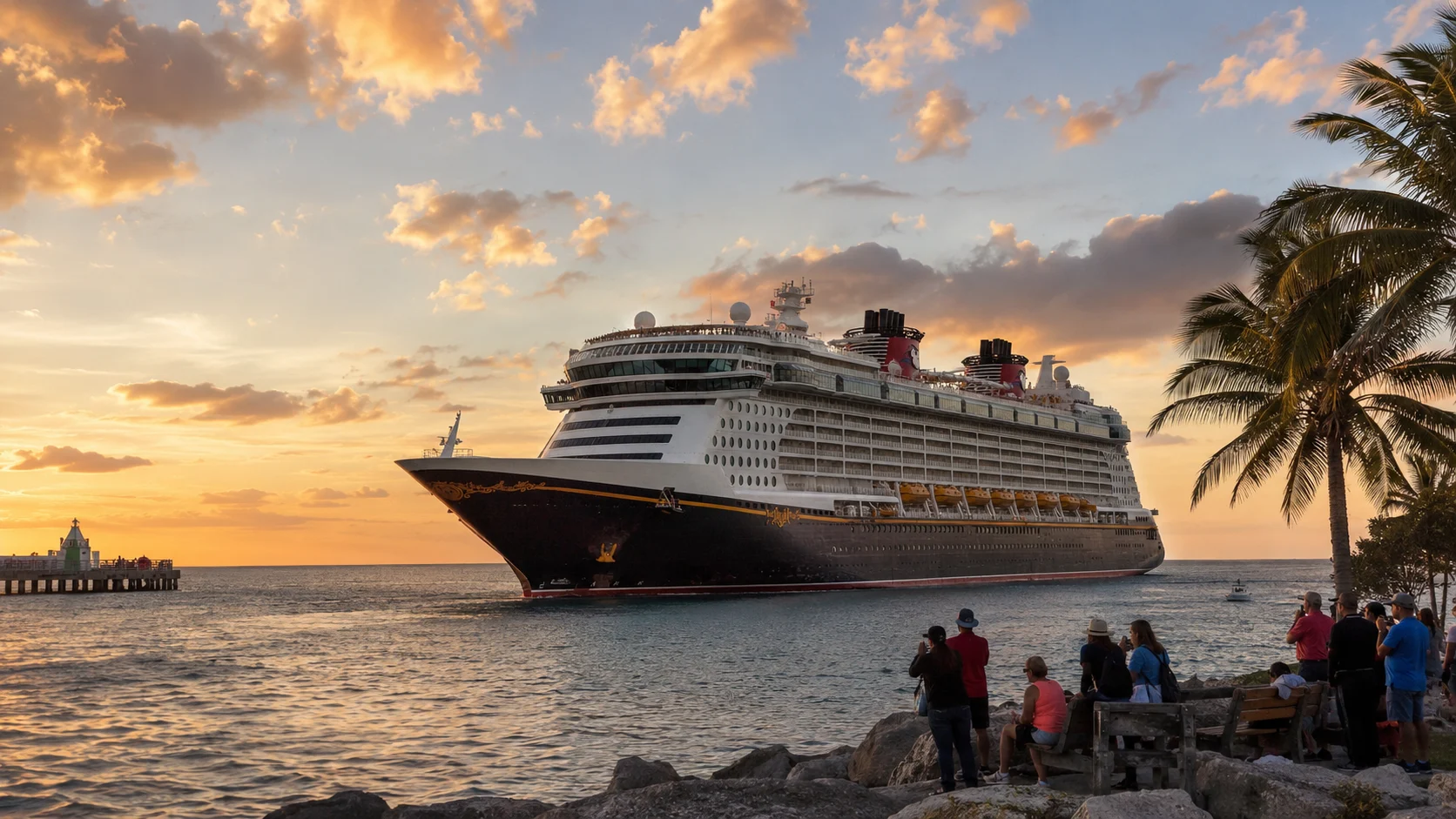
Disney Dream remains one of the fleet’s best all-around designs because the ordinary logistics are so good. AquaDuck, three conventional elevator banks, a real adult entertainment district, Quiet Cove, Palo and Remy, practical family staterooms, strong kids clubs, rotational dining, and Disney-level theater make the ship easy to enjoy without needing the shiniest hardware.
The compromises you should weigh are the concentrated family pool deck, paid extras and limited time aboard on short or port-heavy trips. Dream can be the right choice over a newer ship when its layout, shows, and actual itinerary suit your family, without needing an unsupported claim that all older cabins are worn.
Compare the exact Dream cabin, itinerary and total fare with Fantasy and one Wish-class alternative before booking. The best reason to choose Dream is its practical layout and specific mix of AquaDuck, adult spaces, family cabins and theater, not a claim that older automatically means cheaper or worse.
Plan your Disney Dream cruise
Compare the cabins to avoid, best cabins, and deck guide before paying more for a Dream view that adds walking or family-pool noise.