Icon Of The Seas Pros and Cons: Who Should Book It?
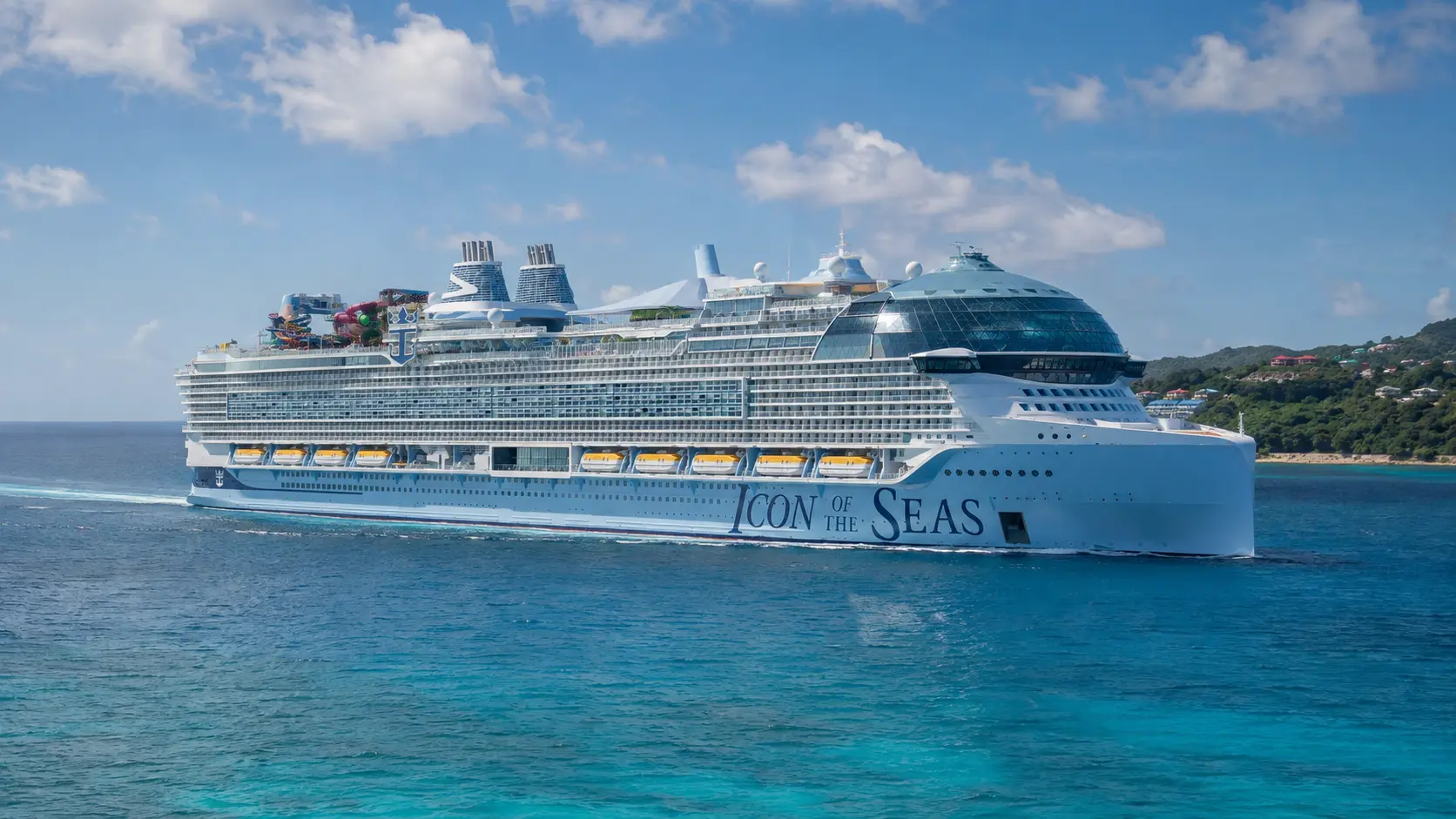
Icon of the Seas is one of the few cruise ships where I think “the ship is the destination” is more than marketing copy.
It can be fantastic for families who actually use Surfside, Category 6, the AquaDome, and the huge entertainment lineup, but Icon is a terrible place to spend premium money if your dream cruise is mostly quiet balcony time and long days in port.
Short version:
- Best reason to book: Surfside is the best reason to pay extra with younger kids.
- Another strong point: The AquaDome fixes the rainy-sea-day problem better than almost any ship.
- Biggest tradeoff: The pools are the weakest part of the “world’s best family resort” pitch.
- Think twice if: “Icon feels uncrowded” is true until it suddenly is not.
- Bottom line: Book Icon Of The Seas when its signature strengths sound exciting, not simply because it is newer or larger.
Before booking, browse the ship page, deck plan, and onboard guide so the cabin and activities match your priorities.
Four questions to answer before booking Icon
- Will your family use the ship heavily? If yes, Icon’s price becomes much easier to defend.
- Are you sailing during a peak family occupancy? Maximum family occupancy changes the crowding experience dramatically.
- Which neighborhood will be your home base? That should influence the cabin more than a generic “midship is best” rule.
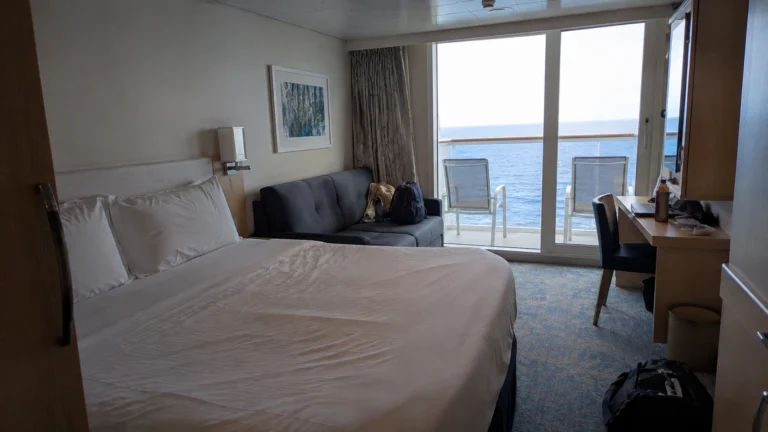
- Do you want a real balcony? Do not book an infinite balcony until everyone understands exactly what it is.
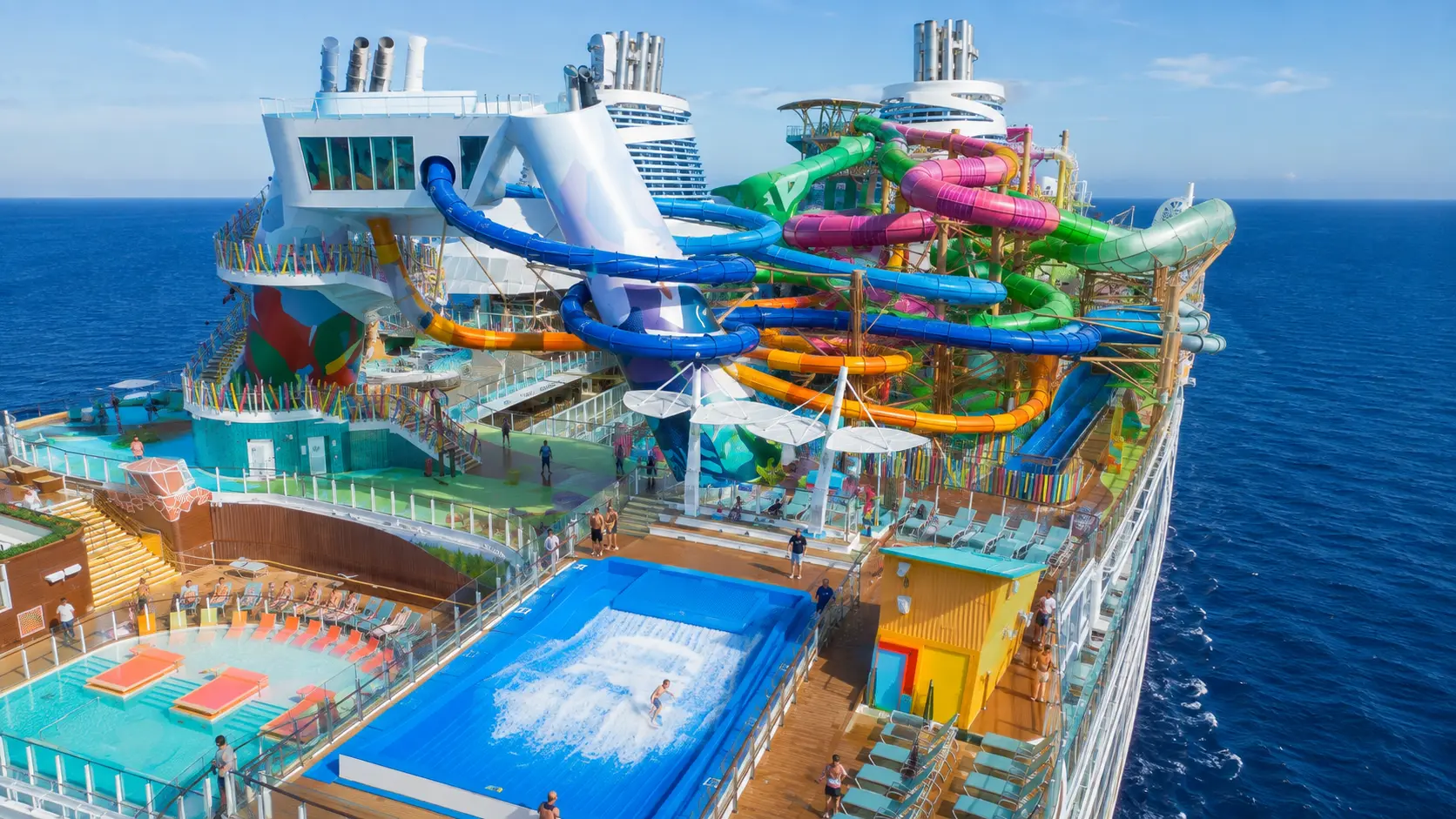
Pro: Surfside is the best reason to pay extra with younger kids
Surfside is not just a children’s pool with a new name. Royal Caribbean put splash areas, a carousel, family food, drinks for adults, play, and access to kid-focused programming into one aft neighborhood so parents can spend hours there without repeatedly crossing the ship.
This is one of those design choices that sounds less impressive in a brochure than it feels with a preschooler. When someone needs a bathroom, snack, dry shirt, nap, or emergency beige food, having those needs clustered together can save the afternoon.
Families with small kids should therefore think very hard about an aft cabin near Surfside. A room that looks “far from the AquaDome” may still be the right room if you are making six Surfside trips for every one trip forward.
The weakness is age range. There is an awkward middle where a child can be too old for the little-kid Surfside slides but still too short for the most exciting Category 6 attractions, so check height rules before treating the waterpark as a universal win.
Pro: the AquaDome fixes the rainy-sea-day problem better than almost any ship
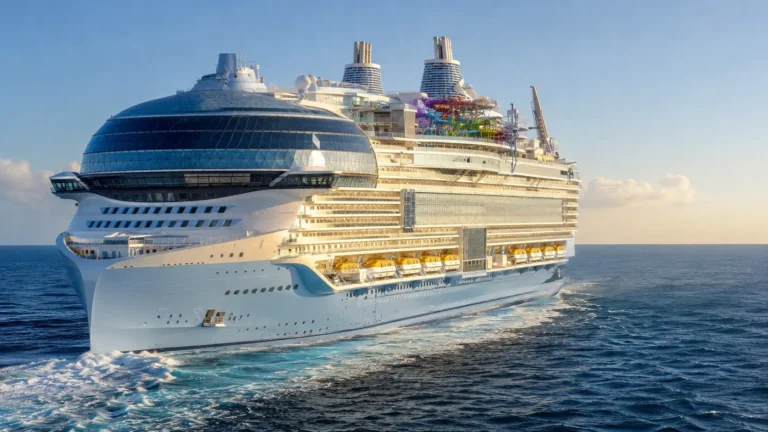
The AquaDome is one of Icon’s smartest pieces of architecture because it gives passengers somewhere bright and interesting to go when the pool deck loses an argument with rain or wind. You get ocean views, seating, food, drinks, and the AquaTheater under one huge enclosed structure.
AquaDome Market makes the neighborhood even more useful because it is not a venue you visit only for a show. You can come forward for lunch, coffee, a quieter seat, or a view without needing an activity reservation to justify the walk.
This is a big reason Icon feels less dependent on Caribbean weather than some other family ships. A ruined pool afternoon does not automatically dump everyone into the same buffet and Royal Promenade.
Pro: the entertainment is one of the rare cruise extras you should count as real fare value
The Wizard of Oz is still the headline, and the production is far closer to a real theater event than the old cruise-ship stereotype of singers performing a medley in front of changing LED graphics. Aqua Action uses the AquaDome’s diving, aerial, robotic, and projection technology, while Starburst uses Absolute Zero’s ice and mapped visuals.
The aqua and ice productions are strong enough to count them as real fare value, not filler between pool days. Even if other parts of Icon do not impress you, these shows are one of the clearest places where the ship’s scale actually pays off.
Reserve Wizard of Oz and Aqua Action first, then leave room for the rest. Aqua performances can move for technical or weather reasons, so give yourself more than one possible night rather than treating the first schedule like a legal contract.
Pro: Icon distributes free food where people actually are
This sounds boring until you have four people who become hungry in four different neighborhoods. Pearl Café, Surfside Eatery, Surfside Bites, Park Café, El Loco Fresh, Sorrento’s, AquaDome Market, and other casual options reduce the need to march back to Windjammer every time someone wants lunch.
The food variety is a real strength, including the Main Dining Room and buffet, even though individual meals will always be more subjective. The bigger design win is distribution, because every alternative meal taken outside Windjammer is also one fewer person helping Windjammer feel like an airport food court.
Use specialty dining selectively. Icon has enough included food that buying a large dining package only makes sense if the restaurants themselves are part of your vacation, not because you are worried the complimentary food will be unbearable.
Pro: Central Park is the adult pressure-release valve Icon desperately needs
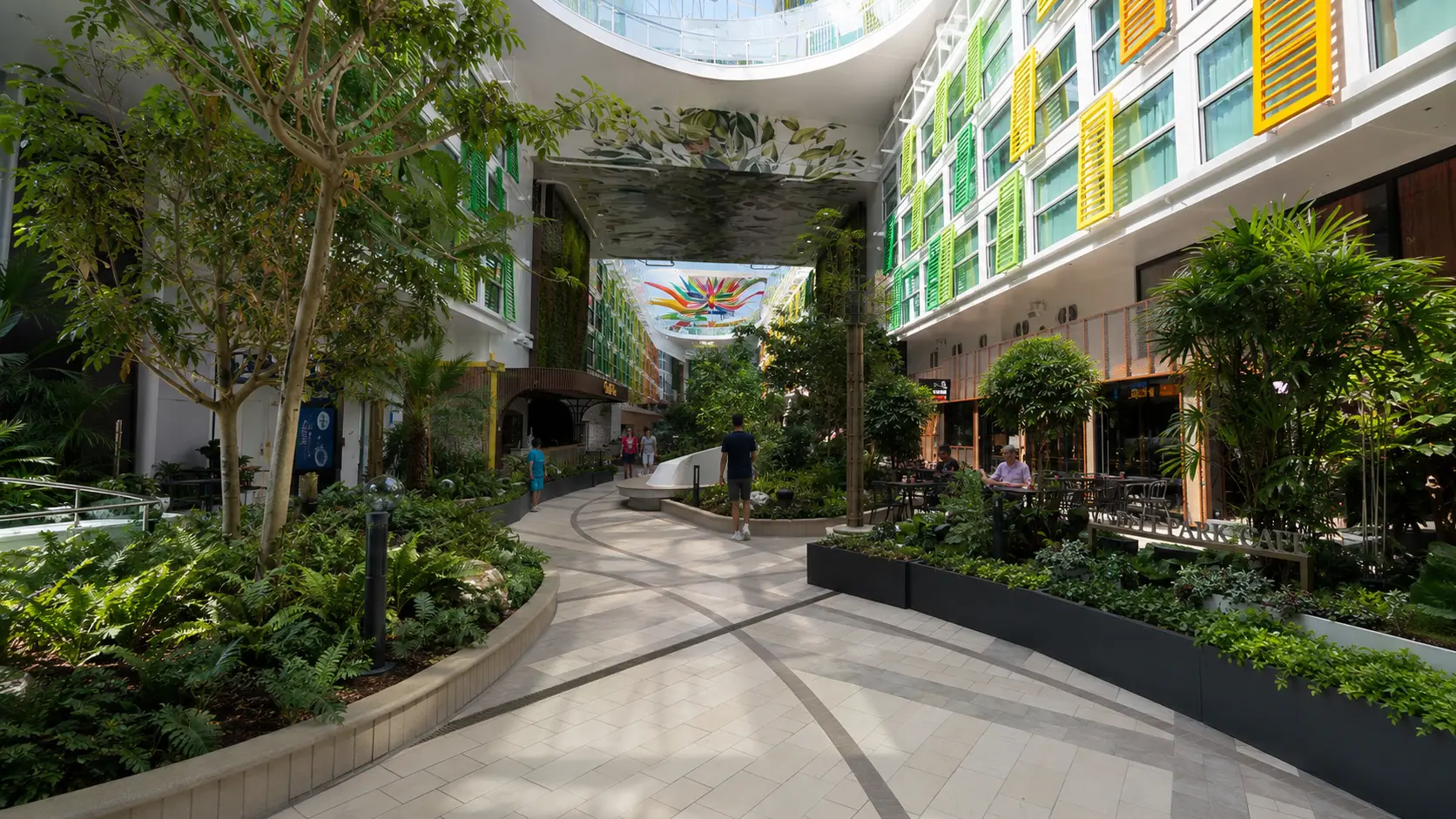
Central Park is where to send anyone who boards Icon and immediately wonders whether they made a terrible mistake involving 7,000 other people. It is open-air, green, calmer at night, and surrounded by restaurants and bars that feel completely disconnected from the water-park energy above.
Adults without children can build a surprisingly good week around Central Park, the AquaDome, The Hideaway, specialty dining, live music, and shows. Do not call Icon an adult-centered ship, but adults are not required to spend seven days watching children climb things.
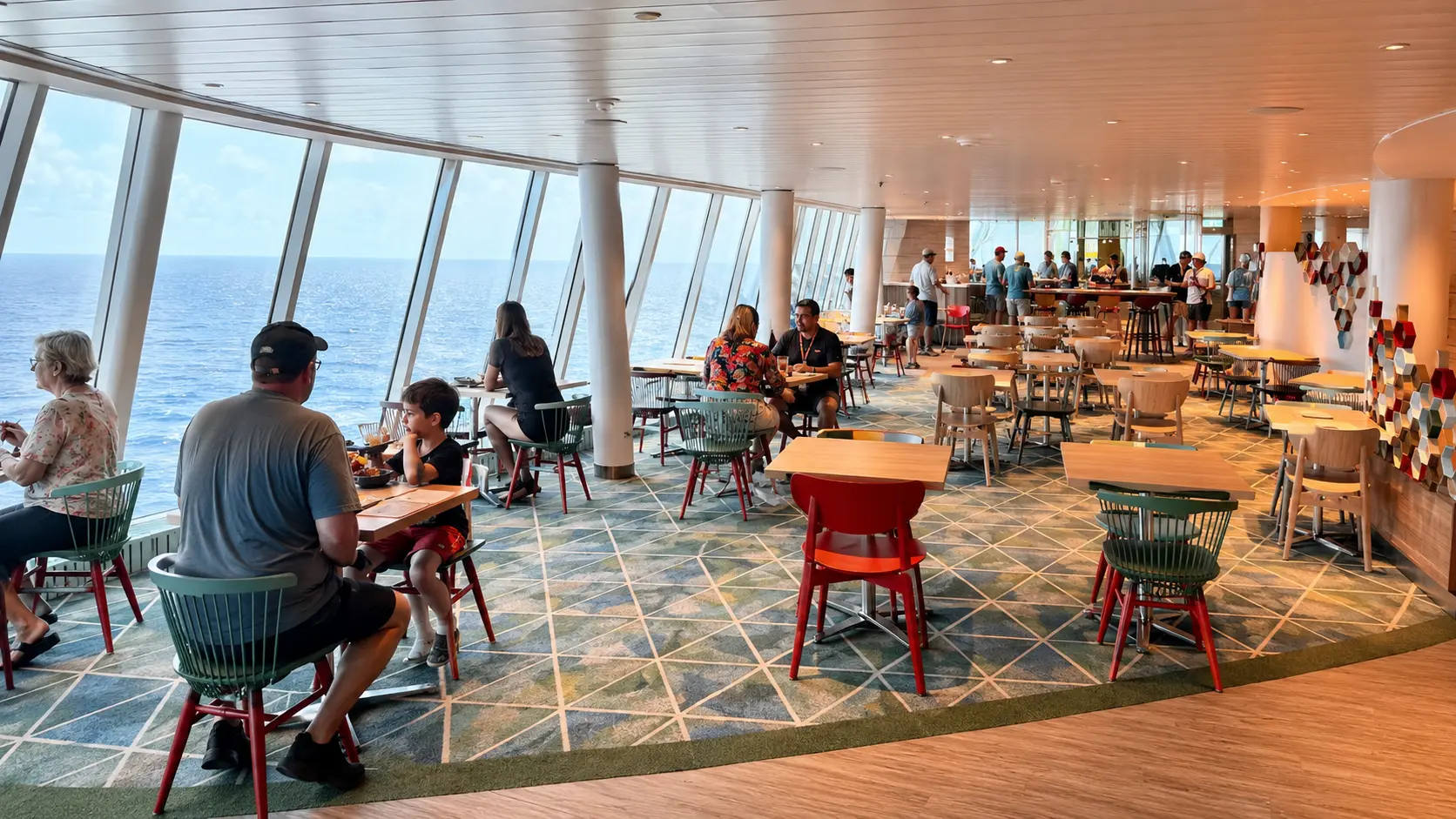
Con: the pools are the weakest part of the “world’s best family resort” pitch
Icon advertises a lot of pools, but quantity does not automatically mean roomy swimming. Several pools feel small or shallow, and the popular pool areas are one of the clearest places where Icon’s passenger count catches up with the design on hot sea days.
Royal Bay is enormous by cruise-pool standards, but the deck around the overall pool complex can still feel packed when families settle in for the afternoon. Chair-saving behavior does not help, because apparently towels also enjoy prime real estate.
Either do pool time early, use the family neighborhood that matches your children, or shift to attractions while everybody else is sunbathing. If your perfect cruise is six uninterrupted hours beside a quiet deep pool, Icon is not the obvious choice.
Con: “Icon feels uncrowded” is true until it suddenly is not
Icon can feel uncrowded and packed within the same hour because the ship disperses people well until thousands of them want the same thing. Central Park can feel almost empty while the pool deck is packed, and the Royal Promenade can be comfortable until a major show or event ends.
Occupancy mix matters enormously because double occupancy and maximum family occupancy are different worlds. When sofa beds and upper berths fill with children, the same cabin inventory produces a much denser ship than a sailing dominated by couples.
Do not avoid Icon solely because of its capacity if you otherwise love the ship. Avoid peak family occupancy dates if you are highly crowd-sensitive, because clever neighborhoods cannot make so many extra passengers evaporate.
Pro and con: the destination elevators are better, but you still need to use them correctly
Icon’s destination elevators are one of the biggest quality-of-life improvements over Oasis-class ships. You select where you are going before boarding, the system assigns a car, and passengers headed to compatible floors are grouped together rather than everybody piling into the first open elevator and pressing twelve buttons.
The destination elevators are a real improvement over conventional elevator chaos on ships such as Wonder or Symphony. They can still become crowded after shows, and groups need to follow the panel instructions accurately so the system knows how many people it is trying to move.
The bigger issue is horizontal distance. An efficient elevator can move you twelve decks quickly and still leave you at the wrong end of a ship that is almost 1,200 feet long.
Con: cabin categories are needlessly easy to misunderstand
Icon has so many new family, neighborhood, panoramic, suite, and infinite-balcony categories that you should never book from the category name alone. Two rooms that both sound like “balcony cabins” can give you completely different relationships with outdoor space.
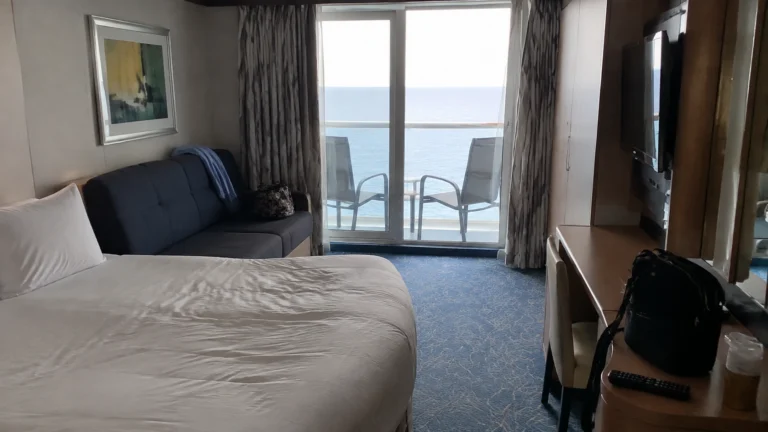
The infinite balcony is the biggest example. Instead of stepping through a sliding door onto a separate exterior platform, you lower a large window so part of the cabin becomes open to the outside, which also affects the cabin’s climate control while it is open.
The infinite balcony works best if you value the extra usable interior space and huge opening; it works poorly if “balcony” means a separate outdoor platform to you. It is genuinely a different product, not a normal balcony with a new name, so decide which experience you want before booking.
Storage is another concern in several new layouts, and the Surfside Family Suite can feel short on storage for the number of people it is designed to hold. Read the Icon cabins to avoid guide and best cabins guide before paying a deposit.
Con: the price is hard to defend if your family does not care about the hardware
Icon can command a substantial premium over older Royal Caribbean ships on comparable Caribbean weeks. That premium makes sense when your family uses Category 6, Surfside, major shows, multiple pools, kid spaces, AquaDome, casual dining, and the neighborhoods as an all-day resort.
It makes much less sense when your ideal cruise starts with breakfast, leaves the ship at 8 a.m., returns for dinner, and ends on the balcony. In that scenario you are paying a lot of money for other people’s children to have a spectacular water park.
Always compare the full trip against Star, Wonder, Symphony, and any ship running the ports you actually want. Icon is worth premium pricing only when Icon itself is part of the itinerary.
Who should book Icon
- Families with younger kids who will live in Surfside. The logistics are better than simply having more kid attractions.
- Families with older kids and teens who meet the thrill-attraction requirements. Category 6, Crown’s Edge, sports, pools, and shows can carry entire sea days.
- Multigenerational groups. The neighborhoods let grandparents, parents, teenagers, and younger kids separate without anyone being stranded with the wrong vacation.
- First-time cruisers who love giant resorts. Icon feels more like a purpose-built land resort than almost any ship afloat.
- People worried about bad weather. AquaDome, Absolute Zero, the theater, Promenade, cafés, and indoor entertainment create a real backup day.
Who should choose another ship
- Port-first travelers paying a large Icon premium. Buy the itinerary instead.
- Adults seeking a quiet, intimate ship. You can find quiet on Icon, but you are working against the ship’s center of gravity.
- Anyone who dislikes advance decisions. You can improvise, but the marquee shows and best dining times reward planning.
- Travelers with limited walking tolerance who cannot secure a strategic cabin. Accessibility does not make the corridors shorter.
- People who mainly want a big pool. Icon’s pool scene is not as spacious as the marketing totals suggest.
How to book Icon
First, choose your neighborhood, not your cabin category. A family with a preschooler should probably optimize around Surfside, while adults who expect to spend evenings in the AquaDome and Central Park may make a completely different location choice.
Then, decide conventional balcony versus infinite balcony before looking at price differences. That design preference is too personal to leave until after the deposit, and my Icon deck-by-deck guide can help place the final room.
Reserve Wizard of Oz and Aqua Action as soon as your booking window allows, then read the Icon dining guide before buying any meal package. There is too much good included casual food to purchase specialty dining out of fear.
Finally, leave chunks of sea-day time completely empty. Icon is the kind of ship where the unplanned hour turns into Pearl Café, a walk through Central Park, an ice-skating session, or watching somebody else make an unfortunate decision near Crown’s Edge.
Continue planning with the cruise tips, things to do.
How to use this guide: Recommendations weigh Icon’s layout, room designs and included experiences against the tradeoffs different travelers face. Confirm the exact cabin, prices, operating times and access rules for your sailing before booking.
The final verdict
Icon of the Seas earns its reputation because the design actually changes family logistics, not just because the ship has more stuff. Surfside, AquaDome, distributed casual food, serious entertainment venues, and destination elevators solve real mega-ship problems better than many older ships.
The weaknesses are equally concrete: shallow or crowded pools, a confusing cabin catalog, divisive infinite balconies, huge walking distances, and a fare that can become absurd when your family will not use the attractions. Book Icon because you want Icon, and it can be spectacular; book it as transportation to Cozumel, and you may spend the week wondering why you paid so much.
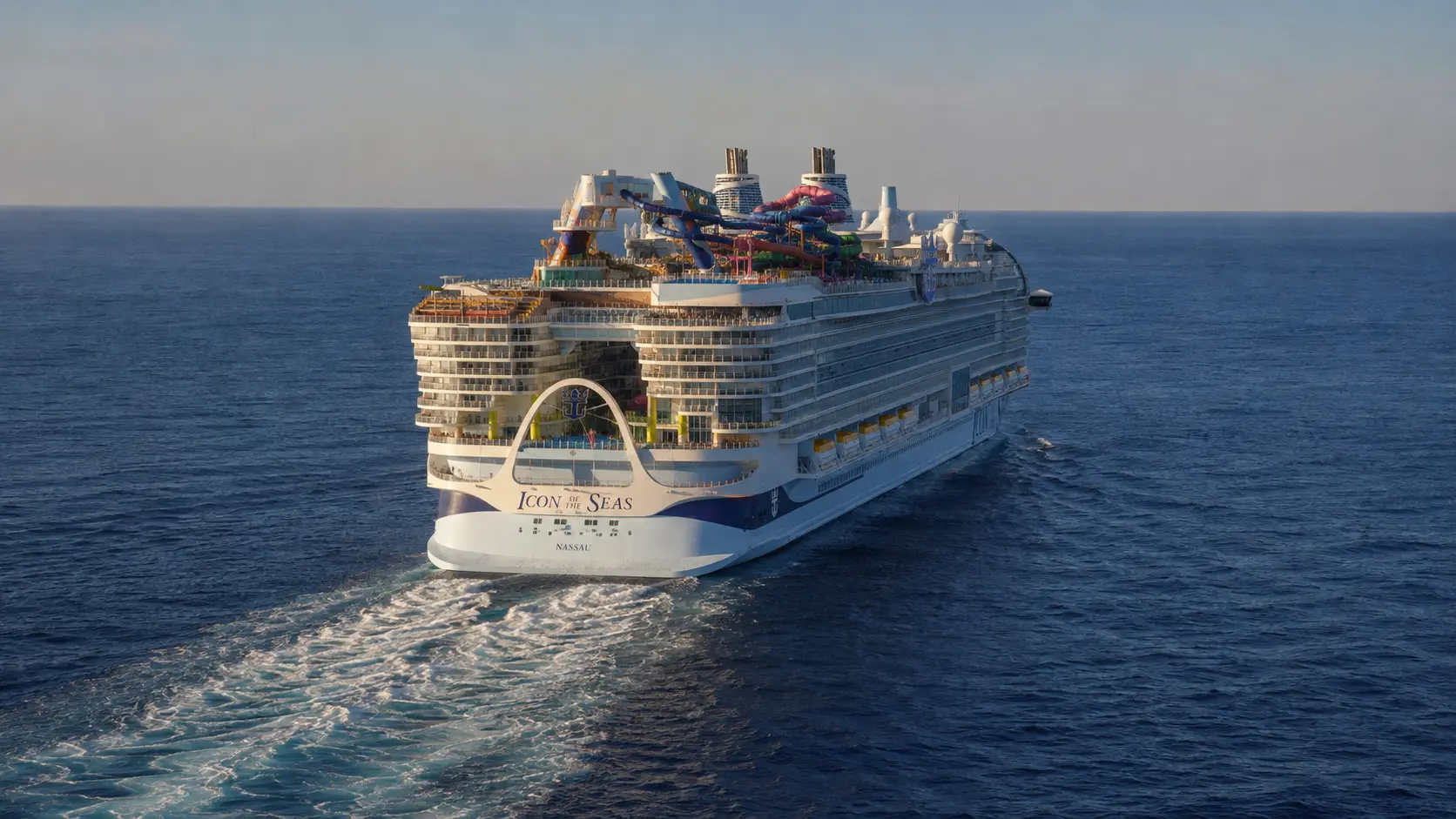
Plan your Icon Of The Seas cruise
Use the cabins to avoid, best cabins, and deck guide to turn the broad pros and cons into a confident room choice.
How this guide was researched:
I checked Royal Caribbean’s current ship information against the article’s cabin, venue and layout claims. Schedules, prices, access rules and assignments can change by sailing, so confirm booking-sensitive details before payment.