Disney Wish Cabins to Avoid: Exact Rooms and Better Choices
Disney Wish’s biggest cabin tradeoffs are an inside room’s single bathroom, partial balcony views and Deck 10 rooms below the pool-and-food deck.
Choose an oceanview for the split bathroom, a clear-railed verandah for seated sea views and a room between cabin decks when light sleep matters.
Short version
- Start here: Three verandah grades, one room.
- Compare carefully: The Navigator’s Verandah is not the steel box it is on the older ships.
- Watch for: Whitewall verandahs, and why one can still work.
- Better choice: The fifth bed, and what it should cost you.
Three verandah grades, one room
Disney prices staterooms by number, and a lower number costs more. The verandah grades on the Wish run from 4 down to 7.
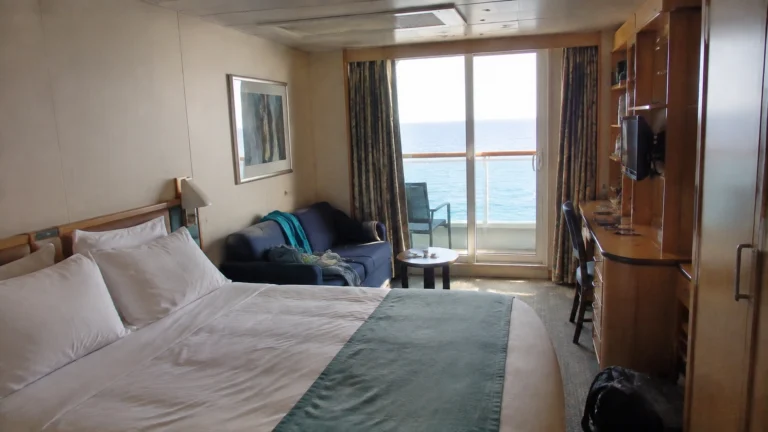
Categories 5 through 7 are the same box. Each is 243 square feet all in: roughly 200 square feet of room, plus a 43-square-foot verandah on the front.
Same queen, same convertible sofa, same pull-down berth above it. Same split bathroom, which on Disney means the toilet and a sink in one little room and the tub and a second sink in another, so two of you can get ready at once.
Everything you spend climbing from a 7 to a 6, or a 6 to a 5, buys you the frontage of the verandah. Not floor space, not a better bed, not a quieter position.
So the question is not which deck. It is how much of your week you plan to spend sitting on that balcony looking down.
The Navigator’s Verandah is not the steel box it is on the older ships
The deeply enclosed, porthole-style Navigator’s Verandah is associated with Disney Magic and Wonder. Do not carry that picture across to Wish or assume every ship uses the name for an identical balcony.
The Wish does not do that. Category 7A is a real open verandah with a partial view, and the amount of hull plating varies meaningfully by cabin number.
Cabin 9514 is a good example of the milder version, where the obstruction is relatively small and you still get a glass rail. Cabin 7194 has effectively no plated-over opening at all, but the tradeoff is a smaller, oddly shaped verandah.
There are eighteen of these rooms: 6174, 6674, 7022, 7174, 7194, 7518, 7670, 7690, 8022, 8170, 8520, 8668, 9014, 9160, 9172, 9514, 9660, 9672.
They are not equal. Reading down the plan, 7022, 7174, 7518, 7670 carry the most plating, close to half the opening, while 7194 and 7690 have none at all but end up with a smaller, oddly shaped verandah instead.
Those four rooms have the least appealing 7A balcony geometry. Treat them as the least attractive 7A choices when several numbers are available, not as unusable rooms.
Best move: Book one. If you have the cabin numbers in front of you, take 8170, 8520, 8668, 9160, 9172, 9514, 9660 or 9672 over the four with the heaviest plating.
Whitewall verandahs, and why you should take one anyway
A whitewall means the lower half of your balcony rail is solid white steel instead of clear plexiglass.
Standing at the rail you see everything. Sitting in the chair you see panel.
These are categories 6A and 6B, and they cost less than the clear-railed category 5 room they are otherwise identical to. On the Wish that is 6A cabins 8182, 8184, 8186, 8188, 8192, 8680, 8682, 8684, 8686, 8690, 9174 through 9178, 9674 through 9678, and 6B cabins 6188 through 6194, 6688 through 6694, 7186 through 7192 and 7682 through 7688.
The whitewall itself would not scare me away. You are getting the same cabin and the same outdoor square footage for less money; the real tradeoff is simply that the lower horizon disappears when you are seated.
Best move: Take the Category 6 saving when fresh air matters more than the seated sea view; choose a glass-railed verandah for a child who wants to see the water from a chair or for your own morning coffee with an open horizon.
The fifth bed, and what it should cost you
Now the family arithmetic, which is where real money changes hands on this ship.
A room that sleeps five gets there with a queen, a convertible sofa, a berth that folds down above the sofa, and a separate single bed that pulls out of the wall. Your attendant sets the wall bed up in the evening, because there is nowhere for it to live during the day.
The deluxe family oceanview with verandah, category 4, gives you 241 square feet of indoor room plus that same 43-square-foot verandah. The deluxe family oceanview without one, category 8, gives you 237 square feet indoors and a big porthole.
Four square feet apart indoors, and a large gap in fare. Meanwhile the standard verandah you were cross-shopping has only 200 square feet inside it.
Five people will fit, but bedtime gets snug once the sofa, upper berth, and wall bed are all in play. The Wish also leans more heavily on shelving and open storage than some older Disney ships, so four or five people’s luggage takes more discipline than the square-footage number suggests.
Best move: If you need the fifth berth and you want the room to work at bedtime, the family oceanview (8B and 8C) is the better buy than a standard verandah. You give up the balcony and you get 37 more square feet of floor to put people on.
What the swap does not buy you. It is a different category at its own fare, and you are still fitting five people and their luggage into one room.
The inside rooms are the ones that lost something real
The Wish has no deluxe inside category at all. Where the older Disney ships give you a middle inside tier, this ship goes straight from oceanview down to standard inside.
That matters more than it sounds. All 121 inside rooms are 169 square feet, and all of them have one ordinary bathroom instead of the split one.
The 169-square-foot layout is compact and much squarer than many cruisers expect from Disney, especially once more than two people are using it. The conventional single bathroom is also noticeably tighter than the split-bath setup found in the oceanview and verandah categories.
A Standard Inside is workable for two adults, but three or four people have more beds, bags and bathroom turns competing for the same compact space; a Category 9 oceanview is the more useful family upgrade when the split bathroom matters.
The bathroom is not a matter of opinion, and it is the specific feature most families think they are buying when they book Disney.
Best move: If the two-room bathroom is why you chose this line, do not book an inside on the Wish. The cheapest oceanview is 218 square feet and restores it, including the deck 2 rooms from 2550 to 2640.
Cabin 10137, and what deck 10 actually hears
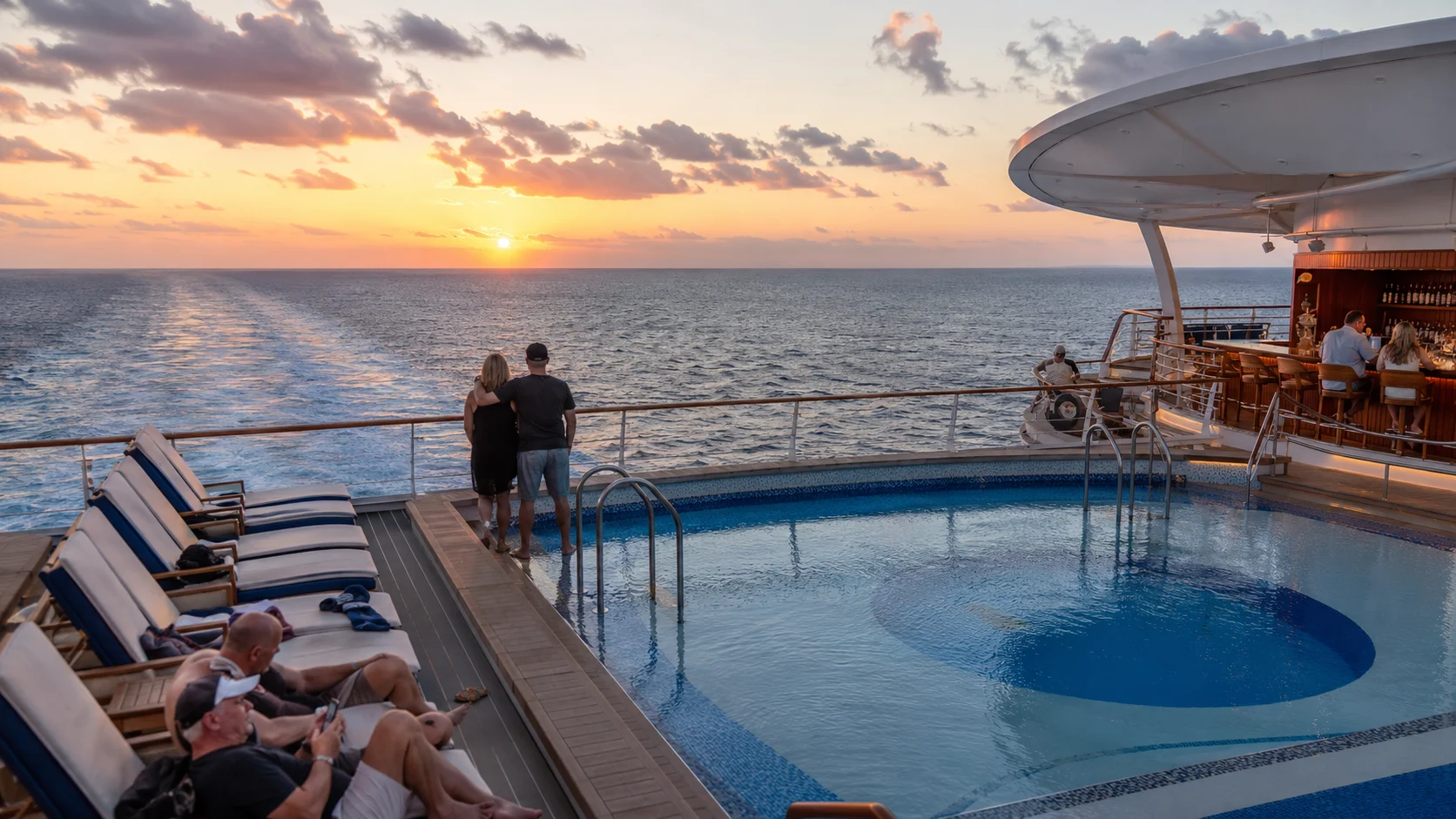
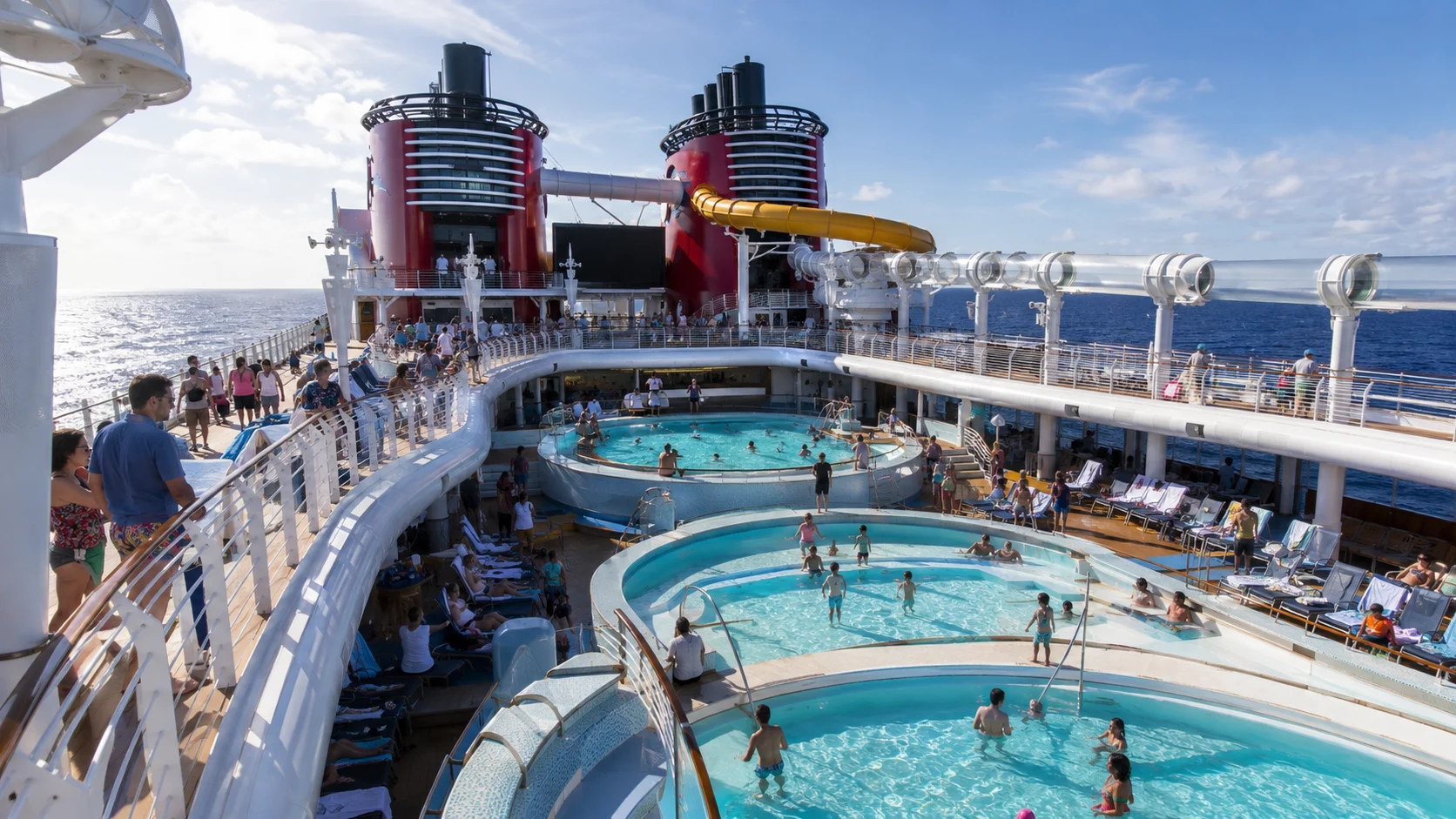
Deck 10 is the highest full-width cabin deck, with the Deck 11 pools, casual food and Marceline Market above different parts of it; the smaller Deck 11 forward cabin block is a separate location choice.
A March 2023 report for inside cabin 10137 described frequent banging and movement, including at night; that is a reason for a light sleeper to choose a different location, rather than proof that the room is persistently noisy on every sailing.
Elsewhere on deck 10, the more typical issue is occasional morning cleaning or chairs moving on deck 11 rather than all-night disruption. That is annoying if you wake at every scrape, but it is not enough for me to blacklist the whole deck.
Other Deck 10 guests have enjoyed the convenient upper-deck location, including a February 2025 account that mentioned chair movement without waking their baby; choose the deck for quick pool access when that occasional activity is an acceptable trade.
Best move: For very light sleep, favor a comparable room on Deck 9 with cabins above and below; Deck 10 remains a reasonable convenience choice for families awake early and happy to be near the pools and casual food.
Cabin 6558 also has a published noise complaint, discussed on DISboards in May 2025; it is a room-specific caution for early sleepers, not grounds for rejecting every Deck 6 cabin near evening venues.
Rooms you can stop worrying about
This is the reassuring half, and on the Wish it is longer than the warnings.
- The deck 10 overhang. Deck 11 sticks out above these verandahs, but do not treat the overhang as a cabin flaw. It gives you useful midday shade and a better chance of keeping the chair dry when it rains without turning the balcony into a cave.
- Deck 2 and the Oceaneer Club. The kids clubs sit on deck 2 on this class, but cabin 2062 does not deserve an automatic warning for club or slide noise despite sitting close to that activity.
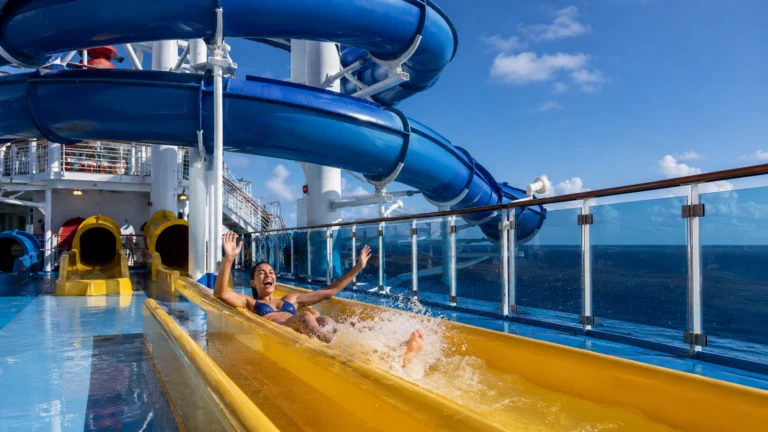
- The AquaMouse. The flume runs above open deck, not above your ceiling, so do not avoid a cabin because you are picturing 760 feet of water tube thundering over the room at bedtime.
- Concierge on decks 12 and 13. The splash-zone and sun-deck relationship does not give me a strong enough reason to blacklist these cabins. Judge the category on its space and concierge value rather than inventing an overhead-noise problem from the map.
- Deck 9. Cabins above and below make this a sensible starting deck for light sleep, although neighbors and corridor activity can still be heard; choose it for that separation rather than a promise of silence.
- Forward cabins and motion. Do not blacklist the forward Wish cabins as a group, even as high and forward as 11524. Motion is itinerary- and weather-dependent, not a reliable reason to reject the entire area.
- The obstructed-sounding category numbers. On this ship the partial views live in categories 6 and 7. The 9-series oceanviews are all 218 square feet with a real porthole, and the forward ones simply have it set at an angle.
Quick answers
Is the Navigator’s Verandah on the Disney Wish worth it?
At a meaningful discount, yes: Wish’s Category 7A is an open verandah with a partial obstruction, so choose by the exact balcony and fare rather than picturing the recessed porthole-style version on Magic and Wonder.
Which deck is quietest on the Disney Wish?
Deck 9 is a sensible first choice for a light sleeper because it sits between stateroom decks; it is a location advantage, not a guarantee that every room or neighbor will be quiet.
Do Disney Wish inside staterooms have the split bathroom?
No. Every inside room on this ship is a standard inside with one conventional bathroom, which is a change from Disney’s older ships.
Will five of us fit in a Disney Wish family stateroom?
Yes, using a wall bed that folds down at night on top of the sofa bed and the berth above it. It works, but expect the cabin to feel tight once all five sleeping positions and everybody’s luggage are in play.
Continue planning with the things to do, pros and cons.
How this guide was researched: Room locations and categories were compared with Disney’s Wish plan and stateroom information; the 10137 and 6558 cautions are dated individual reports, with positive Deck 10 experiences kept in context. Public-space proximity describes a booking tradeoff rather than a promise about sound in every room.
Where to put the money
Buy the cheapest verandah grade you can get, and spend the difference on something you will remember. The room behind a whitewall or a plated Navigator’s is the same room as the one behind clear glass, and on a week of port days and Funnel Vision you will not be in it much anyway.
Then spend properly at the other end. If five of you are sleeping in one room, the extra floor space of a family oceanview is worth more than a balcony, and the inside rooms are the one place on this ship where the cheap option takes away something you actually wanted.
Keep the specific feature you care about before accepting an upgrade: a split bathroom, a clear seated balcony view or a cabin deck overhead can improve the week more than the category number alone.
For a family sharing the room, compare the floor space and bathroom in Disney’s Wish room guide before buying a higher deck; a larger family oceanview may help more than a verandah. Use the verandah descriptions for the seated-view compromise and the Wish deck plan for the route to your family’s favorite spaces.
Compare these warnings with the best cabins and the deck guide. The dining guide and ship tips can help you choose the most convenient end for your routine.