Queen Anne Cabins to Avoid (and the Compromises Worth Skipping)
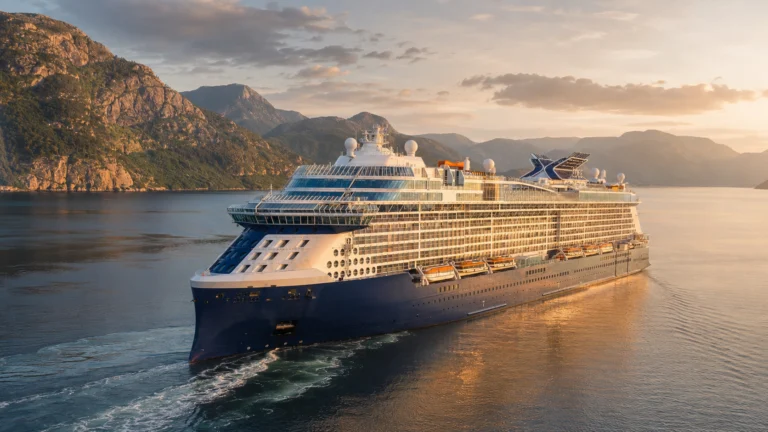
Queen Anne’s cabin compromises are easy to separate: Deck 4 lifeboats and metal balcony fronts change the view, while Deck 8 and upper-forward rooms trade a short public-deck route for more activity nearby.
For light sleep, start with a selected balcony on a residential stretch of Deck 6 or 7, then pay for Britannia Club or the Grills when their dining and service appeal.
Short version:
- Skip Deck 4 CB and CC balconies if an open ocean view is the whole reason you are paying for a balcony.
- Check metal-front balconies such as 4001 if you want to see the sea clearly while seated.
- Light sleepers should be picky on Deck 8 beneath the Pavilion and Artisans’ Foodhall.
- If motion bothers you, think twice about high-forward rooms such as 11012 before paying for the view and lounge access.
Metal-front balconies: choose glass for a seated ocean view
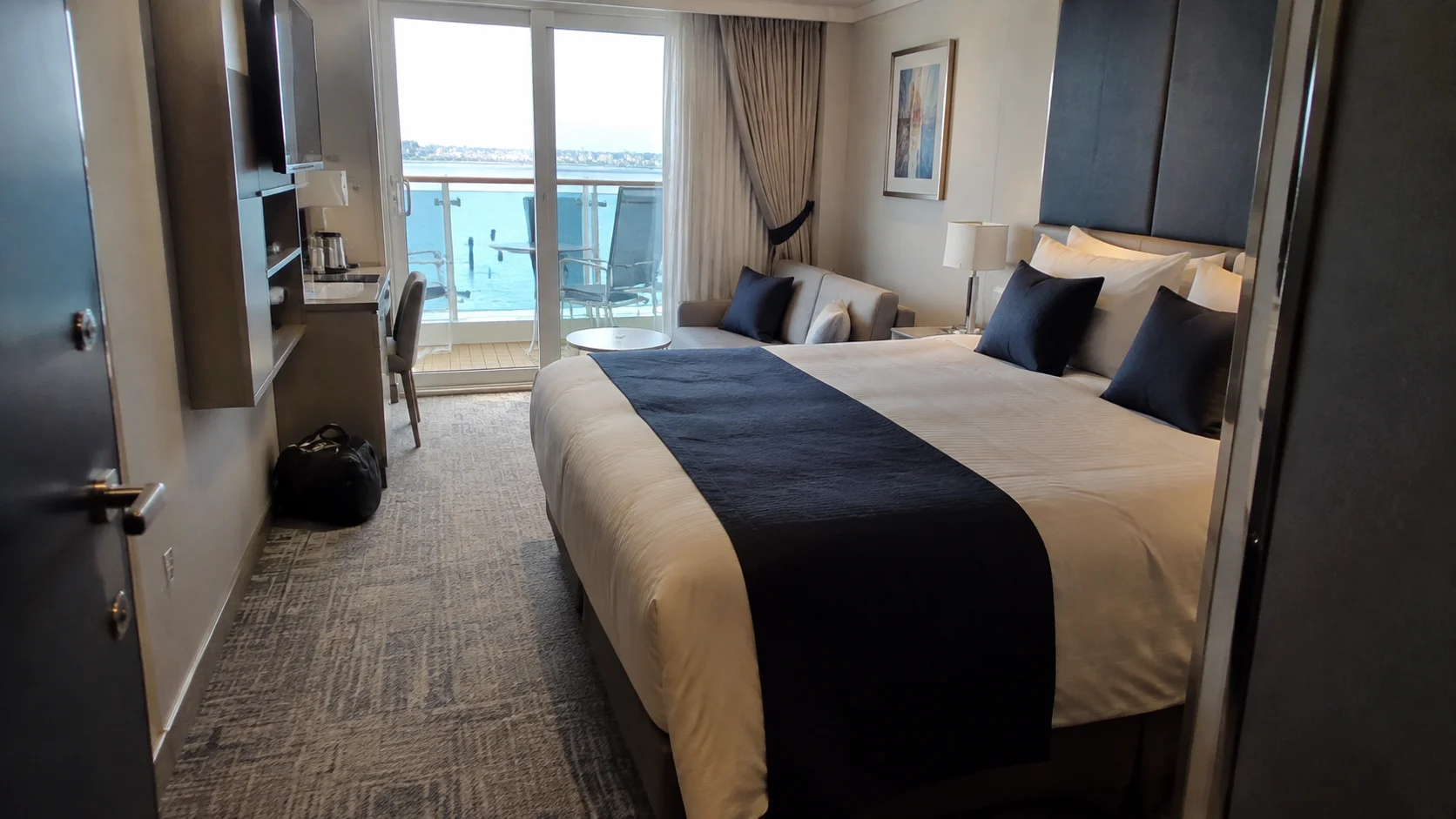
A metal-fronted balcony can interrupt the view while you are seated, even though standing brings more horizon back. Shade changes sunlight rather than the physical rail, so it may be a bonus for a heat-sensitive traveler and a poor match for someone who wants private sun.
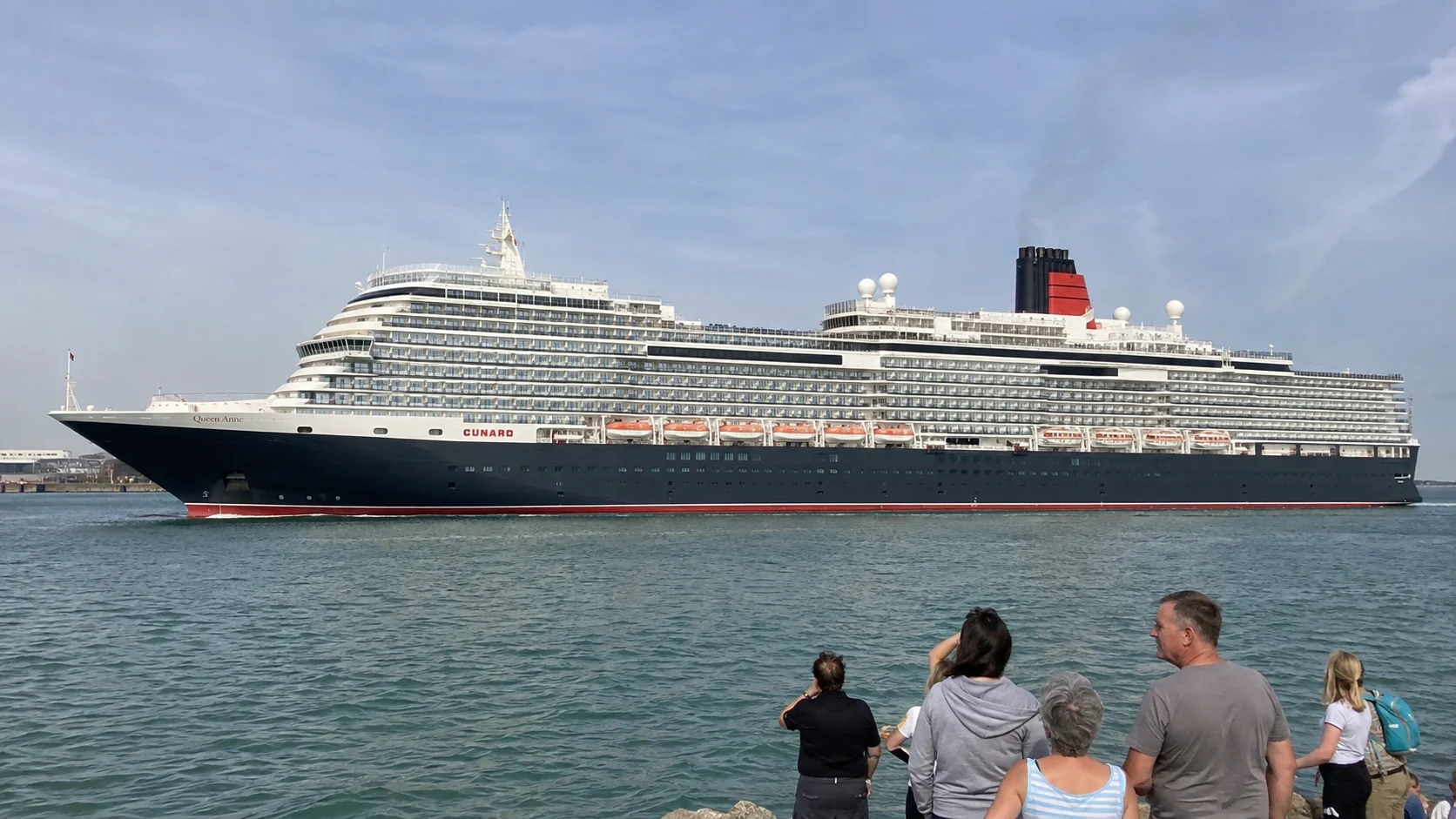
Cabin 4001 is a forward BF Balcony on Deck 4, marked with a metal balcony front and visible-from-above symbol; use the balcony-front symbols on the Queen Anne plan to distinguish full and partial metal fronts from glass, because that difference matters much more from a deck chair than from the rail.
Partial view, shade and metal fronts should earn different discounts
Deck 4 categories CB and CC are both partially obstructed by lifeboats. Neither category code tells you precisely how much of the view you will lose from the chair, the bed, or the balcony rail.
CC 4064 and CB 4086 sit in the Deck 4 lifeboat-obstructed inventory; choose a clear-view Britannia Balcony when watching the ocean from your chair is the reason for booking, and keep an obstructed room when the saving and fresh air matter more than an uninterrupted view.
The lifeboats fully obstruct these marked balcony views during Panama Canal transits. Choose another category if watching the transit from your own balcony is a priority.
Britannia Club and Grills buy more than a cabin name
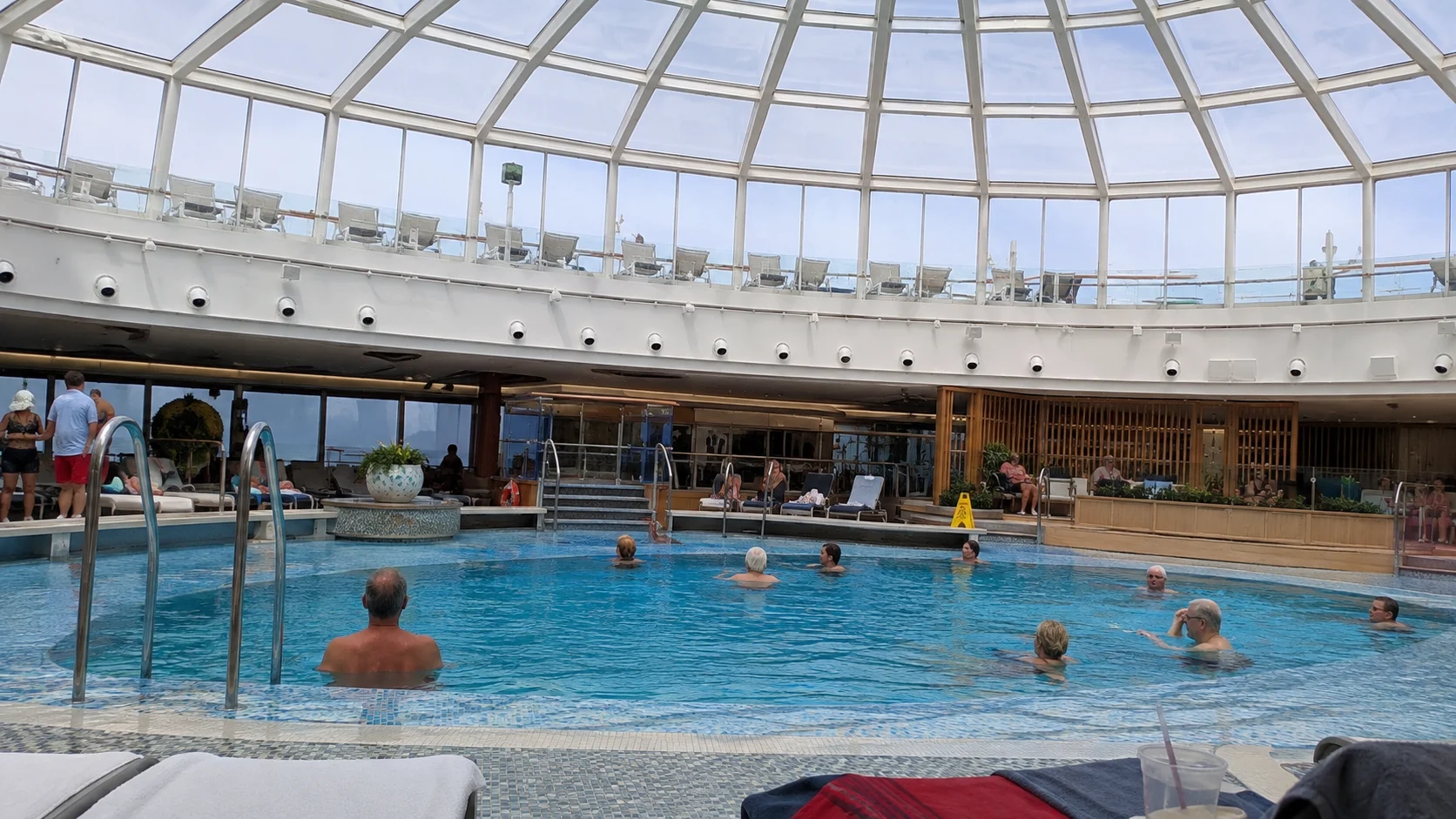
On Queen Anne, a Britannia Club stateroom adds its associated dining arrangement, while Princess Grill and Queens Grill suites connect the room with a different restaurant and service experience. The higher grade can be worthwhile without making its physical address perfect for every traveler.
On Queen Anne, suite layouts vary by category and position, particularly toward the bow and stern. Confirm balcony shape, bath arrangement, separate living space, and included benefits for the exact booking rather than importing them from another Q category.
A Britannia Club balcony remains broadly the same kind of bedroom as a regular balcony; if the problem is limited indoor room, Princess Grill is the more useful size comparison, while Club is primarily a dining-and-service decision.
For a long sailing, decide where you expect to spend time: a couple who enjoys the included restaurants, promenade and lounges may get more value from a regular balcony, while someone who wants a leisurely dedicated restaurant at every meal has a stronger reason to choose Club or the Grills.
Deck 4 above the theater and other public rooms
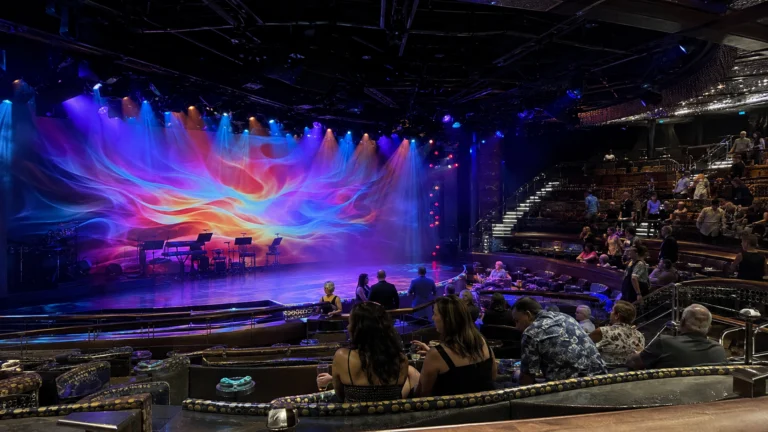
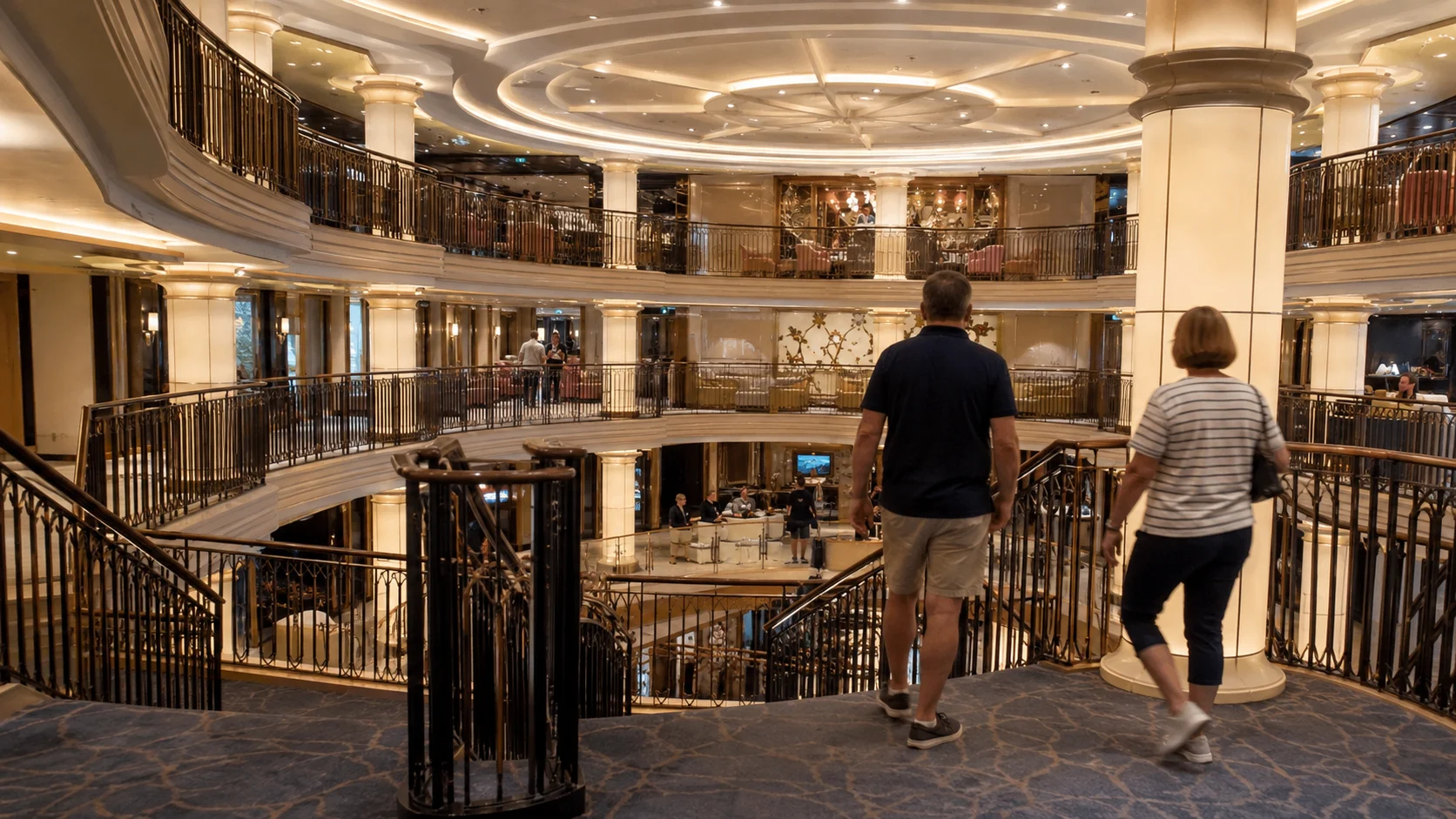
Deck 4 cabins sit above Deck 3 public rooms, with the Royal Court Theatre forward and dining spaces farther aft; for an early bedtime, a comparable Deck 6 or 7 room with cabins below is the more conservative choice than a low forward room above the theater.
An accessible layout must match the transfer and bathroom routine
Check the accessibility arrangements before accepting a cabin, including doorway widths, bathroom layout, transfer space, and device storage. A larger suite or a mobility-device-friendly symbol does not by itself guarantee a fully accessible room.
Cunard distinguishes wheelchair-accessible accommodation from cabins marked for powered mobility devices; the latter symbol does not turn an ordinary bathroom into a roll-in shower, so keep the exact accessible designation that matches your needs.
Do not trade an adapted room for a larger standard suite just because the fare is attractive; use Cunard’s accessibility information to agree the practical arrangement before choosing an upgrade.
A guarantee fare gives away the details this ship makes visible
On Queen Anne, the assignment terms matter whenever the fare does not let the traveler keep an exact room number. The savings buy less control over deck, view, connecting doors, public-space adjacency, and walking distance.
A guarantee is reasonable for someone who mainly wants the balcony and would enjoy shade, a forward location or an obstructed view within the booked grade; it is a poor fit when a glass front or a short walking route is essential.
The same applies to an upgrade offer: a higher service tier can improve dinner without improving the bedroom’s position, so keep a well-chosen room if the possible assignments would undo the view or sleep advantage that mattered in the first place.
Three Queen Anne cabin comparisons worth making
8060: shade and a pool-deck ceiling
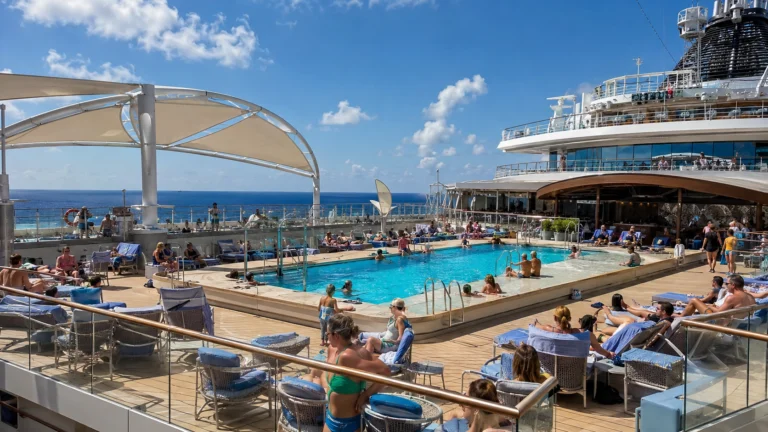
BB Balcony 8060 gives you outdoor space on Deck 8, close to the main daytime deck. Its shaded-balcony symbol matters if you prefer shelter from direct sun.
P2 Princess Grill Suite 8100 is another Deck 8 comparison: Artisans’ Foodhall is above that part of the accommodation deck, so suite status does not remove the public-space relationship; a P1 on Deck 6 or 7 is the better first comparison for someone who values afternoon naps over buffet convenience.
Passenger accounts do not support rejecting Deck 8 as a whole: in a spring 2026 discussion, a Queen Anne guest reported no pool-deck noise during a December sailing, while another liked a room near the lifts.
Those are individual experiences, and they do not identify a guaranteed quiet room; they do show why a short route to the buffet or elevators can be a worthwhile compromise, especially for someone who is awake early and returns late.
The Pavilion area is overhead, so compare this room with a balcony between residential decks if early sleep is important. The map identifies the location; it cannot tell you how loud a particular sailing will be.
A balcony on a residential stretch of Deck 6 or 7 is my starting comparison for a light sleeper; keep 8060 when shade and the quick trip to the Pavilion are worth more than accommodation overhead.
Check the total fare difference for the voyage, then picture how often you will use the balcony. A shaded seat can be welcome in warm weather and less appealing when you are hoping for private sunshine.
11012: a short lounge route with an overhead tradeoff
BF Balcony 11012 is on Deck 11 below the Commodore Club on Deck 12. The location puts a popular observation lounge close by, but it also makes the space above worth checking.
For someone prone to motion, the high forward position is the stronger reason to skip 11012: a central Deck 6 or 7 balcony trades a few extra stairs to the Commodore Club for a lower, more central place to sleep.
The deck plan identifies the lounge above but cannot establish how much sound reaches the room; choose a cabin below accommodation if late lounge activity worries you enough to spoil the booking.
For someone who enjoys the forward lounge and is comfortable with ship movement, the location may work well. For someone who returns early to sleep, a residential buffer would be higher on my list.
6100: Britannia Club with cabins above and below
A1 Balcony 6100 is on Deck 6 in a residential stretch, with cabin decks above and below. It is a useful comparison if you want Britannia Club dining and some separation from the upper public decks.
Britannia Club buys its dedicated restaurant and flexible arrival during dinner service; ordinary Britannia also offers open dining, so choose Club for the dining room and service rather than paying only to escape a fixed sitting.
Put 6100 beside a standard Britannia Balcony while both fares are visible. Choose Club when you will enjoy the dedicated dining room often enough to justify the whole-voyage price difference.
Cabins above and below are a useful screening choice, not a soundproofing guarantee. Check the room’s door, capacity, and daily walking route before treating it as your final answer.
My Queen Anne pick: Deck 6 or 7, chosen for the way you travel
For a couple, a selected Britannia Balcony on a residential stretch of Deck 6 or 7 is the straightforward choice; choose A1 cabin 6100 when Britannia Club is part of the plan, or a standard balcony nearby when the dining upgrade will go unused.
For an inexpensive dark room to sleep in, a central inside on Deck 5, 6 or 7 is a sensible comparison; it loses daylight and outdoor space, but it keeps you among accommodation rather than choosing a public-deck-adjacent room solely for a window.
For three or four sharing, the plan’s sofa-bed and upper-bed symbols matter more than another balcony grade; choose the room that accommodates the booked party and leaves a workable route to the bathroom when every bed is open, or compare two connecting cabins when privacy and a second bathroom would improve the trip.
For a scenic sailing, spend on the view only when you expect to use the balcony: a clear glass front is worth more to a traveler who likes morning coffee outside, while a discounted lifeboat-obstructed balcony can still be a happy choice for someone who mainly wants fresh air between visits to the public decks.
How this guide was researched: I used Queen Anne’s official ship information and August 2026 deck plan, then compared passenger accounts for noise and everyday cabin comfort.
The physical warnings here describe the view and nearby spaces, with alternatives for travelers whose sleep, mobility or balcony priorities make those compromises less appealing.
Continue planning with the dining guide, best cabins, deck guide for Queen Anne.
For the final check, use the official guide before payment.