Norwegian Escape Cabins to Avoid (and the Rooms That Make More Sense)
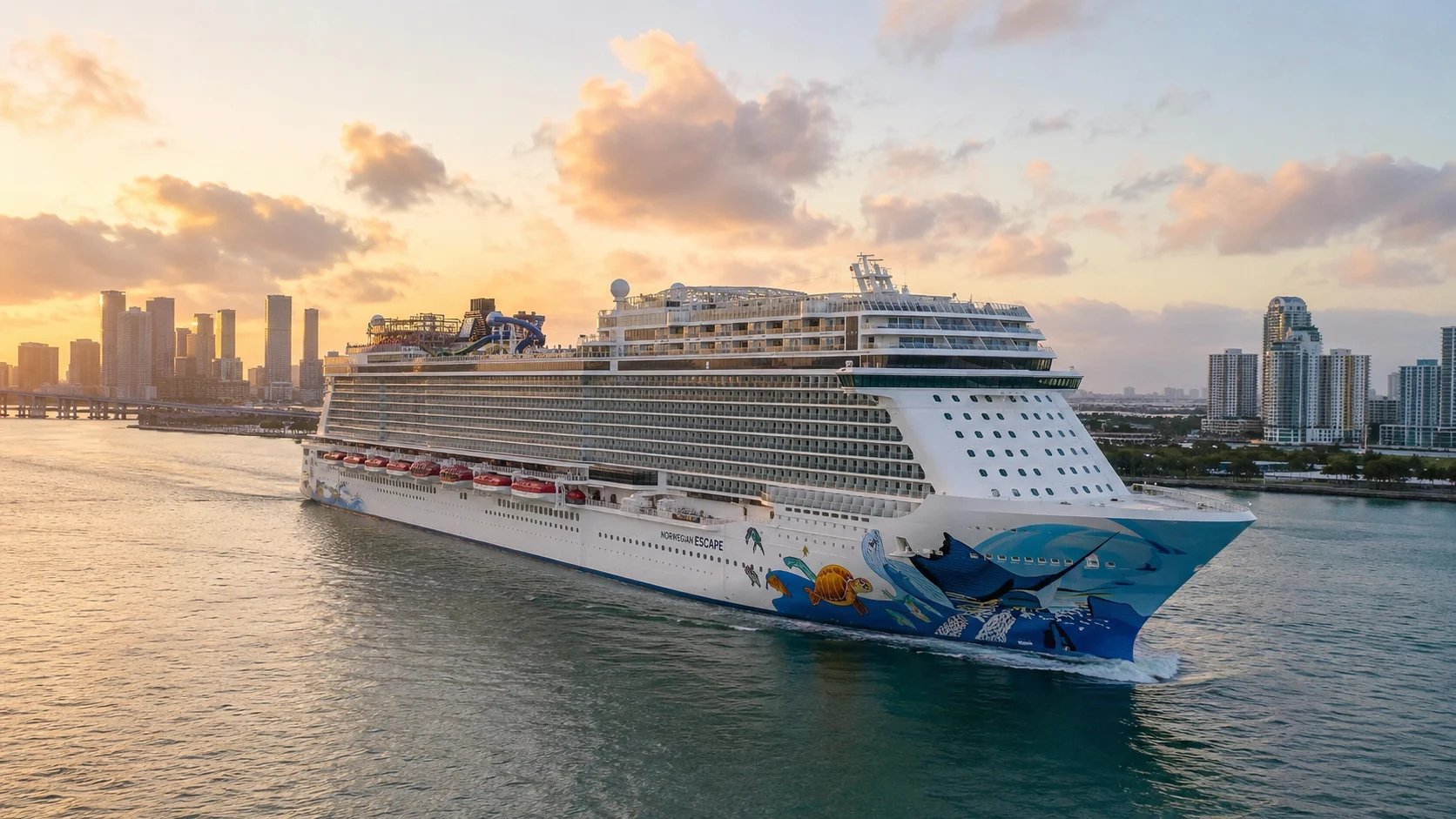
On Norwegian Escape, the cabins most worth checking are those beside or directly above or below public venues, compact rooms booked at maximum occupancy, and guarantees that give up room selection.
A good fare can still work well, provided the compromise suits everyone sharing the cabin.
Short version:
Check Deck 15 for activity overhead, Deck 9 for Waterfront venues below, and forward Deck 8 or Deck 5 rooms for their relationship to the theater levels. Avoid an unassigned guarantee or a compact four-person layout when the exact location or usable space is essential.
Cabins to check first, and what to choose instead
- Deck 15 beneath Deck 16 public space: compare the exact ceiling with the pool, fitness and Garden Café footprints; Deck 14 can retain upper-deck convenience with another cabin deck above.
- Deck 9 above Deck 8 venues: check the restaurant or lounge below; a similar room on Deck 10 adds a residential level of separation.
- Forward Deck 8 and Deck 5 cabins: line them up with the theater and other Deck 6–7 public spaces; choose a room between cabin decks if evening sound is a priority.
- I4 Family Inside: practical for a tight budget, but compact for four; price a Family Oceanview or a confirmed connecting pair.
- OX or BX guarantees: useful only if the permitted view and location variations suit you; pay for selection when a specific room feature matters.
Deck 15: inspect the space directly overhead
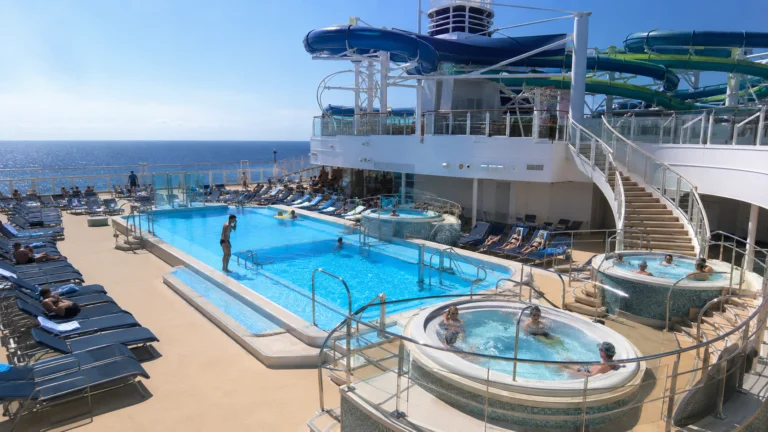
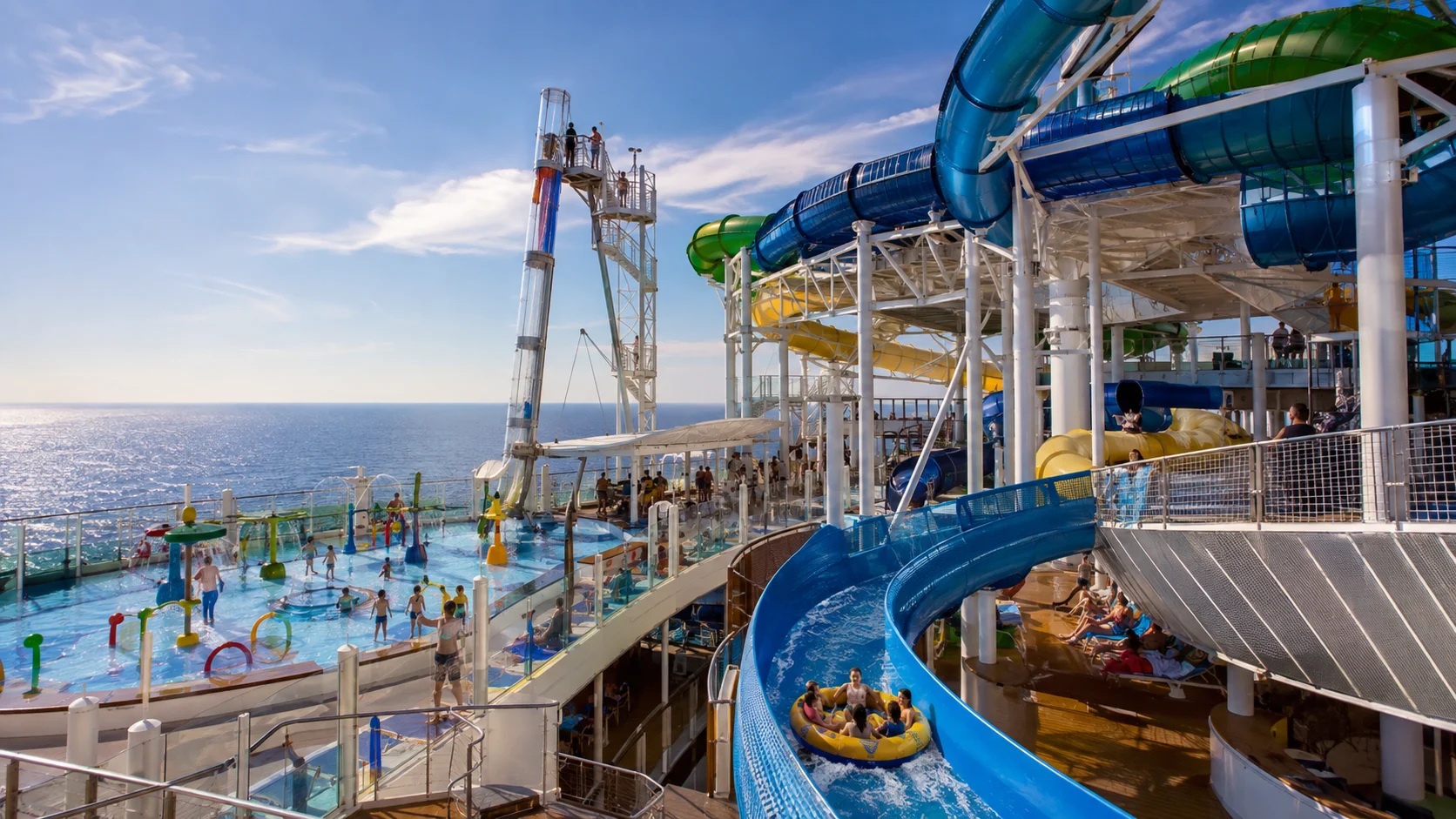
Deck 16 has the spa and fitness center forward, pools and open deck through the middle, and Garden Café aft. A Deck 15 room beneath seating, exercise equipment or an active service area presents a different tradeoff from one beneath a quieter interior section.
Deck plans identify the layout, not the noise level inside a particular room. They cannot prove that every cabin under the pool will be noisy or that a blank area will be silent.
If early preparation, footsteps or moving furniture would bother you, compare the same cabin type on Deck 14. You remain close to the outdoor decks while placing another accommodation deck between your ceiling and Deck 16.
Deck 9: look below the balcony, not just at the sea
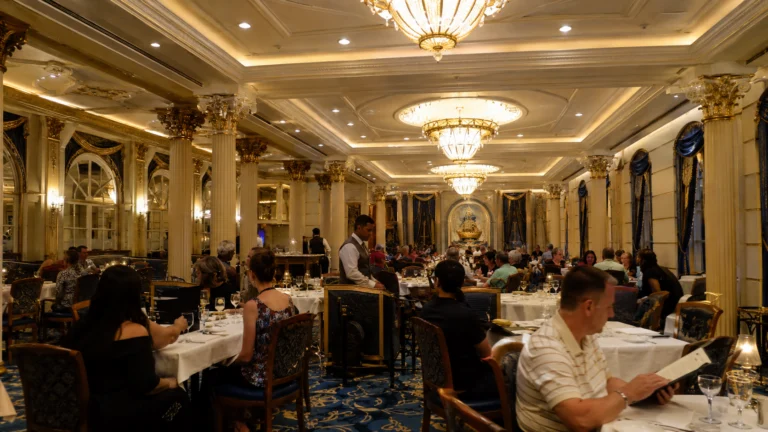
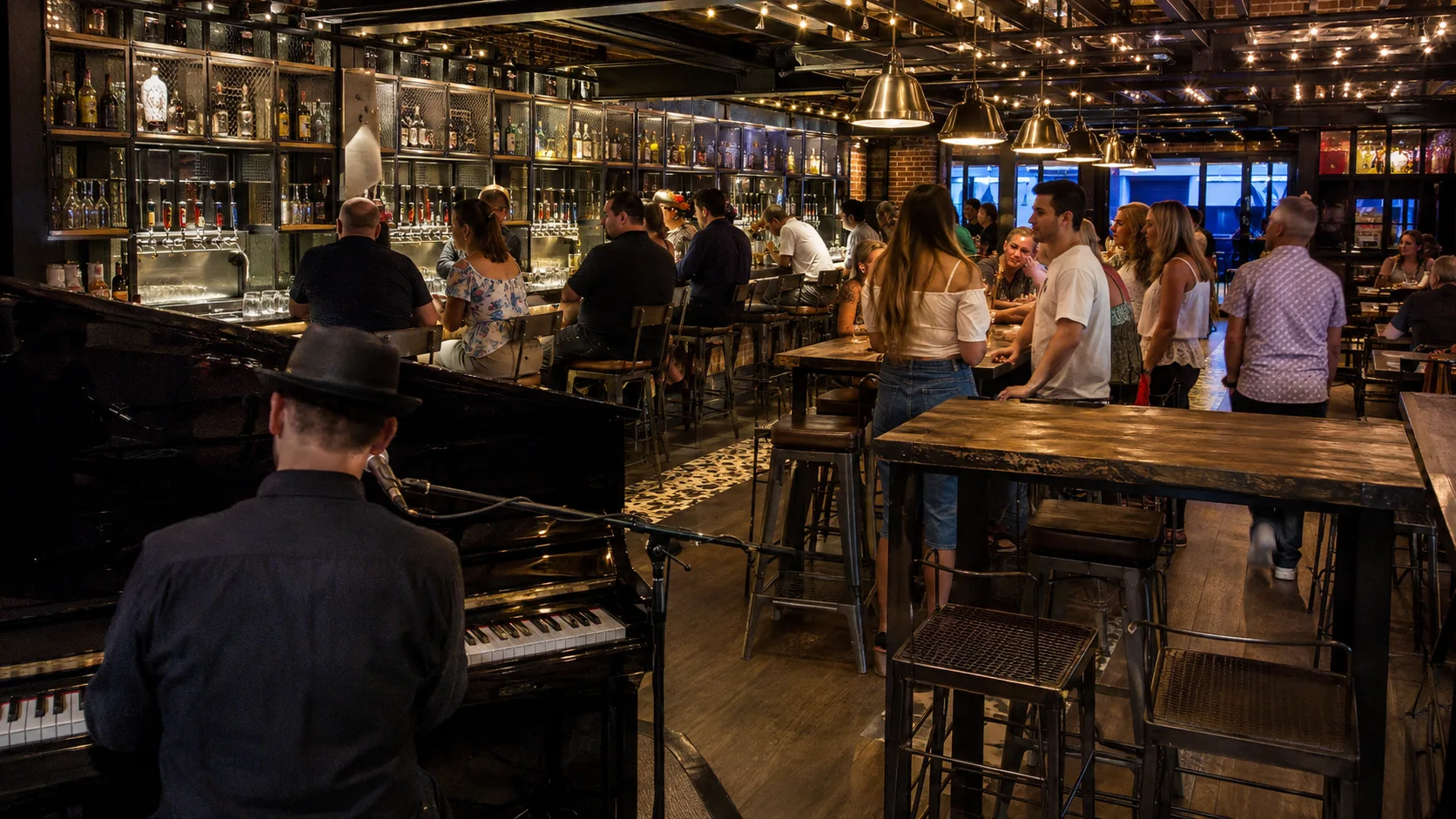
Deck 8 combines forward cabins with The Waterfront’s dining and bar areas farther aft. The District Brew House, Food Republic and Syd Norman’s Pour House are among the public venues worth locating before choosing a room above this level.
A short walk back after dinner may suit late-night guests, while an early sleeper may prefer a similar cabin on Deck 10. Treat this as a layout-based way to reduce exposure to activity, rather than a claim that a particular room has a proven noise problem.
For lower balconies, check both the outward horizon and the view straight down. Public decks, roofs and the ship’s shape can change the feeling of privacy without making the cabin an officially obstructed-view category.
Deck 8 and Deck 5: check the theater relationship
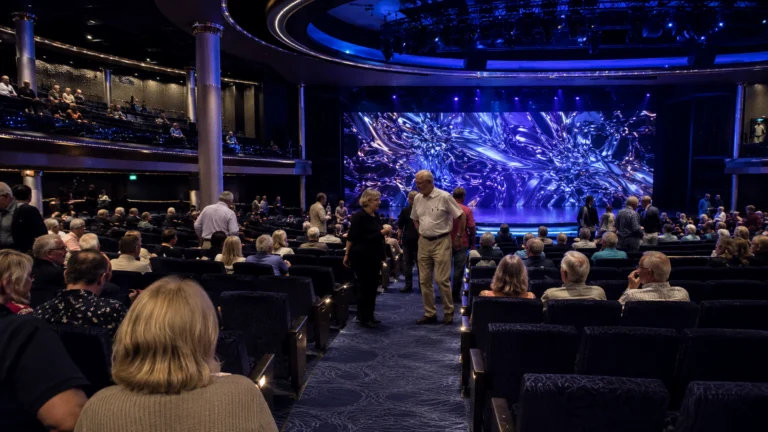
Escape Theater spans the forward sections of Decks 6 and 7, while The Supper Club is also forward on Deck 6. That makes the rooms above on Deck 8 and below on Deck 5 worth a careful side-by-side plan check.
This matters most if someone naps during rehearsals or goes to bed before evening performances finish. A room on Deck 10 or 11 between cabins is a more conservative starting point for that routine.
Deck 5 also contains Splash Academy and the Guppies area, so it can suit families using those facilities. Do not dismiss the whole deck: weigh the exact room’s ceiling and corridor position against the convenience of the lower location.
Exact-cabin checks that are easy to miss
If you are considering aft-facing cabin 10316, give vibration extra attention: a guest on the August 27, 2023 sailing reported noise and vibration. Treat that as a reason to look for recent feedback on the same room, rather than proof that every aft cabin has a continuing problem.
For a room above nightlife, separate balcony sound from sound inside with the door closed. A November 2023 stay in 9806 was reported as quiet indoors despite the live-music venue below, showing why the exact room and how you use it matter.
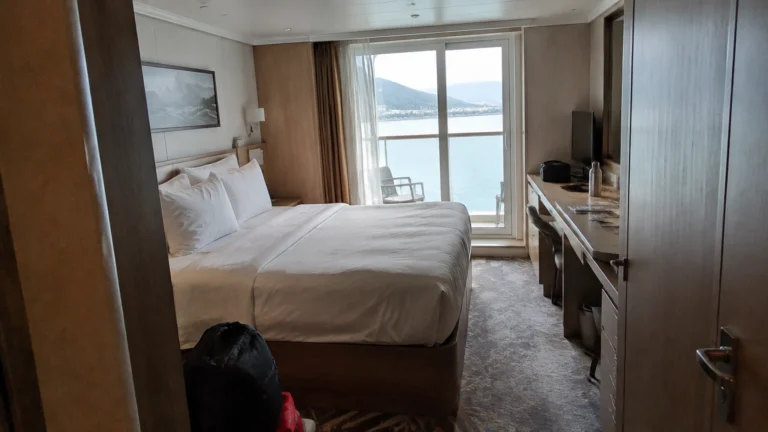
Bed placement is another worthwhile check: a June 2025 stay in 10204 flagged a tight gap between the bed and closet. If you need easier movement or will use every berth, compare the bed-and-sofa orientation with another available room before accepting the layout.
For Deck 15 starboard, pay particular attention to the forward stretch around 15724–15748 when lining up the fitness-center footprint above. This is an overhead-layout check, not a claim that every cabin in the range is noisy.
I4 Family Inside: avoid filling every berth without checking the layout
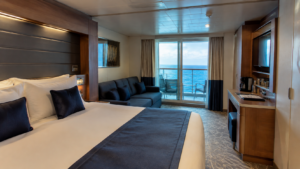
I4 Family Inside cabins are on Decks 12–14 at about 135 square feet, accommodating up to four. The family label describes who the room can accommodate; it does not create separate sleeping or living space.
With all berths in use, the key questions are where luggage goes and whether someone can reach the bathroom without disturbing everyone else. Confirm the actual bed arrangement and who will use any upper berth before booking.
Compare a Family Oceanview for more indoor space, a balcony for private outdoor seating, or two connecting cabins for two bathrooms and separate sleeping rooms. Use the full party’s fare rather than comparing the headline price for two people.
A Family Balcony is not automatically a bigger family room
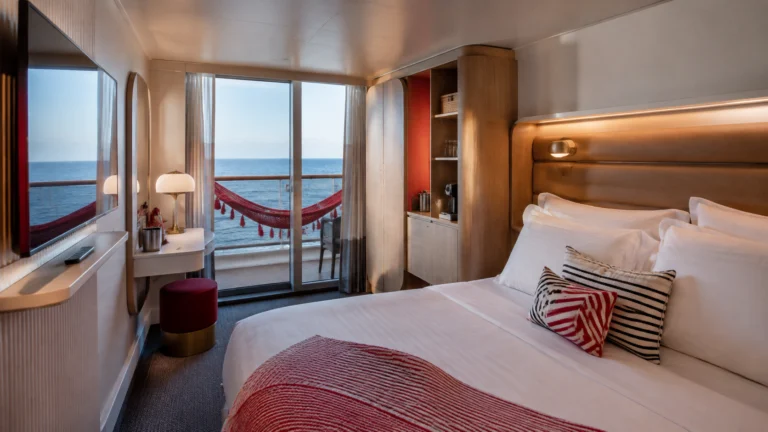
Escape’s B4 Family Balcony category is on Decks 14 and 15 and is listed for up to four guests, with a total area of about 207 square feet including the balcony. That is a different layout and location from I4, rather than a guarantee of generous floor space for four.
If pool visits dominate the day, an upper balcony may be useful. If younger children will use Splash Academy, remember that the club is on Deck 5, so a higher cabin does not shorten every family journey.
OX: skip the guarantee if the window is the reason for booking
An OX Guarantee Oceanview booking allows a fully or partly obstructed view, a porthole or a picture window. A cabin number may be assigned as late as the day before embarkation.
That makes OX a poor fit when you expect a particular outlook or need a specific deck. Choose a selected oceanview and confirm its window and sightline instead.
If you mainly want daylight and can accept the full range of eligible assignments, the guarantee may still make sense. Compare its total fare with a selected room before deciding what location control is worth.
BX: do not buy a guarantee expecting a particular balcony
BX guarantees a Balcony stateroom or better, with the room assigned by NCL rather than selected by you. Escape’s balcony accommodation spans different decks, positions and outdoor footprints.
Avoid BX when a larger balcony, a non-connecting room or a particular location is central to the trip. A selected balcony lets you check those features before paying.
The same location-control issue applies to IX Inside and MX Club Balcony guarantees. A possible upgrade should be treated as a bonus, not as the reason the booking works.

Forward, aft and higher cabins: match the location to your priorities
If motion is a concern, a lower, more central room is the usual starting point for reducing movement. No cabin position can guarantee a motion-free sailing, and sea conditions matter more than any “best deck” label.
Aft-facing balconies suit travelers who want a wake view, but they put you farther from forward venues and The Haven complex. Forward rooms reverse that walking tradeoff and may feel more pitching in rough water.
Choose the view only if you will use it enough to justify the route. For easier everyday access, identify the elevator bank nearest your most-used venues before choosing a cabin along the corridor.
Connecting doors, nearby lobbies and unexplained blank spaces
A connecting door is useful when both rooms belong to your group; otherwise it is another feature to consider if you are sensitive to sound. Neighboring cabin numbers alone do not prove that the rooms connect.
Elevator proximity can reduce walking, so there is no need to reject every cabin near a bank. Check whether the door opens beside a gathering area, a connecting passage or a service entrance instead of judging by distance alone.
An unlabeled area on the deck plan does not establish that it contains machinery, a crew pantry or a quiet void. If it borders the room you want, ask NCL what is there before relying on an assumption.
Smoke sensitivity and balcony privacy
Escape’s designated outdoor smoking areas include Deck 16 midship on the port side and at Spice H2O on the starboard side. Check the current smoking policy when comparing nearby upper-deck locations.
Wind and operating arrangements affect where smoke may travel, so a deck plan cannot certify a smoke-free balcony. If this would materially affect your trip, raise it with NCL before selecting the room.
Accessibility takes priority over the upgrade label
If you need an accessible layout, choose that before considering an ordinary cabin or Club Balcony upgrade. Confirm the specific room and your requirements with NCL’s Access Desk, including doorway clearance, transfers, bathroom facilities and any balcony threshold.
Check the route to essential venues and where a mobility device will be stored inside the cabin. An apparently convenient deck is only useful if the whole route works for you.
A final cabin check before you book
- Confirm the cabin number, category, maximum occupancy and bed arrangement.
- Compare the exact footprint with the deck above and the deck below.
- Check connecting-room, accessibility and view information rather than relying on the category name.
- Compare the total fare with one realistic alternative, including the value of choosing your room.
- Trace the repeat journeys: breakfast, pool, kids club, dinner and evening entertainment.
Use the cabin-type guide to compare layouts, and the ship-guide library when weighing Escape against another ship. The best cabin choice is the one whose compromises fit your trip at a price you are comfortable paying.
Continue planning with the pros and cons, dining guide and things to do.
How this guide was researched:
Checked against the ship overview, deck plans, onboard information and accessibility guidance. Confirm the cabin layout, included benefits and operating arrangements for your sailing before booking.