Harmony of the Seas Tips, Secrets & Things to Know: Practical Advice for a Better Trip
Use Harmony of the Seas as several smaller places: Central Park for a quieter meal, the pool deck for an active afternoon, and the theater neighborhoods for relaxed evenings without turning the whole day into a checklist.
Harmony’s dining choices reward a quick venue plan, while the best cabin still depends on the exact view, noise exposure, and daily route.
Short version
- Best first move: How to find your own rhythm on Harmony.
- Worth planning: Plan around Harmony’s distinct venue mix.
- Easy win: Reserve a performance before deciding every dinner time.
- Important tradeoff: Make a lounge evening a real alternative to another show.
- Cabin strategy: Choose a Harmony of the Seas cabin near the spaces you will repeat, then check the rooms and venues directly above and below it.
Plan around Harmony’s distinct venue mix
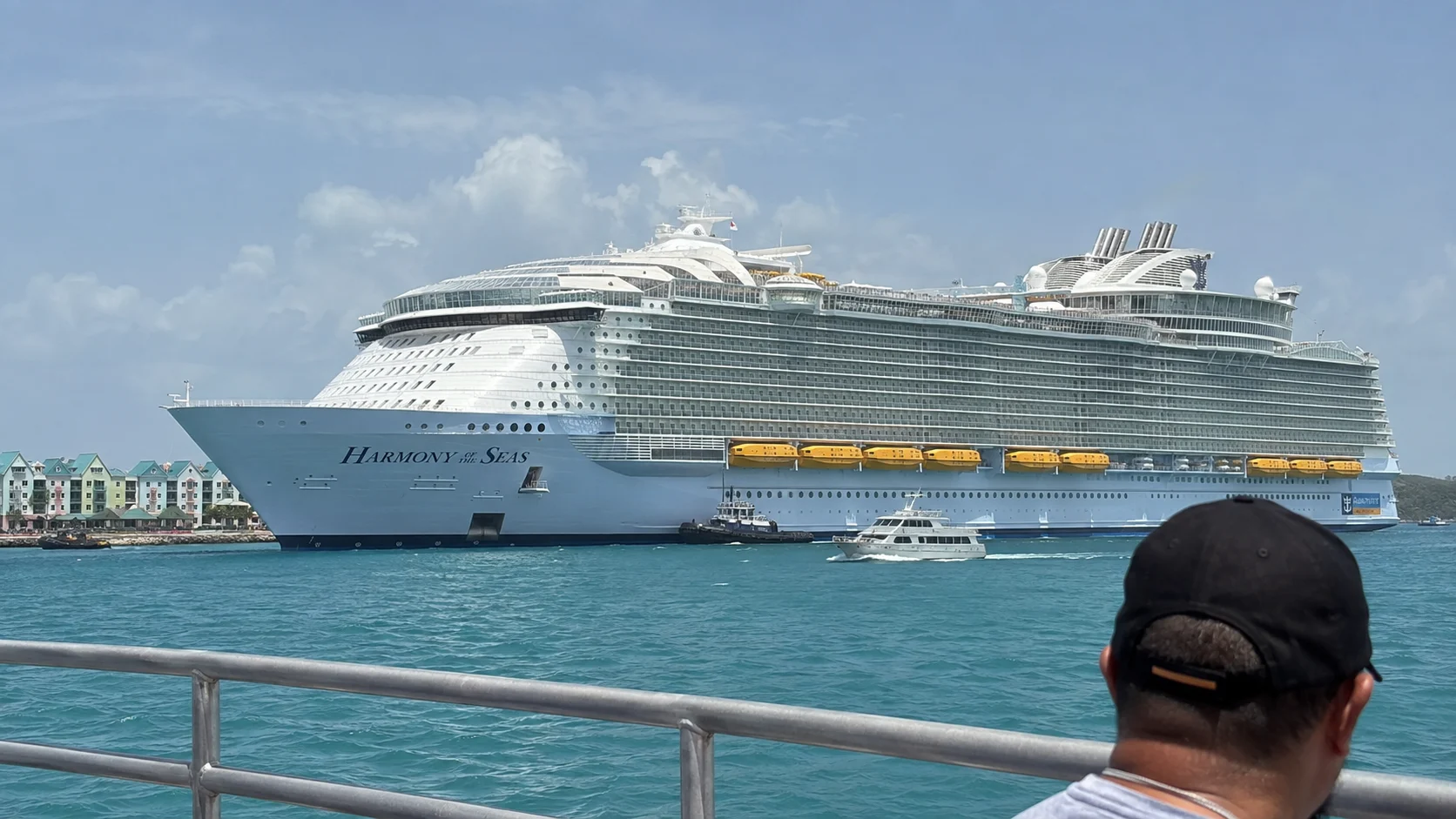
Harmony’s venue mix includes The Lime & Coconut, Playmakers, El Loco Fresh, Samba Grill, and an expanded casino. Check the hours and menus for your sailing before building a meal or evening around one venue.
For a pool day, El Loco Fresh is a practical addition because a casual meal can stay close to the outdoor activity. That matters more to a family in swimwear than another specialty dinner several decks away.
Playmakers and Samba Grill solve different evening plans: one is a sports-bar meal, the other a Brazilian steakhouse dinner. Choose the actual experience you want before buying a package that encourages using restaurants merely because they are included in the deal.
Reserve a performance before deciding every dinner time
Protect Harmony’s AquaTheater and ice-show priorities before arranging every dinner. Use the show booking guide for the reservation window, then leave an early-cruise backup for any outdoor performance affected by weather.
Put an outdoor AquaTheater performance early in the sailing when it is a priority. Weather or sea conditions can force changes, and an early choice leaves more room to consider an alternative than a final-night plan.
Then choose a contrasting indoor performance and stop. Harmony’s lounges and neighborhood evenings are easier to enjoy when the calendar has open space instead of a sequence of dinners and shows that requires hurrying between them.
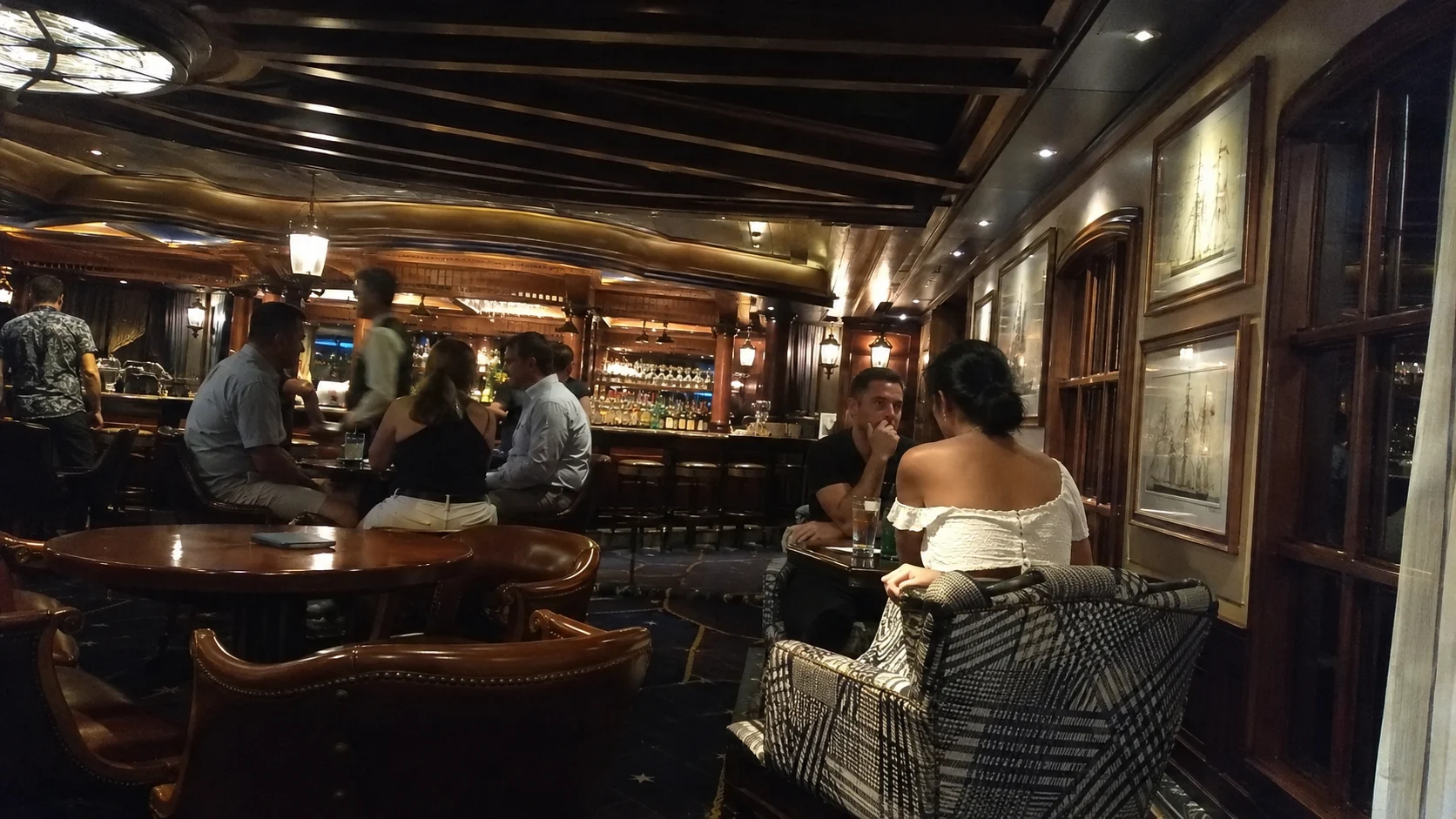
Make a lounge evening a real alternative to another show
An evening in Central Park works best when somebody has checked the music schedule and chosen a specific meeting spot. Use Trellis Bar as a clear landmark rather than send the group to “the park” and hope everyone chooses the same end.
For a sports evening at Playmakers, ask whether the actual game is available before committing to a long meal there. A wall of screens is useful only if the broadcast you care about is among the options.
Leave when the room does not suit the group, but stay when it does. The useful freedom on Harmony is being able to choose between a lively venue and a calmer neighborhood, not needing to inspect every bar before bedtime.
Compare the three very different balcony experiences
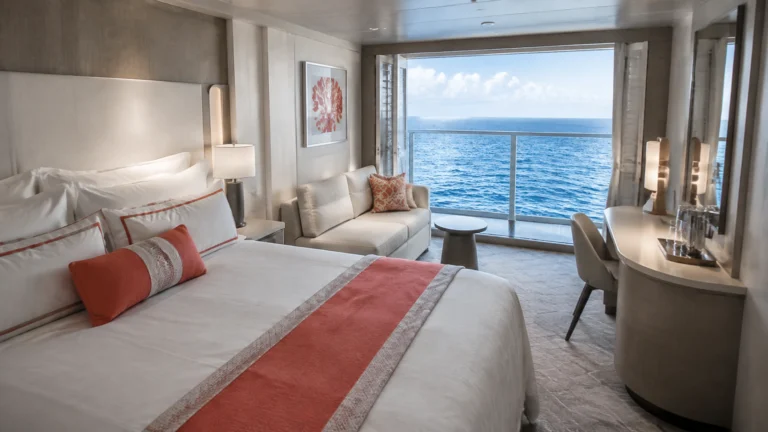
An ocean-facing balcony is the straightforward choice when a private outward view is the purpose of paying more. A Central Park balcony exchanges that sea view for greenery, public-space activity, and neighboring cabins across the open interior neighborhood.
Boardwalk balconies have a busier setting and can have varied sightlines toward the aft opening and AquaTheater. Inspect the exact room before treating a partial view as a substitute for a booked show or a direct wake-facing balcony.
Our cruise cabin guides can help compare those categories. Decide which setting you actually want first, then evaluate the room’s position, rather than assume every balcony offers the same privacy and sound environment.

Keep a simple Central Park food routine
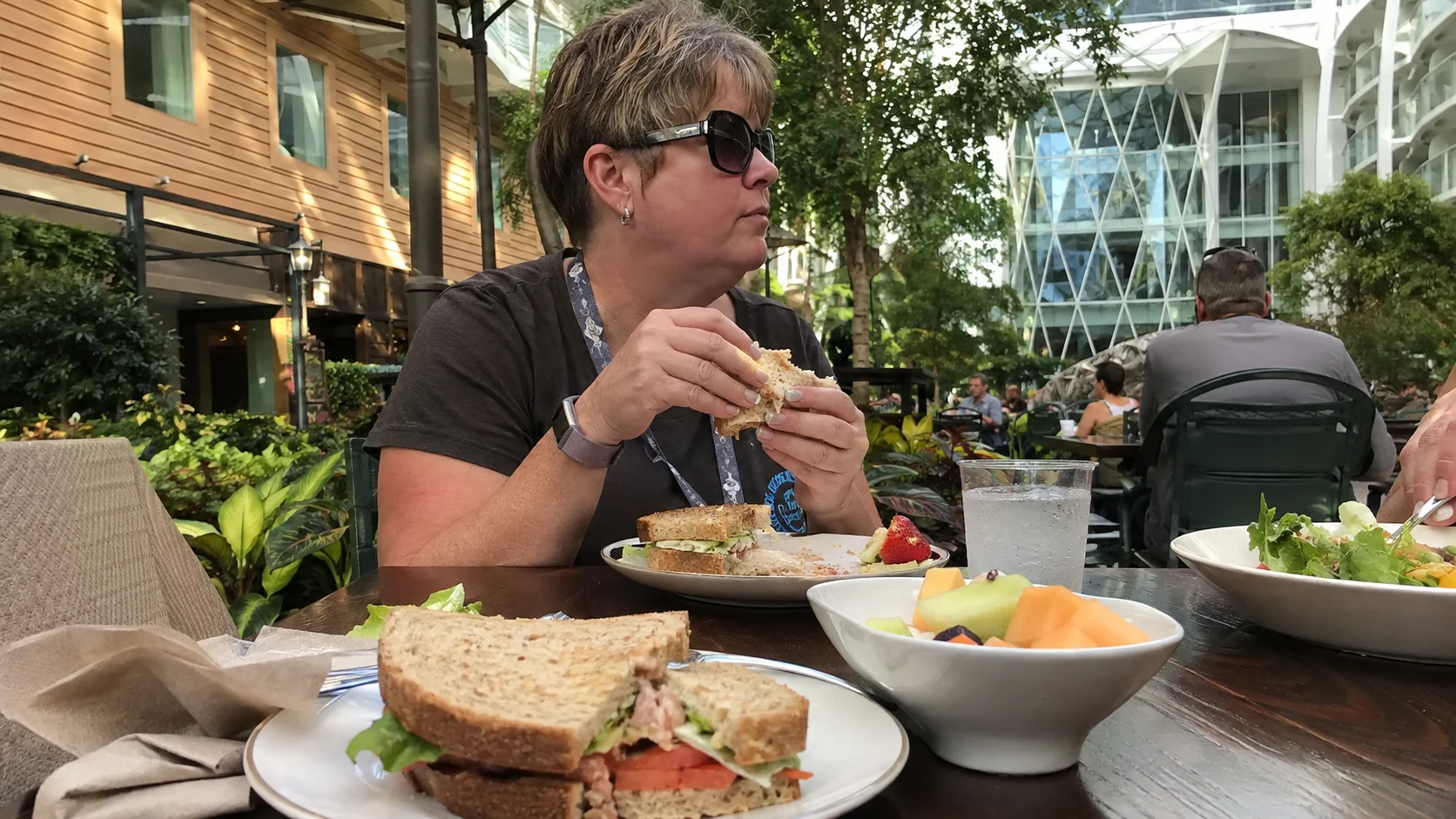
Park Café is the stop you should remember for a lighter meal while already in Central Park. A sandwich or salad there can save a trip to Windjammer when lunch does not need the buffet’s larger selection.
Visit early enough to see the serving hours and seating options before the main lunch crowd arrives. If a table is important to the group, carrying a manageable first order is easier than collecting every meal and then searching together for somewhere to sit.
Windjammer still earns its place when people want several different cuisines or a bigger breakfast. Choose it deliberately for variety, while keeping Park Café as the alternative when the quieter neighborhood is part of what you want from the meal.
Treat the Solarium as an adult retreat, not a family meeting pool
The Solarium is for guests 18 and older. Families with younger swimmers need a separate pool plan, so agree on where to meet later before adults head into the quieter area.
A popular adults-only space can still be crowded. Try a different time of day or a seat away from the most obvious gathering point instead of assuming every visit will feel like the first busy sea-day afternoon.
For a sheltered sea view without turning the break into a pool visit, try the seating beside the walking route mentioned above. Keep the lane clear for walkers and runners, and leave if wind makes the spot less comfortable than an indoor lounge.
Separate waterslide, surfing, and skating requirements
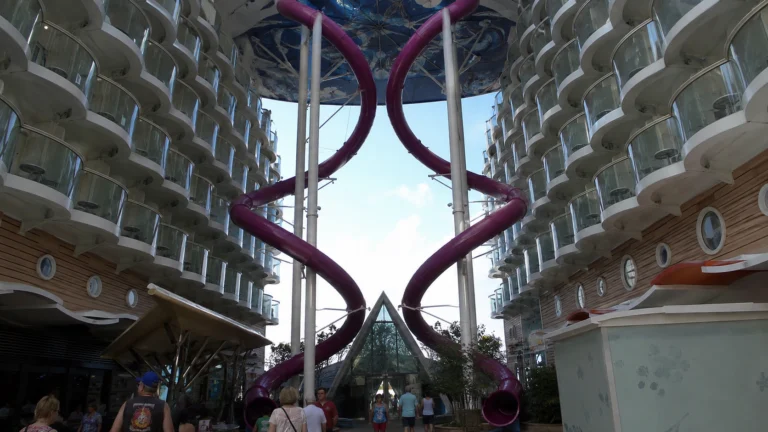
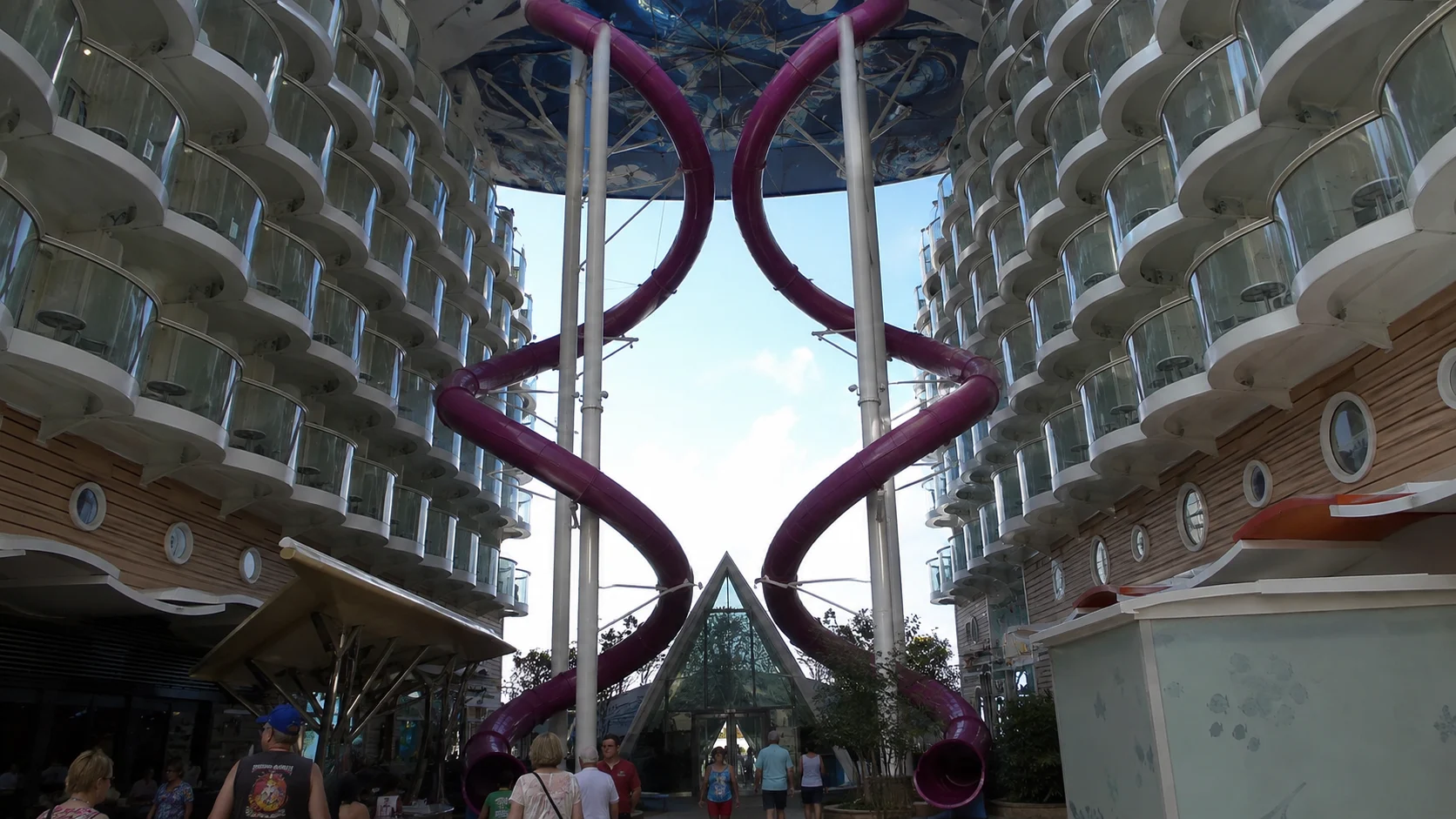
Typhoon and Cyclone require riders to be at least 48 inches tall and no more than 300 pounds. Other Harmony attractions have their own limits, so one successful measurement is not a pass for every feature on the ship.
FlowRider uses different minimum heights for boogie boarding and stand-up surfing: 52 inches and 58 inches respectively. Check the actual session type, because a public session and a paid lesson are different offers even though they use the same equipment.
Harmony’s public skate is a separate Studio B activity rather than an extension of the ice production. Pack long pants and socks, find the correct activity session, and allow time for its capacity, waiver, and equipment process.
Let a specialty dinner earn the time as well as the price
Samba Grill is the option you should compare when the group wants a meat-focused Brazilian steakhouse evening. Put that meal on a day when everyone expects to arrive hungry, rather than immediately after a long food tour or a late lunch ashore.
Playmakers is the more casual choice when a game and sports-bar food are the reason for going. Neither venue needs to be booked simply because it appears on the venue list, and a short cruise may be more comfortable with one deliberately chosen paid meal.
Before buying a dining package, compare the actual restaurants, available meal periods, and any extra charges with the meals you would otherwise purchase. Keep an included dinner flexible after the longest port day so the group can choose a lighter evening without wasting a reservation.
Use the cabin map to shorten the routes you will repeat
Look at the cabin vertically as well as along the corridor: public spaces above or below can affect sleep even when the room itself looks attractive. Our cabin location guides help turn the category choice into an exact-room comparison.
Favor cabins above and below for a light sleeper, then compare elevator access with the daily pool, Central Park, and theater routes. A room near the places you actually use can be more useful than paying for a theoretically central location without tracing those walks.
After boarding, complete the safety briefing and assembly-station visit, confirm the show and dinner bookings, and find El Loco Fresh, Playmakers, and Samba Grill. Then leave the next stretch open for the pool, a café, or a lounge that looks inviting, rather than trying to inspect the whole ship in one afternoon.
Continue planning with the things to do, deck guide.
How this guide was researched: This guide was checked against the cruise line’s current ship pages, deck plans, venue listings, and published policies. Details can change by sailing, so confirm booking-sensitive prices, hours, access rules, and cabin assignments before payment.
Treat the Boardwalk and Central Park as two different evening tools
Harmony feels calmer when the group stops treating every neighborhood as a shortcut to somewhere else. Use Central Park for a quiet drink or dinner, and save the Boardwalk for carousel time, AquaTheater energy, and a louder family atmosphere.
Pair plans within one neighborhood before crossing the ship. A Boardwalk dinner followed by an AquaTheater show is far easier than squeezing a Central Park reservation between two activities at opposite ends of the vessel.
The same rule helps families set meeting points. Choose one exact venue entrance or landmark rather than saying only “Central Park,” because the neighborhood is long enough for two people to wait in different places.
On the first afternoon, walk from the cabin to both neighborhoods and note which elevator bank works best. That small orientation makes every later reservation feel less rushed.
Keep one unscheduled hour after boarding for the Promenade, Boardwalk, and Central Park walk. It reveals how the decks connect before show times, dinner reservations, and family requests begin competing for attention.
Use the Royal Promenade for a fast indoor regroup, but move elsewhere when a parade or party draws a crowd. A nearby named venue makes a clearer backup meeting point than an elevator bank.
Keep planning with the Harmony pros and cons, cabins to avoid, and Harmony dining guide.