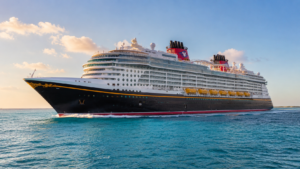
Disney Destiny Pros and Cons: Who Should Book It?
Disney Destiny is basically Disney Wish’s controversial floor plan wearing a much more mischievous outfit.
The heroes-and-villains theme, Pride Lands dinner, Hercules, De Vil’s, and Marvel-heavy details give it a sharper personality than Wish, but the ship still inherits the same two-elevator-bank layout, small pools, narrow traffic points, and reservation pressure, now compressed into mostly four- and five-night cruises.
Short version
- Best reason to book: Destiny has a much stronger personality than “Wish number three”.
- Another strong point: Pride Lands is the dining room that changes the Destiny versus Wish decision.
- Biggest tradeoff: Destiny did not fix Wish’s two-elevator-bank layout.
- Think twice if: The pool deck is still designed around many small bodies of water.
- Bottom line: Book Disney Destiny when its signature strengths sound exciting, not simply because it is newer or larger.
Before booking, browse the ship page, deck plan, and onboard guide so the cabin and activities match your priorities.
My quick Destiny verdict
- Best reason to choose Destiny: your family actually prefers Marvel, villains, The Lion King, and Hercules to Wish’s princess-heavy personality.
- Best new experience: Pride Lands: Feast of The Lion King, which gives Destiny a genuinely different dinner experience rather than just a new coat of paint.
- Biggest inherited weakness: the Wish-class layout still feels chopped up, with only forward and aft elevator banks and several narrow traffic points.
- Biggest itinerary issue: four- and five-night cruises can make a ship with this much entertainment feel rushed.
- Who should compare Treasure instead: families who want seven nights and a more cohesive adventure theme.
Pro: Destiny has a much stronger personality than “Wish number three”
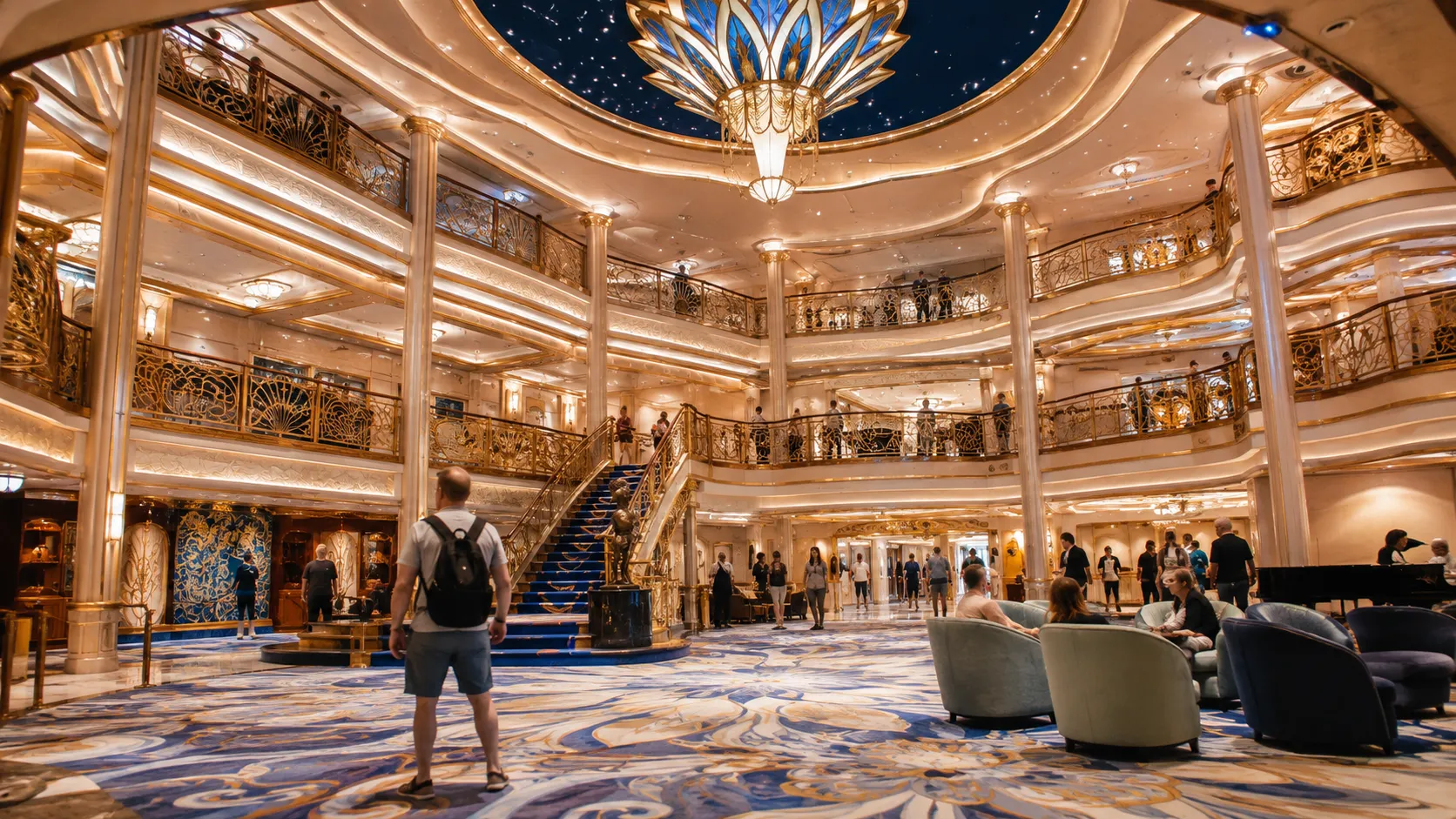
Disney could have changed a few restaurant names, swapped some artwork, and called the third Wish-class ship new. Destiny instead leans hard into heroes and villains, with Black Panther in the Grand Hall, Cruella in De Vil’s, Doctor Strange in The Sanctum, Pirates of the Caribbean influence in Cask and Cannon, and a dining room built around The Lion King.
That makes the ship much easier to recommend to families whose Disney taste skews Marvel, Pixar, villains, and big stage stories rather than princesses. A ten-year-old who rolled their eyes at Cinderella décor may suddenly become very interested when Loki appears in the atrium.
The theming is less cohesive than Treasure’s adventure concept, and do not pretend otherwise. Destiny feels more like a very polished heroes-and-villains greatest-hits collection, which can be fantastic when those are exactly the characters your family likes.
Choose Destiny because those characters excite your family, not because the ship launched after Treasure. The hull is too similar for launch order to do the deciding.
Pro: Pride Lands is the dining room that changes the Destiny versus Wish decision
Pride Lands: Feast of The Lion King is Destiny’s standout new rotational restaurant, combining dinner with live music, performers, and the songs people actually know from The Lion King. It is the single dining experience that gives Destiny a stronger identity than a simple third version of Wish.
Expect children who love the movie to be completely absorbed and adults to enjoy having something more musical than the screen-heavy Worlds of Marvel. The downside is obvious if your idea of dinner is quiet conversation, because Disney has once again decided your entrée would benefit from a production number.
Destiny also retains 1923 and Worlds of Marvel in the rotation, so the week still mixes one calmer dining room with more overtly themed nights. Your serving team follows you, which remains one of Disney Cruise Line’s best family conveniences when they already know the allergy, booster-seat, and picky-eater situation by night two.
Do not pay for adult dining just to escape rotational restaurants every night. Use the included experiences first, then book a premium meal because you actually want Palo or Enchanté rather than because you are hiding from another soundtrack.
Pro: Hercules gives Destiny a headline show that belongs to this ship
Disney Hercules is the theater production to protect on the schedule because it gives Destiny a major entertainment identity beyond reused fleet favorites. The story, music, comedy, puppetry, effects, and Disney-level production values make it exactly the kind of show that families would pay real money to see on land.
That value matters when you are deciding whether the Disney premium is justified. A family that attends Hercules, character entertainment, kids clubs, deck events, and the other major productions is extracting far more from the fare than a family that spends every port day ashore and goes to bed after dinner.
The downside is capacity. Small popular venues and compressed short-cruise schedules mean a lot of people can want the same show or lounge at the same time, so arrive early for Hercules and stop trying to treat every other event as equally essential.
Identify two true must-sees and arrive early for those, then leave the rest flexible. Four nights is too short to spend half the cruise waiting for doors to open.
Pro: the adult lounges are more interesting than the family-first reputation suggests
De Vil’s is the adult venue everybody photographs because Cruella’s black, white, and red aesthetic is hard to miss, while The Sanctum brings Doctor Strange into a more refined lounge setting. Cask and Cannon adds a Pirates of the Caribbean pub atmosphere, giving adults several places that feel specific to Destiny instead of leftover generic cocktail bars.
That matters for couples who like Disney but do not need characters in every room. You can build a very good adult evening around dinner, one of these lounges, a theater show, and Quiet Cove without spending the entire night in a family atrium.
The catch is capacity. Several Destiny lounges are intimate in the literal sense that too many people make them stop being intimate, so try the most popular spaces earlier in the evening rather than assuming a post-dinner seat will magically appear.
Con: Destiny did not fix Wish’s two-elevator-bank layout
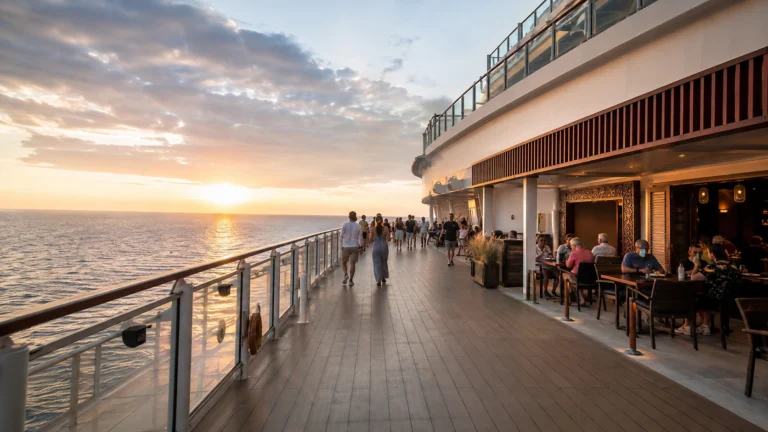
The biggest physical criticism of Disney Wish still applies because Destiny uses the same basic Wish-class architecture. There are forward and aft elevator banks but no traditional midship bank, and several public spaces sit along routes that can feel narrow or unnecessarily indirect.
This becomes more frustrating with strollers, wheelchairs, scooters, and families all moving after the same show or dinner seating. A route can technically work and still feel crowded enough to make cabin proximity to the correct elevator bank a serious booking factor for anyone who depends on elevators.
If your family can comfortably take stairs for a few decks, you may use them more than expected. If someone must rely on elevators, make the cabin’s relationship to the correct bank one of the most important decisions on the booking screen.
Use the Disney Destiny cabins to avoid guide before choosing a room. “Near the elevators” is not enough when the ship only gives you two main choices and your favorite venues may cluster around one of them.
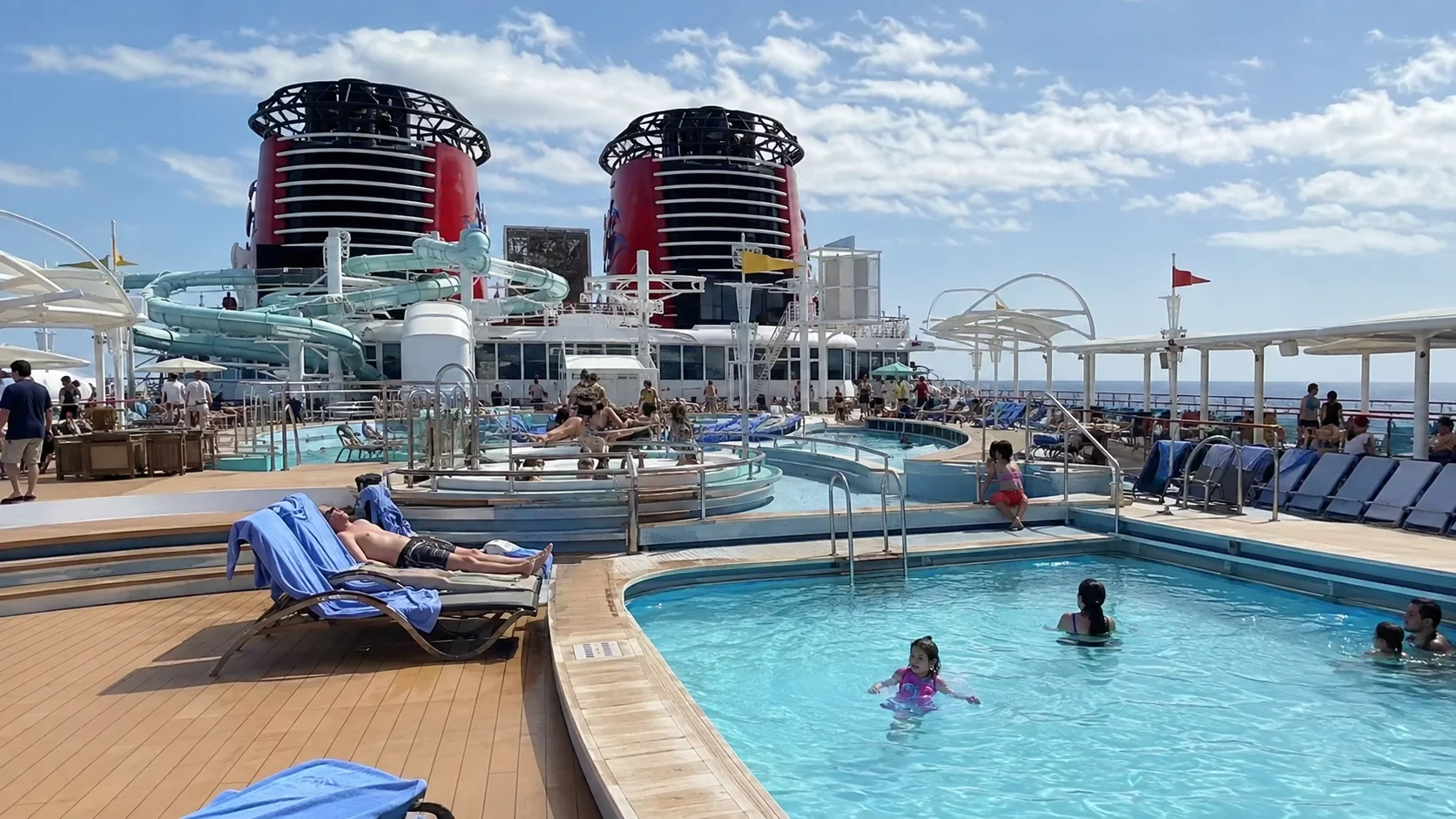
Con: the pool deck is still designed around many small bodies of water
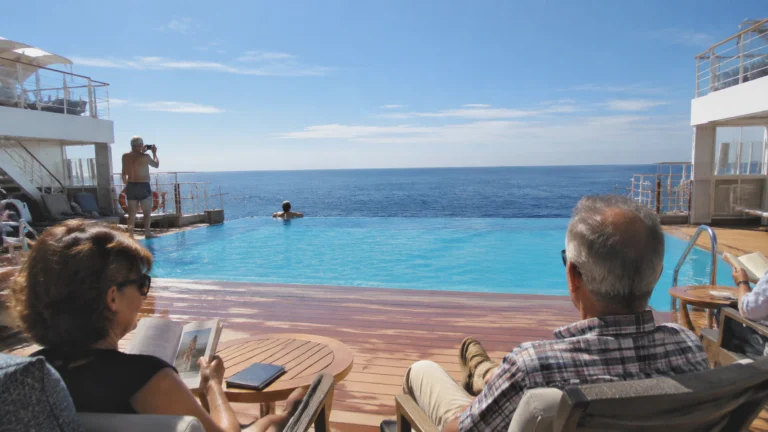
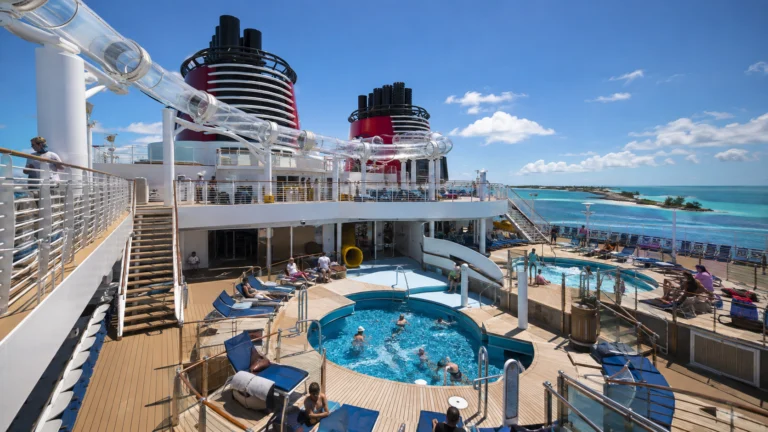
Destiny inherits the Wish-class approach of multiple small family pools rather than one large traditional main pool. That creates variety and themed pockets, but it also means a sunny sea day can produce several very crowded little pools instead of one spacious place to actually swim.
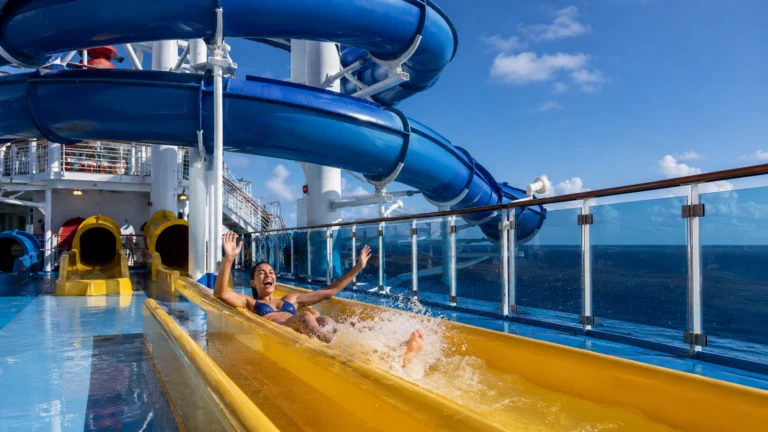
AquaMouse gives families a marquee water attraction, and the splash areas help younger children, but do not choose Destiny for a child whose entire vacation dream is swimming for six hours. Royal Caribbean and some other family ships simply provide more substantial water-park and pool hardware.
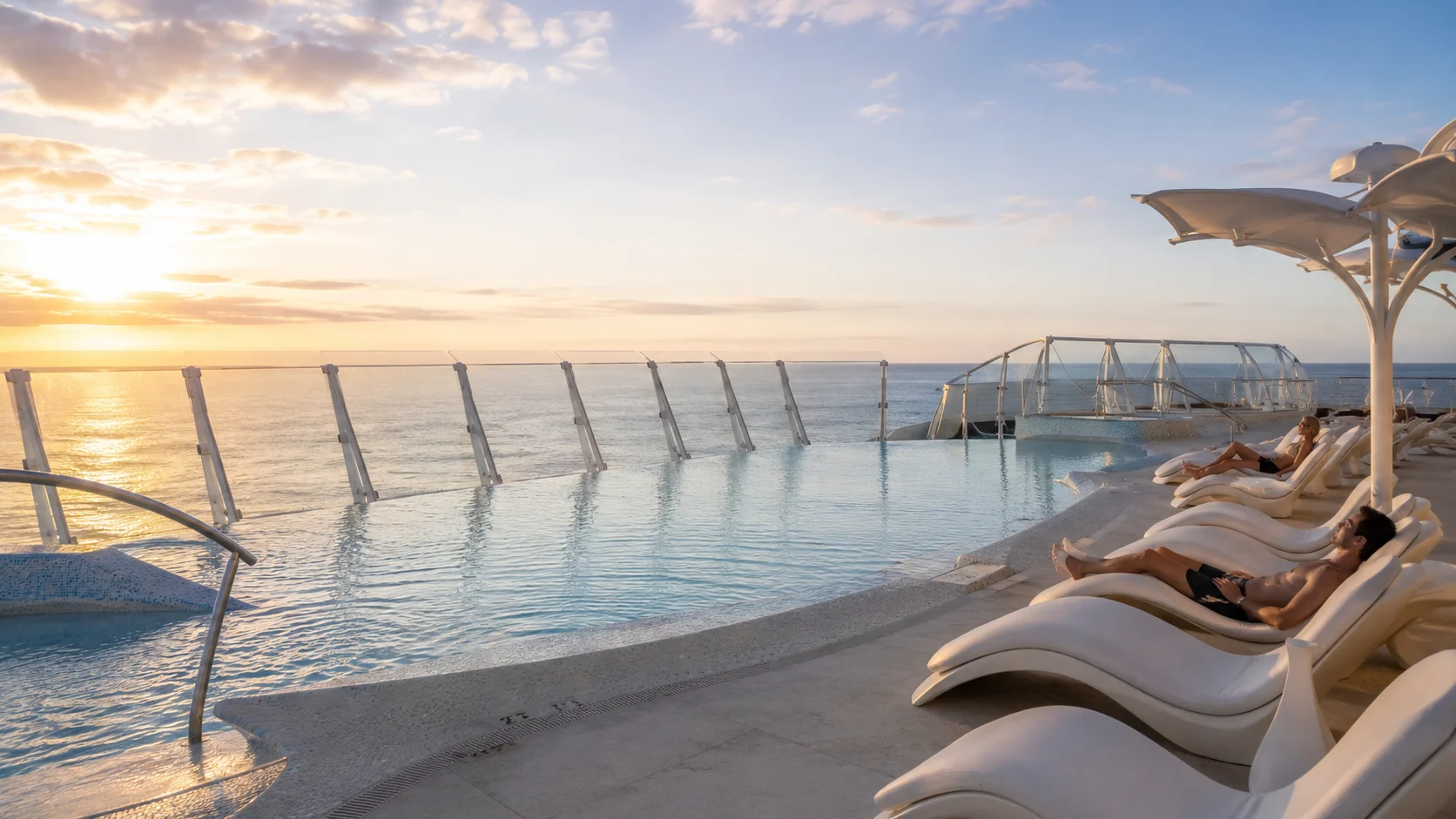
Quiet Cove gives adults an escape, but the adult pool remains compact. It is attractive and useful, just not the sprawling adults-only resort deck some travelers picture when they hear “adult area.”
Con: four and five nights make the Wish-class layout feel more rushed
Disney Treasure gets seven nights to let you learn the same basic hull, while Destiny often sails shorter Bahamas and Caribbean itineraries from Port Everglades. That changes the experience more than the deck plan suggests.
You are trying to fit Pride Lands, Hercules, kids clubs, adult lounges, AquaMouse, character meetings, rotational dining, Castaway Cay or Lookout Cay, and possibly another port into a long weekend. The result can feel more like a Disney park itinerary with stateroom service than a lazy cruise.
Choose five nights over four whenever the price difference is reasonable. One extra day gives you more value than a small cabin upgrade because it lets the family skip an activity without immediately calculating what percentage of the cruise has been lost.
If seven nights are available in your vacation window, compare Treasure before paying Destiny’s new-ship pricing. Destiny wins on theme and itinerary fit, while Treasure wins on breathing room.
Pro: the kids clubs remain one of Disney’s strongest defenses of the fare
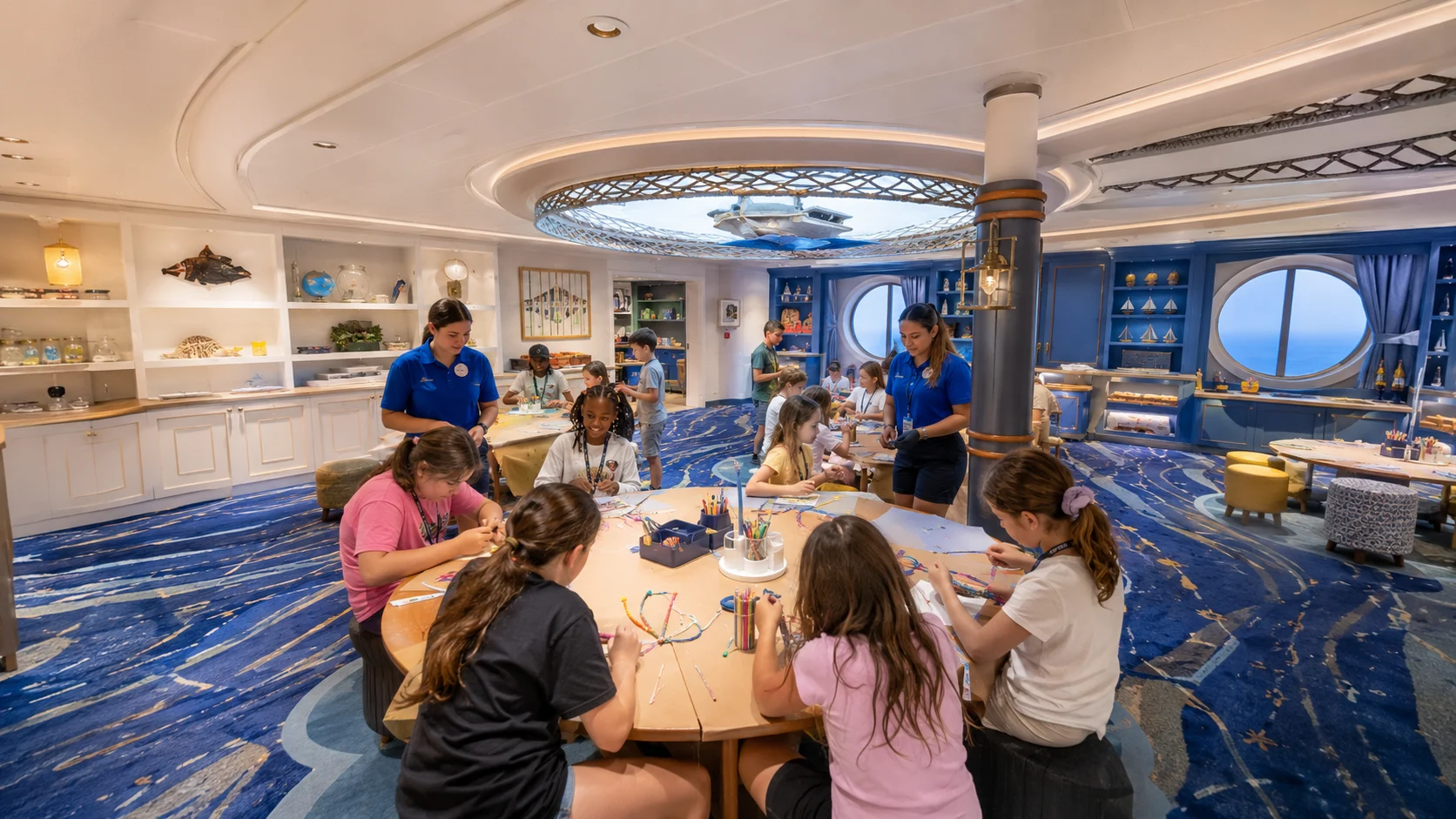
Disney’s Oceaneer Club setup continues to be a major reason families pay more, with highly themed spaces and structured programming that feel closer to attractions than hotel childcare. Destiny’s hero-and-villain overlays make those spaces especially appealing to children who have aged out of the princess phase but are still very much in the Marvel and Pixar phase.
This is where Disney’s price premium becomes easier to justify for parents who actually use the clubs. A child happily disappearing into programming for two hours can be worth more to exhausted parents than another waterslide visible from the deck plan.
Visit during open house early in the cruise so everyone knows where the spaces are and which activities appeal. Do not discover on the final morning that your child would have happily spent the entire week doing something you never bothered to find.
Cabins are family-friendly, but location still beats Disney magic
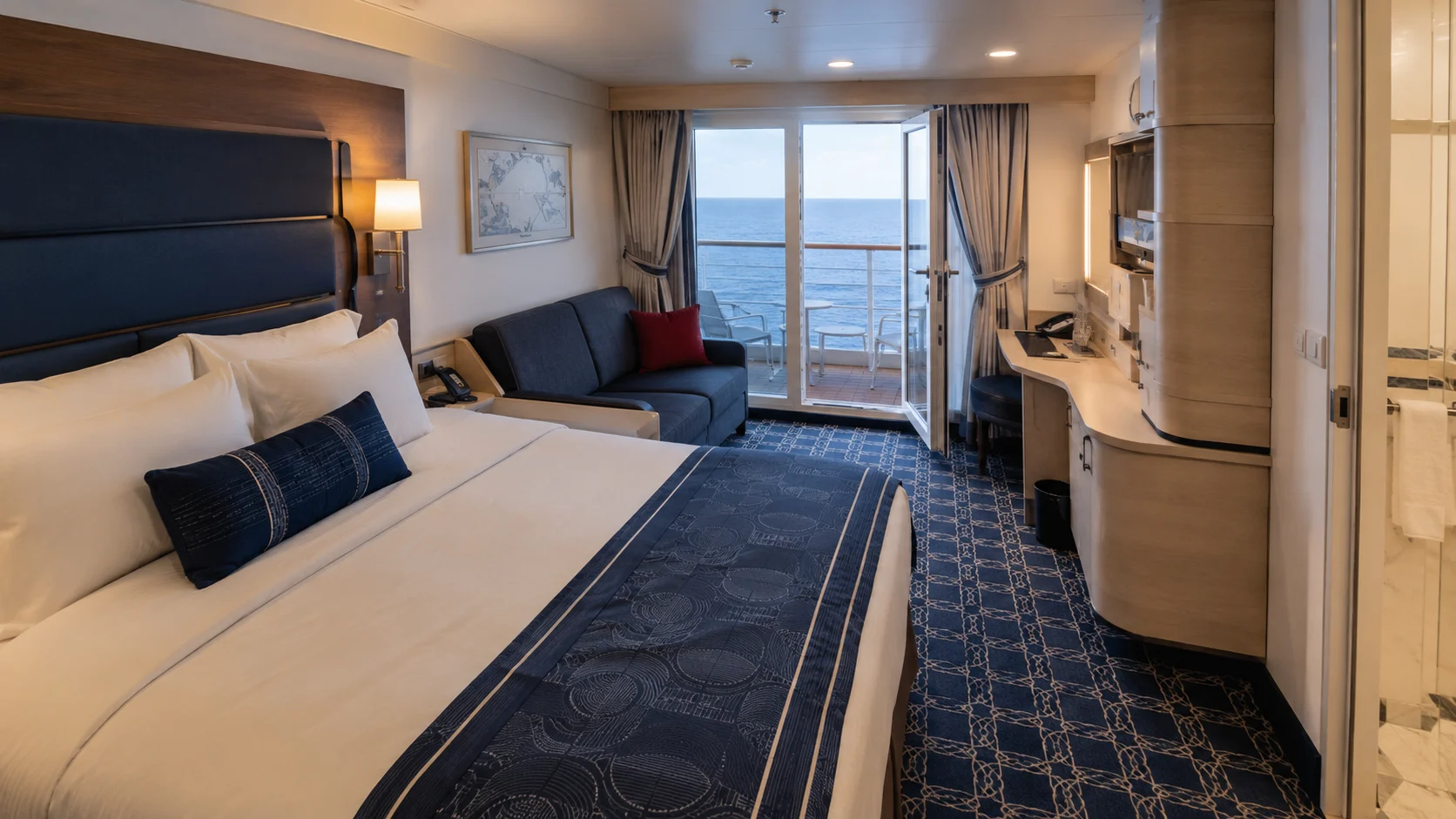
The split-bath layout remains one of Disney’s best ordinary-life features because one person can shower while another uses the toilet and sink. Families of three or four feel that benefit every morning, which is more useful than a cabin feature designed mainly to look impressive in a tour video.
Connecting doors, upper-deck activity, verandah rail style, and the distance to the correct elevator bank still matter. You are better off with a slightly less glamorous cabin that shortens six daily trips than a prettier one that turns every dinner into a walk across the ship.
Guarantee rates are only attractive if your family genuinely accepts any room in the category. If “any room” actually means “anything except twelve locations I already hate,” choose the number yourself and preserve family peace.
Destiny versus Treasure versus Wish
Choose Destiny over Wish if your family prefers Marvel, villains, The Lion King, and Hercules to Wish’s fairy-tale identity. The ships share enough architecture that those storytelling differences are more meaningful than obsessing over tiny specification changes.
Choose Treasure over Destiny if seven nights and a more cohesive adult-and-family theme matter more than the specific heroes-and-villains lineup. Treasure also gives the Wish-class deck plan enough time to become familiar instead of finally making sense during the packing process.
Choose Dream or Fantasy over all three if you love Disney’s older, more intuitive ship layout and want a larger traditional adult outdoor area. Newer Disney hardware is not automatically the best Disney product for every loyal Disney cruiser.
Who you should book Disney Destiny for
- Marvel and villains families. Destiny’s theme is not subtle, and that is exactly the appeal.
- Families who consider dinner part of the entertainment. Pride Lands and rotational dining are major components of the experience.
- Multigenerational Disney groups. Kids clubs, adult lounges, shows, character programming, and Quiet Cove give several generations something legitimate to do.
- Travelers who want a shorter Disney cruise. Four or five nights can be easier to fit around school and work than Treasure’s seven-night commitment.
- Disney adults who actually like the new lounge themes. De Vil’s and the other adult spaces give Destiny a better evening identity than the family-first label suggests.
Who you should steer elsewhere
- Disney cruisers who already dislike Wish’s layout. Destiny did not secretly add a midship elevator bank while nobody was looking.
- Pool-first families. The ship is stronger at themed entertainment than at spacious swimming.
- Adults wanting a large quiet outdoor retreat. Quiet Cove is useful but still relatively compact.
- Travelers who hate arriving early for small venues. Popular entertainment can fill, especially on short cruises where everybody follows the same compressed schedule.
- People who want a relaxed week. Treasure’s seven-night rhythm is a better match.
How to book Disney Destiny
First, compare a five-night Destiny sailing with a seven-night Treasure sailing and a similar Dream or Fantasy cruise. The winning ship would be the one whose theme, duration, itinerary, and cabin price match the family, not the one with the newest delivery date.
Choose the cabin around the elevator bank that serves our most repeated venues, then lock in the dinner seating that best matches the children’s normal bedtime. A 5:45 p.m.
Dinner can be much more valuable than a slightly better cabin location when the alternative is a child asleep during Pride Lands.
Reserve or arrive early for Hercules and any truly important character experience, then leave the rest loose. Disney gives you enough entertainment that missing one event because everyone was happy somewhere else is not a failure.
Finally, price the trip against another family cruise before deciding the Disney premium is reasonable. If your kids will use the clubs, shows, characters, and rotational dining, Destiny can earn it; if they mostly want a pool and pizza, you have many cheaper ways to provide both.
Continue planning with the dining guide, things to do, cruise tips.
How this guide was researched: This guide was checked against the cruise line’s current ship pages, deck plans, venue listings, and published policies. Details can change by sailing, so confirm booking-sensitive prices, hours, access rules, and cabin assignments before payment.
The final verdict
Disney Destiny is the Wish-class ship to choose when the heroes-and-villains personality is part of the vacation, not just decoration. Pride Lands, Hercules, De Vil’s, The Sanctum, Marvel details, Disney service, and excellent kids programming give it concrete reasons to exist beside Wish and Treasure.
The ship also keeps the Wish-class flaws: awkward circulation, only two main elevator banks, compact pools, small popular venues, and a layout that can feel more frustrating on a four-night cruise than on a full week. Book Destiny for its specific stories and experiences, and the trade makes sense; book it because “new Disney ship” sounds automatically better, and Treasure, Dream, or Fantasy may suit you more.
Plan your Disney Destiny cruise
Use the cabins to avoid, best cabins, and deck guide to turn the broad pros and cons into a confident room choice.