Britannia Cabins to Avoid (and the Safer Locations)
On Britannia, compare G330 and G331 carefully for obstructed balcony views, and think twice about A Deck when sleep matters more than pool access.
For a couple, start with C416 or C417; for five sharing, compare C330 or C331 before choosing a higher family room.
Short version
Start here: G330/G331 exchange a clear outlook for a lower fare; C416/C417 are ordinary C Deck alternatives with cabin floors above and below. A330/A331 suit five but sit beneath Lido; C330/C331 provide five-berth alternatives farther from the upper public deck.
Four-bed Inside cabins are wrong when adults need a double
Britannia’s plan identifies the four-bed Inside setup as fixed lower twins plus two ladder-accessed pull-down beds. With those upper beds in use, the lower beds can’t be converted into a double.
Avoid that arrangement when sharing an adult bed is essential to your family’s comfort. Choose an eligible sofa-bed balcony layout or another confirmed room layout rather than assuming all four-person rooms sleep the same way.
The category code alone doesn’t explain who uses each bed. A child uncomfortable with a ladder or an adult who needs easy nighttime bathroom access deserves a different comparison before the fare decides it.
Use the official cabin symbols with the exact number. The nighttime setup is a physical feature you can settle, rather than a vague fear about whether a room is big enough.
Maximum occupancy doesn’t provide another bathroom
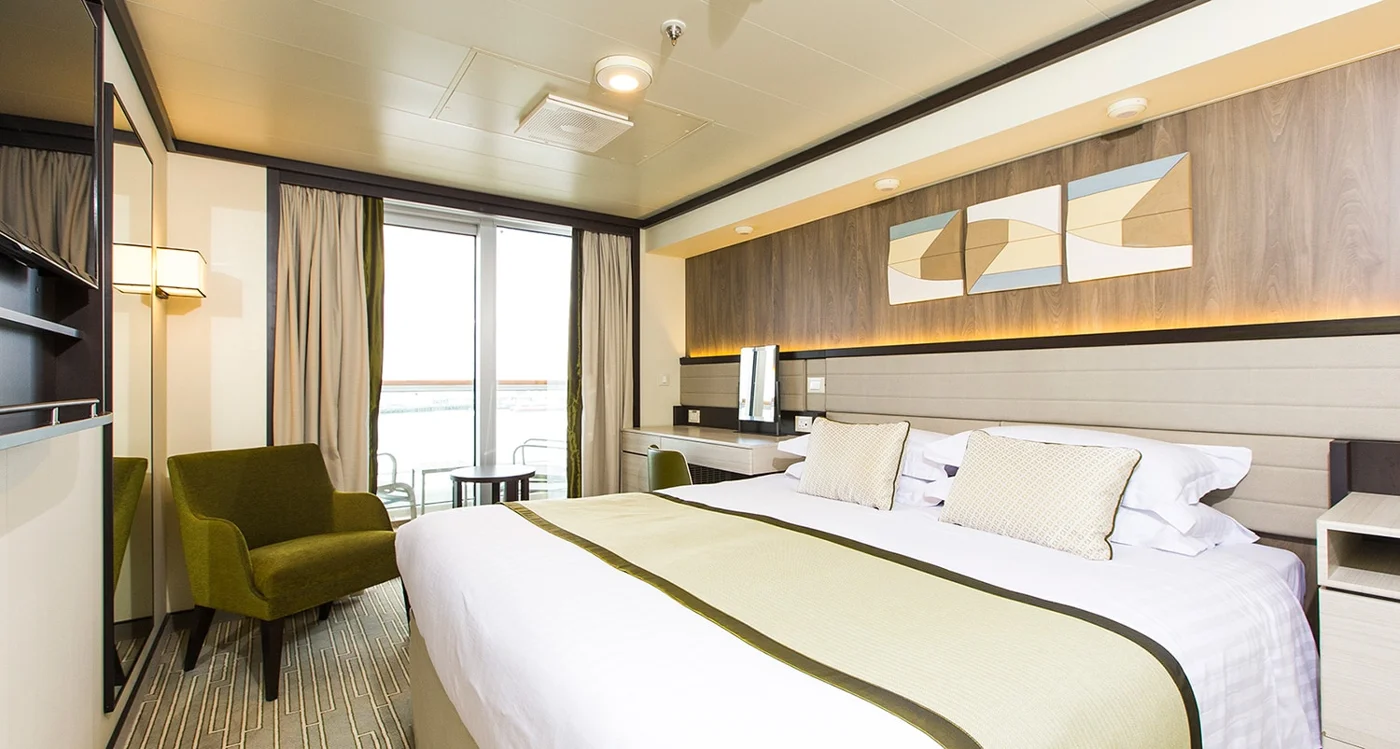
An approved extra berth makes a room bookable for another guest, but it doesn’t create separate bedtimes or reduce the morning shower queue. Avoid filling a shared cabin to capacity when privacy is the reason you wanted an upgrade.
For five, compare the approved Superior Deluxe candidates C330 and C331 with two rooms under P&O’s permitted passenger allocation. The shared room suits a family comfortable with one bathroom, while two rooms can work better for older teenagers or adults with different bedtimes.
The current five-berth layout includes a fixed double, double sofa bed, and pull-down single. Check how the open sofa affects sitting space and the route through the room before deciding the daytime picture represents every hour of the cruise.
Our best cabin choices give specific five-berth candidates. Pay for the sleeping arrangement that solves your routine rather than the highest possible guest count.
Nearby rooms aren’t an internal connection
Britannia’s current plan doesn’t mark internal connecting pairs. Avoid booking adjacent cabins on the assumption that children can move between them through a private indoor doorway.
An opened balcony divider, where staff permit one, isn’t the same arrangement. It can’t establish an internal door or replace the supervision needed for younger children.
Choose separate rooms when independence and another bathroom are the goal, with P&O confirming the adult-and-child allocation. For a family needing continuous direct access, compare one approved shared layout or another product that actually supplies the door you need.
Agree on bedtime and meeting arrangements before treating two rooms as an automatic comfort upgrade. The extra privacy helps only when the group is happy with the separation it creates.
G330 and G331 trade a clear view for a lower fare
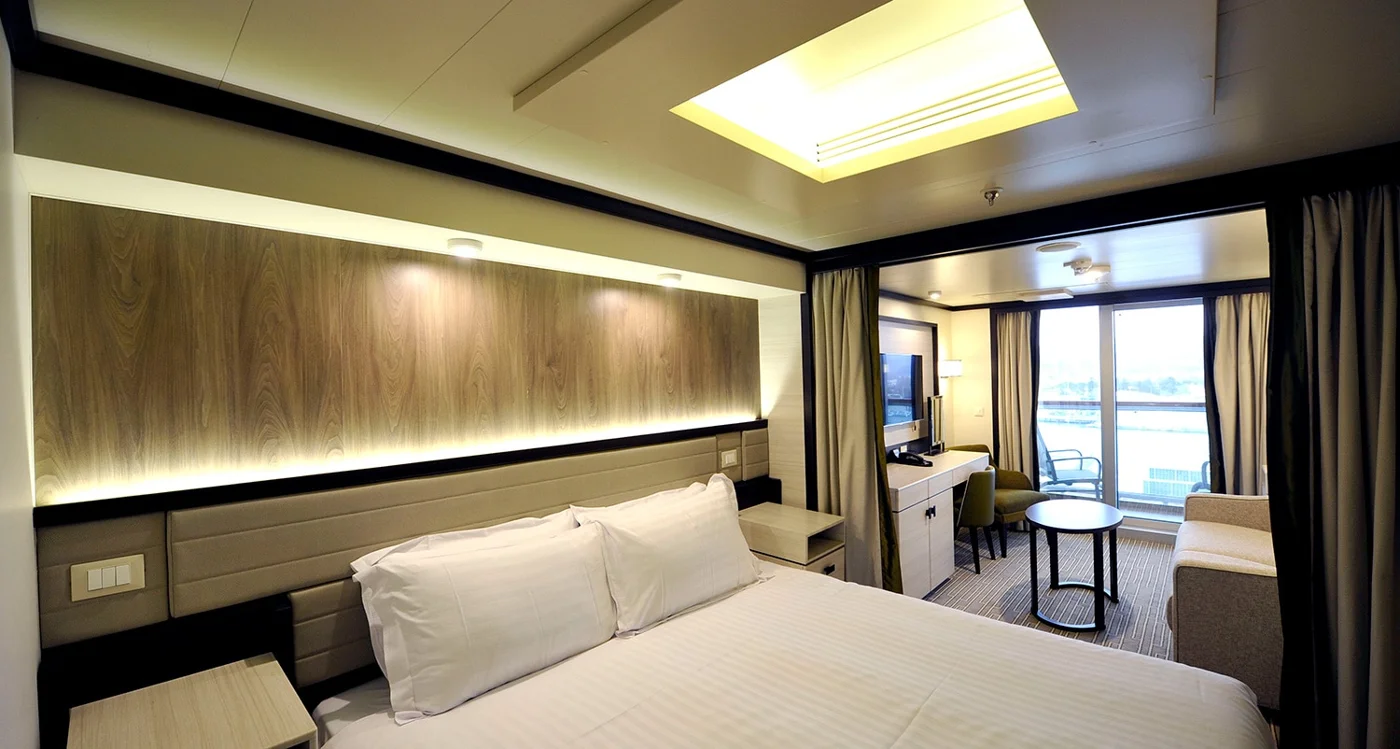
G330 and G331 are examples of G Deck’s IB obstructed Balcony with Sofa rooms, with lifeboats and equipment outside the accommodation. Britannia has no standard window-only Sea View category between an Inside and a balcony.
For a couple buying a balcony to watch scenery from a chair, compare C416 or C417 on C Deck instead. Both sit among accommodation floors, so the clearer-view choice also moves you away from the entertainment deck below G.
Keep the obstructed option when the saving is substantial and fresh air matters more than a wide panorama. You can still use public decks for scenery, as long as that is the vacation you intended to buy.
Ask for the exact numbered room’s view rather than a photo from another G Deck cabin. A lifeboat-side angle, partial opening, and solid obstruction are different compromises even when the broad product label is shared.
IB through JE describe products rather than one identical view
IB, IC, and IE are obstructed Balcony with Sofa grades, while JB, JC, and JE are obstructed Balcony grades without that label. The room’s furniture and the outside obstruction therefore need separate comparisons.
Avoid assuming the sofa fixes every family problem or that a different subgrade removes the view restriction. Confirm the extra-bed arrangement, room number, and sightline attached to the quote.
For a couple who wants an outdoor door and little indoor sitting time, the simpler room may be enough. For someone spending several daylight hours reading inside, the furniture can earn part of the difference even when the outlook remains obstructed.
Check the Britannia room choices alongside the plan. Buy the combination of space and view that you’ll actually use.
G Deck’s convenient evening route can put nightlife below the bed
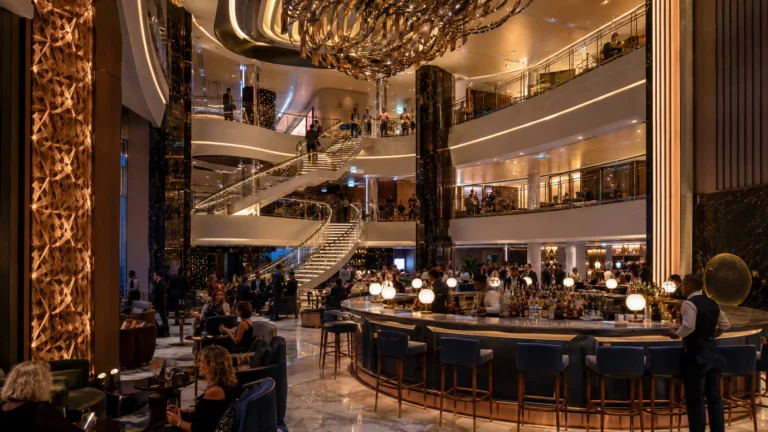
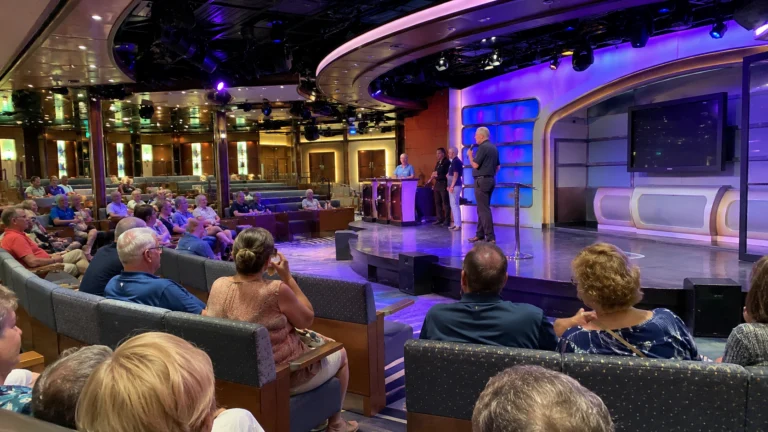
Main Deck 7 carries Headliners forward, The Crystal Room farther along, the atrium venues, The Studio, Sindhu, and The Live Lounge aft. G Deck accommodation sits directly above different sections of those public areas.
For an early sleeper, avoid an unchecked position over a performance or late lounge when a comparable room with cabins above and below is available. The map establishes exposure, without predicting a fixed sound level in every cabin.
C or D Deck is a useful alternative when sleeping comfortably matters more than one-flight access to the show. An extra journey to dinner can be a fair trade for cabins around your bedroom.
Keep G Deck when the exact location and fare suit a late-evening routine. A short return from entertainment is a real advantage for someone who’ll still be awake during it.
Our deck routes help compare that convenience with having cabins around the room. Choose the venue relationship that fits your bedtime rather than calling the whole deck good or bad.
A Deck needs a check of the Lido spaces overhead
A Deck is Deck 15, immediately below Lido Deck 16. Crow’s Nest, dining, pools, buffet service, and outdoor circulation put different venues above rooms across the ship.
Avoid choosing a high room for a light sleeper without checking that footprint. Pool furniture or working food areas pose a different potential concern from accommodation overhead on a middle cabin deck.
For a family of five, A330 and A331 are approved Superior Deluxe candidates on this upper floor; compare C330 and C331 when separation from Lido matters more than the short pool trip. Both choices keep everyone in one cabin, so the decision is location rather than an extra bathroom.
A family repeatedly returning from Lido may reasonably choose A Deck. Keep it for the route that helps you, rather than because a higher number automatically implies a better room.
The Lido single cabins are a high-forward choice
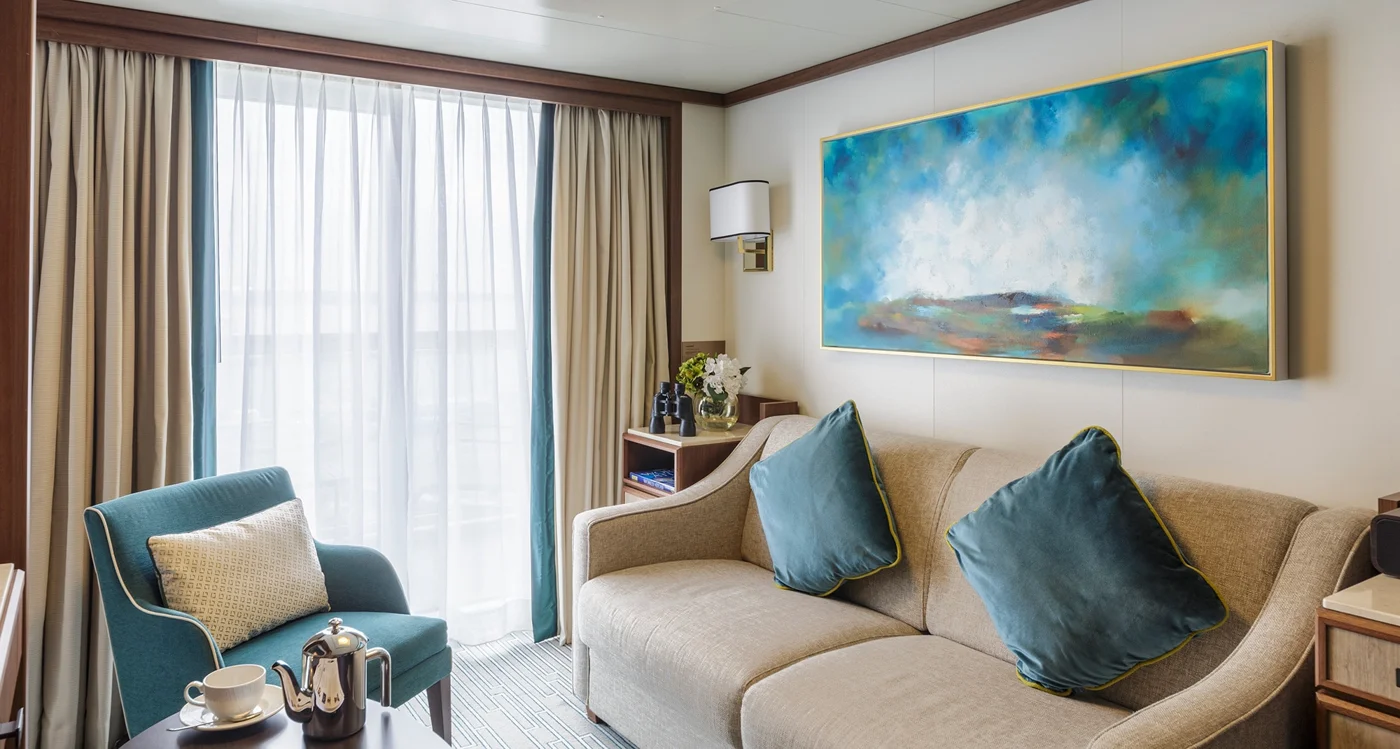
Britannia’s dedicated Single Inside and Single Balcony rooms occupy the forward section of Deck 16. They can be appealing for solo travelers who enjoy nearby Crow’s Nest and upper social spaces.
Avoid choosing them purely for the single label when sea movement is your first concern. Compare a lower and more central ordinary room at its single-occupancy price.
Check the spaces above the room and nearby access routes against Sun Deck 17. A short trip to an attractive adult space doesn’t establish a silent bedroom beneath it.
For someone happy with the position, the dedicated room can still be good value. The useful question is whether its full fare and daily walk beat the available double-room comparison.
Steel fronts, shade, and bridge overlooking are separate features
Britannia’s cabin notes identify steel-fronted balconies, partial shade, and overlooking from balconies above. Forward balconies can also be overlooked by the bridge, with some rooms carrying restricted-at-sea access markings.
Avoid a steel front when the seated horizon is the reason for paying for a balcony. Keep it when fresh air is enough and the price compensates for the view you’ll have from a chair.
Shade can be a benefit for reading and a disappointment for someone expecting full sun. Choose it for the way you use outdoor space instead of treating either exposure as universally superior.
An overlooking symbol asks a privacy question, while a restricted-access symbol asks when you may actually use the balcony. Settle both before paying heavily for a terrace you pictured as a private all-day retreat.
A far-end Suite doesn’t solve movement or long walks
A larger room can improve storage and living space without moving its location toward the middle. Avoid buying a forward or aft Suite as a cure for motion sensitivity solely because it is the most expensive option.
For a wake-facing aft choice, consider the longer forward route and possible vibration during maneuvering. Those are tradeoffs to compare, rather than guaranteed outcomes for every room and voyage.
For a high-forward room, compare exposure and the balcony marking alongside the desirable view. A lower central balcony or Inside may be more useful when comfortable movement is the first priority.
Keep the Suite when its space and service would improve the trip enough to accept that position. The upgrade should solve the concern that matters rather than conceal it beneath another appealing benefit.
The central bank is a poor staircase assumption
Britannia’s central elevator bank doesn’t provide a continuous public staircase through the cabin floors. Avoid choosing a midpoint room on the assumption that every one-floor journey will have a convenient stair beside it.
If you normally use stairs, compare the forward or aft bank serving the places you’ll repeat. For someone dependent on elevators, prioritize a manageable corridor and allow time during the dinner or excursion rush.
A nearby launderette can be handy on a long cruise and create more corridor visits. Compare the doorway and service position instead of using distance from elevators as the only sleep test.
Our Britannia tips connect those routes with the first day. A well-chosen bank can help more than another small category upgrade.
Assigned cabins are worthwhile only when the eligible outcomes work
Select Price offers cabin-number choice, while the saver products can leave assignment to P&O under their terms. Avoid giving up control when obstruction, opened beds, accessible features, or the spaces above the room would decide your comfort.
The fare conditions also affect dining priority and cancellation. Compare the complete booking, rather than saving a little on the room and discovering that its assignment is the feature you most wanted to choose.
Begin with the practical concern everyone can name: sleep, view, mobility, or shared beds. Then accept another position only when its saving or convenience earns the compromise throughout the cruise.
How this guide was researched
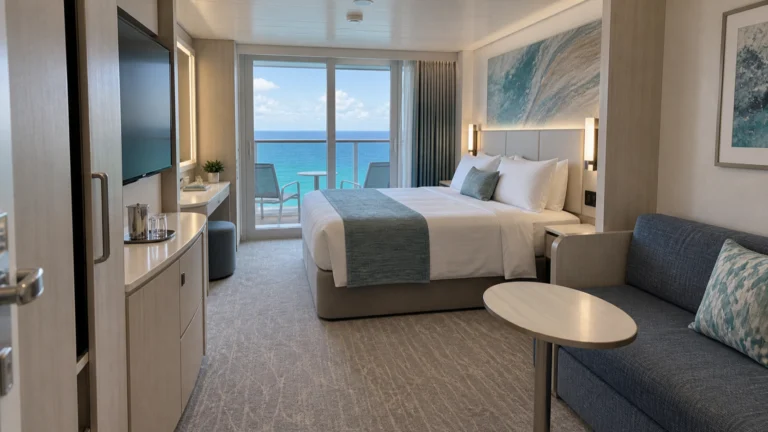
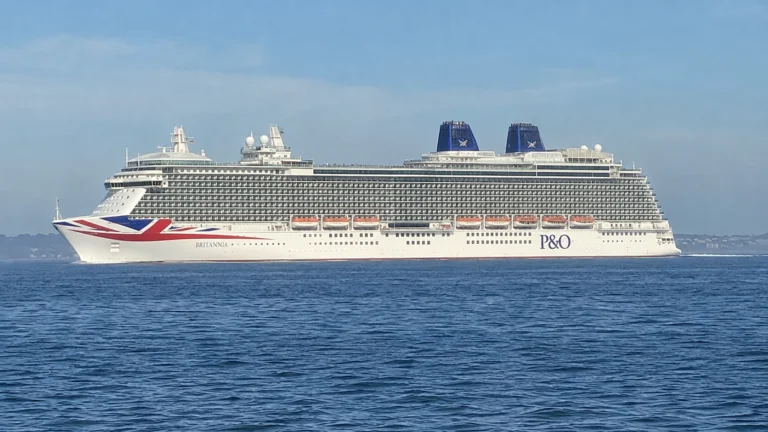
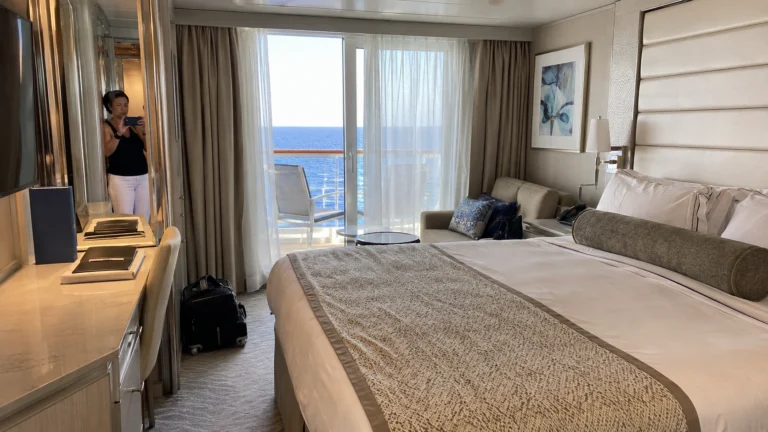
Room examples follow Britannia’s deck plan, obstruction grades and approved family layouts, alongside P&O’s fare and supervision rules. Cabin photographs show representative accommodation; a deck plan identifies physical neighbors rather than measured noise.