Oceania Vista Best Cabins & Suites: Exact Rooms to Book
For most couples on Oceania Vista, start with Veranda 8068 on Deck 8 for a private outdoor seat and cabin decks above and below.
Compare French Veranda 7068 only if you can happily give up outdoor seating, then pay for Concierge or a Penthouse when its extra benefits will improve your day.
Short version
Start with walkout Veranda 8068; choose French Veranda 7068 for the saving when a balcony chair is unimportant. For a Penthouse, compare residentially buffered 10036 with higher 11034, then choose Solo Concierge or a larger suite for its actual layout and benefits.
Start with Veranda 8068 for an everyday balcony
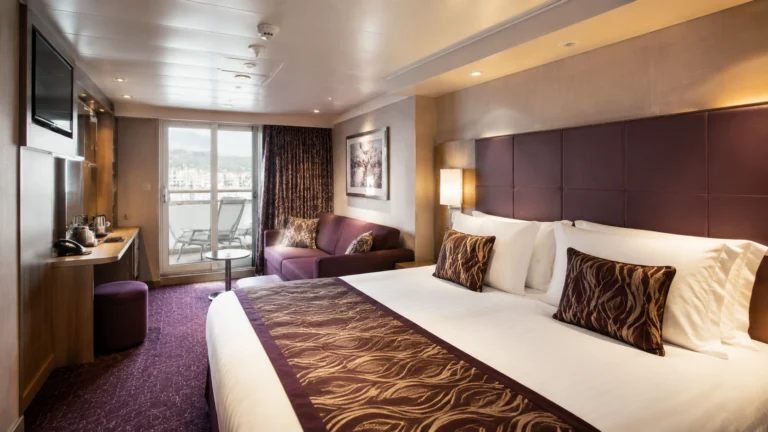
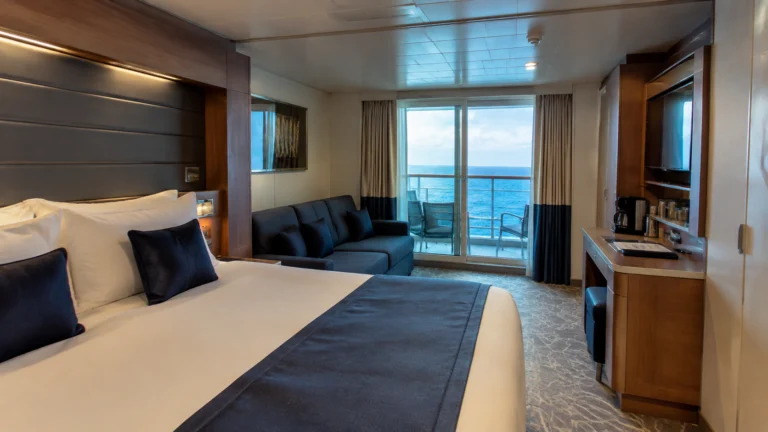
Choose a standard Veranda if you want a comfortable double room and a private outdoor seat without paying for extra service benefits. Its total is about 291 square feet, including the veranda, so compare that measurement with other ships on the same basis.
Standard Veranda rooms are on Decks 7 and 8. Deck 8 is a useful place to begin if you’d prefer cabin levels above and below rather than public spaces directly underneath.
B1 8068 is a useful standard-balcony starting point, away from the extreme ends of Deck 8. It gives two travelers a private place for coffee or an evening look at the water without paying for suite service.
For a port-heavy trip, this is where the cabin search can comfortably stop. Spend more when you want another daily benefit, such as a larger sitting area or meal delivery, rather than a grander category name alone.
Keep the location in view when an upgrade offer arrives. A modest fare increase loses its appeal if it trades the room you deliberately chose for one beneath a pool or restaurant.
Our Vista cabin cautions guide explains the overhead and downstairs checks. Use it alongside the numbered deck maps, rather than treating a category-wide recommendation as approval of every cabin.
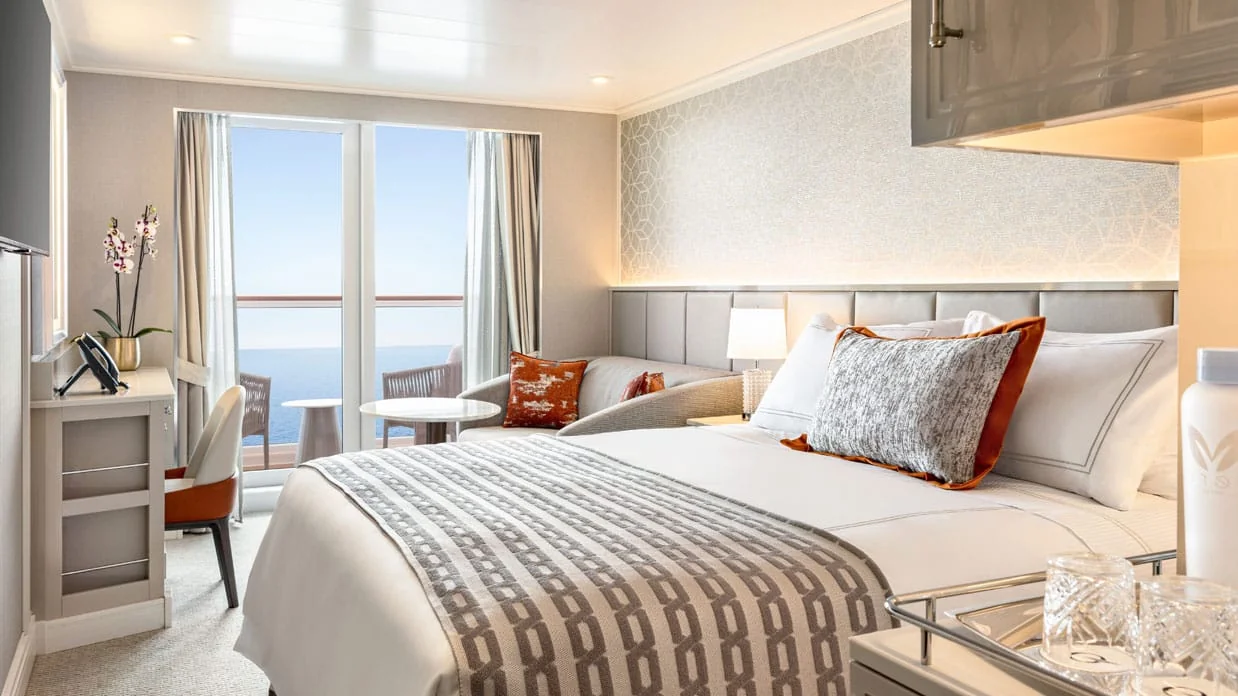
Choose French Veranda for the saving, not outdoor seating
A French Veranda can be sensible if you like natural light and opening glass but won’t miss a balcony chair. Its floor-to-ceiling doors open to a railing, with no private walkout platform.
The total is about 240 square feet, and these B5 rooms are on Deck 7. Room 7068 is a example of the category, useful to compare with a standard walkout Veranda such as 8068.
Book French Veranda only after everyone in the room understands the difference. It’s disappointing to arrive expecting a place for outdoor coffee and find that the feature you imagined isn’t part of the room.
Compare the saving with how much time you’ll spend outside. On a busy port itinerary, you may prefer using the public decks and spending the difference ashore; on a long sea-day voyage, private outdoor seating may matter much more.
Also inspect the Deck 6 public footprint underneath the room you choose. A lower-priced category isn’t automatically poor, but its neighbors still need the same exact-number review as an expensive room.
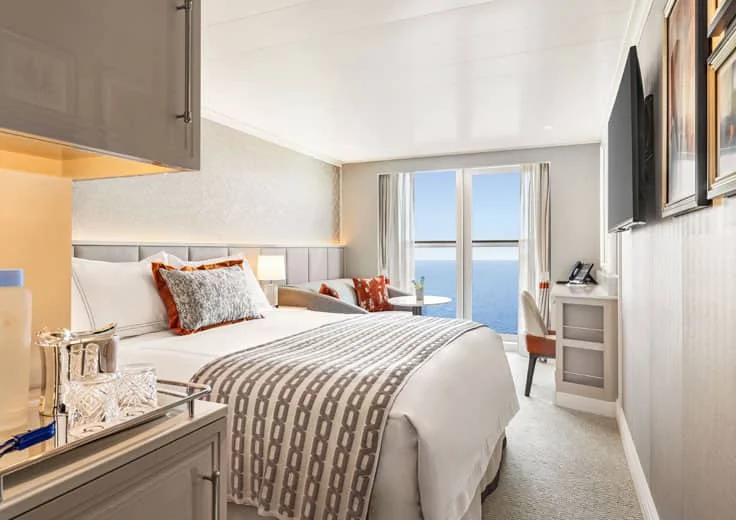
Upgrade to Concierge for useful services
Ordinary Concierge Level Veranda rooms have about the same 291-square-foot total as standard Verandas. Choose them for the benefits, rather than expecting a larger room from the word Concierge.
The upgrade includes Concierge Lounge access, expanded Grand Dining Room lunch and dinner delivery, Aquamar Spa Terrace access and earlier advance specialty reservations. These can be practical advantages if you spend time onboard and enjoy dining in the room.
The laundry benefit covers up to three bags per stateroom, with a maximum of 20 garments per bag and exclusions. Send a useful middle-of-the-trip load and keep tomorrow’s clothes with you while it is being processed.
Self-service laundry is available free to all guests, so don’t buy Concierge merely to avoid a laundrette charge. The relevant question is whether you’d value having the service done for you.
Earlier dining access can help you find preferred times, but it doesn’t add extra advance reservations over the ordinary standard-room allowance on Vista. Our Vista dining guide explains the distinction before you price the upgrade.
Check the location of the room alongside the perks. A Concierge room far from your preferred daily route may feel less convenient than a standard room that suits your walking needs.
Compare Solo Concierge with a double used alone
Vista has dedicated Solo Concierge Veranda rooms with a total of about 270 square feet. They provide private outdoor space and Concierge benefits, which makes them worth checking if you’re traveling alone.
The current Deck 9 map places the Solo rooms aft, with room numbers 9128, 9130 and 9132 on one side and 9141, 9143 and 9145 on the other. The Concierge Lounge is forward on that deck, so these rooms aren’t beside it.
Compare the solo price with a standard double cabin quoted for single occupancy. The dedicated solo category is an option to evaluate, not proof that it will always be the cheapest or best offer.
The Solo room is worth paying for when its seating, storage and private veranda fit the way you travel. Its separate sleeping area should not be mistaken for a fully enclosed bedroom.
If you’re booking a long trip, consider the route from the room to the lounge and dining areas. A comfortable solo room still needs to work for your energy level on ordinary days between excursions.
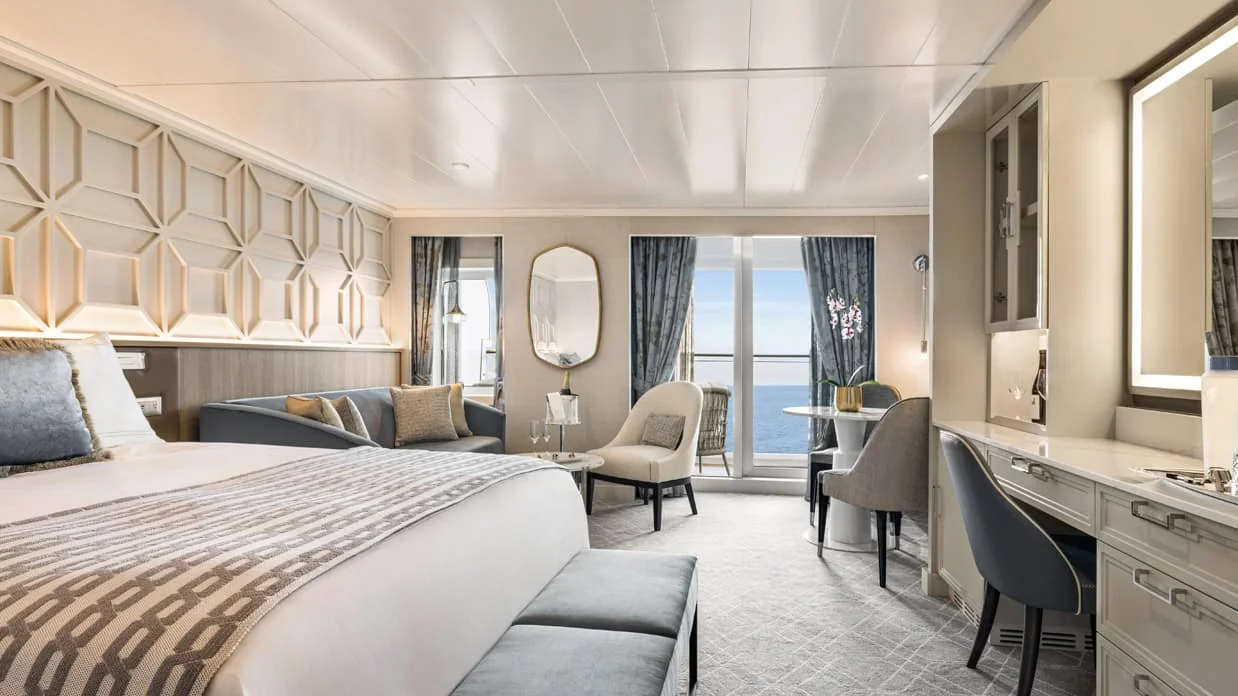
Choose Penthouse when you’d use the extra space
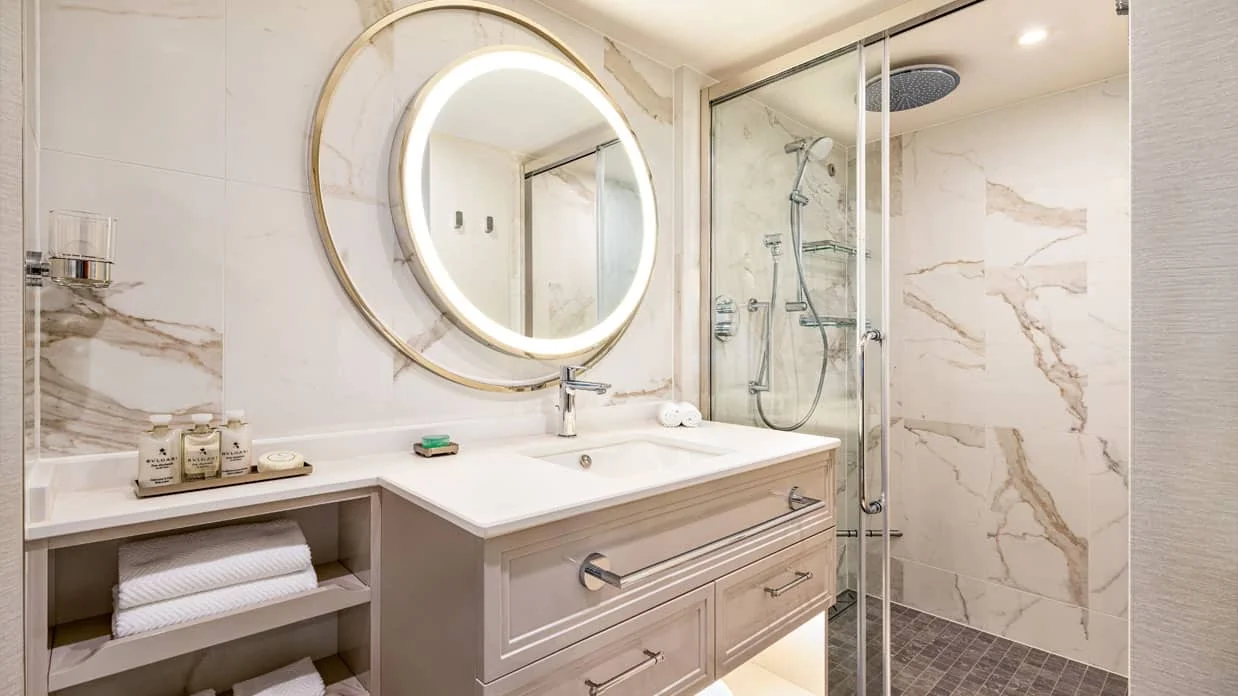
Penthouse is the first upgrade to consider if you’re often in the room, want a more generous getting-ready routine or need better separation between sitting and sleeping activities. Its total is about 440 square feet, including the veranda.
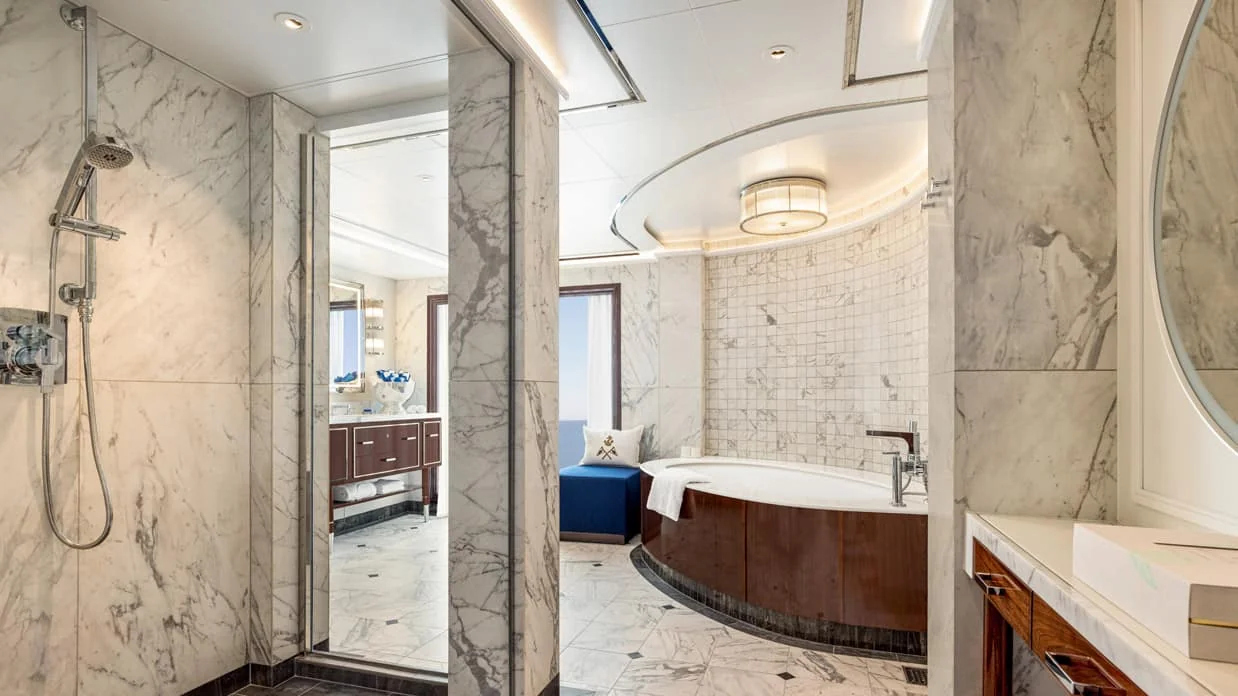
The room features include a walk-in closet and a bathroom with dual vanities. Those everyday conveniences may matter more to you than the category’s name, especially on a long cruise with plenty of clothes and shore gear.
Butler service and access to the Executive Lounge add another reason to upgrade. Before payment, ask which meal-delivery and other services are included so you can decide whether you’ll actually use them.
Compare room position before choosing PH1, PH2 or PH3 solely by price rank. Different grades can share the broad Penthouse layout while putting you under different kinds of space.
For daytime naps or early nights, put PH2 10036 ahead of PH1 11034: 10036 has cabin levels above and below, while 11034 is beneath the central public deck. They need separate quotes because the grades differ, even though both belong to the Penthouse family.
Deck 11 also has positions beneath the forward accommodation on Deck 12. Keep a higher room when that particular location or shorter pool route matters to you; the whole floor does not deserve the same warning.
Consider an Oceania Suite for a longer stay
Oceania Suites offer about 1,000 to 1,200 square feet in the range, on Decks 11 and 12. They suit someone who wants substantially more living space rather than just a few extra cabin services.
Ask for the exact room plan before comparing two quotes in this category. A broad area range means the representative picture doesn’t answer every question about layout, outdoor space or where the furniture sits.
For a long cruise, think about how you would use the living area on a normal afternoon. Paying for space you never enter is less useful than buying a layout that lets one person read while the other rests.
Check the footprint above a Deck 12 candidate against Deck 14, because there is no Deck 13. Forward lounges and enrichment venues matter to that comparison even when the room itself is a premium suite.
For a couple who mainly sleeps between port days, a Penthouse is already a generous upgrade. Keep an Oceania Suite on the list when its separate living space will be used for private meals, reading or entertaining most days.
Pick a Vista Suite for the bow layout and view
Vista Suites are forward on Decks 8, 9, 10 and 12, with totals of about 1,450 to 1,850 square feet. The bow position and generous space are the reasons to compare them.
If movement worries you, weigh that end-of-ship location before deciding the view wins. No suite can promise calm conditions, and a lower central room may be a more sensible preference for you.
Also ask how the outdoor area is arranged and used on the exact room you’re considering. A large total measurement doesn’t tell you how sheltered the seating feels or whether the layout fits your routine.
Owner’s, Vista and Oceania Suites have nonconvertible king-size beds. Confirm that arrangement early if two travelers need separate beds, rather than assuming an expensive room can accommodate every bed preference.
Compare the full trip cost with another category, not just the room alone. You may prefer a Penthouse and more ambitious shore plans, or you may happily use the extra suite space every day.
Pick an Owner’s Suite for substantial aft space
Owner’s Suites sit at the stern on Decks 8, 9 and 10, with about 2,200 to 2,400 square feet in the range. They’re a serious space purchase and should be evaluated as an exact layout, not simply as the highest option on a booking screen.
Request the particular floor plan and details of the outdoor areas. Compare bedroom, bathroom and sitting arrangements with how the travelers will share the room throughout the trip.
A stern-facing view can be appealing, but it comes with an aft location. If you’re sensitive to movement or concerned about a particular room report, ask about that exact number instead of accepting a blanket claim that every aft suite is either perfect or problematic.
The extra space doesn’t replace itinerary research. Even in a large suite, a trip with ports or pacing you don’t enjoy is unlikely to become the cruise you wanted.
Check capacity and accessibility before paying
Get the maximum occupancy attached to the exact room quote. Some rooms can take an additional guest, but the broad category label doesn’t tell you which ones have the necessary arrangement.
Ask where the extra bed goes and what seating remains when it is made up. Three adults can need more usable floor space and bathroom coordination than the advertised total suggests.
If you need an accessible cabin, request the specific layout and measurements that matter to your equipment. Check bathroom arrangements and the route to the venues you’ll use rather than making the decision from square footage alone.
Also ask about the exact bed setup in standard and smaller suite categories. A preference for twins, a particular mattress arrangement or transfer space should be recorded before you rely on it.
Match the room to the trip you booked
Use the current fare inclusions when comparing upgrade value. Standard rooms already receive many useful daily benefits, so the higher category needs to earn its price through additional space, access or service.
For a port-heavy cruise, a good standard Veranda can leave more money for meaningful shore experiences. For a long trip with several sea days, Penthouse space or Concierge services may get much more use.
Our Vista pros and cons guide helps with the broader ship choice. Settle whether Vista suits your vacation before fine-tuning a premium room on it.
Finally, keep the exact number, grade, passenger capacity and quoted benefits together in your booking records. That’s a much better basis for choosing than a cabin review that never identifies the room it describes.
How this guide was researched
Room layouts, numbered deck plans and category benefits were compared for the standard, French Veranda, Solo and suite choices. Areas include the relevant veranda; recommendations distinguish physical location from passenger noise experiences.
Deck plans, room details and onboard activities provide the ship information behind these choices.