Navigator of the Seas Best Cabins & Suites: The Rooms Worth Booking
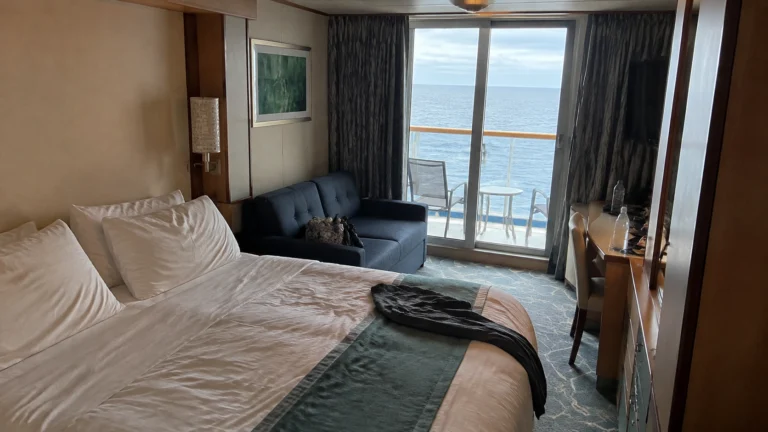
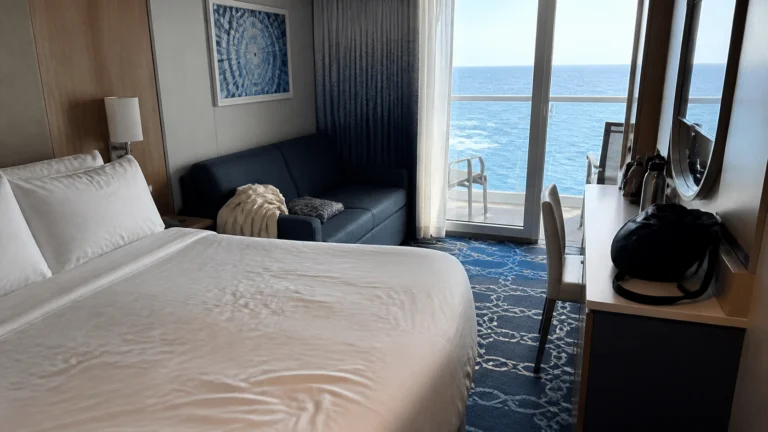
For most couples on Navigator of the Seas, choose a nonconnecting ocean-facing balcony on Deck 8 or 9 before spending more on a suite.
Put 7388 and 7688 on the shortlist if the aft view is what excites you, and compare larger rooms only when extra space or service will improve your actual day.
Short version
Start with a Deck 8 or 9 ocean-facing balcony for most couples. Compare 7388/7688 for an aft view, 1388/1688 for an unusual corner layout, and Junior or Grand Suites only when the extra space or confirmed service helps your group.
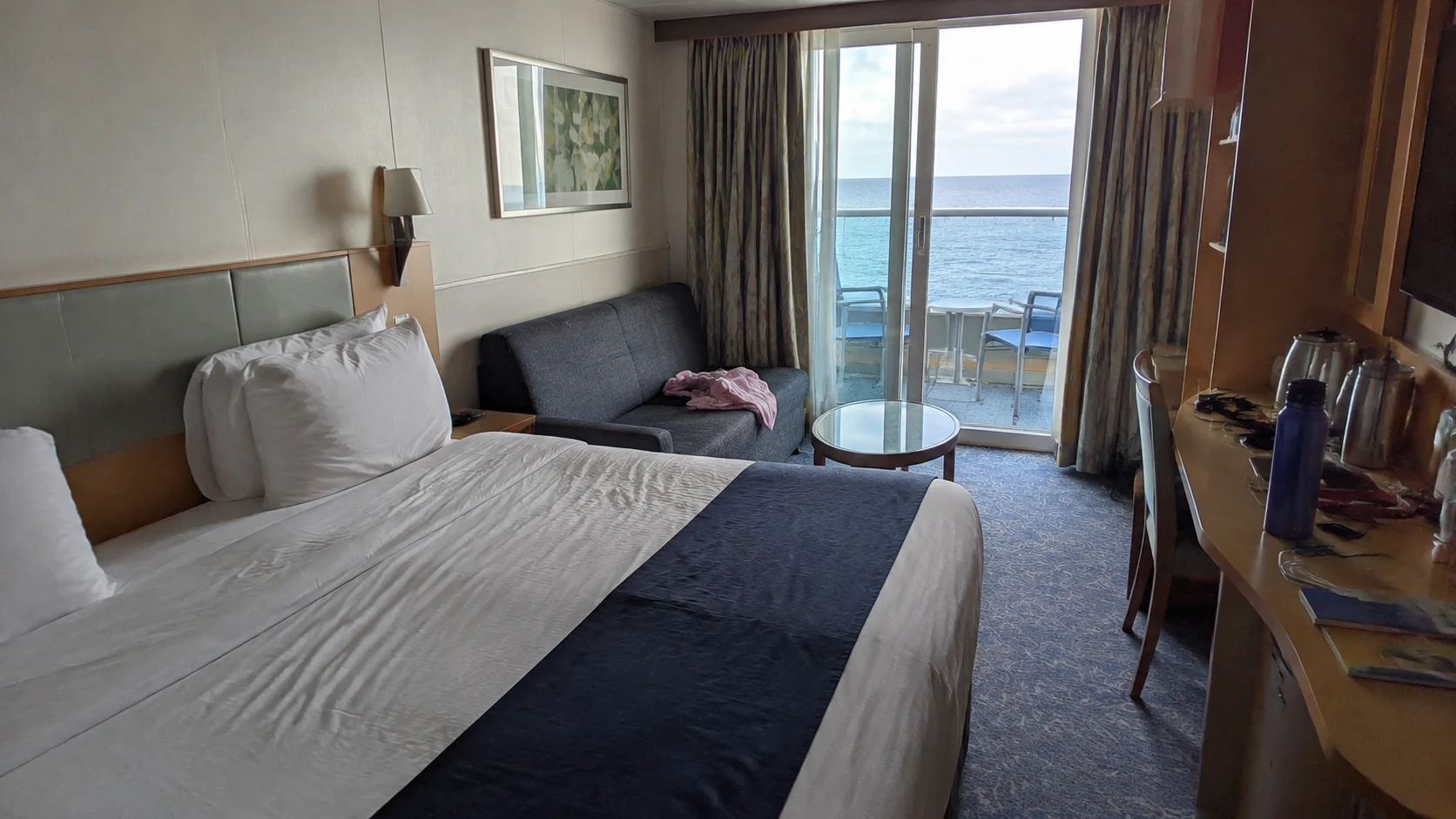
The easiest balcony choice is a selected room on Deck 8 or 9
An ordinary Ocean View Balcony gives you private outdoor space without making an unusual layout part of the purchase. Choose a cabin with accommodation above and below when sleeping well matters more than being one deck closer to lunch.
These decks keep you within the main residential stack, between the lower entertainment decks and upper pool area. You’ll still use elevators or stairs, but you avoid choosing height merely because it sounds more prestigious.
Favor the elevator area that serves your usual dinner and evening plans. Navigator is long, and a good location can save more effort over the cruise than a small increase in room size.
A few doors away from a lobby is a sensible compromise if passing conversations bother you. Don’t rule out every cabin near an elevator, especially if a long hallway walk would be tiring.
Check the exact room on the official deck plans. A nice balcony photograph doesn’t tell you whether the cabin connects to a neighbor, has extra beds, or sits beneath public space.
Choose a lower Ocean View when motion matters most
If you’re prone to feeling the ship move, start lower and nearer the middle before comparing views. An Ocean View gives you natural light and sea scenery without paying for outdoor space you may not use.
This is a strong option when ports and shore activities are the main focus. You can spend the balcony saving on an experience you’ll enjoy rather than buying a room feature that mostly looks good on the booking page.
An outside window is different from a Promenade window or a virtual balcony. Choose the real Ocean View when daylight and a horizon are the reason for upgrading from an interior.
For the location, inspect what surrounds the cabin on the lower public decks. A central position helps your motion preference, while the space above and nearby still matters for sleep.

Compare 7388 and 7688 for the aft experience
Cabins 7388 and 7688 sit at the aft corners of Deck 7. They’re the shortlist to investigate when you want a stern-facing balcony and a different perspective from the ordinary side-facing rooms.
The attraction is the wake and corner position, rather than a suite label. Look at room-specific photographs before booking, because Navigator’s aft structure is part of the view and the category photograph won’t explain every sightline.
Choose these rooms when private outdoor time is a priority and the longer walk doesn’t bother you. A favorite balcony can become a useful retreat between pool time, dinner, and the evening show.
The corridor beyond the aft elevator area is the compromise. If someone in the group has limited stamina or regularly forgets things in the cabin, a more central balcony will usually make the trip easier.
A far-aft position can also be a poor match for someone concerned about motion. Don’t book a popular cabin number over your own comfort priorities just because other travelers love it.
Compare 7388 and 7688 by the fare, available beds, neighboring rooms, and photographs. Neither side deserves an automatic premium across itineraries that change direction, ports, and sailing conditions.
Inspect 1388 and 1688 when you want an unusual corner layout
Cabins 1388 and 1688 are aft-corner balcony rooms on Deck 10. Add them to the comparison when the corner-room experience sounds more useful than a standard rectangular cabin.
Inspect the actual interior rather than assuming ordinary category dimensions describe the room perfectly. A passenger report for 1388 describes a support pole, making photographs particularly important if an obstacle in the sitting area would bother you.
The right buyer sees that layout and still wants the room. The wrong buyer chooses it for its reputation and only discovers the unusual arrangement after boarding.
Deck 10 also brings you closer to the public deck above, so inspect the restaurant and outdoor footprints overhead. The aft position and long route to forward venues remain part of the choice even if the indoor space looks appealing.
Price a Junior Suite alongside these rooms. Choose the corner balcony if its shape and view are the features you want, and choose the suite when its space, storage, or bathroom works better for the people sharing it.
Our cabin cautions explain the circumstances that can make these popular rooms a poor fit. A good shortlist includes the reason to say no as well as the reason to book.
Pick a Promenade View for atmosphere rather than daylight
Navigator’s Promenade View Interior cabins have windows looking into the Royal Promenade. They can be a fun budget choice if you enjoy watching the ship’s indoor social scene.
Choose one for the unusual view and an attractive fare. Skip the upgrade if a window only matters to you because you want natural daylight, ocean scenery, or a quiet place to watch the horizon.
Keep curtains closed when changing, because other rooms face the same indoor space. Music and events can also affect the experience, so early sleepers should weigh the location carefully.
An ordinary interior is the simpler price-first option. A true Ocean View is the better step up when you want daylight, while an ocean-facing balcony adds somewhere private to sit outside.

Use an interior when the room is mainly for sleeping
A selected interior can be the smartest purchase for someone who spends the day in port and the evening around the ship. You still get the same public pools, shows, promenade, and included dining as guests in more expensive rooms.
Spend a little of the saving on control of the location if quiet or walking distance matters. A less expensive category in a useful position can be more comfortable than a discounted upgrade in a location you dislike.
Navigator also advertises virtual-balcony interiors among its room options. Treat the screen as an added feature, rather than natural light or access to fresh air.
If you know you’ll relax in the cabin during afternoons, compare the sitting area carefully. A low fare stops being a good deal when two people have nowhere comfortable to spend the time they intended to enjoy inside.
Junior Suite is the practical space upgrade
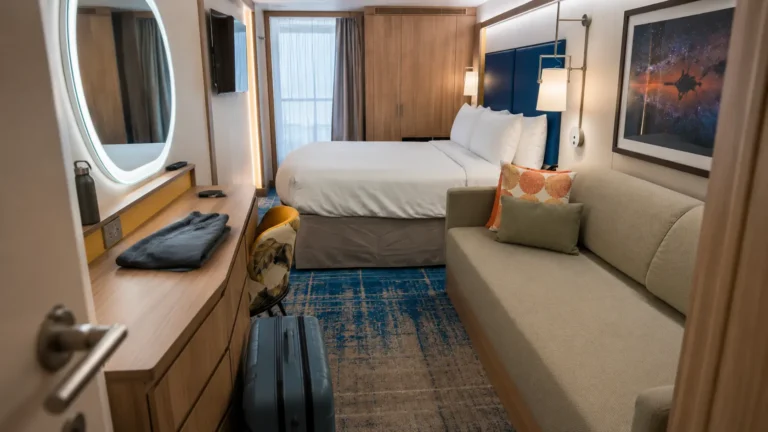
A Junior Suite is worth considering when the larger room, storage, and bathroom arrangement solve a real problem. It’s particularly useful to compare when several people are sharing one cabin or you expect substantial time indoors.
Choose it for those features rather than assuming it includes the fuller benefits of a Grand Suite. Royal Caribbean’s suite benefits distinguish the categories before you compare the fares.
A bathtub can help families with younger children, but it isn’t automatically easier for someone who dislikes stepping over a tub wall. Check the offered layout rather than making bathroom comfort depend on the word suite.
On a short cruise with busy port days, the extra room may get little use. On a longer sailing, a comfortable sitting area can be worth paying for repeatedly, especially when the balcony weather isn’t ideal.
Grand Suite is the choice for room plus service
Move to a Grand Suite when you want both more private space and the fuller service package. Suite Lounge access, concierge support, and other published benefits give you more reasons to pay than square footage alone.
Decide which of those benefits your group will use. Lounge access matters more when you want a familiar place to return each evening than when everyone plans to spend the evening moving among public bars and shows.
Navigator’s suite experience doesn’t create a separate neighborhood like those on newer Royal Caribbean ships. If you’re mainly seeking a self-contained resort area, compare the ship’s actual facilities before paying for the category.
Inspect the exact suite’s surroundings as carefully as an ordinary cabin’s. Paying more doesn’t change what sits above the room, the elevator route, or the movement at its position along the ship.

For families, compare two connecting rooms before one suite
Two confirmed connecting cabins can give parents and children different bedtimes, more storage separation, and two bathrooms. Those practical improvements may matter more than a larger shared living area.
Verify the internal connection for both room numbers, because two rooms next to one another aren’t necessarily connecting. Confirm the arrangement before making it the reason for your booking.
Compare the total cost for everyone, including the occupancy pricing that applies to each room. A per-person headline can make one option look cheaper before the full family fare appears.
If you prefer one larger room, check who sleeps on the sofa bed or Pullman and how that setup changes the space at night. Capacity tells you how many guests can be booked, not whether the arrangement suits your family.
Reserve the largest suites for a trip built around the room
Navigator’s larger suites can make sense for a celebration or group that wants a shared private living space. Book one because you’ll use the layout, rather than because an upgrade offer makes the name sound irresistible.
For two adults who only want fresh air and a view, an ordinary balcony may already solve the problem. Move up when extra rooms, service, or a larger private area adds something you can clearly name.
On a longer sailing, the room can become part of the day’s routine. On a port-heavy short trip, compare how many waking hours you’ll spend there before committing a large part of the budget.

Confirm access needs before comparing views
For a wheelchair, scooter, or other specific access requirement, start with a confirmed accessible stateroom. A large suite isn’t a substitute for the doorway, shower, and transfer space you need.
Then choose the elevator area that shortens your repeated journeys. The deck guide shows how dinner, shows, pools, and upper lounges relate to the cabin decks.
For most couples, finish with a selected Deck 8 or 9 ocean-facing balcony. Choose the aft corners for their particular view, an interior or Ocean View for value, and a suite for space or confirmed service you’ll actually use.
Our Navigator tips help you turn that room choice into an easy onboard routine. Stop upgrading when the next category adds a label without improving the vacation you want.
How this guide was researched
Royal Caribbean’s current Navigator venue and room information was checked alongside the official deck plans, including visual checks of the cabin and public-deck layouts. Cabin position supports a recommendation, not a guarantee of silence; live prices, opening hours, and onboard instructions can change.
A room-specific passenger report for 1388 was checked for its interior support pole; unusual rooms should be compared with photographs of the exact layout.