Viking Mira Cabins to Avoid: Suite Locations That Matter
Viking Mira’s easiest cabin mistakes are paying for Deluxe Veranda expecting more space, choosing a high forward suite despite motion sensitivity, and overlooking public spaces above Deck 6.
A central Deck 4 or 5 DV or PV is my starting choice for comfort, while suite buyers should choose the exact layout and location before paying for the category name.
Short version:
Choose a central DV on Deck 4 or 5 for straightforward value, PV for more room, and an Explorer Suite for a separate living room; light sleepers have less public space overhead on Decks 4 and 5 than on Deck 6, and motion-sensitive travelers should put location ahead of a high suite.
- PS1 Penthouse Junior Suites on Deck 8: 8000–8011 and 8016–8019. These are among the highest accommodations on the ship, so I would compare motion and the deck relationship before paying mainly for height.
- PS3 Penthouse Junior Suites on Deck 6: 6018-6025, 6104 and 6105. Deck 7 above changes from a short cabin block into the pool, World Café, Wintergarden, Aquavit Terrace and other public spaces, so the exact ceiling matters.
- Forward Explorer Suites: 3000, 3001, 4000, 4001, 5000 and 5001. Choose these for the outlook and space only when a forward position suits your motion tolerance.
- Aft Explorer Suites: 3102, 3103, 4128, 4129, 5118, 5119, 6106 and 6107. These trade wake-facing geography and larger layouts for longer walks to forward venues and a more end-of-ship position.
- My low-drama pick: a midship DV or PV on Deck 4 or 5, where the veranda is already standard and the cabin stays away from the ship’s highest and most extreme positions.
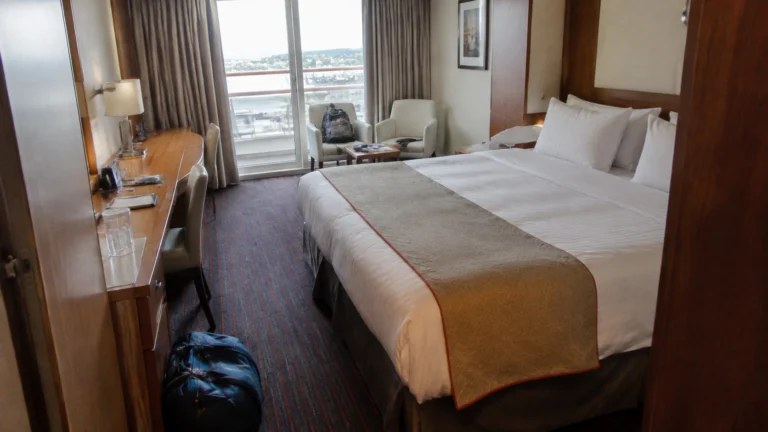
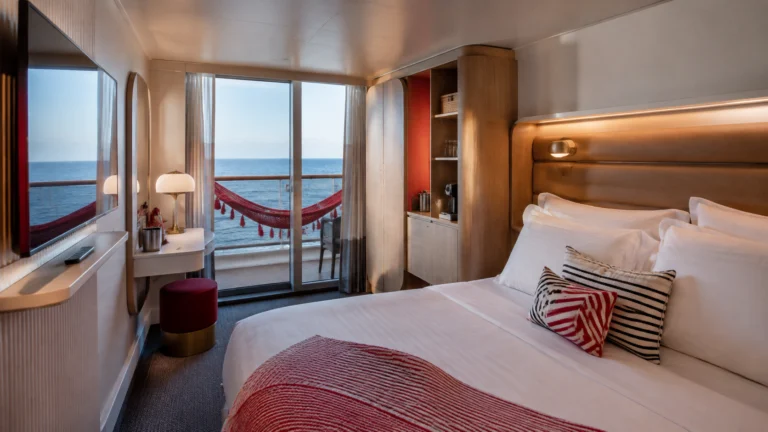
Every Mira cabin has a private veranda, so there is no reason to pay a suite premium just to get outdoor space; the ship’s room descriptions separate living space from reservation and service benefits.
High forward PS1 suites: avoid the position if motion bothers you
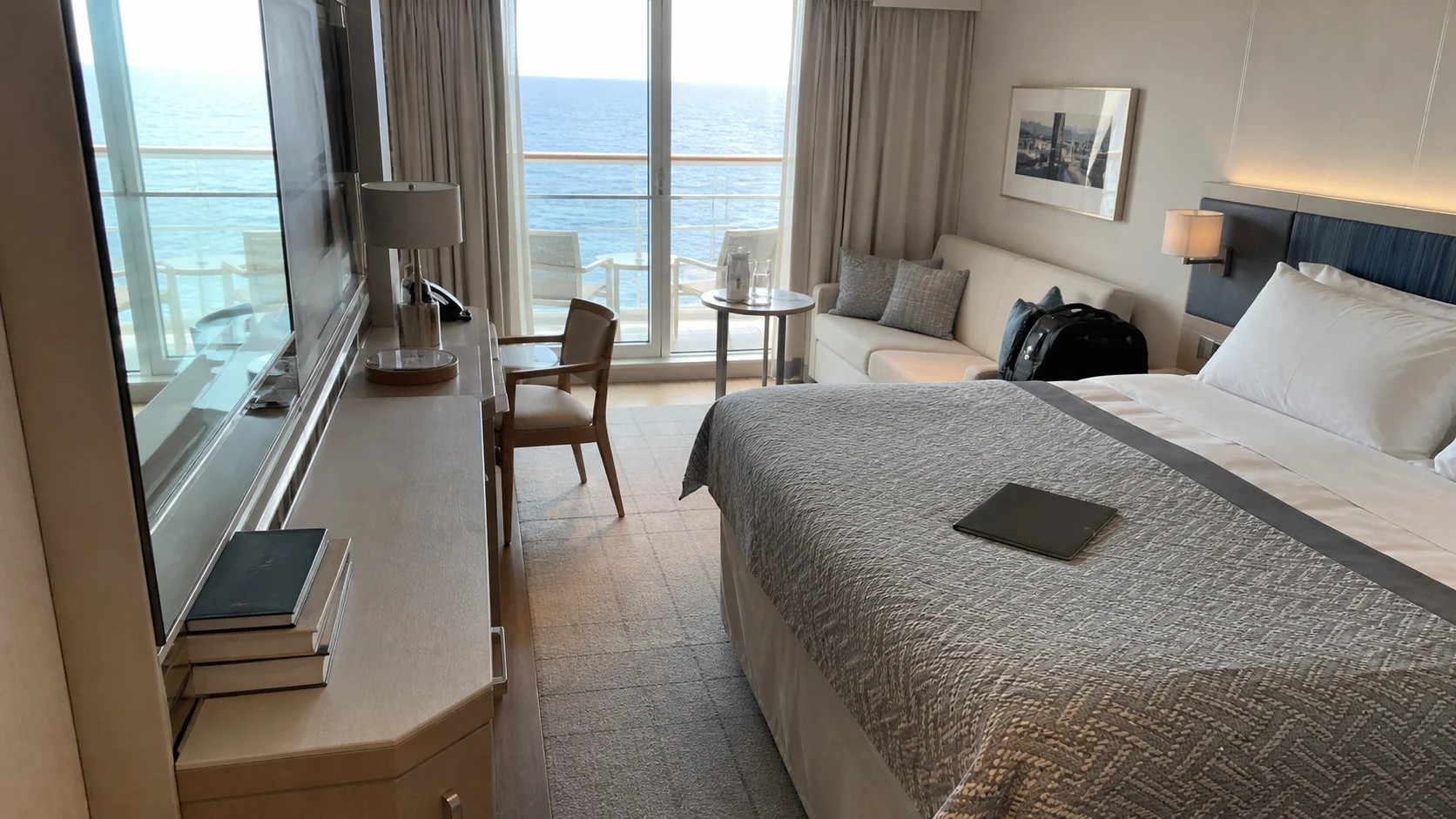
Category PS1 Penthouse Junior Suites are 8000 through 8011, plus 8016 through 8019. At about 432 square feet including the veranda, they provide a meaningful jump in living space over a standard 288-square-foot V or DV.
The trade is position. Deck 8 is one of Mira’s highest accommodation levels, which can mean more noticeable motion than a lower central room when the sea is active.
Choose PS1 for a traveler who will use the extra sitting area and values the upper location. Compare a PS3 or PV lower down when motion sensitivity matters more than being high on the ship.
The category premium should buy useful interior room, not merely the assumption that a higher deck is more luxurious. Mira already gives every standard stateroom a private veranda, so a suite upgrade needs to solve a different problem.
A balcony is a lovely place to read on a calm day, but height does not improve a cabin that makes you reluctant to use it when the sea rises; for a northern itinerary with more exposed passages, a central room lower down is the more comfortable first comparison.
PS1 can still be the right choice for someone who wants a generous sitting area and easy access to Explorers’ Lounge: the mistake is choosing it for prestige without considering the high forward position, rather than choosing a feature you will enjoy.
Deck 6 beneath public spaces: choose a cabin buffer for light sleep
Deck 6 itself contains no public areas, which makes it look like a simple residential choice. The ceiling is the part you should inspect because Deck 7 above combines a small forward cabin block with Explorers’ Lounge, Wintergarden, the pools, World Café, Aquavit Terrace and other public spaces.
Deck 6 PS3 suites include 6018 through 6025, plus 6104 and 6105; the aft pair sits below the aft public area rather than another cabin deck, making it a less conservative choice for someone who naps or sleeps lightly.
Public space overhead can mean chairs moving or service work at times that do not match your bedtime; it is a reason to prefer a cabin below accommodation, without claiming that every suite on Deck 6 is noisy.
For the 432-square-foot Junior Suite without Deck 6’s pool-and-dining relationship, compare the aft PS3 suites on Deck 4 or 5; if a separate seating area matters less than location, a central PV on Deck 5 keeps more living room than V or DV and cabins overhead.
Explorer Suites: avoid buying the wrong layout from a sample plan
Viking says Mira’s Explorer Suites range from roughly 808 to 1,215 square feet including the veranda, and specifically warns that the layout varies by deck and location. Forward examples range differently from aft examples, so one glamorous floor plan cannot represent every ES cabin.
The forward Explorer Suites include 3000, 3001, 4000, 4001, 5000 and 5001. The aft group includes 3102, 3103, 4128, 4129, 5118, 5119, 6106 and 6107.
Choose forward for the dramatic outlook and easier access toward Explorers’ Lounge, then accept that the bow is farther from the center of motion. Choose aft for wake-facing geography and the distinctive suite layouts, then accept the longer route to forward spaces.
Neither end is automatically worse. The mistake is paying Explorer Suite money for a location that conflicts with how the traveler handles motion or moves around the ship.
The largest advertised Explorer Suite figure should not be treated as the size of the room you are buying: Viking explicitly says the configuration varies by deck and location, including different forward and aft ranges.
For a couple with different sleep routines, the separate bedroom is the useful benefit; for someone who mainly wants a roomy place to sit outside, the veranda shape may matter more, so choose the booked layout that solves that need instead of using one marketing illustration as a promise.
V1 and V2 on Deck 3: the least expensive cabin is still a real veranda
Mira’s V1 inventory includes 3002 through 3023, plus 3092, 3094, 3096 and 3098. V2 covers 3074 through 3091, plus 3093, 3095, 3097 and 3099.
These standard Veranda Staterooms are about 288 square feet including the private veranda. That makes the lowest category a much stronger baseline than an entry room on a mainstream ship where moving up is the only way to get outdoor space.
Book V1 or V2 when the location works and the higher-category reservation perks are not important to the trip. The lower deck can also be a sensible choice for someone who prefers a more conservative motion position.
The main reason to pay for DV, PV or PS should be a location, larger room or included benefit you will actually notice. The category code alone does not make the bedroom more relaxing.
Deluxe Veranda: avoid paying extra for space you will not gain
Viking lists V and DV at the same basic 288-square-foot size, so moving from V to DV is not automatically a room-size upgrade. Position and category benefits do more of the work.
PV increases the total size to about 360 square feet, which is a meaningful change for a long sailing, two people with different routines or anyone who spends more time inside the cabin. Compare that actual space gain with a centrally placed DV before assuming the larger category is always the better fit.
For most couples, Deck 4 or 5 is the easiest starting location: the middle of either deck avoids the high bow rooms and keeps other cabins overhead while preserving the private veranda.
Early Mira passengers provide a reassuring counterweight to dramatic cabin warnings: a June 2026 review rated its DV cabin highly, and an August 2026 review liked the deeper veranda.
Neither review identifies an exact cabin that can become a universal quiet recommendation; the useful lesson is that Mira’s ordinary veranda categories can be satisfying rooms, so a premium suite needs to earn its cost through extra space or a layout you actually want.
Adults-only occupancy changes the cabin decision
Mira’s accommodation is mostly a two-person decision, which makes mainstream advice about Pullmans, family bunk arrangements and five-person cabins largely irrelevant. The better questions are bed configuration, storage, motion and how often you will make the same walk to dining or lounges.
For two couples traveling together, nearby rooms are useful when the location suits both parties; adjacency is less valuable if one couple wants an early bedtime and the other wants quick access to the upper lounges.
For accessibility requirements, confirm the exact adapted room with Viking before changing categories. A larger ordinary suite is not automatically a substitute for doorway, shower or transfer features designed around mobility needs.
Continue planning with the cruise tips.
How this guide was researched:
This guide was checked against the official ship page and deck plan and guest information. Details can change by sailing, so confirm booking-sensitive prices, hours, access rules, and cabin assignments before payment.
Reservation priority and accessible rooms: the other costly mistakes
Keep an exact room when a lower central position or accessible bathroom is essential; a higher category is only a useful upgrade when the assigned cabin still meets those needs.
The distinction is useful on a port-heavy cruise: DV opens shore-excursion booking at 137 days before sailing, compared with 130 days for V, and includes one advance reservation at each alternative restaurant; that earlier choice can matter when you care about a particular excursion departure.
PV grows to 360 square feet and opens shore-excursion booking at 147 days; choose it when the extra room, earlier booking window and storage will be enjoyed daily, rather than expecting priority to make every excursion or restaurant time available.
Mira’s published accessible Junior Suites are 6020 and 6021; a large ordinary Explorer Suite is not an equivalent substitute, so protect the adapted room that matches your mobility needs before considering a different category.
What you should book on Viking Mira
For most couples, start with a central DV or PV on Deck 4 or 5: it puts cabins overhead and avoids the highest accommodation levels and extreme ends of the ship.
For value, compare a well-positioned V1 or V2 with DV, since the total room size is the same and both include a veranda; spend more for an earlier reservation window or a better daily route when those benefits justify the whole-voyage difference.
For suite buyers, PS is the sitting-space upgrade and ES adds a separate bedroom; choose a lower suite for its position or a high suite for its convenience, then make the exact layout earn the premium.
The cabin guide library helps compare Viking’s unusually simple all-veranda ladder, while the Cabins to Avoid library is useful when comparing Mira with ships that have much more complicated room inventories.