Carnival Breeze Cabins to Avoid: Rooms and Better Picks
Carnival Breeze’s trickiest cabin choices involve rooms above evening entertainment, Coves beneath the galley and balcony upgrades whose location matters more than their size.
For most light sleepers, a central Deck 7 or 8 room with cabins above and below is the easiest starting point, while Coves and stern balconies are worth paying for when their particular view appeals.
Short version
- For sleep: start with a central Deck 7 or 8 room instead of one directly above Promenade or beneath active Lido space.
- For a wraparound balcony: compare Deck 8 corners 8466 and 8473 when the stern walk suits you.
- For a clear suite view: skip Junior Suites 9205 and 9206.
- For daylight: 2203, 2204, 2207 and 2208 are Upper/Lower interiors rather than porthole rooms.
Balcony upgrades you should skip when sleep or easy access comes first
A bigger balcony won’t make an awkward ceiling quieter. On Breeze, you should be cautious about a Deck 6 Premium Vista without checking Promenade below, or a Deck 9 version without checking Lido above.
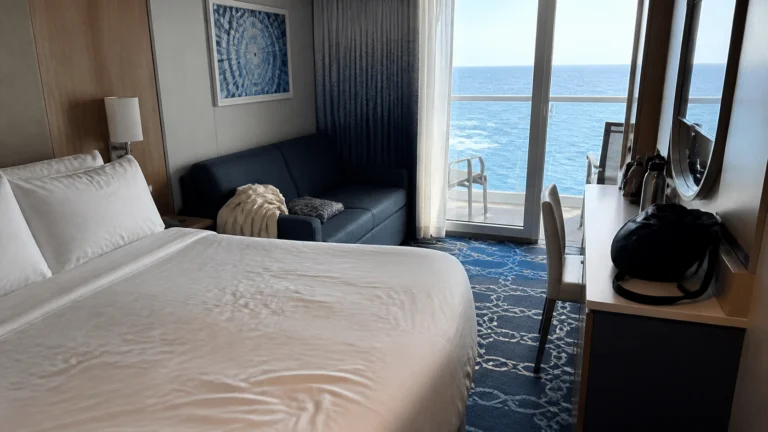
For a light sleeper: Compare a residential-deck location before paying the premium. Deck 8 corners such as 8466 and 8473 are alternatives to examine when the wraparound outlook is the feature you want.
For someone who needs a short walk: Think twice about those same stern corners. More outdoor space won’t shorten the corridor, so a conventional room nearer an elevator may be the better purchase.
A Cove trades a high balcony for sheltered seating near the water, but choose one away from the galley directly overhead if sleep is the reason for moving.
Use the cabin comparison guide for the broader room-type decision. Here, the priority is ruling out the location that clashes with your sleep or mobility before buying extra space.
Deck 6: match the room to the entertainment below
Deck 5 Promenade has Ovation Theater forward, Ocean Plaza near the middle and RedFrog Pub and Liquid Nightclub farther aft, making rooms directly above those venues less appealing for an early bedtime.
Music and bass can travel through the structure, while audience movement and furniture create different possible disturbances. Treat the venue as a reason to compare another room without assuming every nearby cabin stays noisy all night.
Rooms around Ocean Plaza and the nightclub sections have a more credible late-night sound risk than ordinary residential areas. Favor a residential buffer without turning the entire deck into a blacklist.
Better alternative: A comparable Deck 7 or 8 room with cabins above and below adds separation from entertainment, while a discounted Deck 6 room can suit someone who stays out until the program ends.
There is also a privacy trade along the side balconies above the outdoor Lanai promenade. Looking down can include people and public decking rather than only the sea, so compare a matching room photo if a secluded balcony is the reason for upgrading.
Moving to Deck 7 or 8 adds separation from the Lanai below; a room-specific photo showing the balcony’s cover and public area beneath it is more helpful for privacy than the deck number alone.
Cove Balconies: choose the ceiling as well as the view
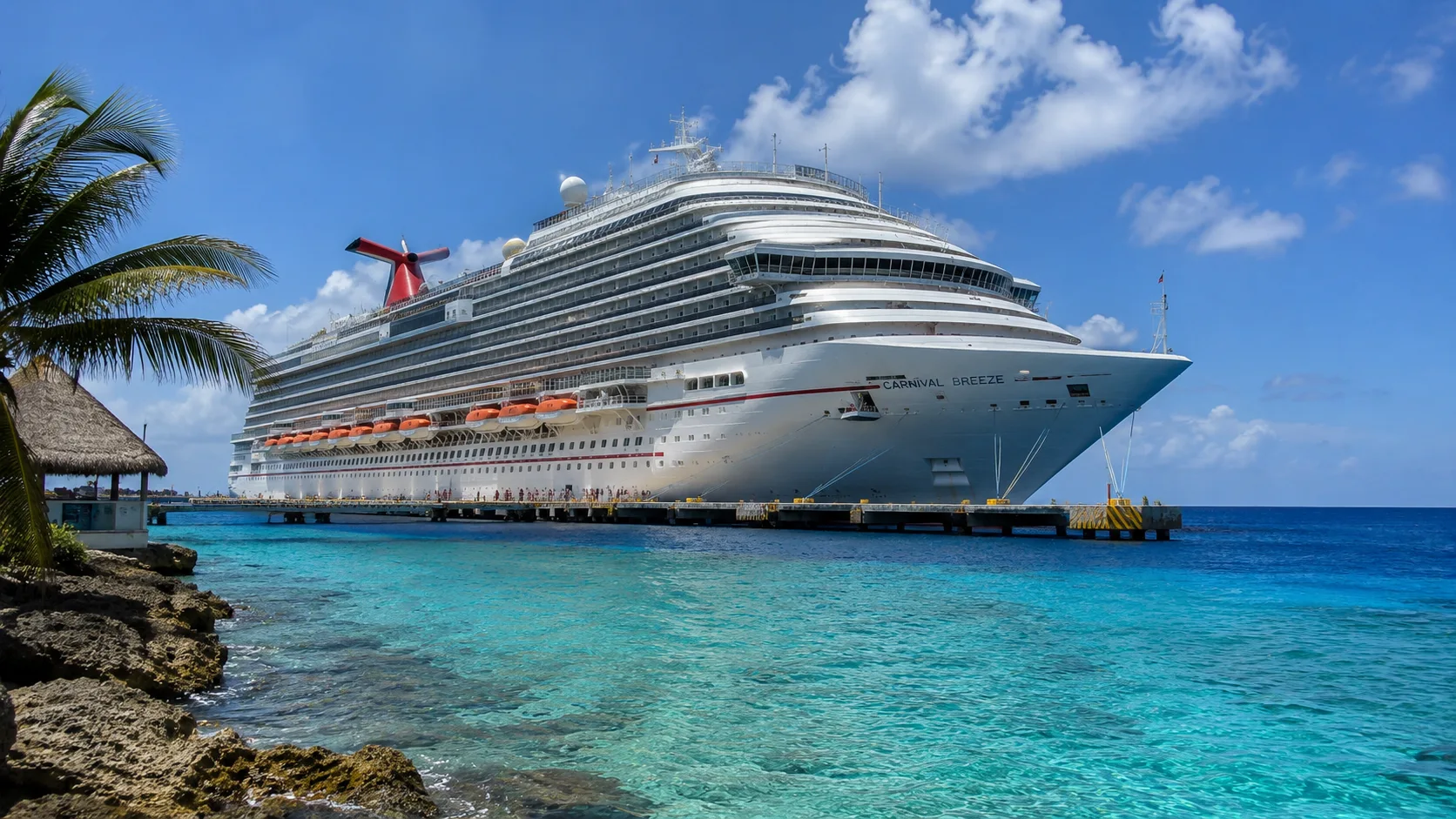
Breeze’s Deck 2 Coves offer shaded, sheltered outdoor seating close to the water, a lovely fit for travelers who enjoy that outlook more than upper-deck sunshine.
The Deck 3 galley lies between Sapphire and Blush dining rooms, and preparation, carts and cleanup can continue beyond passenger dining hours; choose a Cove outside the kitchen’s directly overhead position for a light sleeper.
The galley’s position supports a cautious choice, but it does not establish the hours or severity of sound in a specific cabin on your sailing.
The category stretches beneath different public spaces, so rejecting every Cove throws away useful options. Conversely, another guest sleeping well nearby does not establish that a galley ceiling will work for someone who wakes at every impact.
What you should compare instead: A Cove beneath a dining-room section rather than the galley, with its exact room position checked against Deck 3. For the most conservative sleep choice, move to a Deck 7 or 8 residential room instead of relying on another public ceiling.
Forward Cove 2248 is farther from the galley but has the forward theater to consider, so a central Deck 7 or 8 room is the more conservative sleep choice when the balcony type is secondary.
For a motion-sensitive traveler, a more central lower location is my preference over the far-forward end. For someone who loves the low-water balcony and sleeps readily, the category can justify accepting a carefully understood overhead compromise.
Portholes, Upper/Lower beds, and the daylight assumption
Cabins 2203, 2204, 2207 and 2208 are Interior Upper/Lower rooms rather than Category PT rooms with two portholes; their position beside window cabins does not give them the same daylight.
These rooms can be good value at a dark-interior fare for someone who likes the bed setup, but they are the wrong purchase if you chose the forward location expecting porthole light.
The bed arrangement deserves equal attention: Upper/Lower is not the ordinary pair of twins that converts into a king. It can suit friends or a solo traveler at the right fare, while a couple wanting one shared bed should choose a room explicitly offering that setup.
9205 and 9206: the Junior Suite view restriction
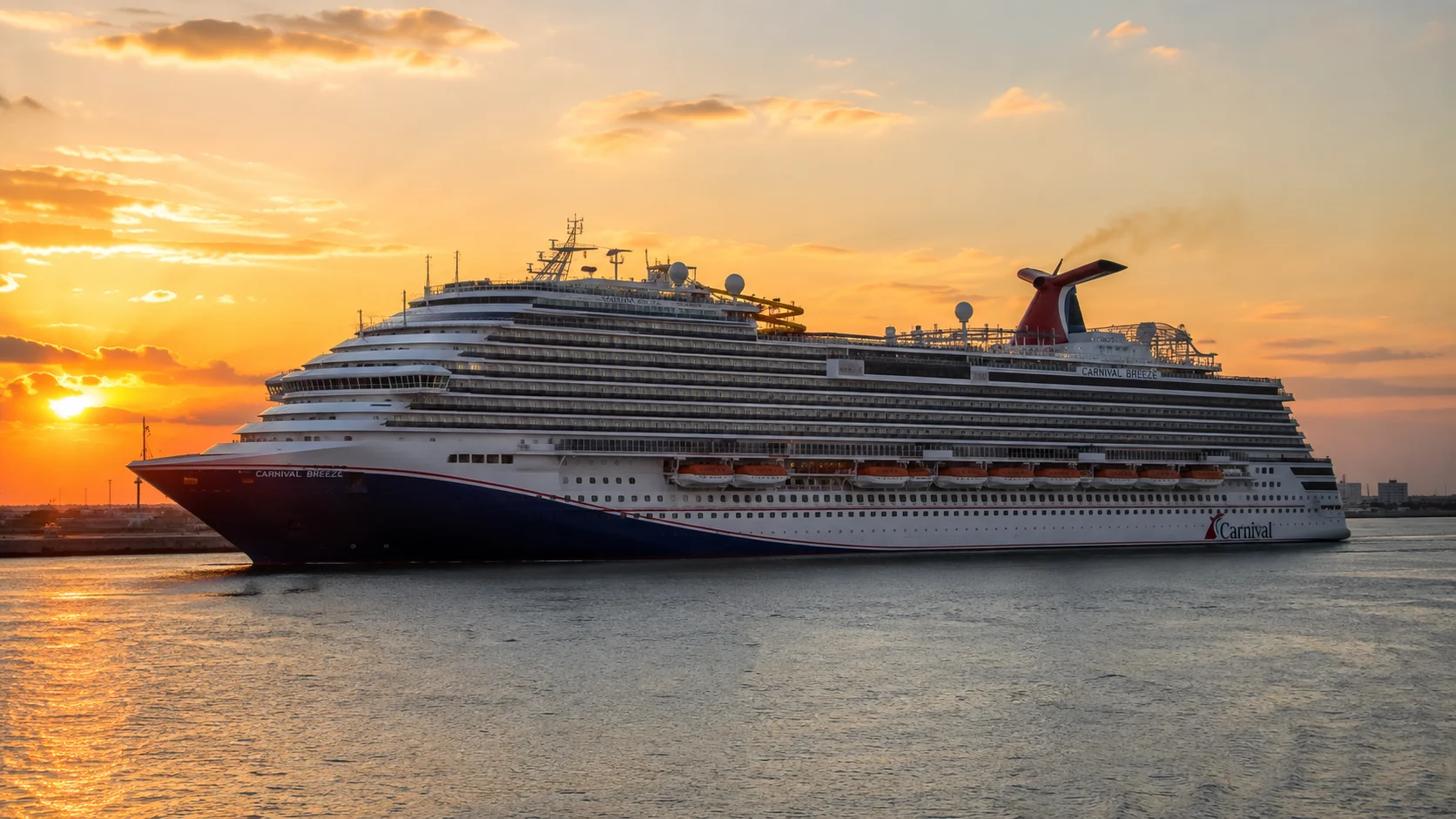
Carnival marks Junior Suites 9205 and 9206 as obstructed, so choose them for the extra room at a suitable price rather than assuming the suite fare buys a clear balcony view.
Do not refuse either at a steep discount. At anything close to the fare of an unobstructed suite or a suitable Premium Vista Balcony, compare the actual sightline before choosing.
This is also a good reminder that “suite” does not mean “best location.” The cabin label buys layout and amenities; the room number still decides what physically sits outside the glass.
9202 and 9203: a window onto an observation walkway
Cabins 9202 and 9203 are Category 4J interiors with an obstructed picture-window view toward the forward public observation area, giving daylight with a different privacy arrangement from a standard Ocean View.
I actually like this category when it is priced close to an inside. You get natural light, and the nearby outside deck offers fresh air without paying for a private balcony.
The trade is privacy and sightline. People can use the public deck outside, so do not book one expecting an uninterrupted private view of the water.
Deck 9: a forward cabin ceiling differs from an aft Lido ceiling
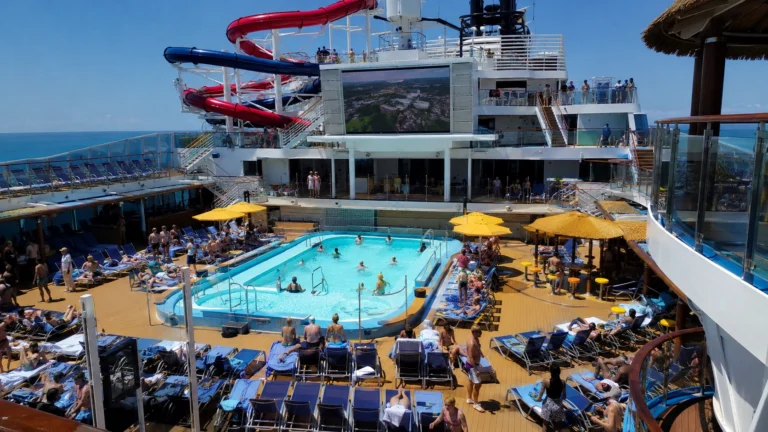
Deck 10 starts with a forward stateroom block, then changes to the Beach Pool, Lido seating, Lido Marketplace, and the aft Tides Pool. Deck 9 rooms beneath those public uses have different surroundings from rooms beneath the forward cabins.
Pool seating, buffet service and forward cabins create different upstairs neighbors along Deck 9, so a room beneath cabins is the simpler choice for someone who rests during Lido’s busy hours.
If you are awake early and spend much of the day upstairs, the convenience can be worthwhile. If a child naps in the afternoon or you wake at every scrape, compare Deck 8 in the same general position.
Passenger cabins above and below remove the direct Lido exposure without adding a huge journey to the pool. They do not remove ordinary neighbor noise, so you should still inspect a connecting door or a door facing a busy lobby.

Deck 10 forward is a different booking from sleeping under the pool
Breeze’s Lido cabins occupy a forward block on Deck 10 before the deck opens into the pool areas. They share the pool’s deck rather than sitting directly beneath the main pool area.
Book here for someone who wants easy pool access and does not mind a high forward position. A room near the transition to public areas needs a doorway-traffic check, while the forward end makes motion a more relevant consideration.
Forward picture-window interiors retain the observation-walkway trade described above. Convenience, daylight, privacy, and a private balcony are separate things to buy.
Families and access needs: solve the actual room layout
Carnival’s Breeze accommodation descriptions distinguish Deluxe Ocean View rooms with a full bathroom and a separate washroom. That second space can help a family get ready, but it is not a promise of two complete bathrooms with two toilets.
Some Deluxe Ocean View rooms accommodate five, so compare the actual berth symbols before booking for a larger family. Extra Pullmans or sofa beds can change how the room works at night, including the permitted arrangement of the main beds.
Two connecting rooms may be more useful for teenagers or different bedtimes than one larger cabin. Confirm a real connecting pair rather than assuming two nearby numbers have an internal door.
For mobility needs, prioritize the accessible bathroom, doorway and device space with Carnival’s Guest Access team, then choose a manageable elevator route rather than a favorite deck number.
A room near an elevator is not automatically noisy. For someone who finds repeated corridor walks tiring, that location can be a practical improvement several times a day.
A guarantee can give away the choice you care about
Some Carnival guarantee offers permit obstructed views and leave the exact assignment to the line. Read the conditions of your actual offer before comparing its price with a selected room.
Take a guarantee saving when the permitted assignments suit your trip; pay to select when a clear view, particular beds or a room away from the galley is essential.
Do not build the budget around an upgrade or an easy switch after assignment. A discount only helps if the room you can legitimately receive still works.
Continue planning with the things to do, pros and cons.
How this guide was researched: I used Carnival Breeze’s official deck plan and room descriptions to match the view, bed arrangement and nearby public spaces. A venue’s location supports a cautious choice for a light sleeper, while individual experiences can vary by room and sailing.
What to actually book on Carnival Breeze
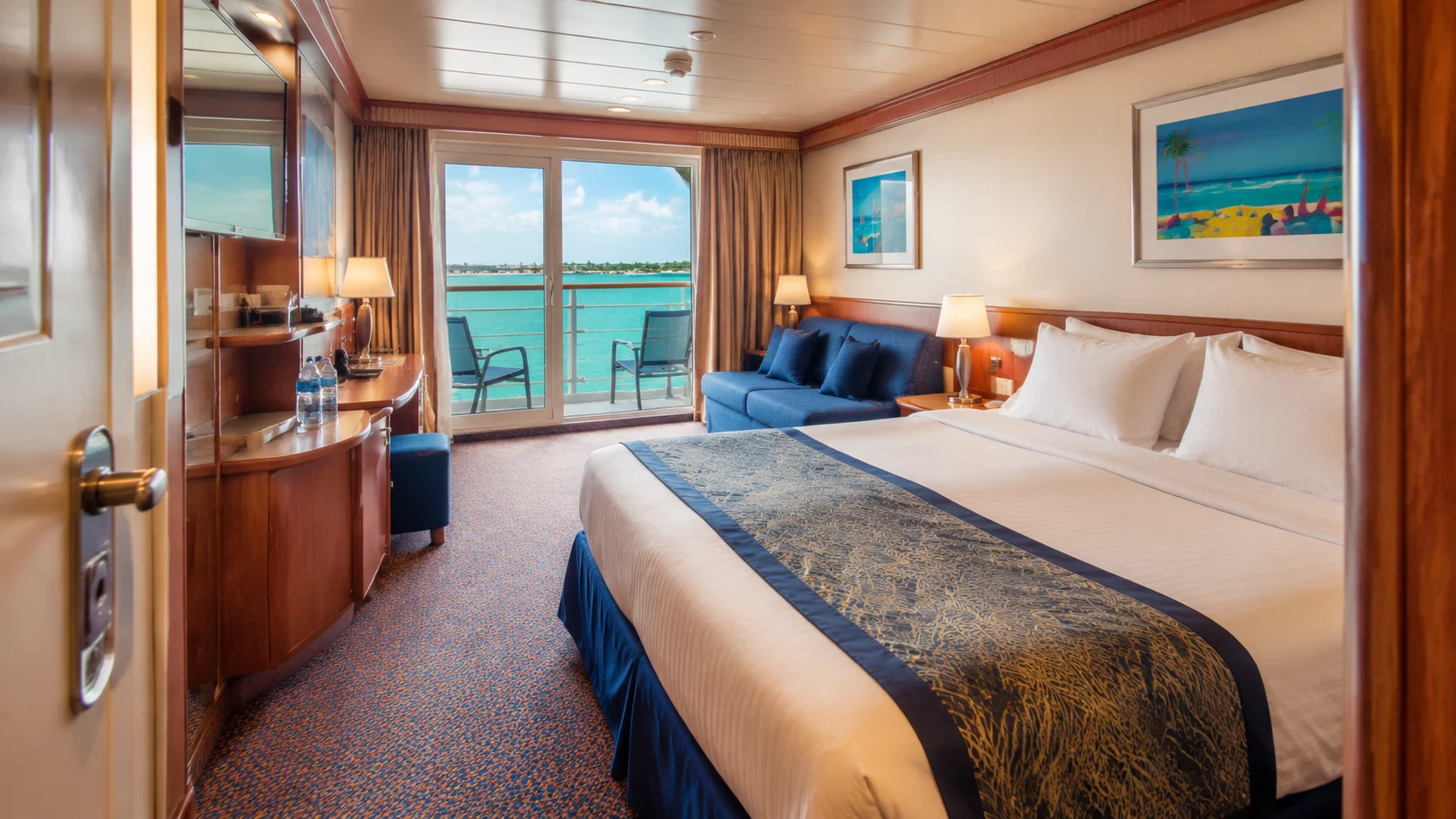
- Light sleepers: A central Deck 7 or 8 room with cabins above and below, checking its immediate doorway and connecting arrangement.
- Motion-sensitive travelers: Start with a lower, more central room and choose around the actual public space overhead before paying for a high-forward upgrade.
- Families: Confirmed berths and the Deluxe Ocean View washroom benefit, or a real connecting pair when two bathrooms and separate bedtimes matter.
- Balcony enthusiasts: A residential-deck Premium Vista corner for the wraparound outlook, accepting the aft walk; a selected Cove for a close-to-the-water experience.
- Value seekers: A correctly priced 4J, Upper/Lower, or obstructed suite when its precise compromise is acceptable.
For a standard balcony, start midship on Deck 7 or 8 and spend more only for a feature you expect to use every day.
The Cabins to Avoid series covers other ships, and the ship explorer helps if Breeze is still one of several possibilities. Once you choose Breeze, keep the available room and its actual ceiling at the center of the decision.
Before booking, open the deck plan, ship page, and accessibility guide. Use them to confirm the exact category, nearby spaces, and any access needs tied to your room.
Compare these warnings with the best cabins and the deck guide. The dining guide and ship tips can help you choose the most convenient end for your routine.