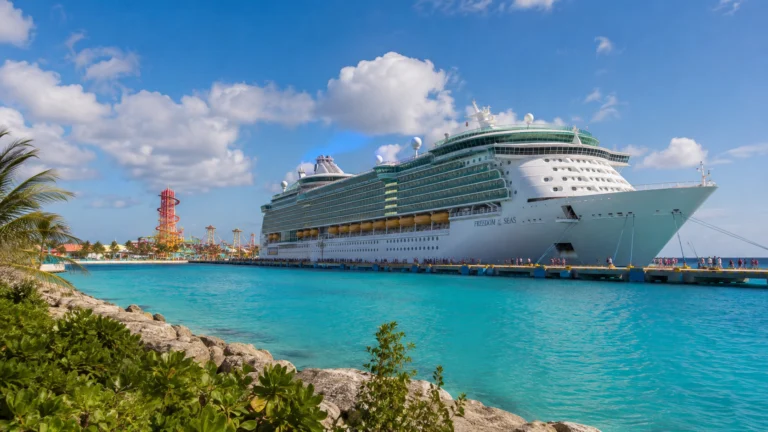
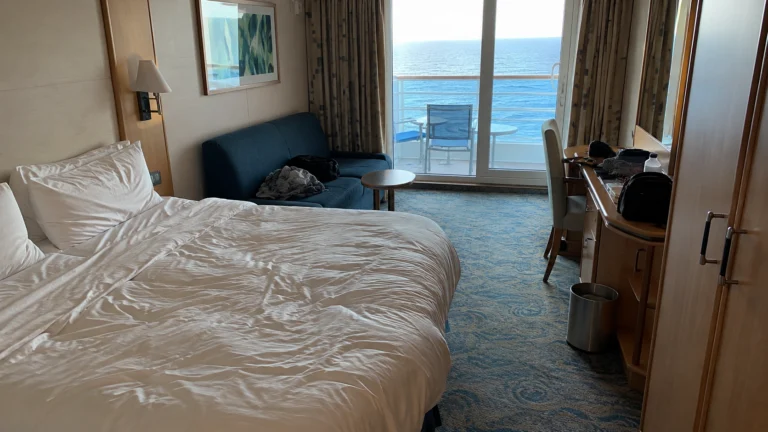
Odyssey of the Seas Cabins to Avoid: Obstructed Balconies & Deck 13
On Odyssey of the Seas, a known balcony obstruction can be a useful discount, while Deck 13 trades cabin buffers for quick upper-deck access.
For most light sleepers, a nonconnecting clear-view balcony on Deck 9, 10 or 11 is the better starting point.
Short version:
Choose a Deck 9 or 10 balcony for cabin buffers, an obstruction-marked room for a meaningful discount or a Studio Balcony for one person when its total fare is attractive.
- 6254, 6258, 6654 and 6658: current cabin data specifically flags these Deck 6 balconies as obstructed.
- Category 1E and 2E on Decks 6–8: Royal Caribbean sells these as Obstructed Ocean View Balconies, commonly affected by lifeboat tops or structural framing.
- Deck 7 cabins 7116–7128 port and 7516–7528 starboard: a broad metal lip below the balcony interrupts the straight-down sea view.
- Deck 13 light sleepers: compare the exact room with Deck 14’s pools, Solarium, Windjammer and activity spaces before paying for upper-deck convenience.
- My low-drama pick: a clear-view balcony on Deck 9, 10 or 11 with cabins above and below.
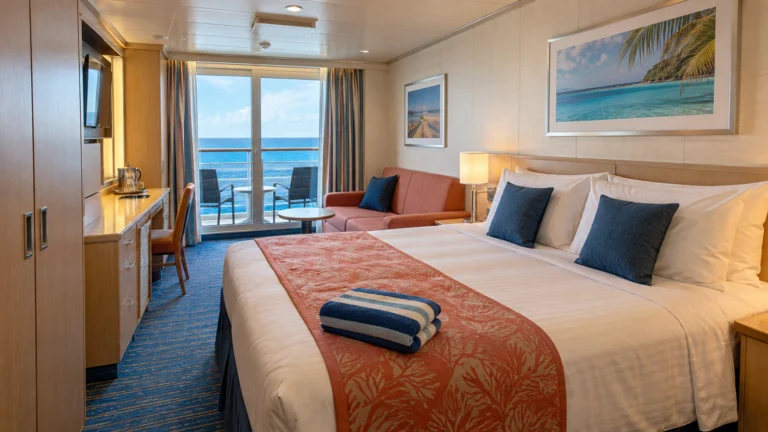
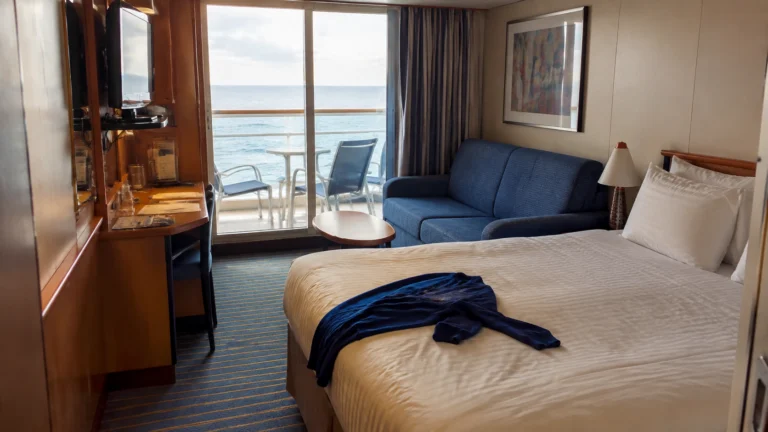
Royal Caribbean’s Odyssey plan lists1E and 2E as Obstructed Ocean View Balcony categories on Decks 6, 7 and 8. A conventional clear-view category suits scenery lovers better, while an obstruction can be worthwhile when fresh air matters more than the view down.
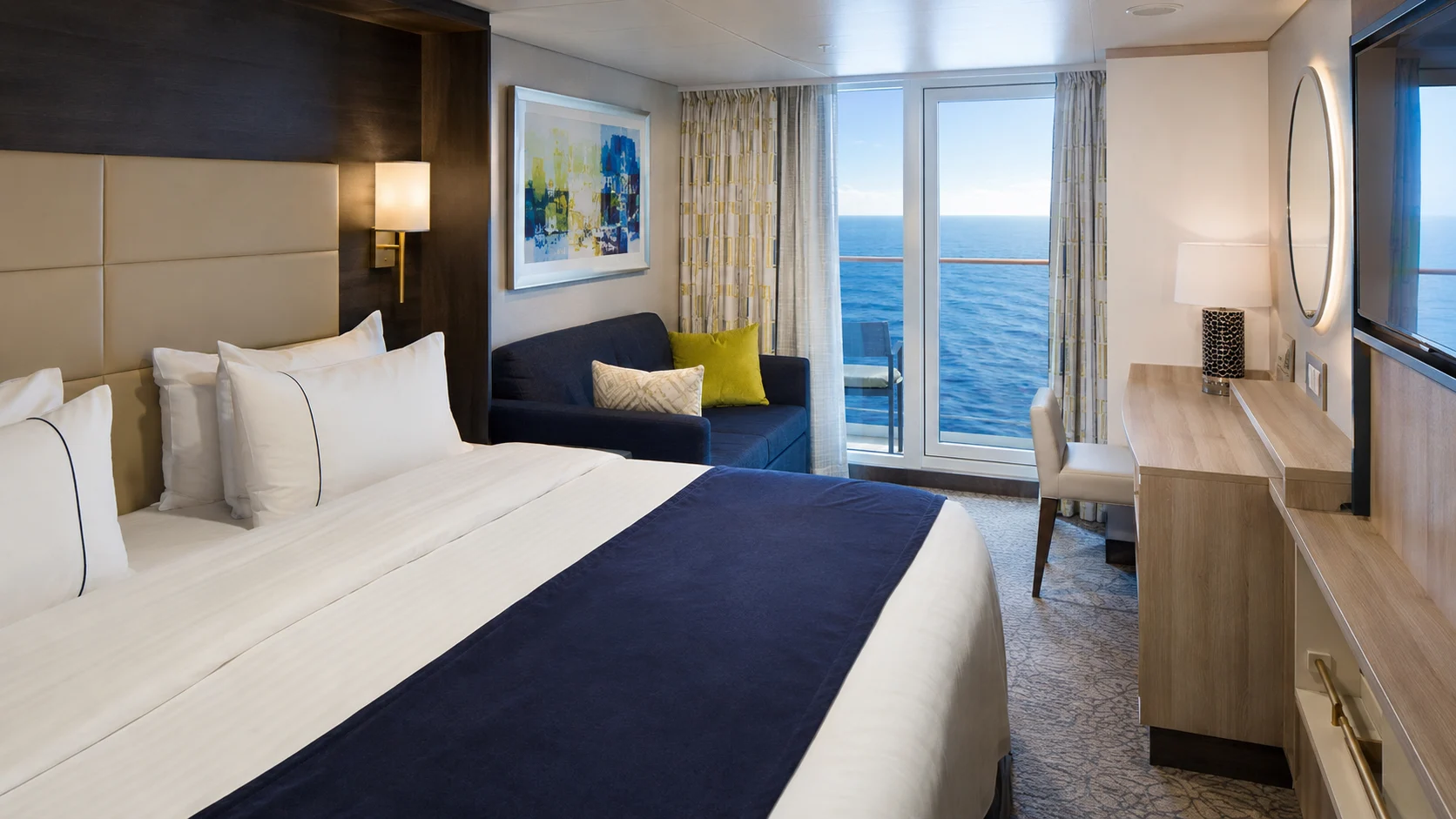
6254, 6258, 6654 and 6658: separate the view from the room type
On the current deck plan, 6254 and 6654 are Studio Ocean View Balcony rooms, while 6258 and 6658 are Obstructed Ocean View Balcony rooms. The obstruction symbols deserve attention in all four, but the sleeping space and room layout are different products.
Choose a Studio Balcony for one person when the compact room and total solo fare make sense. Choose a regular obstructed balcony for a couple who wants outdoor space at a discount; a clear-view room is the stronger choice when ocean scenery is the purpose of the upgrade.
The important distinction is that an obstruction can affect the downward view without ruining the horizon. Ask what is visible while seated and what clears when standing instead of relying on one percentage or one generic category photo.
1E and 2E: obstructed balcony is the category, not a surprise
Royal Caribbean uses 1E and 2E for Obstructed Ocean View Balconies on Odyssey. Many look over the top of lifeboats, while some forward rooms on Decks 7 and 8 sit inside large steel framing that creates a porthole-like opening around the balcony view.
Choose one when the discount is meaningful and a real balcony matters more than an uninterrupted downward view. Pay for a clear-view category when the balcony is mainly about scenery.
Do not confuse this with a Virtual Balcony Inside. Category 4U gives you a live-screen exterior view, not daylight, fresh air or an outdoor platform.
Deck 7 cabins 7116–7128 and 7516–7528: the downward view is compromised
On Deck 7, cabins 7116 through 7128 on the port side and 7516 through 7528 on the starboard side sit above a metal lip that extends several feet out from the base of the balcony, as shown in the forward balcony notes. The main compromise is the straight-down sea view, not necessarily the horizon ahead.
Keep one at the right fare when you mostly care about fresh air and an outward horizon. Move toward a hump balcony when you want the cleanest look straight down to the water.
The first few forward balconies on Decks 7 and 8 also use heavy steel framing around the opening. That gives more privacy and wind protection while making the exterior feel more enclosed, so it is another fit decision rather than an automatic avoid.

Deck 13: pool chairs or dining activity above the room
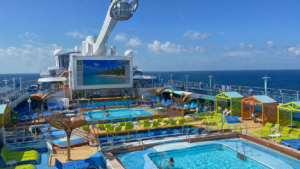
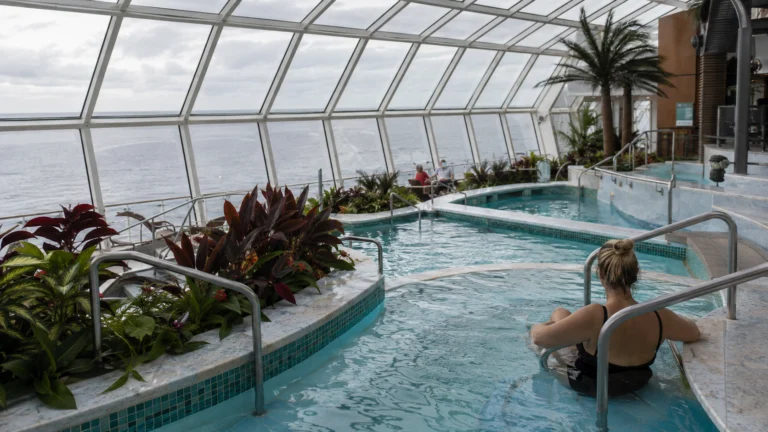
Deck 13 sits beneath Deck 14’s Solarium, pools and aft dining areas. A room under pool seating has a different possible noise source from one beneath Windjammer, where dining, staff movement and cleaning matter more.
Be more cautious beneath active seating and high-traffic areas when sleeping late or afternoon naps matter. Chairs, carts, footsteps and cleaning are plausible overhead issues, but the deck plan cannot prove a fixed sound level in every room.
A cabin-buffered room on Deck 9, 10 or 11 is the simpler choice for a light sleeper. For a family using the pools and Windjammer frequently, Deck 13 can be convenient enough to justify that overhead tradeoff.
A move a few decks lower can preserve the same broad balcony type while placing another cabin overhead. That is often a more useful sleep upgrade than buying a larger room directly beneath the public deck.
Aft inside cabins above Two70: a show-time concern, not an all-night warning
Some aft interior rooms on Deck 7 sit above the Two70 entertainment space. That creates a plausible path for show sound during performances, but it is a very different issue from pool furniture moving overhead at dawn.
Choose a cabin-buffered position for an early sleeper who might be in bed during a show or rehearsal. A traveler attending the production and returning later may value the nearby route more.
Do not stretch that relationship into a warning about every aft cabin. The concern belongs to the specific rooms whose floor overlaps the venue.
Virtual Balcony is useful only when you want a screen, not a window
Category 4U gives an Inside cabin a live exterior video feed. I like it for travelers who want visual orientation and a sense of what the weather looks like without paying for an exterior cabin.
Do not choose it for someone who needs daylight to wake naturally, wants fresh air or expects to look out at the real ocean. No cabin-number change turns the screen into a window.
Connecting rooms and extra berths can matter more than deck height
A room that sleeps four can feel very different after the sofa or Pullmans are open. Picture the nighttime path to the bathroom, closets and balcony before paying for a higher deck or larger-view category.
I use a nonconnecting room as the tiebreaker for a couple who does not need the interior door. For families booking both sides, the same connection can be one of the most useful features on the ship.
For accessibility needs, preserve the exact adapted room first. Doorway, roll-in shower, transfer side and mobility-device space matter more than moving to a theoretically quieter standard cabin.
Guarantee fares surrender the exact controls that matter here
A guarantee works for travelers comfortable with the allowed rooms and locations; Royal’s guarantee terms allow obstructed views and assignment as late as port check-in. Keep cabin-number control when a clear view, cabins above and below, a nonconnecting room or a short elevator route is essential.
The saving is worthwhile when the full range of possible assignments suits your trip. A specific view or accessibility need is a better reason to select a room than to hope the guarantee avoids the unsuitable choices.
Continue planning with the dining guide.
How this guide was researched:
I compared Odyssey’s current ship-specific plan and category descriptions with the cabin-location advice. Obstruction symbols describe views, while public spaces above or below explain a possible sleep tradeoff rather than proving noise in a room.
What you should book on Odyssey of the Seas
For most couples, start with a selected clear-view balcony on Deck 9, 10 or 11, choosing a nonconnecting room when the interior door has no use. Those levels offer useful cabin buffers without the main pools directly overhead.
Choose 1E or 2E when the obstruction discount is meaningful and fresh air matters more than open scenery. For a family, the beds and route to the bathroom deserve priority over a higher deck.
For motion sensitivity, a lower central room is the stronger starting point. A very light sleeper gains more from a cabin buffer than from treating every Deck 13 room as unsuitable.
The ship guide library helps with Odyssey’s active upper-deck layout, while the Cabins to Avoid library is useful when comparing these obstruction and ceiling tradeoffs across Royal Caribbean ships.
Solo balcony choices need their own comparison
Studio Balconies 6254 and 6654 are compact solo rooms, with Royal Caribbean listing the Studio Balcony category at about 119 square feet inside and 50 outside. A regular balcony has a much larger interior, so the dedicated solo label deserves a comparison with the complete single-occupancy fare for a normal room.
A solo traveler who spends most days out of the room may welcome a private terrace without paying for unused second-person space. Someone using the cabin for relaxed afternoons, working or storing a lot of luggage may prefer the ordinary balcony even at a higher fare.
An obstruction remains a separate decision from solo pricing. Choose a clear-view standard room when the view is important, or keep an obstruction-marked studio when its outlook and saving suit the trip.
Odyssey becomes easier to book when the comparison is a known discounted obstruction, a clear conventional balcony or a lower-cost interior. The right room gives you the feature you will use, with a location and sleeping arrangement that fit your routine.
For more room comparisons, the best cabins guide covers balcony and suite upgrades, while the deck guide shows the pool and entertainment routes.