
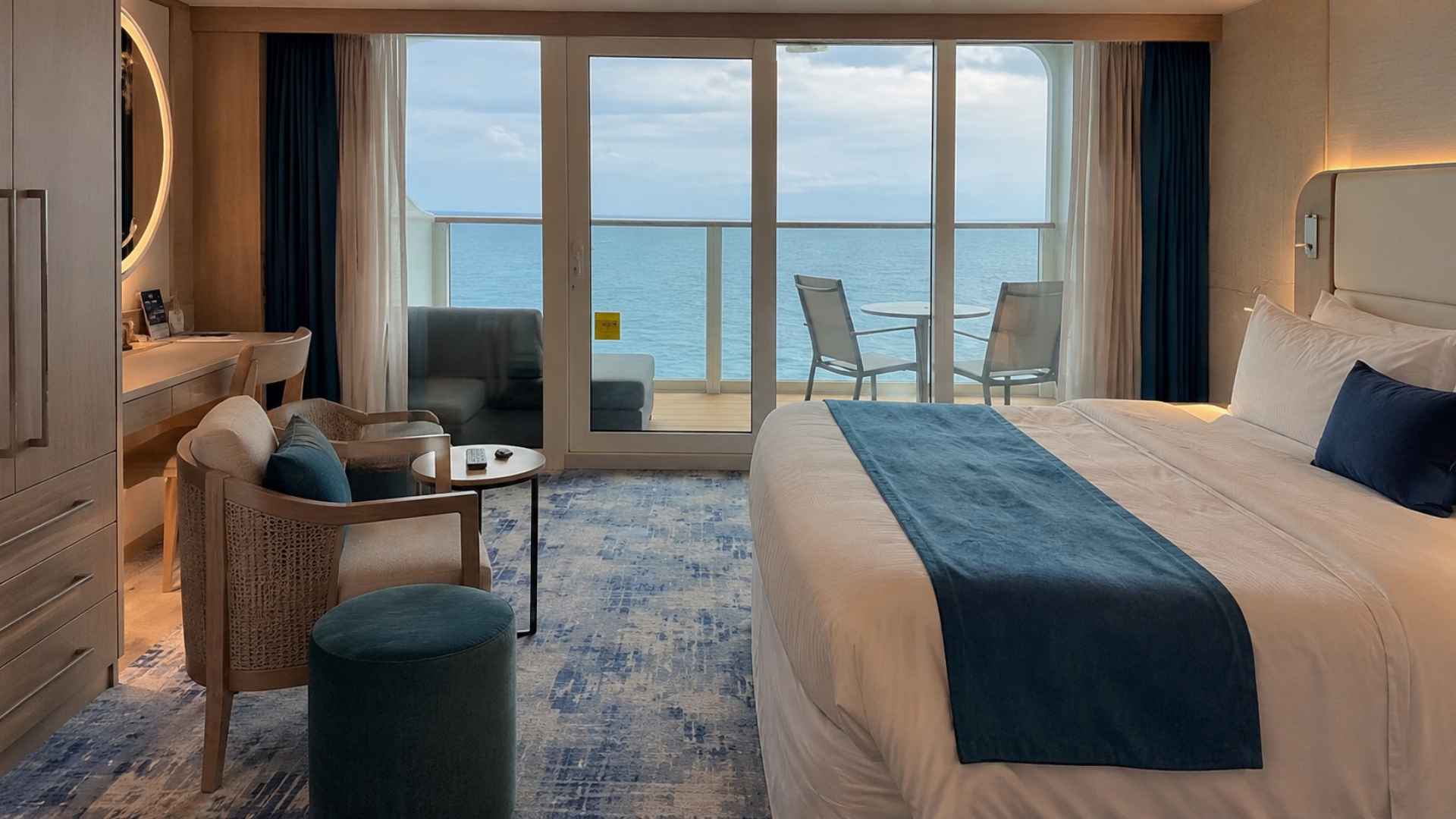
Cabin guides
Your cabin is the one thing you cannot change your mind about
What the categories get you, how location changes the week, and which trade-offs are worth paying for. For the stage before you have a cabin number.
Start with categoriesThe four categories, and what each one actually buys
Every line invents its own names. Underneath, there are four things you can book.
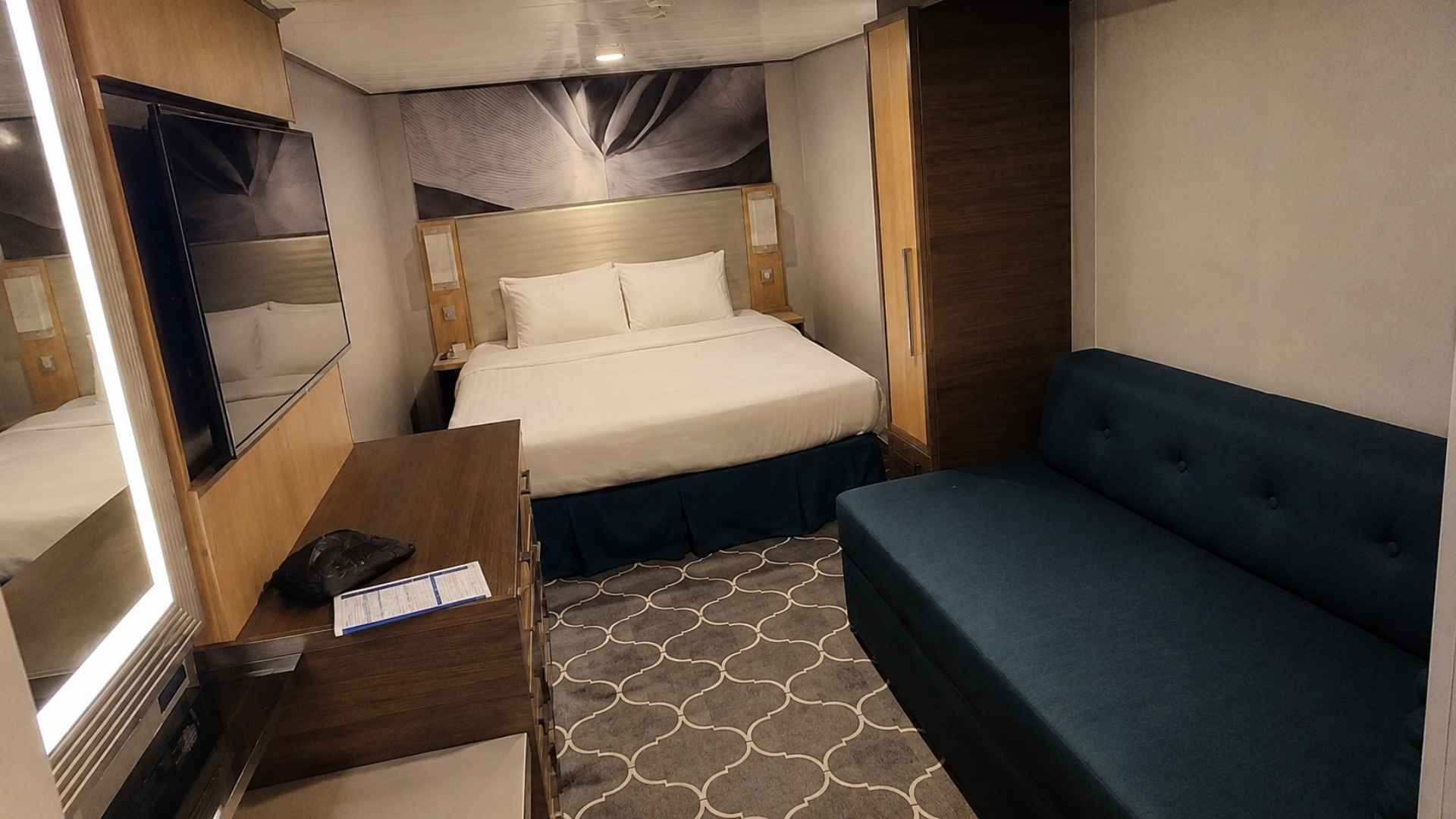
Interior
What it buys you
The cheapest bed on the ship, and a room that is genuinely dark.
Worth it when
You are out of the room all day, and the fare difference buys something better.
Skip it when
You need to know where you are, or the scenery is the point of the trip.
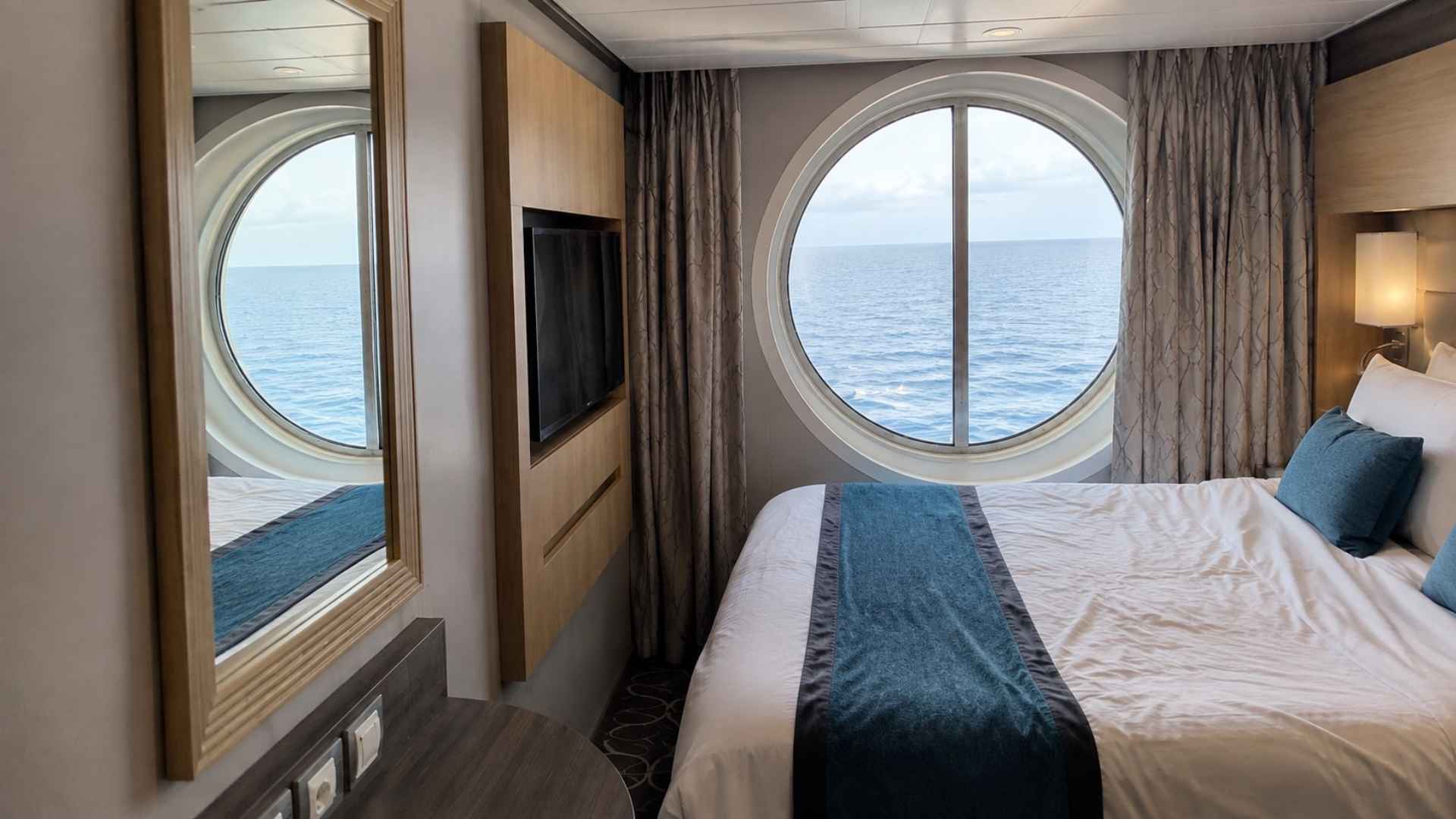
Oceanview
What it buys you
Daylight and your bearings, for much less than a balcony costs.
Worth it when
You want the light, not the outdoor space.
Skip it when
You would sit outside every morning, or the window is obstructed in the ways that matter.
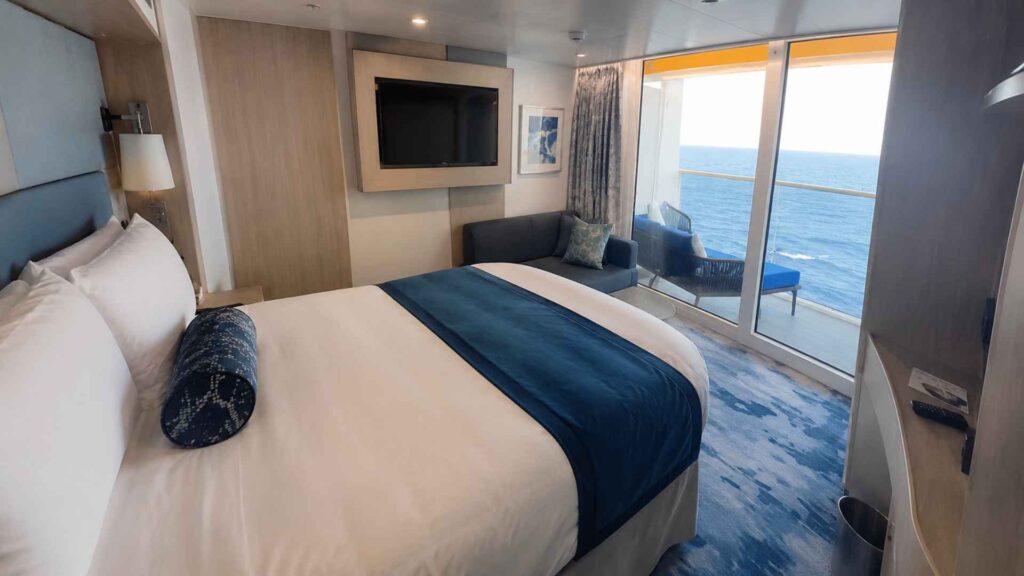
Balcony
What it buys you
Private outdoor space, worth a lot on a scenic itinerary and much less on hot Caribbean sea days.
Worth it when
There is a coastline worth watching, or someone needs somewhere to be while the room sleeps.
Skip it when
You will be at the pool all week, or the balcony faces a neighborhood rather than the sea.
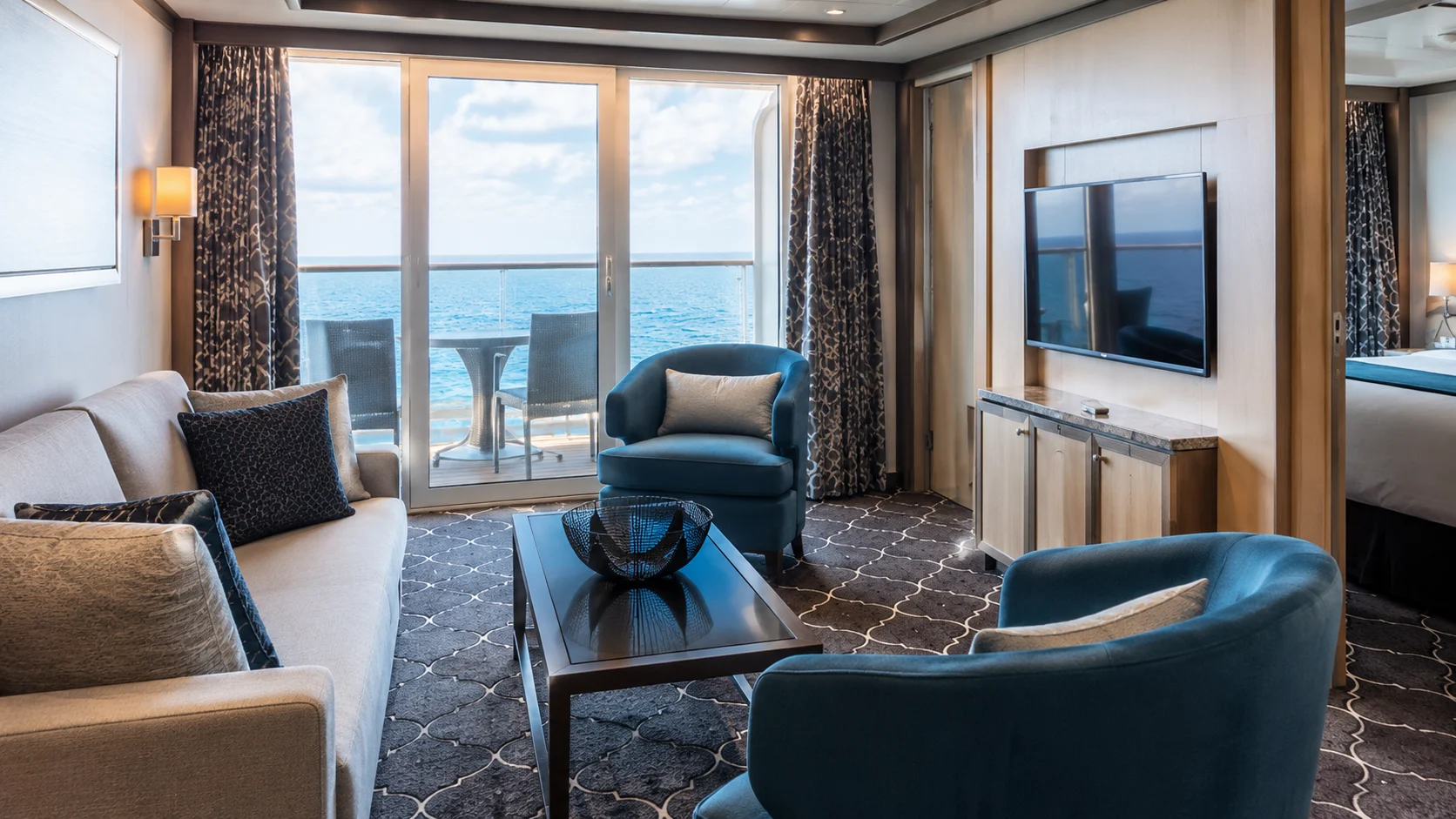
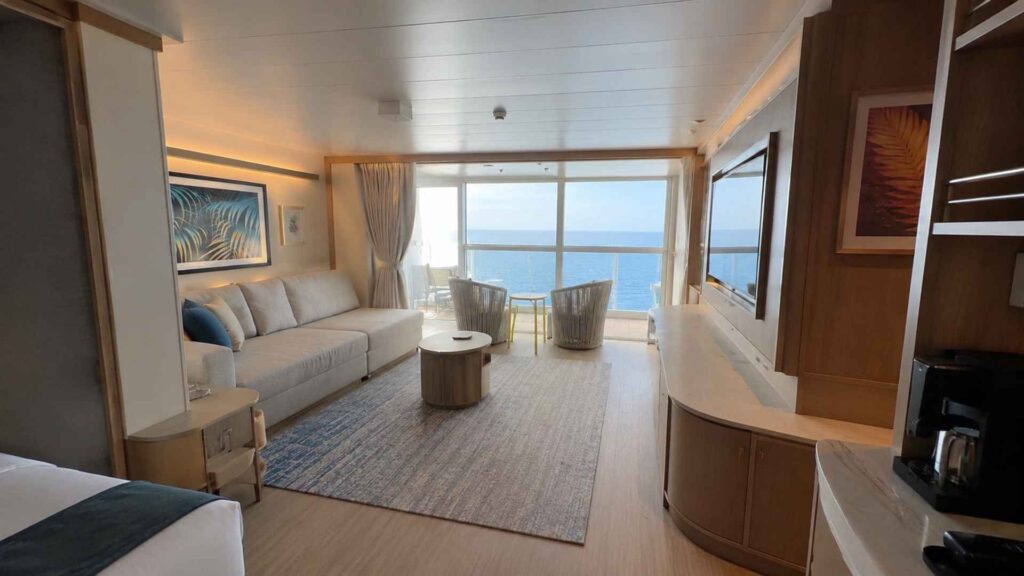
Suite
What it buys you
Space plus, on some lines, a separate restaurant, lounge and sundeck that can be the real value.
Worth it when
Floor space decides your week, or the enclave changes how crowded the ship feels.
Skip it when
Your tier does not include the enclave, or the suite is smaller than the junior suite below it.
Then: where on the ship
Higher is not automatically better. Position decides motion, noise and how far you walk.
Forward
More motion, quieter neighbours, and a walk to everything.
Midship
The steadiest part of the ship, and the shortest walk to everything.
Aft
The best balconies on many ships, and the most variable conditions.
Motion
More pitch in rough water, worse the higher you go.
The least of anywhere onboard, and not by a small margin.
Less pitch than forward, more of a corkscrew, plus propulsion vibration on some ships.
Noise
Usually residential, except for anchor machinery far forward and low.
Entirely decided by what is stacked above and below you.
Wake noise is constant, while a pool deck or galley overhead can be disruptive.
Walking
Often a long walk to dining and pools farther aft.
Usually the shortest walks, with central lifts close by.
Short to the buffet and pools, longer to the theatre.
Book here if
Rough water does not bother you and you will take the walk.
You get seasick, or you want the safe default.
You want a wake-view balcony and have checked what sits above.
What the category name does not tell you
Both are visible on a deck plan once you know to look.
What the view really is
Partially obstructed covers everything from a thin lifeboat davit at the edge of the glass to a wall of orange fiberglass. Some flagged cabins are excellent value, so ask which one you are buying before paying to move off the flag.
Whether anyone can see in
Balconies get overlooked from the decks above and from public spaces. An inward-facing balcony is a different product from an ocean-facing one, and the ones without a sheer curtain put you on display in your own room.
Before you click book
Six checks on the deck plan
Open the current deck plan for your ship, not an older one, and work down this list. Five minutes, and it catches most of what people write to me about afterwards.
Nothing checked yet.
- What sits on the deck directly above your cabin
- What sits on the deck directly below it
- Whether a buffet galley or pantry is stacked anywhere near
- What the obstruction is, if the category is flagged
- Whether the balcony is overlooked from above or from a public space
- How far it is to the lifts, and to the venues you will use most
Cabins for particular situations
Where the general advice stops being the advice.
Families
Check how many berths are real beds rather than fold-downs. Connecting doors cut both ways: convenient with your own family, thin with someone else’s.
Solo travellers
A few lines build dedicated single cabins, which avoids the supplement entirely. They tend to be small, interior, and clustered with their own lounge.
Accessibility
Documented dimensions, turning space and bathroom layouts, and very limited in number. Confirm the specifics rather than the label, and book early.
Guarantee bookings
Cheaper, and it hands the choice to the line. Fine if nothing on the ship would ruin your week, a gamble if something would.
How cabin advice here is researched
Two independent reports and a physical explanation, or it does not get published.
Categories, dimensions and obstructed-view designations come from the line. Everything about how a room feels comes from passengers who slept in it.
Editorial standards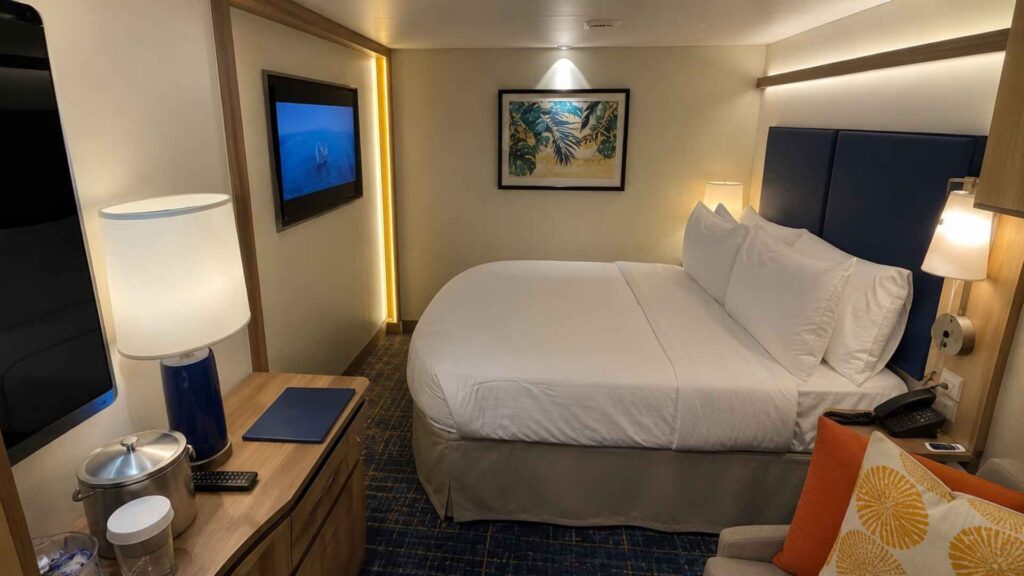
Where to go next
Once you know what kind of room you want.
 Cabins to Avoid
Ship by ship, with cabin numbers and the reason behind each one.
Browse the series
Cabins to Avoid
Ship by ship, with cabin numbers and the reason behind each one.
Browse the series
 Cruise Ships
See whether your ship is covered, and read the guides written for it.
Find your ship
Cruise Ships
See whether your ship is covered, and read the guides written for it.
Find your ship
 Cruise Lines
How category systems, obstruction labels and suite tiers differ by operator.
Compare lines
Cruise Lines
How category systems, obstruction labels and suite tiers differ by operator.
Compare lines