Margaritaville at Sea Paradise Cabins to Avoid (and the Cabins I’d Choose)
For a sleep-focused Margaritaville at Sea Paradise trip, compare Deck 6 Oceanviews 6065 and 6066 before accepting a room beneath entertainment or pools.
Pay for a suite when its space or balcony solves your group’s actual needs, and check its location as carefully as you would a cheaper room.
Short version
Compare Deck 6 Oceanviews 6065 or 6066 for up to three guests, or Interiors 6031 or 6032 for a four-berth budget option, before accepting Deck 7’s public ceiling. Junior Suites 5331 and 5332 add space beside the lobby; Grand Terrace Suites 1001 through 1010 add balconies beneath Deck 11 activity.
Start with a residential buffer
Deck 6 sits between two accommodation decks, which makes it a sensible first comparison for travelers who go to bed before the lounges finish. Choose a central position when shorter walks and reduced sensitivity to pitching matter more than being one flight from dinner.
That buffer reduces direct exposure to the main public decks without promising silence. Hallway conversations, connecting doors, neighboring guests, and service activity can affect any room.
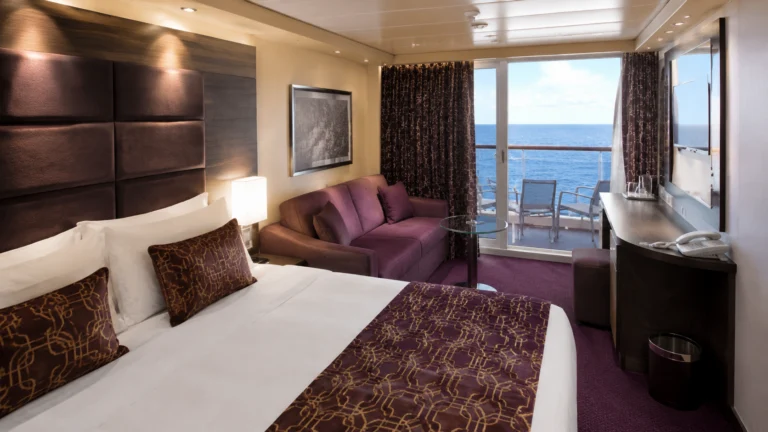
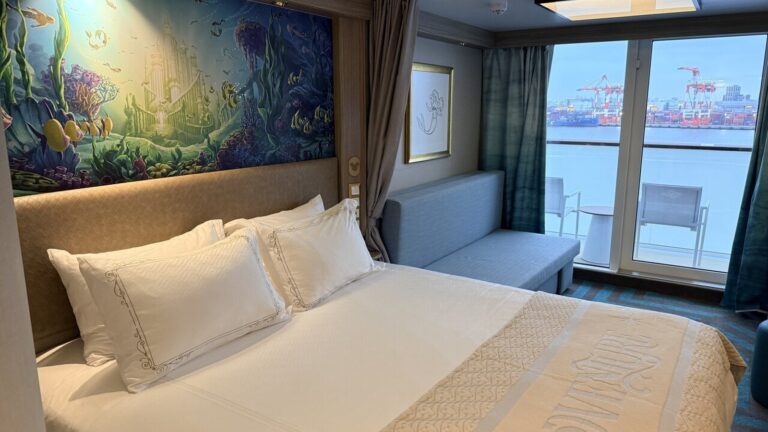
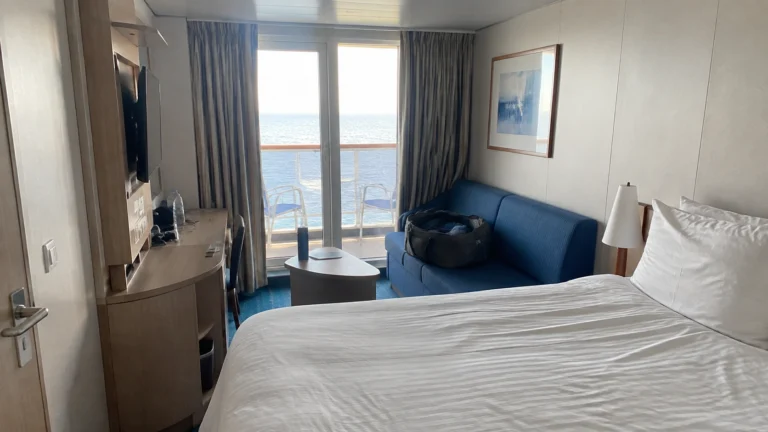
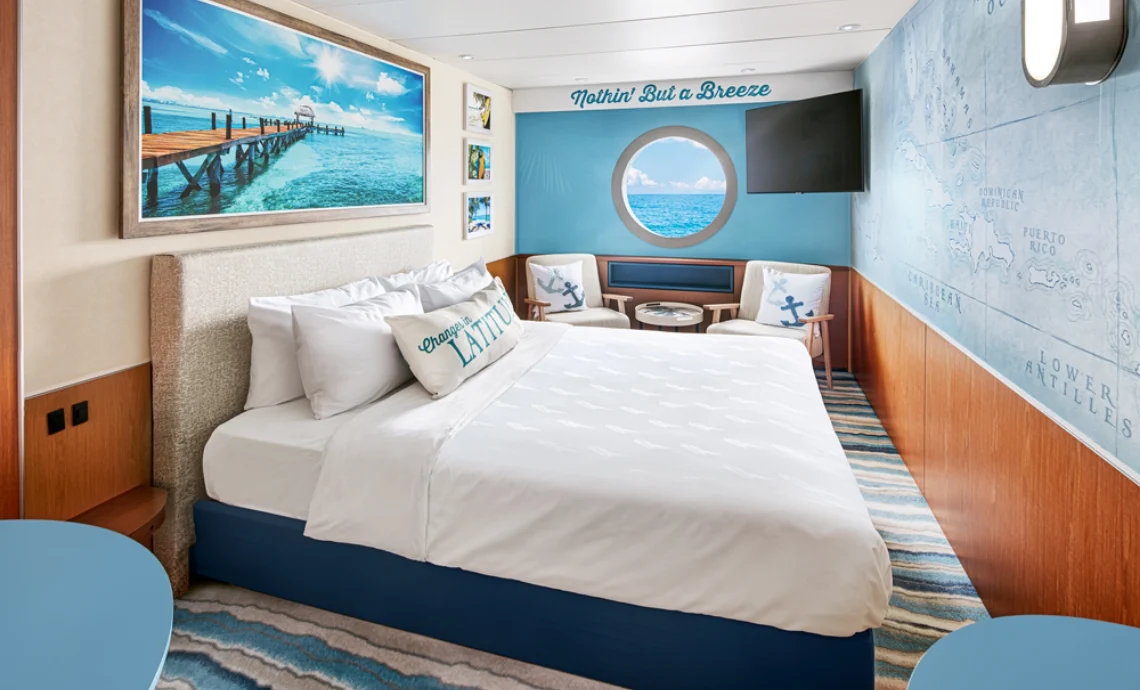
For two or three people, start with Oceanviews 6065 and 6066: both are marked for two convertible singles and an upper berth on Deck 6. They offer daylight and accommodation above and below, without putting your door directly into the elevator lobby.
Use the best cabins guide to compare what you gain from a window or suite before paying. Location and the correct beds can matter more than the name of the upgrade on a short trip.
Deck 7 needs a ceiling check
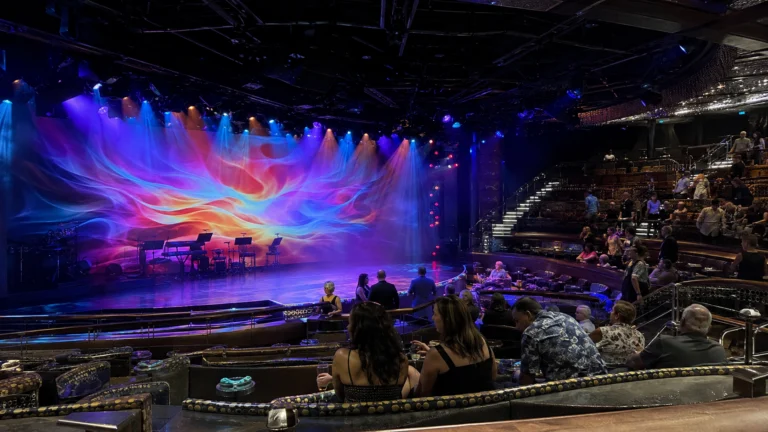
Deck 7 is immediately beneath the public spaces on Deck 8, so it deserves the closest look for early sleepers. Above it are the lower Stars on the Water Theater, Euphoria, youth and activity rooms, and the aft restaurant zone.
A room under a performance space or busy public entrance is a different choice from one beneath a quieter seating area. If your usual bedtime overlaps evening entertainment, compare Deck 6 before accepting the same-priced room on Deck 7.
Don’t reject the entire deck if you plan to stay out late and value the one-flight route to the evening venues. Check the particular ceiling and decide whether that convenience fits your own schedule.
Our Paradise deck guide helps you trace the public rooms above the available cabin. Match the cabin’s fore-and-aft position across both decks instead of judging only the distance to the nearest elevator.
Restaurants can also involve preparation and cleanup outside the dining hours you see as a passenger. If a room lies beneath that zone and sound sensitivity is important, choose a residential ceiling rather than relying on an assumed closing time.
Grand Terrace is a balcony upgrade with a public ceiling
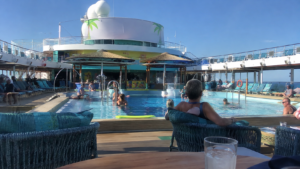
The ten Grand Terrace Suites, numbered 1001 through 1010 on the Paradise deck plan, form a midship block on Deck 10. They are the ship’s only balcony accommodations, and they sit beneath the Deck 11 main pool and entertainment area.
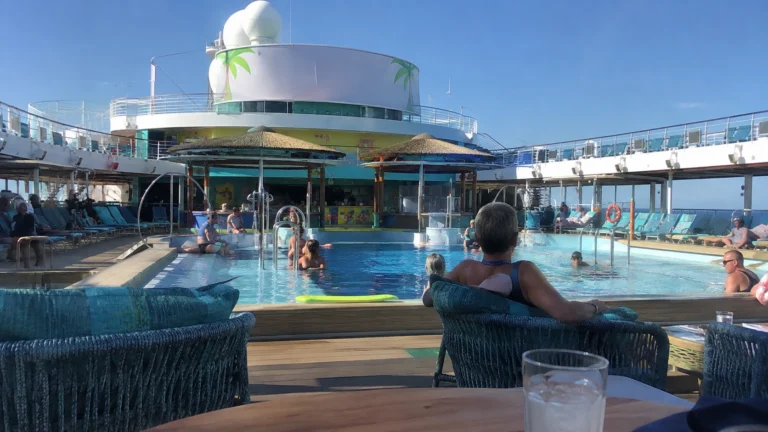
That is worth knowing before buying the suite for peaceful outdoor time. The upper location gives you convenient access to the vacation atmosphere, but pool activity, music, and moving furniture are potential considerations for a light sleeper.
The deck relationship supports a caution, not a claim that every suite is noisy on every cruise. Check the suite’s exact footprint against the pool level and decide whether you’d use the balcony enough to accept that setting.
The Teen’s Club is starboard beside the elevator lobby immediately aft of the Grand Terrace block. If nearby youth activity or hallway traffic would affect your rest, compare the suite’s entrance and the announced session times with a room on a residential deck.
Choose a Junior Suite if extra indoor space matters more than private fresh air and you prefer the lower Deck 5 setting. Choose a central Oceanview on Deck 6 when daylight and a residential buffer are enough.
Keep the Grand Terrace choice when the private balcony is one of the main reasons for taking the trip. Plan to use it deliberately for coffee or an arrival rather than paying its premium and spending nearly every waking hour elsewhere.
Junior Suites are beside the Deck 5 lobby
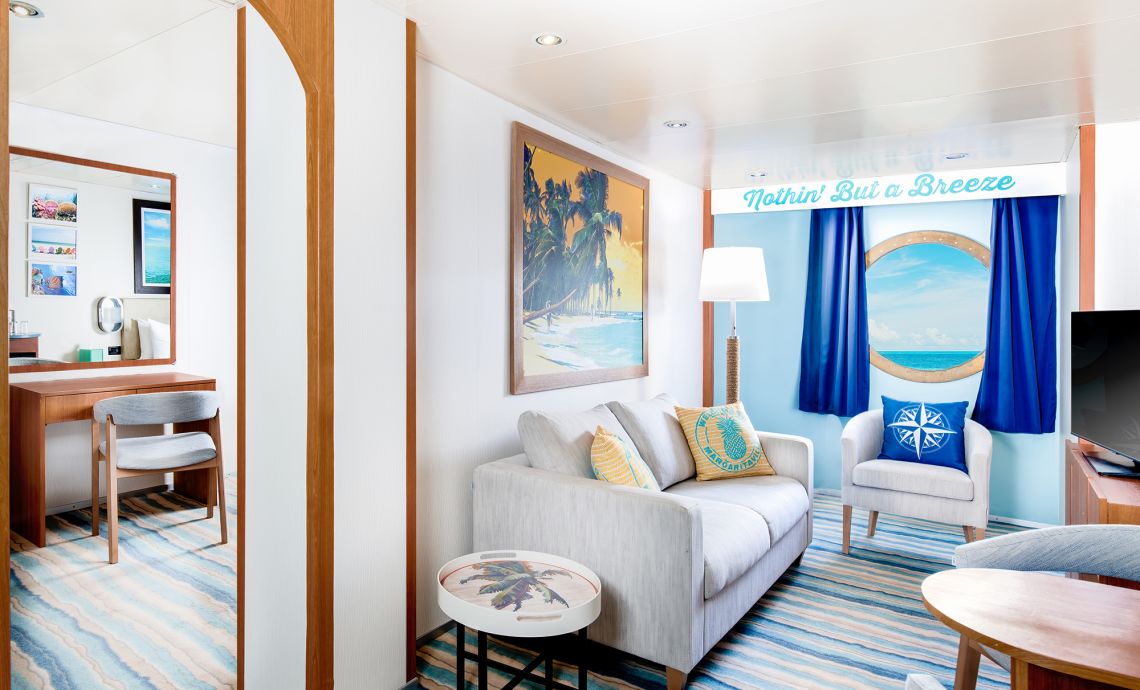
Junior Suites 5331 and 5332 flank the central lobby area on Deck 5 in the published plan. They offer approximately 407 square feet, two large portholes, a sitting area, extra storage, and a separate shower, with occupancy up to four.
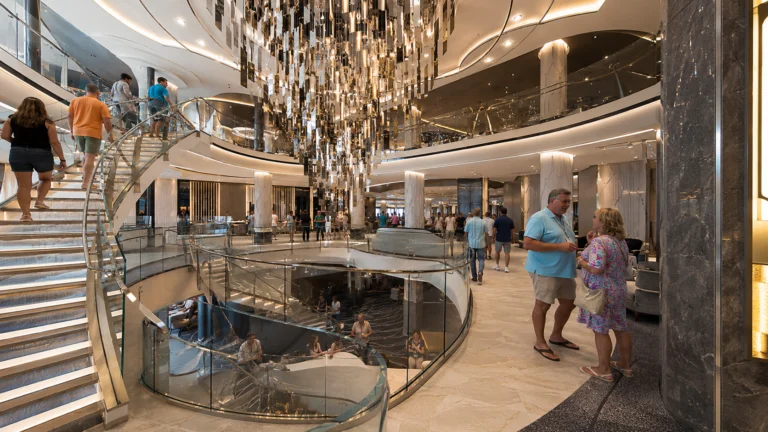
Their location makes reception and the boarding lobby convenient, but it is a public gathering area rather than a completely residential hallway. If you dislike passing conversations or arrival-day bustle, compare that convenience with a Deck 6 window room.
The caution isn’t a reason to dismiss the added space for a family. More sitting and storage room can make four people sharing one cabin easier, particularly when someone wants to rest while the others get ready.
Decide which problem matters most: floor space, daylight, hallway exposure, or the price. A Junior Suite may solve the first two while leaving you closer to lobby activity than an ordinary central room farther from that entrance.
A suite name doesn’t promise a balcony
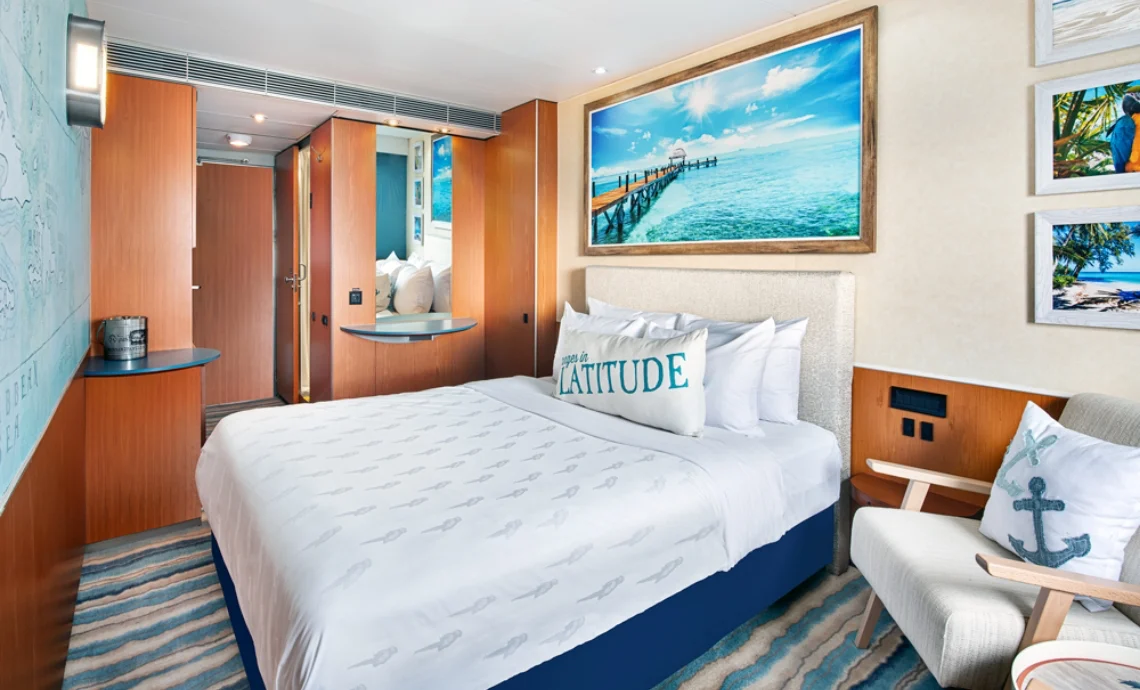
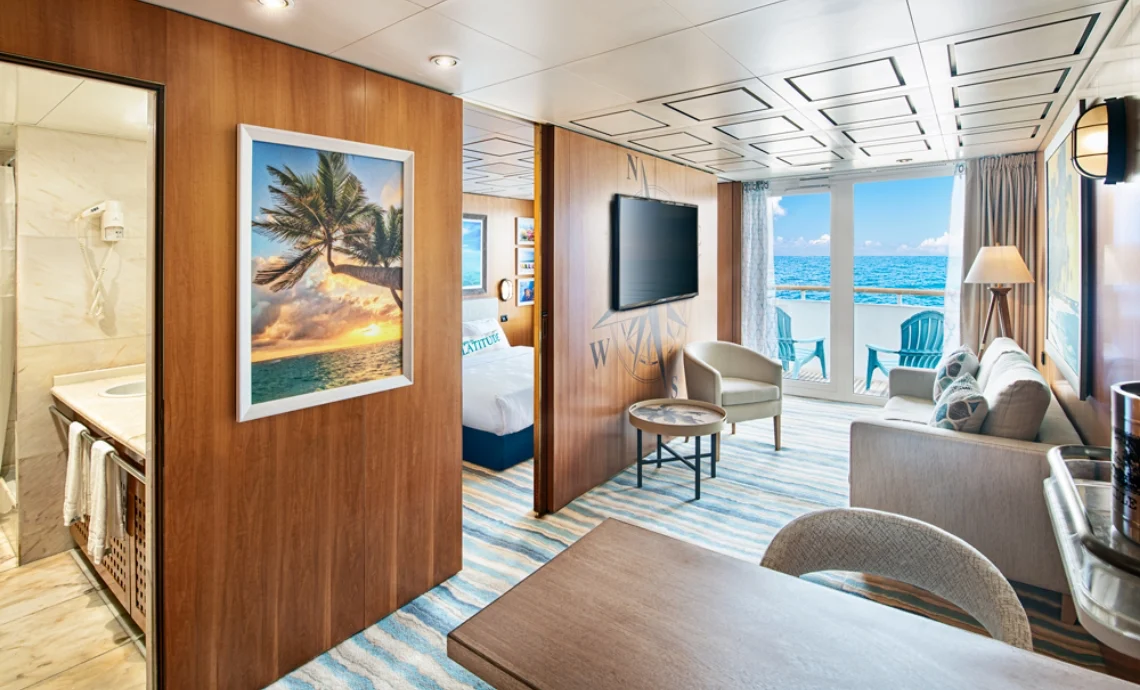
Paradise’s Junior Suites have two large portholes and no private outdoor area. Grand Terrace Suites have the balcony, plus a living area, a deep jetted tub, and a separate shower.
If you picture stepping outside directly from the room, reserve the Grand Terrace category and confirm it on the booking. Paying for Junior Suite space won’t give you that experience.
There is no separate ordinary balcony category in the current Paradise accommodation lineup. Compare Interior, Oceanview, Junior Suite, and Grand Terrace by their actual features rather than borrowing category names from another ship.
For a couple, an Oceanview may be the better value when natural light is enough. Keep the balcony premium for a trip when private outdoor time is important enough to influence both the room choice and daily plan.
Don’t book four people into a three-person description
The current Oceanview category is advertised for up to three, while selected Interiors, Junior Suites, and Grand Terrace Suites can accommodate up to four. Start a family-of-four search with a room specifically confirmed for all four guests.
Ask how each person sleeps in the exact room and what happens to floor space when every bed is made up. Upper berths and sofa arrangements deserve attention if someone can’t climb comfortably or needs to reach the bathroom easily at night.
Interiors 6031 and 6032 are specific Deck 6 budget alternatives marked with two convertible singles and two upper berths. Compare them for four guests only when both upper-berth users can manage the access and the compact shared room works for your family.
Compare a Junior Suite against two separately bookable rooms if the price gap is small. Two rooms can buy another bathroom and separate sleeping hours, but check the actual connecting arrangement and the line’s age rules before choosing that approach.
Lower and central helps with motion planning
If pitching bothers you, compare a lower central room on Deck 4 or 5 with a higher room at either end. The bow and stern can make movement more noticeable, especially when seas are lively.
An Oceanview can also give you daylight and a view of the horizon when you’re in the room. It doesn’t prevent seasickness, so choose the location first and avoid buying a window as a medical solution.
Deck 4 separates you from much of the indoor nightlife, with the tradeoff of more elevator trips to food and pools. A central position shortens the corridor walk before that vertical journey begins.
For a traveler who values fewer daily stairs, Deck 6 may be the more comfortable compromise. Match the room to the walking and elevator routine you’ll actually use rather than chasing the lowest deck automatically.
Elevator convenience has a hallway tradeoff
A room close to an elevator bank can make repeated trips to meals and youth programs easier. A door directly beside a lobby also sits near people arriving, waiting, and discussing where to go next.
Compare rooms several doors down the same corridor when you want both shorter walks and some separation from that gathering point. This is especially useful if your group retires early while other guests keep moving between lounges and cabins.
Use venue names when choosing the bank you’ll rely on. The theater is forward, Fins Dining is aft, and pools are up on Deck 11, so a convenient room for one destination may still involve a longer route to another.
The Paradise entertainment guide helps you decide which evening venues you’ll use most. Choose proximity as a benefit only if your normal evening will actually take you there.
Check connecting doors and the usable window
A connecting room is useful when your party reserves both sides, but the internal doorway is another potential path for voices from a neighboring room. If you aren’t using the connection and sound is a priority, compare an available nonconnecting option.
For an Oceanview, check the view description attached to the actual reservation. A category photograph shows the general room style and doesn’t establish the shape, angle, or outlook of every window.
Choose daylight over an elaborate view expectation if the room is mainly your place to sleep and dress. If watching arrivals from bed is a major part of the vacation, ask for the particular window arrangement before choosing among similarly priced rooms.
A blank area beside a cabin on a passenger map may be a service or crew space. If a specific neighbor is essential to your decision, ask what it contains; don’t turn an unmarked rectangle into a quiet-room recommendation.
Larger doesn’t mean accessible
A Grand Terrace bathroom with a jetted tub is a different feature from an adapted bathroom. Likewise, a Junior Suite’s larger floor area doesn’t establish doorway clearance, turning space, or the shower setup you need.
Use the accessible cruising guidance and Access Desk to match the room to your device and daily routine before booking. The line requests at least 45 days’ notice for most special needs and 90 days for sign-language interpreting services.
Mobility devices must fit the permitted width and be stored and charged inside the room. Ask about the particular doorway, bed access, bathroom, thresholds, and room storage rather than choosing from a small accessibility symbol alone.
Also discuss the port route and shore access if they are central to the trip. A room that works aboard doesn’t guarantee that every transfer or excursion will suit the same mobility needs.
A guarantee fare needs real savings
Accept an unassigned cabin only when you can live with the category’s range of possible locations. An inexpensive Oceanview guarantee is less useful if a forward position, connecting room, or public ceiling would spoil the trip for you.
Compare the saving with the amount required to select a known room. If a residential ceiling or central location is essential, that control may be worth more than a modest discount.
Keep the complete price beside the room comparison: the published gratuity is $22 per person per night in standard accommodations and $25 in suites, with Paradise’s currently posted $15 nightly fuel supplement additional. Two people over four nights pay $24 more in gratuities for a suite before considering the fare premium.
Choose the room that solves your actual sleep, space, access, and outdoor needs, then leave enough money for the rest of the trip. A well-chosen ordinary room can be a better vacation purchase than a suite whose location works against the way you travel.
How this guide was researched
Inspected the current operator-linked Paradise layout visually and checked the current individual room descriptions, occupancy, access policy, and fixed charges. Noise and motion cautions describe location exposure rather than guaranteed experiences.