Carnival Jubilee Cabins to Avoid: Rooms and Better Picks
Carnival Jubilee’s forward balconies, Family Harbor windows, Havana patios and rooms beneath Lido each have a different tradeoff worth understanding before you choose a cabin.
For most couples, a side-facing balcony on Deck 11 or 12 is the easiest starting point, while families and Havana fans should choose around the benefits they will actually use.
Short version
- For sleep: start with a central Deck 11 or 12 room with cabins above and below.
- For seated scenery: choose a side-facing balcony over a solid-front 8L bow balcony.
- For family convenience: choose Family Harbor for the lounge, accepting the FE window restriction.
- For privacy: a conventional balcony provides more separation from passing guests than a Havana Cabana patio.
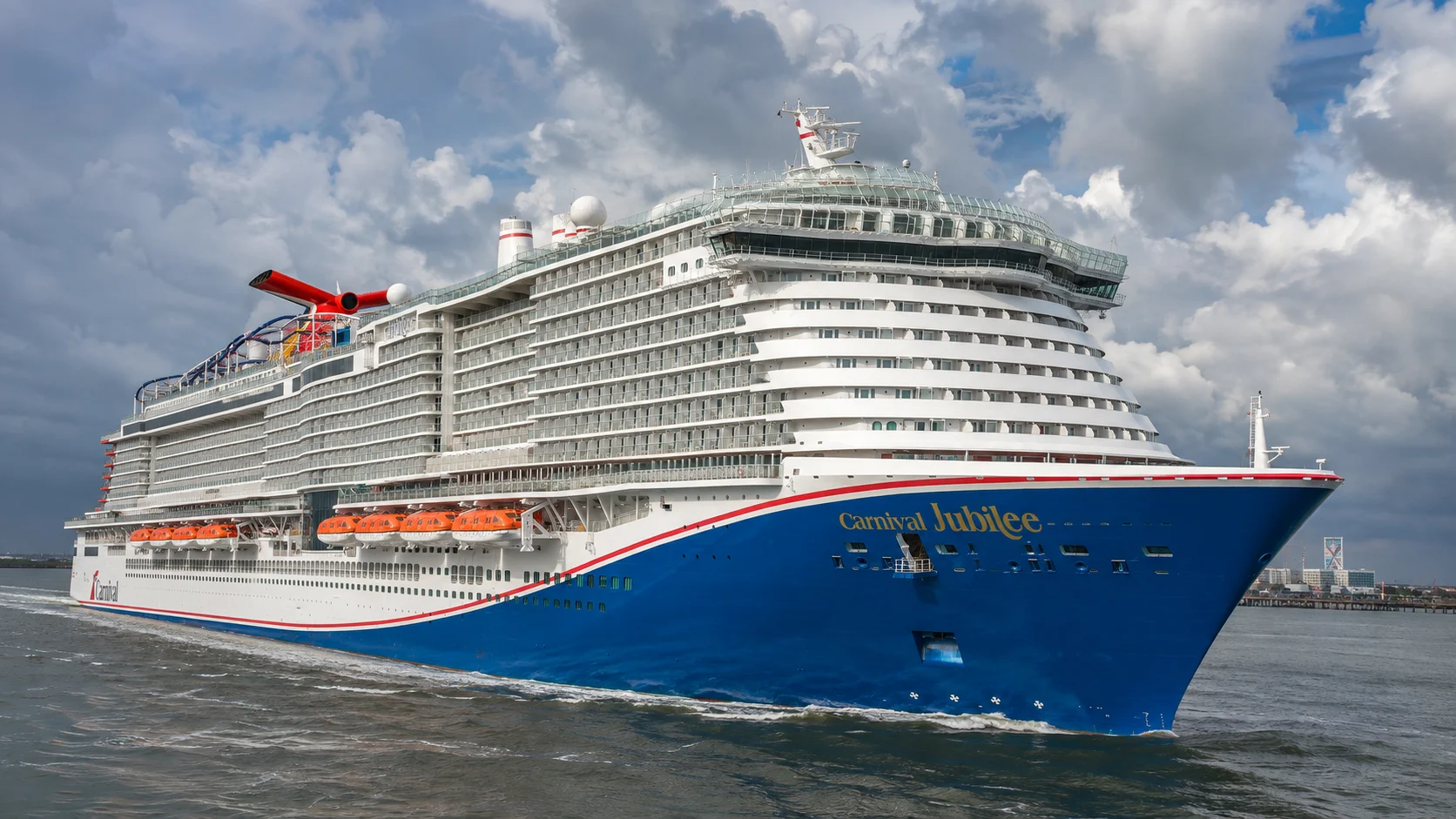
Forward-facing extended balconies: more outdoor space, not necessarily the view you pictured
If your balcony ritual is coffee in a chair with the sea in front of you, you should look carefully at Category 8L. These forward-view extended balconies sit across the bow on Decks 9, 10, 11, 12, 14 and 15.
The exact forward 8L rooms are 9201, 9202, 9204-9209; 10201-10208; 11201, 11202, 11205-11210; 12201, 12202, 12205-12210; 14201, 14202, 14204-14209; and 15201-15208. Keep to these exact numbers because the gaps matter and not every room between the endpoints is an 8L.
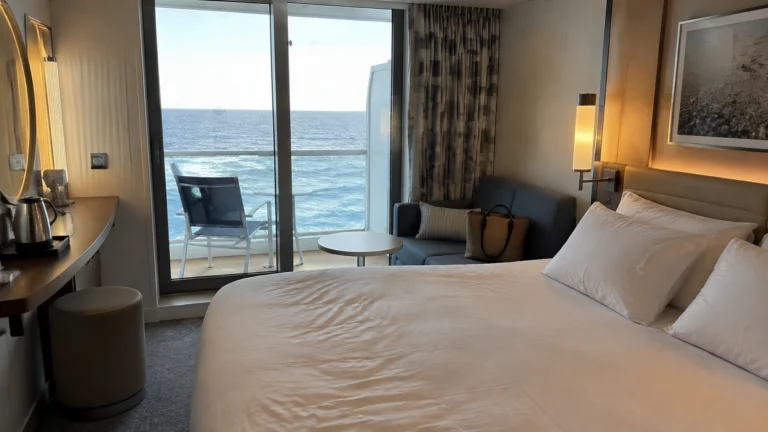
The solid forward railing and the balcony’s shape matter more than the headline square footage. The outlook from a chair can be much more enclosed than the standing view, and the bow position adds wind exposure.
An 8L can be an appealing place to stand and watch the ship approach port, but its solid front makes it a weaker choice for coffee with an uninterrupted sea view from your chair.
What you should book instead: A side-facing balcony with its railing and outlook confirmed. An aft-view extended balcony is another comparison when outdoor space matters most, although the stern brings its own walking-distance and exposure tradeoffs.
An 8L stays on the shortlist when its forward outlook and fare appeal, especially for travelers who spend more balcony time standing than lounging.
Family Harbor Ocean Views: buy the family benefits, not an imagined clear window
Family Harbor Ocean View rooms in Category FE have an obstructed outlook toward an outdoor steel deck area that guests cannot use. The FE room list is the even-numbered rooms 4314-4328 and 4334-4356, plus 4360, 4366, 4378, 4380, 4398, 4402, 4406, 4410, 4414, 4418, 4420, 4422, 4426, 4430, 4434, 4436, 4440, 4448, 4452, 4454 and 4458.
Family Harbor Ocean Views make sense when the family lounge and daylight both matter; an interior is the stronger value when you mainly want the lounge and expect to spend little time in the room.
The Family Harbor benefits on Jubilee include access to the family lounge and its breakfast and snack offerings. Those conveniences don’t depend on the window providing a postcard view.
Better comparison: A Family Harbor Interior when lounge access matters more than daylight. For a conventional ocean outlook, you should compare a standard Ocean View and confirm its particular window before paying.
The standard Ocean View swap gives up the Family Harbor package, while an interior gives up the window. Choose which loss is easier for your family rather than assuming there’s a room that improves everything at the same fare.
Havana Cabanas: the patio isn’t a secluded balcony
Havana requires every occupant to be at least 12, which rules it out for families with younger children; the forward Extended Cabanas are 8201-8208, alongside Corner Suites 8209 and 8210, where the patio position deserves particular attention.
For an eligible group, the next question is privacy. A Cabana patio opens toward the shared Havana outdoor area, with a walkway beyond the patio rather than a conventional balcony hanging privately off the ship.
The cabana setup suits travelers who want the Havana neighborhood and pool access; a conventional side-facing balcony is a better fit for a secluded outdoor retreat.
The forward cabanas also deserve a close look at the actual railing and direction of the view. Paying for a bigger patio doesn’t necessarily buy a better seated sea view.
Better alternative: A conventional side-facing balcony gives you more separation from passing guests, although it gives up Havana access.
If Havana itself is the reason you chose Jubilee, keep the category and compare the exact patio position. The mistake is buying it for an outdoor experience it wasn’t designed to provide.
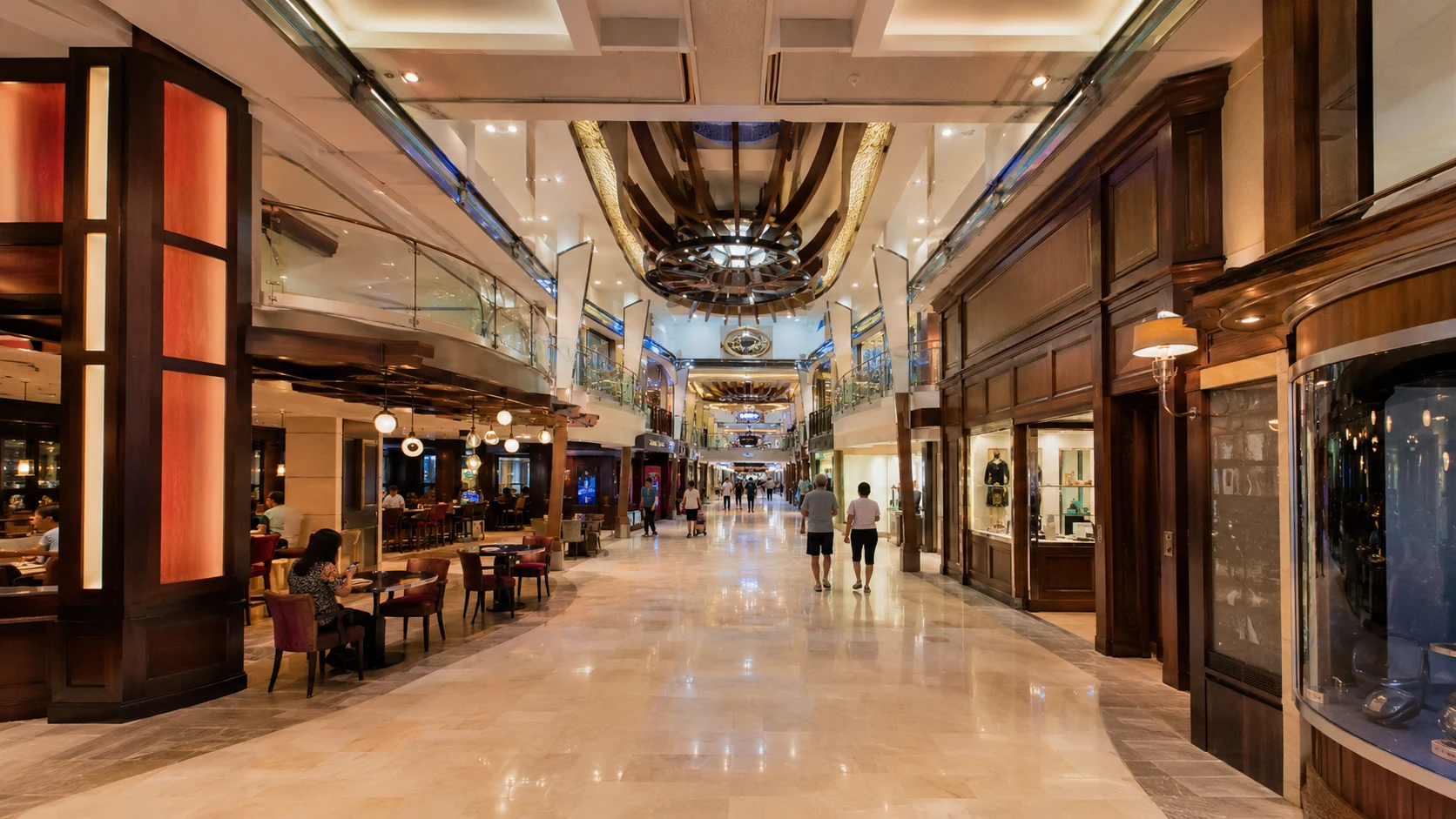
Rooms beneath Lido: convenience with an overhead tradeoff
Parts of Deck 15 sit beneath the pools, seating, food venues and service areas on Deck 16. Those are the rooms you can examine for a light sleeper, rather than automatically rejecting every cabin on the deck.
The possible nuisance is furniture movement, cleaning or public-deck activity overhead. A plan establishes where those spaces sit, but it cannot promise a particular noise level or tell you when your room will be quiet.
Be more cautious if the room is your afternoon nap spot or a child’s early bedtime matters. Someone who lives at Lido during those hours may value being nearby more than the overhead buffer.
Better alternative: The same basic side-facing balcony on Deck 11 or 12, with passenger cabins above and below. That removes the direct Lido ceiling without requiring a suite or a different balcony concept.
Forward Deck 15 rooms can have cabins overhead, and the Deck 16 cabin block is forward of the main Lido activity. Check the specific location rather than applying the pool warning to rooms with a different upstairs neighbor.
BOLT and entertainment: don’t confuse a nearby attraction with a proven noisy cabin
Jubilee puts BOLT and its other major outdoor attractions high at the aft end of the ship. That makes their location worth understanding, but it doesn’t establish identical ride noise in every nearby room.
The track’s position alone does not justify an exact cabin blacklist, and a deck between the ride and a bedroom is not proof of perfect sound insulation either.
For a very light sleeper, a balcony on Deck 11 or 12 away from the upper-aft attractions is a sensible preference when the fare is comparable.
The same logic applies to the lower entertainment decks. A room beneath or near public space deserves an actual location check, not an automatic promise of quiet because the corridor looks separate.
The Jubilee deck-by-deck guide is the place for the full layout. For cabin choice, you can stay focused on the immediate surroundings and the hours you expect to use the room.

Junior Balconies: don’t mistake them for the low-water Cove experience
Jubilee’s plan labels Categories 7X and 7Y as Junior Balcony. They are not the Deck 5 Cove Balcony category, even when a booking description makes the names sound closely related.
Check the actual indoor layout before choosing a Junior Balcony for several people. The smaller room can be a reasonable trade for outdoor space, but the balcony won’t give you more circulation space around the beds.
A true Cove is a sheltered balcony cut into the hull on Deck 5, close to the water, and its shade and low-water outlook are the reasons to choose it.
Better swap: A standard balcony when usable indoor space matters, or a correctly identified Cove when the close-water experience is the attraction. Compare the exact fare rather than assuming one is always cheaper.
The Jubilee cabin and suite comparisons cover the wider upgrade decision. Here, the booking mistake to avoid is paying for one product while picturing another.
Spa Ocean Views and exposed suite balconies: inspect the part you’re paying to use
The Deck 5 Cloud 9 Spa Ocean Views, including 5219, 5223, 5227 and 5231, need a window-outlook check. The walkway outside is a different privacy and view arrangement from a conventional clear Ocean View.
Choose one for daylight and the spa package if the walkway-facing window suits you; a standard Ocean View is the better comparison when the sea view is the upgrade you want.
The suite comparison needs similar care outdoors. A projecting terrace can offer more space while also being more exposed to balconies above, and a wraparound shape doesn’t tell you where structural elements sit.
For a suite, a room-specific balcony photo should show the seats as well as the railing so you can judge the cover and privacy where you will actually sit.
A normal balcony with your preferred view can be more satisfying than a larger exposed terrace; the suite premium is worthwhile when its extra room and benefits improve your trip.
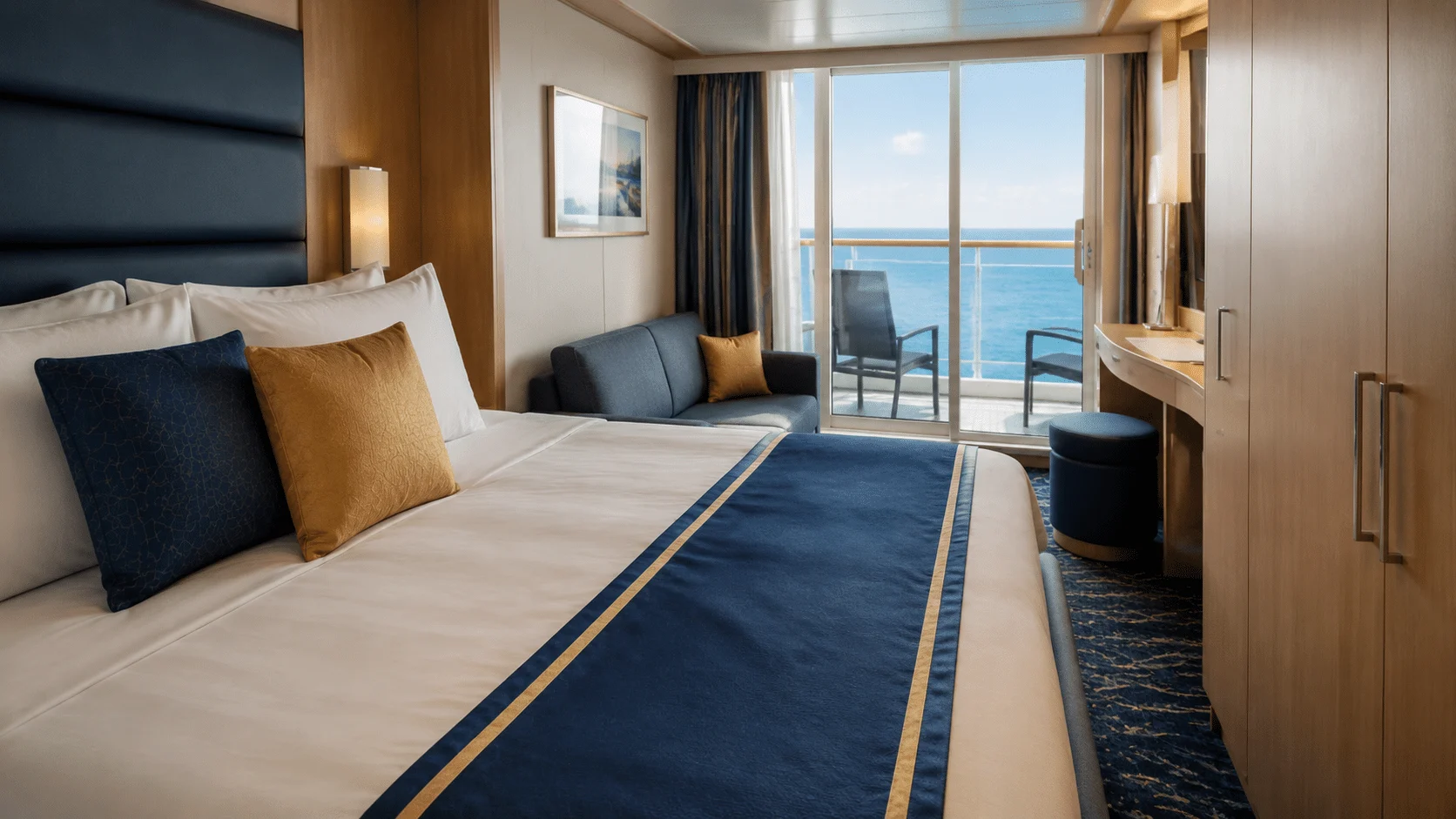
The wrong bed arrangement: an avoidable surprise for couples and families
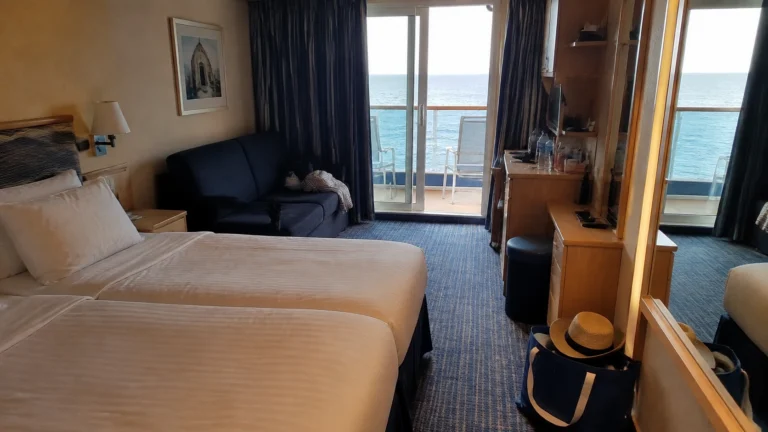
Settle the beds before the category upgrade. Jubilee’s legend distinguishes convertible twins, fixed king arrangements, sofa beds and upper Pullmans, so the same broad room category can hide an important practical difference.
Friends wanting separate lower beds should check that the king can actually split. Parents should confirm which child is using the sofa or upper berth instead of assuming every extra sleeping place is a conventional lower bed.
For several adults sharing, you can think about the room after all the beds are made up, not just its advertised capacity. A balcony doesn’t solve a tight route past open beds or the queue for one bathroom.
Better alternative: Choose a room with the beds your group needs, or a genuine connecting pair if separate sleeping areas and bathrooms would help more than a higher deck.
For mobility needs, use Carnival’s accessibility guidance to confirm the exact layout and scooter accommodation. An ordinary larger suite isn’t automatically an accessible alternative.
Guarantee fares: don’t give away the choice that would prevent your main problem
A guarantee can be a sensible saving for flexible travelers; choosing your cabin is worth more when a clear seated view, separate lower beds or cabins overhead are essential.
The conditions of your Carnival offer matter more than the generic room photo. Some guarantees permit obstructed assignments, and selecting a category doesn’t necessarily give you control of the number.
Compare the saving with the price of selecting a suitable room before boarding, because an upgrade or room change later may not be available.
Continue planning with the things to do, pros and cons.
How this guide was researched: I used Carnival Jubilee’s official deck plan and room descriptions to match the view, bed arrangement and nearby public spaces. A venue’s location supports a cautious choice for a light sleeper, while individual experiences can vary by room and sailing.
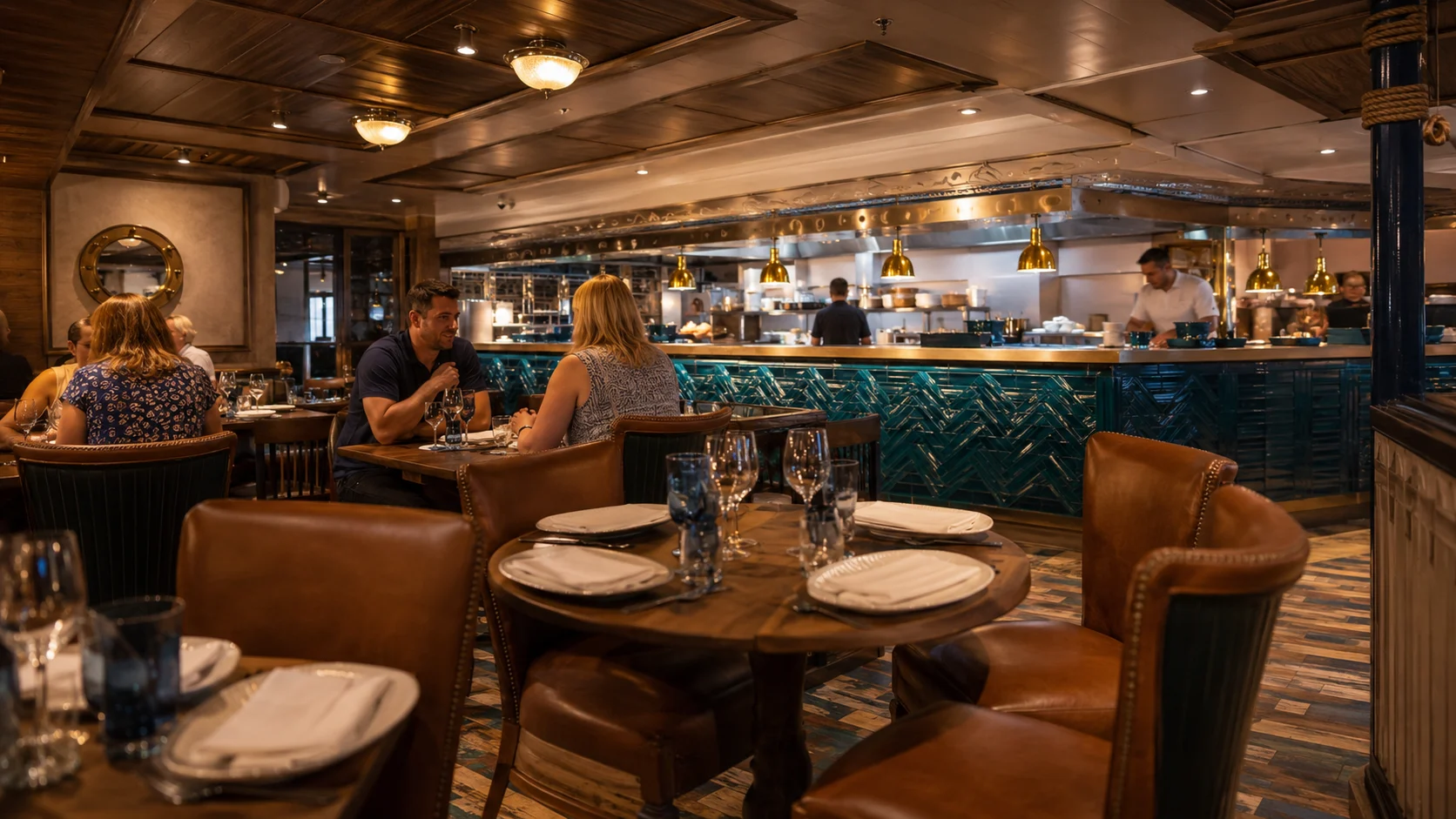
What to book after ruling out the wrong compromises
For a straightforward balcony, start midship on Deck 11 or 12 with cabins above and below, then choose the bed arrangement and outlook that suit your party.
Family Harbor is worth paying for when the lounge simplifies your family’s day; Havana is worth paying for when every guest meets the age rule and the shared-patio arrangement appeals.
For an 8L forward balcony, look for the particular view and fare to justify the railing, shape and bow position. More outdoor square footage alone wouldn’t make it the better choice.
If you already booked one of these rooms, weigh the change cost against your own dealbreaker rather than another traveler’s preferences.
On Jubilee, the most useful upgrade solves a specific problem: the right beds, a view you enjoy from your chair, or a location that protects your rest.
Before booking, open the deck plan, ship page, and accessibility guide. Use them to confirm the exact category, nearby spaces, and any access needs tied to your room.
Compare these warnings with the best cabins and the deck guide. The dining guide and ship tips can help you choose the most convenient end for your routine.