Iona Best Cabins and Suites: Where to Book
I’d choose a central Balcony on Iona’s Deck 10, 11, 12, or 14, with cabins above and below.
I’d pay for a Conservatory Mini-suite when its extra lounge would get daily use, choose a low Sea View to save while keeping daylight, or compare a full Suite for its butler and dining benefits.
Short version: The best Iona cabin is the one that matches your priorities, not simply the largest category. Compare location, outlook, sleeping setup, traffic, and included benefits before paying more.
Iona cabin decision in one minute
Choose an Inside for price, a Sea View for daylight, and a standard Balcony for the simplest private-outdoor-space value. Choose a Conservatory Mini-suite only if its ventilated lounge between bedroom and balcony is worth the premium.
Book a Suite for space, butler service, and suite benefits. Inspect Promenade exposure, balcony shading, overhead venues, and wind restrictions before selecting any exact number.
Quick Answers
What is an Iona Conservatory Mini-suite?
It adds a glass-fronted lounge between the main cabin and balcony, creating a flexible inside-outside transition. The conservatory is ventilated but not temperature-controlled.
These rooms are on Promenade Deck 8 and Deck 9.
Do all Iona Suites have balconies?
No. The current plan specifically says BA Suites 8.109 and 8.110 do not feature a balcony.
They are Family Sea View Suites on Promenade Deck. Never treat the word Suite as proof of outdoor space.
Which Iona cabins have bathtubs?
The Iona deck plan says all Iona cabins are shower-only except Suite grades B4, B5, and B6. Adapted and partially adapted cabins are shower-only.
Confirm the exact bathroom arrangement before booking.
What are the quietest cabin decks?
A central room on a deck dominated by accommodation is the safest starting point. Decks 10 through 12 and 14 often provide a better cabin-above-and-below buffer than Promenade, Lido, or rooms immediately beneath the upper public decks, but exact neighbors still matter.
Iona cabin types compared
- Inside: Standard on all cabin decks; larger on 4, 5, 9, 11, 14. Best for lowest fare and strong sleepers; compromise: no daylight; family layouts can feel tight.
- Sea View: Decks 4 and 5. Best for daylight without balcony pricing; compromise: low position and limited inventory.
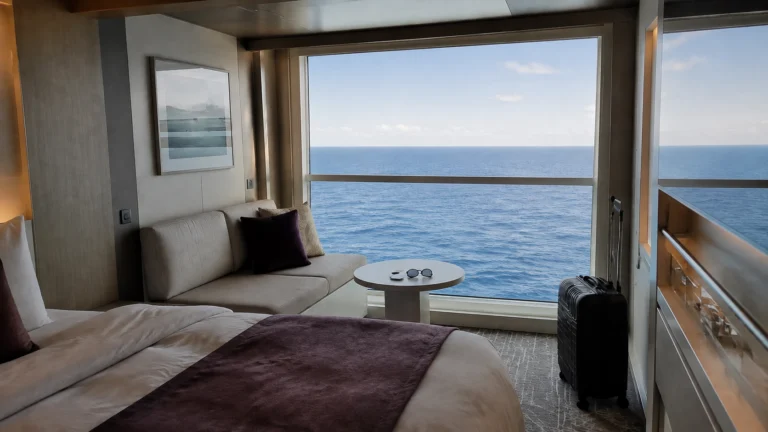
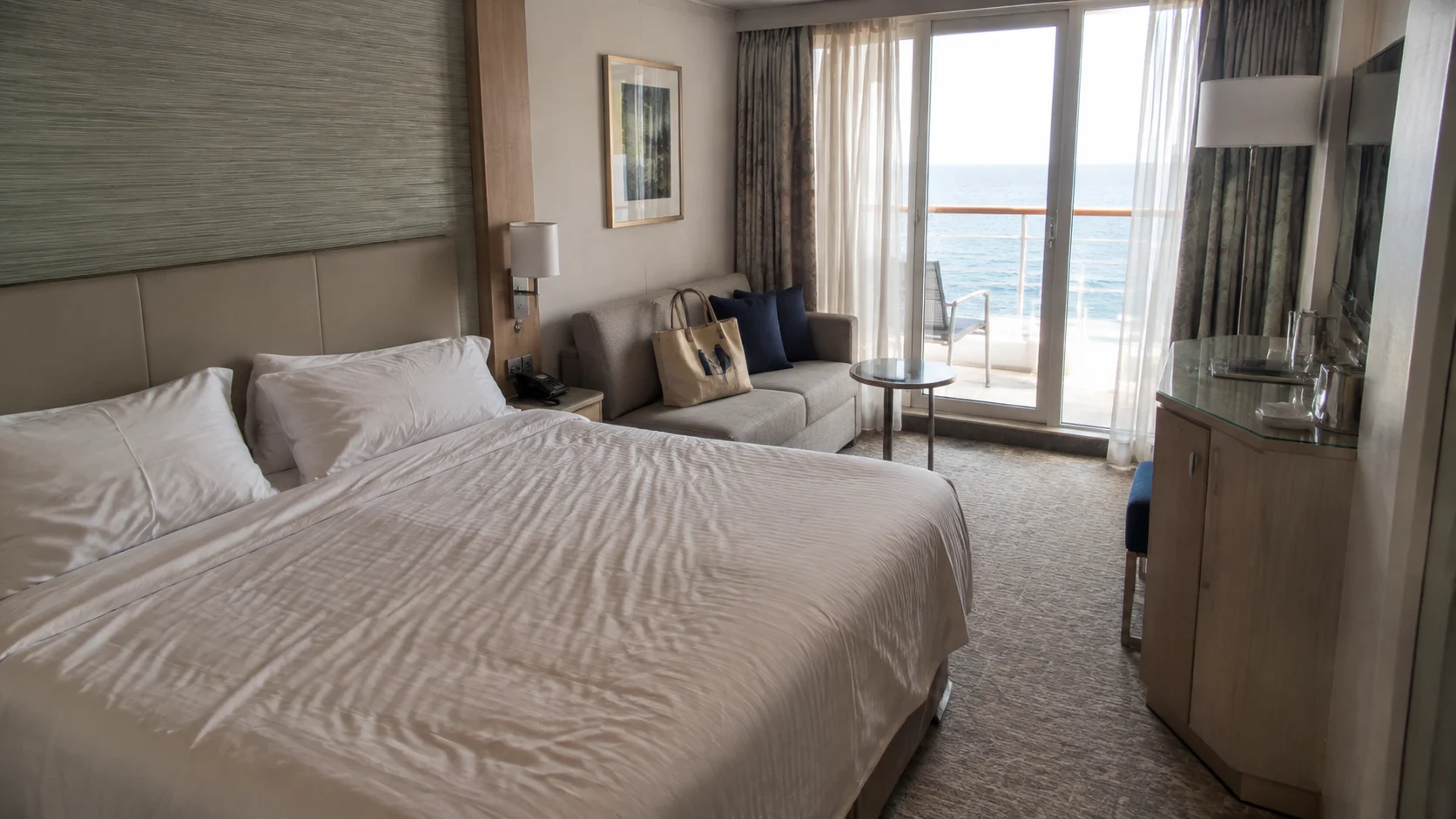
- Balcony: Promenade, Lido, and Decks 5, 9-12, 14, 15, 17. Best for private air and scenic routes; compromise: size, shade, overlooking, and wind access vary.
- Conservatory Mini-suite: Promenade Deck 8 and Deck 9. Best for extra lounge space and weather flexibility; compromise: conservatory is not temperature-controlled.
- Family Sea View Suite: Promenade Deck 8. Best for families prioritizing interior room; compromise: two named suites have no balcony.
- Suite: Decks 9-12, 14, 15. Best for space, butler service, and suite perks; compromise: high fare and some exposed positions.
- Solo: Balcony on 9, 11, 14; Inside on 5, 8, 9, 12. Best for one-person pricing and efficient layout; compromise: small inventory and compact floor area.
Inside and Sea View cabins
Inside grades include standard and larger layouts. The larger label can be useful for a family, but sleeping capacity is not the same as comfortable floor space after a sofa bed or pull-down is deployed.
The plan marks one-extra-bed and two-extra-bed arrangements, with pull-down access by ladder.
Sea View cabins are on Decks 4 and 5. Their low position can help motion-sensitive travelers and keeps access to Headliners Theatre, the atrium, and lower public decks relatively simple.
They require more elevator travel to SkyDome and the upper pools. Check whether a particular view is obstructed.
Balcony cabins: four symbols that change the experience
Iona’s plan separately marks shaded balconies, balconies visible from above or from neighboring balconies and Promenade Deck, obstructed-view cabins, and balconies whose access may be restricted in high winds. A forward position can also be overlooked by the bridge.
These are not small technical notes; they can decide privacy and how often the balcony is usable.
Promenade grades BA, CZ, EZ, and GZ require special attention. Some have unusual public-deck relationships, and the plan marks cabins with no balcony that remain visible from Promenade Deck.
A lower price may be fair compensation, but only if the traveler understands the sightline before sailing.
Conservatory Mini-suites: distinctive, not automatically best
The Conservatory Mini-suite’s enclosed lounge can work as a reading room, breakfast space, or buffer when the balcony is cool. Doors allow the zones to feel separate, which can be useful when two people keep different schedules.
I would choose this extra sitting zone when I expect quiet reading time in the room, rather than pay more simply for the Mini-suite name.
The key limitation is climate. The conservatory section is ventilated but not temperature-controlled.
On a cold Norway morning or strong-sun Canary Islands afternoon, comfort can vary. Promenade Deck examples also need a privacy check; Deck 9 can offer a more conventional relationship to public spaces.
Suites and Family Sea View Suites
Suite grades B4, B5, and B6 are on Decks 9, 10, 11, 12, 14, and 15. The full Suite benefits add butler service, inclusive room service, breakfast in a premium restaurant, priority Southampton boarding, and extra living and dressing space, with bathtub exceptions for adapted rooms.
Terms can vary, so price the confirmed benefit list rather than a generic suite promise.
The BA Family Sea View Suite is on Promenade Deck 8. Suites 8.109 and 8.110 have no balcony according to the current plan.
They can still make sense for a family that values separation and daylight, but they should be compared with connecting balconies or multiple cabins on privacy, bathroom access, and total fare.
Best locations by traveler
- Motion-sensitive traveler: choose low and central, with Sea View on Deck 4 or 5 as a strong candidate.
- SkyDome-focused family: consider upper accommodation decks, but avoid assuming the nearest room will be quiet at night.
- Entertainment fan: Decks 8 or 9 shorten routes to The Club House, Grand Atrium, and lower venues, with a noise and privacy tradeoff.
- Spa traveler: forward rooms reduce the trip to Oasis Spa across Decks 5 and 6.
- Scenic traveler: a balcony is useful, but avoid a marked wind-restricted or heavily overlooked position unless the price reflects it.
- Solo traveler: compare the single premium with a double-occupancy cabin sale; a dedicated solo cabin is convenient, not always cheapest.
Noise and circulation checks
Deck 8 mixes cabins with The Keel & Cow, Sindhu, The Quays, Ripples, The Club House, and Sunset Bar. Deck 15 sits below Lido and upper entertainment.
Deck 17 includes cabins near Crow’s Nest, Epicurean, SkyDome, and family activity. Decks 4 and 5 put some rooms near spa or lower-ship operations.
Always check above, below, and the public route outside the door.
Stair and elevator proximity can save major walking on a 184,000-ton ship, but a doorway facing a busy lobby can hear more passing conversation. Connecting doors help families and can transmit sound.
Our cabins-to-avoid series explains the practical ceiling, view, and privacy checks.
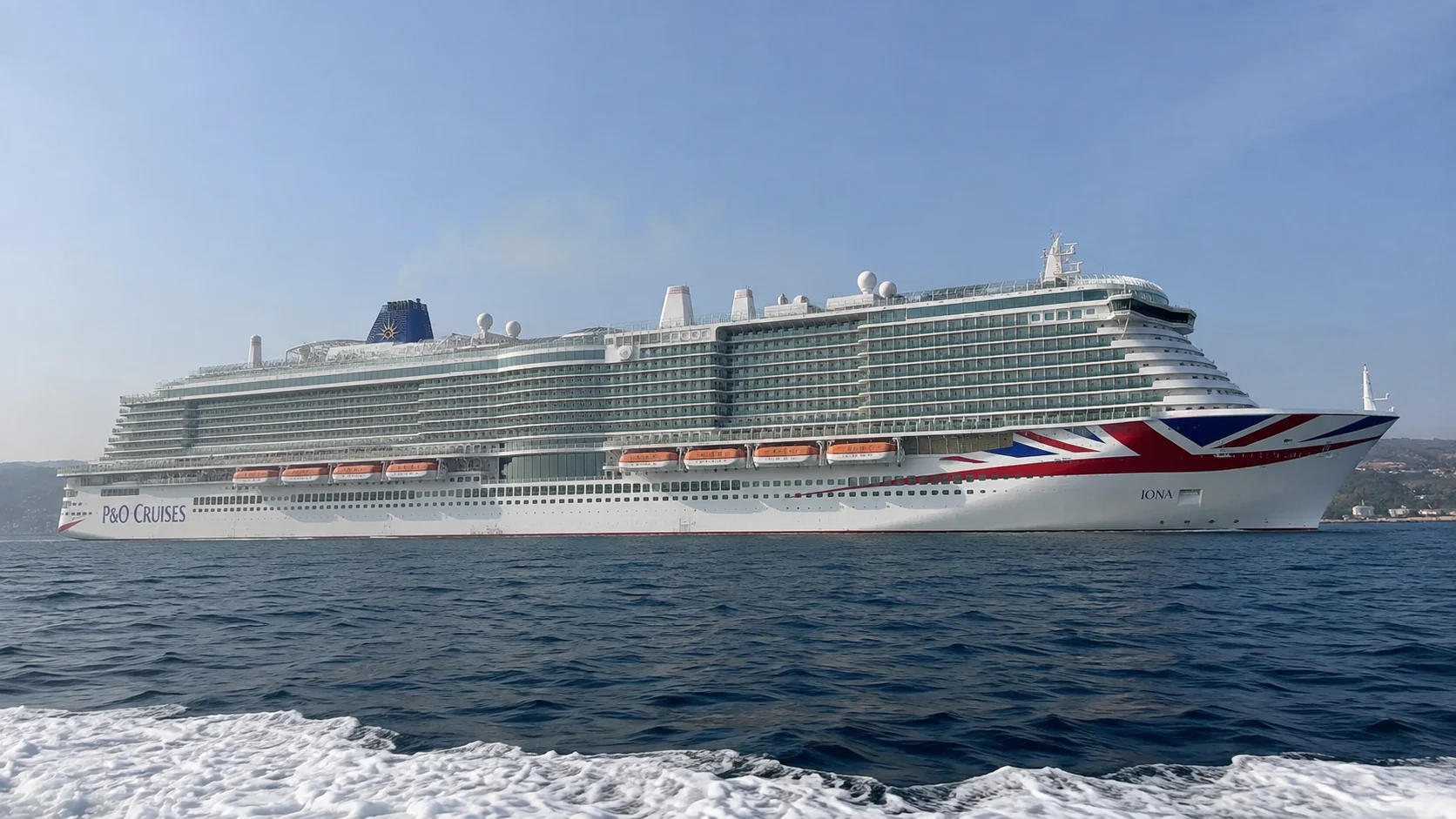
Balcony value by itinerary
A balcony is particularly appealing in the Norwegian fjords because scenery surrounds the ship, but wind and cool temperatures can limit long stays outside. For the Canary Islands or Caribbean, shade may be more important.
Northern Europe trips reward weather protection. Pick the geometry for the route, not a universal best deck.
Port side versus starboard rarely guarantees the superior voyage. Berthing direction changes, and scenic sailing can reveal views on both sides.
A central balcony with reliable access can be better than a far-forward address bought for an assumed sail-in view.
Accessibility
The plan distinguishes adapted cabins suitable for powered mobility devices from partially adapted PB, PC, and PF grades intended for guests using non-powered upright aids who do not need a wheelchair or scooter. All adapted and partially adapted rooms are shower-only.
Use P&O’s accessibility process to confirm doorway width, transfer space, balcony threshold, emergency arrangements, and excursion access.
What the cabin grade codes tell you
The plan maps B4, B5, and B6 to Suites; BA to Family Sea View Suite; and CV, CW, CY, and CZ to the Conservatory Mini-suite family. Balcony choices run through EA, EB, ED, EE, EF, EZ, GA, GB, GC, GD, GE, GF, GX, and GZ.
Sea View grades include LB, LC, and LF, while Inside grades include OA and PA through PF.
A grade is a pricing and location tool, not a quality guarantee. Two cabins with the same broad name can differ in shade, view, bed capacity, or public exposure.
Ask the booking system for the exact cabin number and match its color and symbols to the current plan before accepting an upgrade offer.
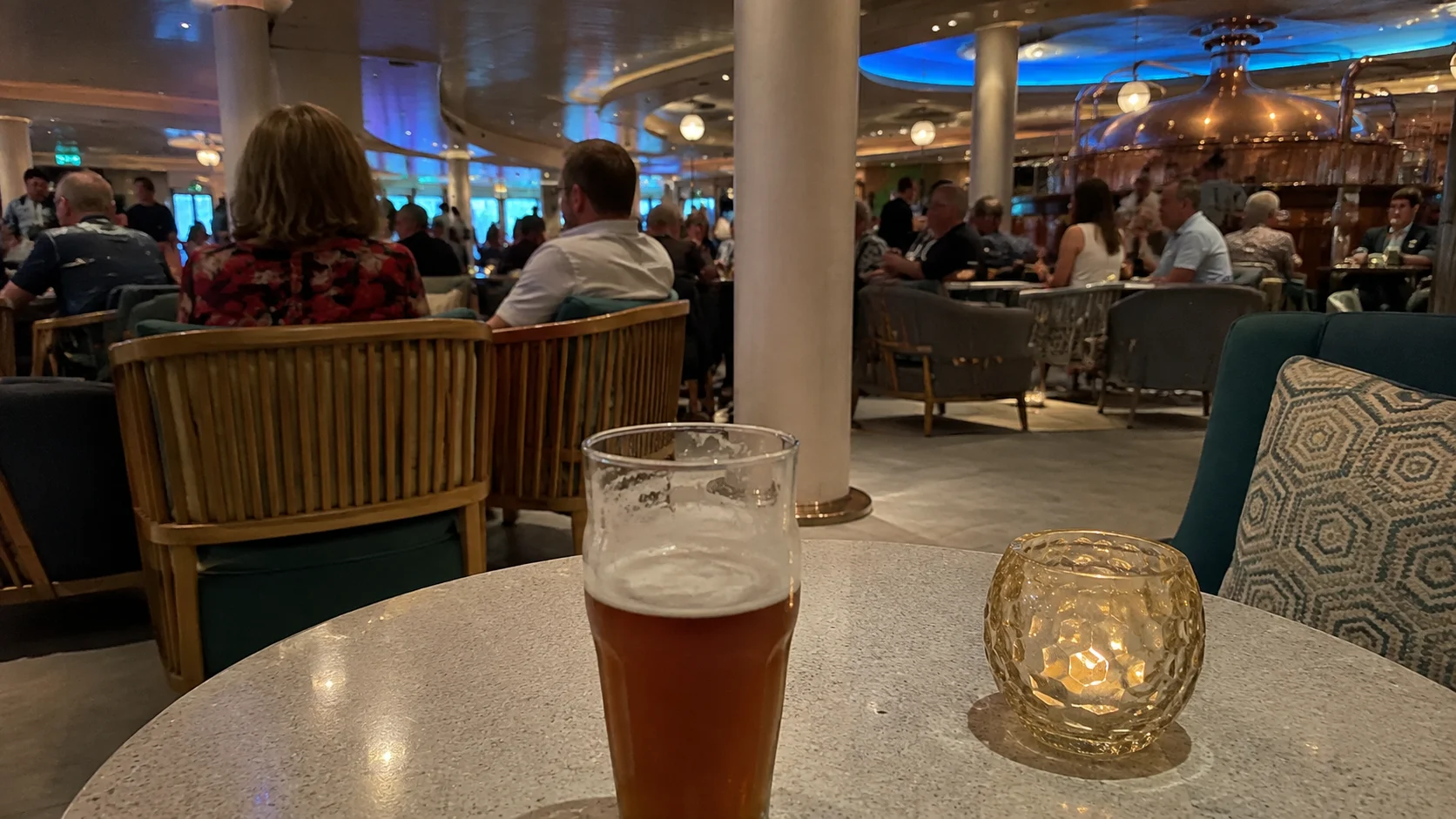
Solo cabin value
Iona places single Balcony cabins on Decks 9, 11, and 14 and single Inside cabins on Decks 5, 8, 9, and 12. A purpose-built single can avoid paying the full supplement on a double cabin and may locate the traveler near useful elevators.
Inventory is limited, so prices can still be high.
Compare total fare, not percentage supplement. A discounted double-occupancy Inside may occasionally cost less and provide more flexibility.
Solo travelers who value private outdoor space should also ask whether the single Balcony’s depth, shade, and outlook meet expectations rather than assuming it matches a standard double balcony.
How to judge a paid upgrade
Calculate the upgrade per night, then identify the exact feature that earns it. For a Balcony, that may be private fjord viewing.
For a Conservatory Mini-suite, it is the extra ventilated sitting zone. For a Suite, it is space, bathtub, butler, priority, and category-linked dining.
If the answer is only a higher cabin name, keep the money for shore experiences or dining.
Family space and the point where I would stop upgrading
Conservatory Mini-suites are advertised at about 274 square feet including the balcony, not 274 square feet of bedroom space. I would compare the actual sitting arrangement and balcony before paying for a higher location grade; a bigger name does not establish a larger indoor room.
For three guests, the marked standard layout adds a single sofa bed; for four, it adds that sofa and a ladder-accessed pull-down berth. I would check whether the main beds can remain together in the selected layout and whether everyone can reach the bathroom once the extra beds are open.
Selected Conservatory Mini-suites now offer five-berth accommodation on selected sailings, using a double sofa bed and a pull-down berth as well as the main bed. That keeps five together, but the extra berth does not provide another bathroom or a separate bedroom.
For teenagers or adults keeping different hours, I would compare two connecting rooms with one larger shared room. Two verified connecting cabins buy two main bathrooms and private sleeping spaces; our cabin-type guide explains why that can be the more useful upgrade.
I would choose a Deck 9 Conservatory over Deck 8 when avoiding direct promenade foot traffic matters, then check the exact venue below on Deck 8. For early bedtimes, an ordinary balcony higher in the residential stack may still be the better fit than that extra lounge.
Suite services and the cruise fare are separate parts of the purchase, so I would price drinks, Wi-Fi, excursions, and specialty dinners from the actual inclusions. Our cruise-line comparison helps explain why a Suite label does not mean every onboard extra is covered.
My stopping point is a well-positioned Balcony when the main aim is private fjord viewing and an easy place to sleep. I would spend the remaining money ashore unless the Conservatory’s second sitting zone or the Suite’s services would change several days of the trip.
Cabin booking checklist
- Check the current deck plan rather than a generic Excel-class diagram.
- Read every symbol for shade, visibility, obstruction, steel front, or wind restriction.
- Verify sofa bed, pull-down ladder, connecting door, and maximum occupancy.
- Identify the venue or cabin directly above and below.
- Confirm whether a Suite has a balcony and whether the bathroom has a tub.
- For a Conservatory Mini-suite, decide whether the unconditioned conservatory works for the itinerary.
Continue planning with the cruise tips, things to do, deck guide, dining guide, cabins to avoid, pros and cons.
How this guide was researched: This guide was checked against the cruise line’s current ship pages, deck plans, venue listings, and published policies. Details can change by sailing, so confirm booking-sensitive prices, hours, access rules, and cabin assignments before payment.
Final recommendation
For most couples, choose a central Balcony on an accommodation-heavy deck after checking shade and visibility symbols. Choose a low Sea View when motion and price matter more than outdoor space.
Book the Conservatory Mini-suite for its extra lounge, not because it is universally superior. Select a Suite only when the space and service benefits will be used, and remember that two Family Sea View Suites have no balcony.