MSC Seaside Cabins to Avoid: Exact Rooms and Better Choices
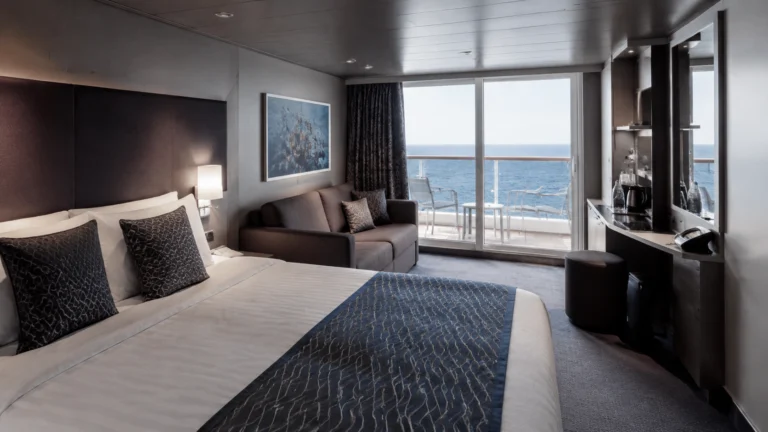
MSC Seaside’s highest balconies, solid railings and large terraces can offer useful advantages, but each deserves a closer look when quiet, privacy or a seated sea view is your main reason for spending more.
For most light sleepers, a selected balcony on Deck 11 or 12 with cabins above and below is the clearest starting point.
Short version
- Start here: Balconies beneath restaurants and pools: question the higher-deck upgrade.
- Compare carefully: Low rooms beside public spaces: don’t solve one noise risk by buying another.
- Watch for: Metal balcony railings: the view can change when you sit down.
- Better choice: Terraces and whirlpools: don’t pay for privacy you haven’t checked.
Balconies beneath restaurants and pools need a closer look
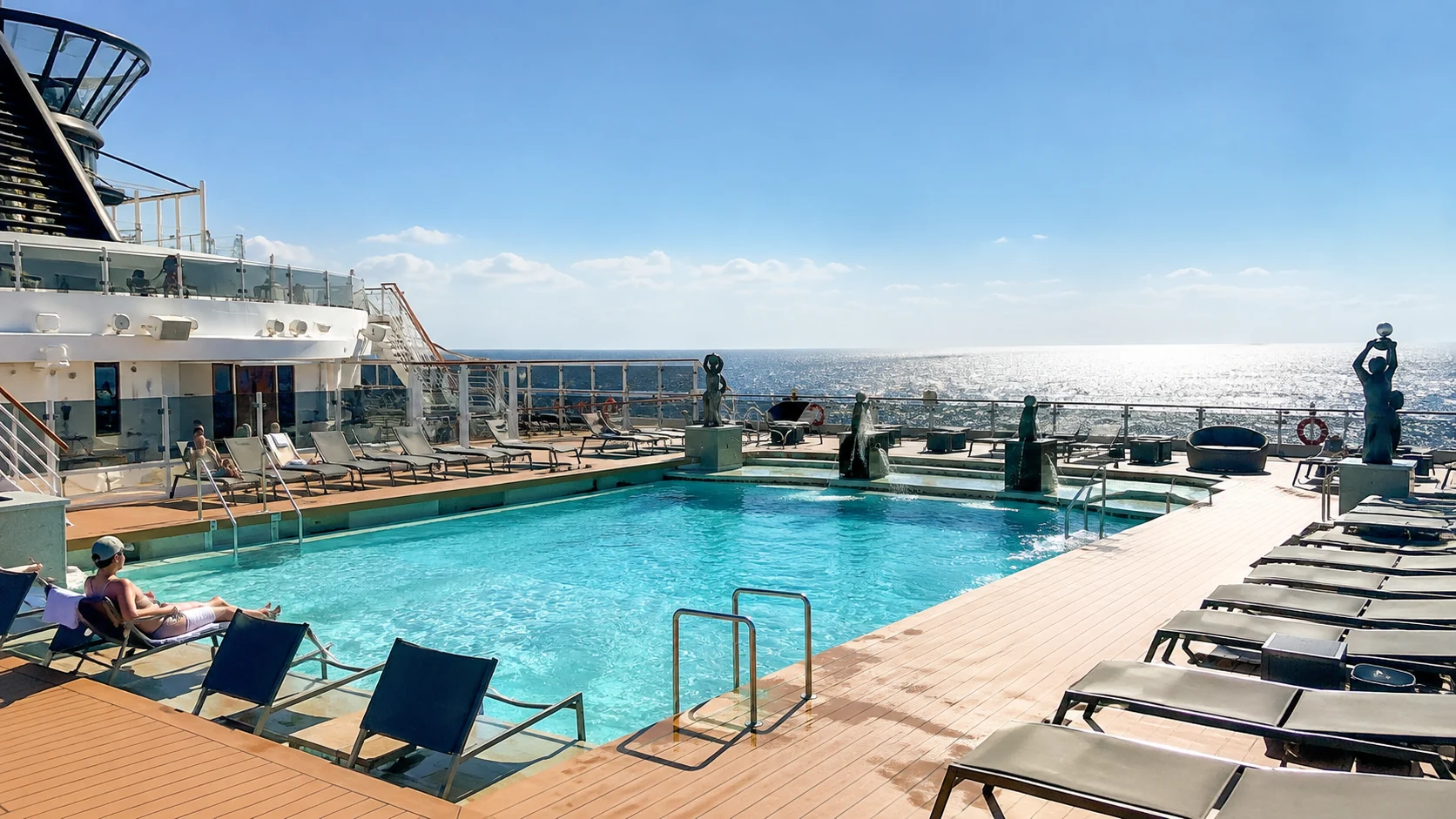
Deck 15 is Seaside’s highest standard cabin deck, with Deluxe Balcony accommodation sold in the BR4 category. Parts of it sit beneath restaurant, service and pool-related spaces on Deck 16 rather than another row of bedrooms.
A shorter trip to the pool can be useful, but the ceiling needs attention before paying more for that convenience. A residential deck below another cabin deck is a simpler alternative when sleep matters more than the one-flight commute.
Deck 16 changes along the ship from accommodation and lounges to restaurants and the aft pool, so the space directly above your room matters more than the deck-wide label.
Furniture movement, equipment, and cleaning are possible interruptions beneath an active public area. Sound varies by location and operation; choose an appropriate room with cabins overhead when that separation matters to your sleep.
For a light sleeper, you should compare BR2 on Deck 11 or 12 first. You can keep the basic balcony product while adding passenger cabins above and below.
Deck 15 can still suit early risers who spend much of the day upstairs; keep it for a worthwhile fare or a shorter pool route, rather than paying merely to move higher.
Low rooms beside public spaces: don’t solve one noise risk by buying another
Moving down from Deck 15 doesn’t mean you need to go all the way to the lowest available cabin. Deck 9 sits above a public level containing the spa, shops, bars and dining areas, with different neighbors along its length.
Give a room over a lounge or busy dining area extra thought for an early bedtime. A room over a different part of the same deck may have a very different tradeoff.
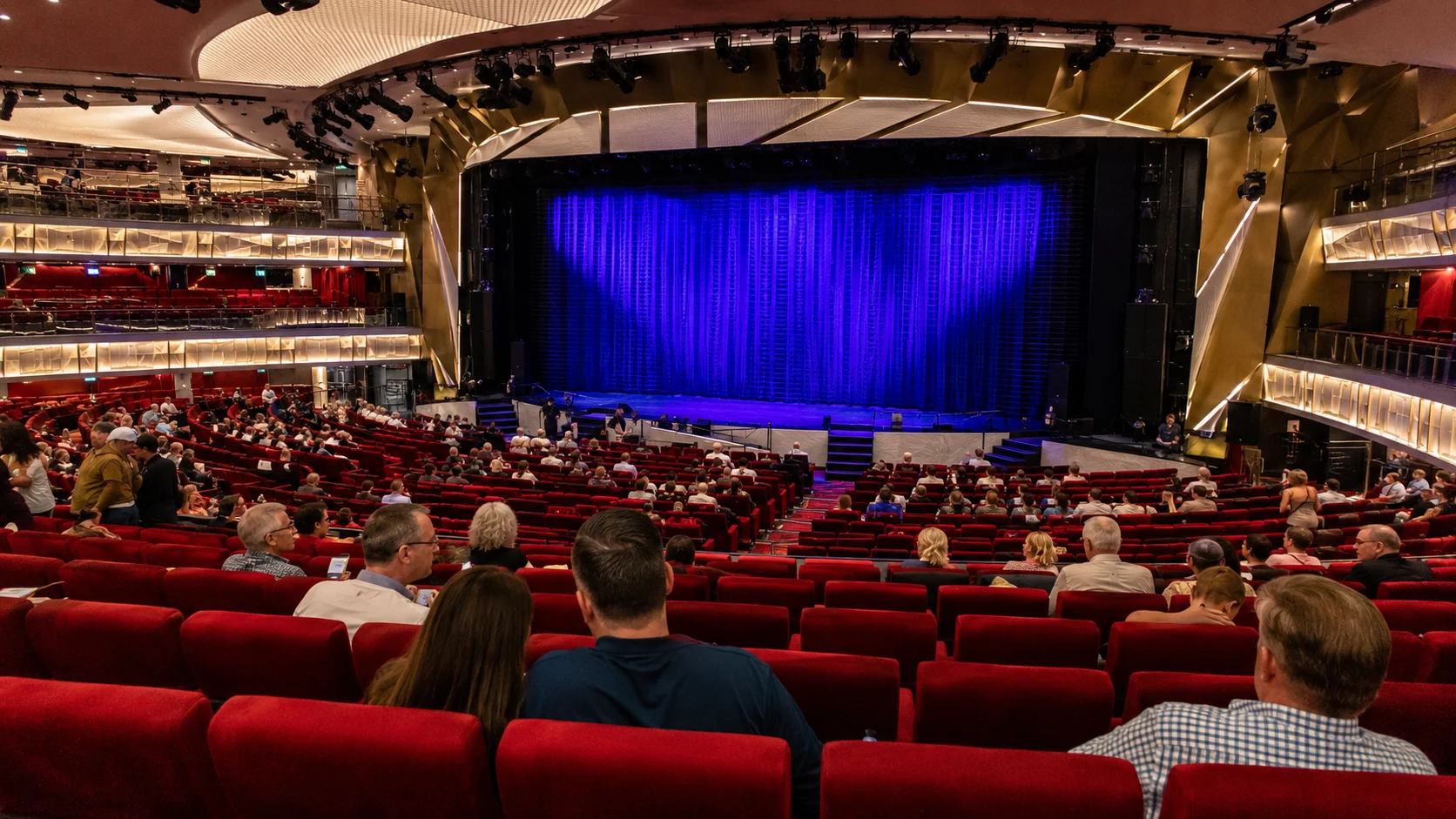
Deck 5 Ocean Views and interiors need the same care because Deck 6 contains public spaces, including the theater forward. Low on the ship doesn’t mean surrounded by bedrooms.
My simpler swap: Compare a residential-deck room before replacing one public-space ceiling with another. For a traveler who needs a low position, try to check the exact Deck 5 neighbors instead of rejecting the whole floor.
The Seaside deck-by-deck guide can help with the route question afterward. Here, the useful decision is whether the available room puts the activity you dislike directly beside, above or below you.
Metal balcony railings: the view can change when you sit down
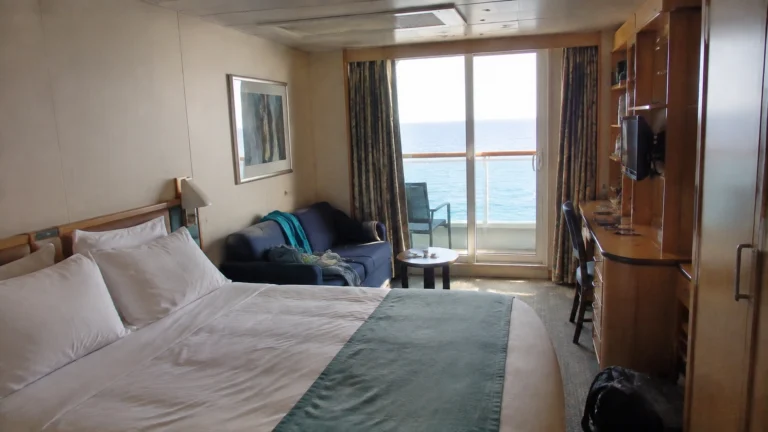
This is one Seaside view warning that can be narrowed to room numbers: 15224, 15226, 15227 and 15229 are Deck 15 balconies to examine for a metal front or restricted outlook. The aft Deck 16 structure also creates shade over some balconies below, which can appeal to readers who prefer shelter but disappoint sun seekers.
A solid railing does not make the balcony useless, but it can be a poor match for someone paying to watch the sea from a chair through clear glass.
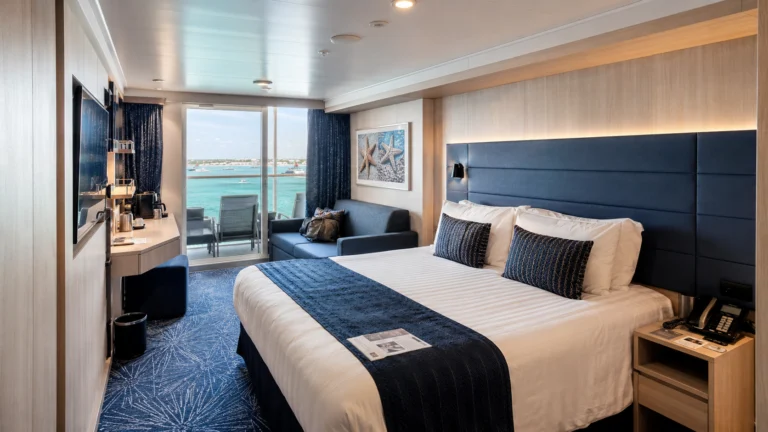
The Seaside stateroom descriptions warn that some balconies have metal fronts and that layouts vary within a category. The photograph beside the category name may not show the number you’re buying.
A better fit for the view: Choose a balcony without the metal-railing or partial-view mark and confirm the outlook for that number; moving a few doors does not automatically remove the restriction.
Consider the marked room at a worthwhile discount when fresh air matters more than the seated view. Don’t pay to fix a compromise you genuinely don’t care about.
Terraces and whirlpools: don’t pay for privacy you haven’t checked
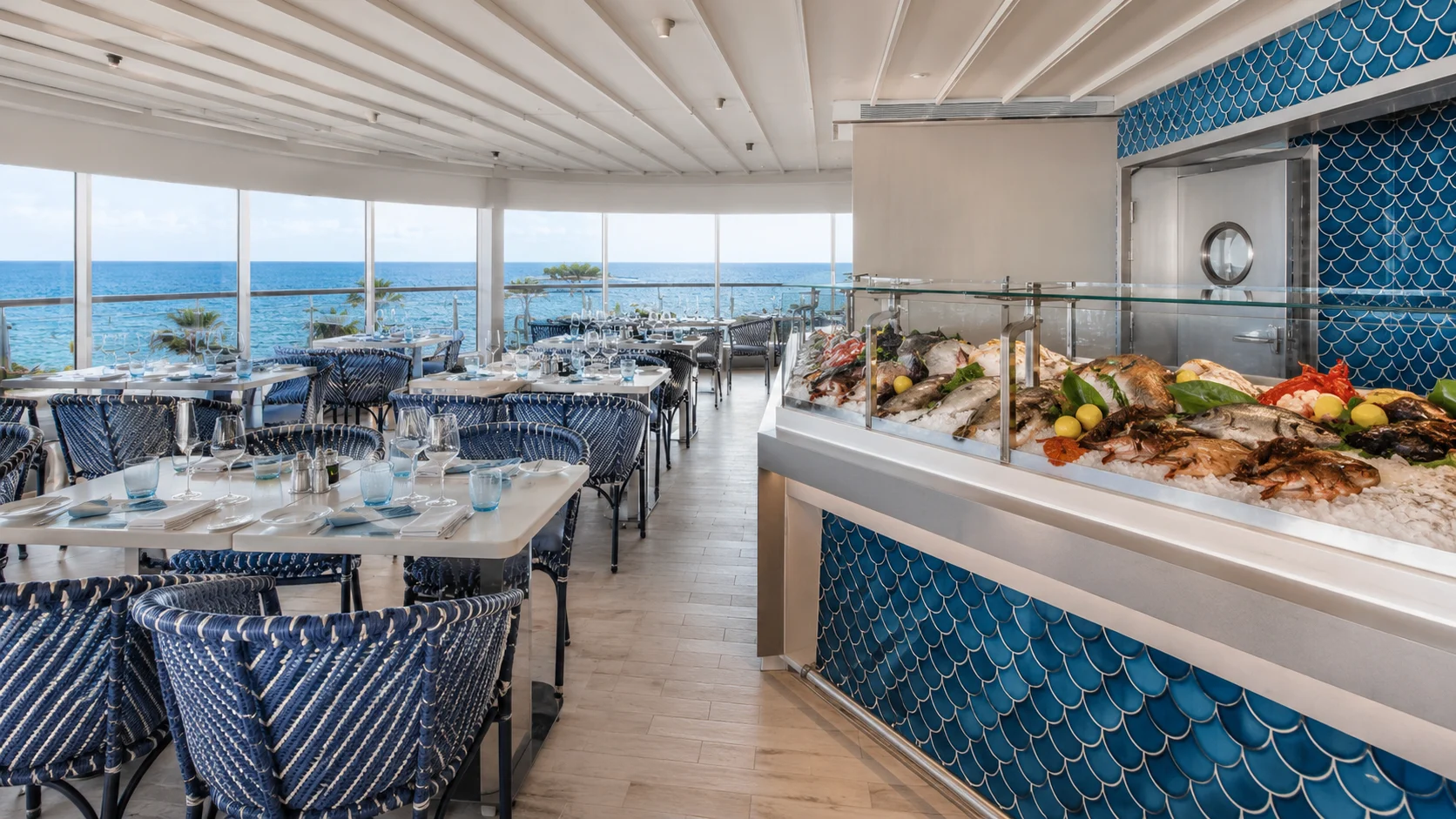
Seaside’s terrace and whirlpool suites are tempting when you want to spend plenty of time outside. Before paying, you can look at the actual railings, dividers and balconies above, not just the outdoor square footage.
A large terrace can be excellent for lounging without being particularly secluded. A whirlpool is also less appealing when the location doesn’t match the private outdoor retreat you pictured.
Choose each Aurea suite on its own layout: the terraces and whirlpool rooms have different railings, dividers and balconies above.
Skip the terrace premium when morning coffee on a simple balcony is your main plan; a selected Deluxe Balcony with a suitable outlook is the useful comparison.
A terrace is worth more when lounging outside is part of the vacation. Choose the usable space, shade and exposure that match that plan rather than competing for the largest advertised balcony.
Yacht Club Interior: a poor fit when daylight is non-negotiable
A Yacht Club Interior buys access to the enclave while keeping the bedroom windowless, a sensible trade for two adults who value its shared facilities more than a private view.
Skip it when waking up to daylight is one of the things you love about cruising. A suite label doesn’t add a window, and moving between windowless rooms won’t solve that particular disappointment.
The upper-forward location deserves a separate check for motion and overhead activity. Yacht Club rooms on Deck 16 and Deck 18 have different spaces above them, so do not promise that the cheapest suite is also the quietest.
The alternative depends on your priority: Compare a Yacht Club balcony suite when you need both the enclave and daylight. Compare an ordinary balcony when the view matters more than the private facilities.
Yacht Club deserves its premium when you will use the private facilities and service; the individual room still needs to fit your daylight, motion and sleep preferences.
Family rooms with the wrong extra beds: capacity isn’t the whole answer
Seaside uses sofa beds, Pullmans and convertible bunks, so book the arrangement that works for each traveler rather than relying on a category’s maximum occupancy.
MSC excludes Yacht Club Interior from third- and fourth-bed availability in its ship legend. That’s an important distinction before a family tries to make the least expensive Yacht Club category work for four.
Bunk beds are unsuitable for children under six. Families who need lower beds should have that specific arrangement recorded before payment.
Two-Bedroom Grand Suites 11001, 12001 and 14001 are specifically listed with two double beds and one Pullman. They offer bedroom separation, but the fifth guest still needs to be comfortable using the upper berth.
Better alternative: A confirmed room arrangement suitable for every traveler, or a confirmed connecting pair. More balcony space won’t fix an unsuitable bed, and a category upgrade doesn’t necessarily put everyone on the lower level.
Connecting and accessible rooms: check the need before rejecting the room
For two adults booking one room, a nonconnecting cabin is a reasonable tie-breaker between otherwise suitable choices; avoiding an internal door is rarely worth accepting a pool ceiling or a much higher fare.
For families booking both sides, the same door can be a genuine advantage. Check the connecting symbol on the plan instead of assuming consecutive room numbers connect.
Accessible rooms aren’t inferior cabins or upgrades to chase for spare floor space. Their layouts serve specific needs, including bathroom access and circulation space.
Confirm the bed arrangement as well as the bathroom before booking one for an access requirement. MSC identifies exceptions to its usual convertible-bed setup, so a broad category description isn’t enough.
High-forward rooms: a tradeoff for motion-sensitive travelers
Travelers who already struggle with ship movement should start lower and nearer the middle before choosing an upper-forward Yacht Club room or a bow suite for its impressive view.
Decks 10 to 12 offer a useful balcony comparison. For a lower Ocean View, Deck 5 midship can be attractive when its specific public-room neighbors also suit your bedtime.
This is a traveler-specific preference, so a forward suite can still be an excellent room. Nobody’s cabin number controls the weather, and no room guarantees a motion-free sailing.
Apply the same restraint to smoke warnings. Confirm the designated smoking location relative to your balcony rather than buy one side of the ship on a promise about which way the wind will blow.
Bella guarantees: don’t give away the location choice you need
Bella is a fare decision, not a defective cabin category. It can be good value when the saving is meaningful and the assignments permitted by your booking all work for the trip.
Fantastica’s cabin-selection option is worth pricing when the ceiling, railing or location would otherwise worry you; Bella’s guaranteed assignment is more attractive for flexible travelers.
For three or four guests, read the assignment conditions particularly carefully and confirm whether your party could be accommodated in separate rooms under the fare rules. Parents needing one specific arrangement shouldn’t leave that question until assignment.
Aurea perks can be worth buying for dining flexibility and other included benefits, but they do not change the room’s physical neighbors.
My rule: Select the room when you’ve already identified a non-negotiable location feature. Take the guarantee only when you can genuinely accept the permitted alternatives, not because you expect an easy switch later.
Continue planning with the things to do, pros and cons.
How this guide was researched: Cabin layouts and nearby public spaces were checked against MSC’s ship information and deck plans, with guest accounts used where available for noise and privacy. A reported problem can guide a choice without predicting every later stay.
What to book once the tradeoffs are clear
For a light sleeper wanting a balcony, start with a midship Deck 11 or 12 room with cabins directly above and below, then choose the appropriate railing and beds.
For a family, the right beds come first; connecting rooms deserve consideration when privacy and another bathroom matter. For a terrace buyer, usable outdoor space and the actual view should justify the premium.
For Yacht Club, decide whether the enclave or a private view matters more; a windowless suite can be excellent for the first priority and frustrating for the second.
Already booked on Deck 15 or behind a metal railing? Compare the cost of changing with your sleep sensitivity and balcony habits; a possible tradeoff does not by itself mean a disappointing vacation.
The other cabins-to-avoid guides help when you’re comparing ships. For Seaside itself, my lowest-drama choice is a selected residential-deck balcony with the right beds and view, not the highest category the budget will stretch to.
Before booking, open the cabin benefits, ship page, and room guide. Use them to confirm the exact category, nearby spaces, and any access needs tied to your room.
Compare these warnings with the best cabins and the deck guide. The dining guide and ship tips can help you choose the most convenient end for your routine.