Disney Fantasy Pros and Cons: Who Should Book It?
Disney Fantasy is strongest for families who want AquaDuck, Europa nightlife, real adult pool space, practical staterooms and its Frozen and Aladdin stage shows.
Choose another ship for a giant waterpark vacation or when the itinerary and fare matter far more than Fantasy’s classic Dream-class advantages.
Short version
- Best reason to book: Satellite Falls adds an adult retreat on both sisters.
- Another strong point: AquaDuck works because it is fun enough to repeat.
- Biggest tradeoff: At full occupancy, the pool deck can feel much smaller than the ship.
- Think twice if: Far-aft cabins can trade wake views for vibration risk.
- Bottom line: Book Disney Fantasy when its signature strengths sound exciting, not simply because it is newer or larger.
Before booking, browse the activity guide, pool rules, and youth guide so the ship, cabin, and fare match your priorities.
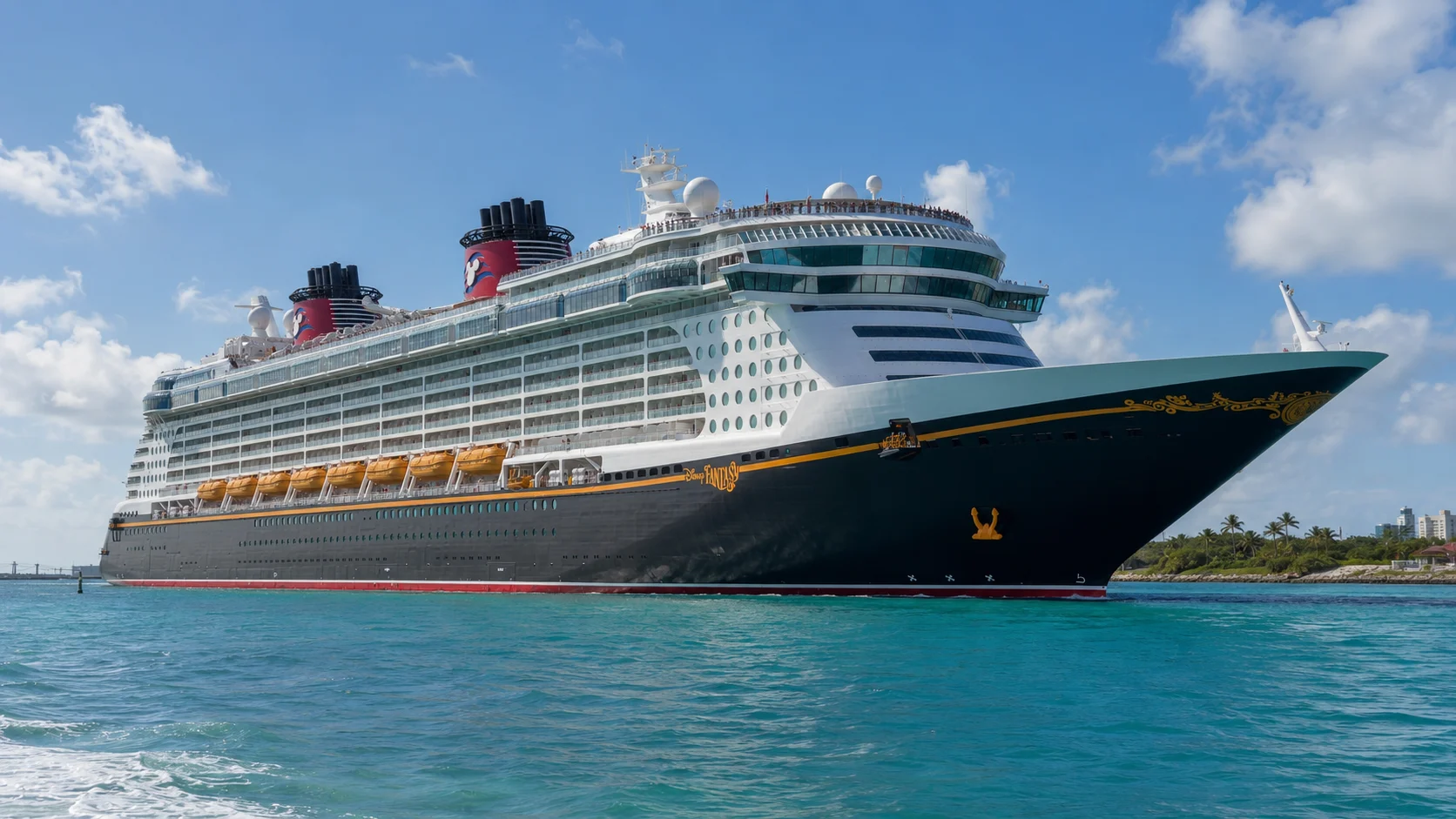
Fantasy’s strongest case is that the classic Disney formula still works
Fantasy uses forward, midship and aft elevator banks, giving families several ways to connect cabins with dining, youth spaces and the upper decks. Compare the exact route from your room before choosing it over Wish or Treasure, rather than assume a familiar layout guarantees easy movement for everyone.
Choose Fantasy over Wish when navigation, adult outdoor space, and classic Disney Cruise Line rhythm matter more than the shiniest character venue. Choose Treasure when you want newer immersive storytelling and Dream when its itinerary or fare simply works better.
Fantasy’s design lets me assess concrete tradeoffs: grouped adult nightlife, traditional rotational restaurants and a concentrated family water deck. Those things matter much more to the vacation than the ship’s age.
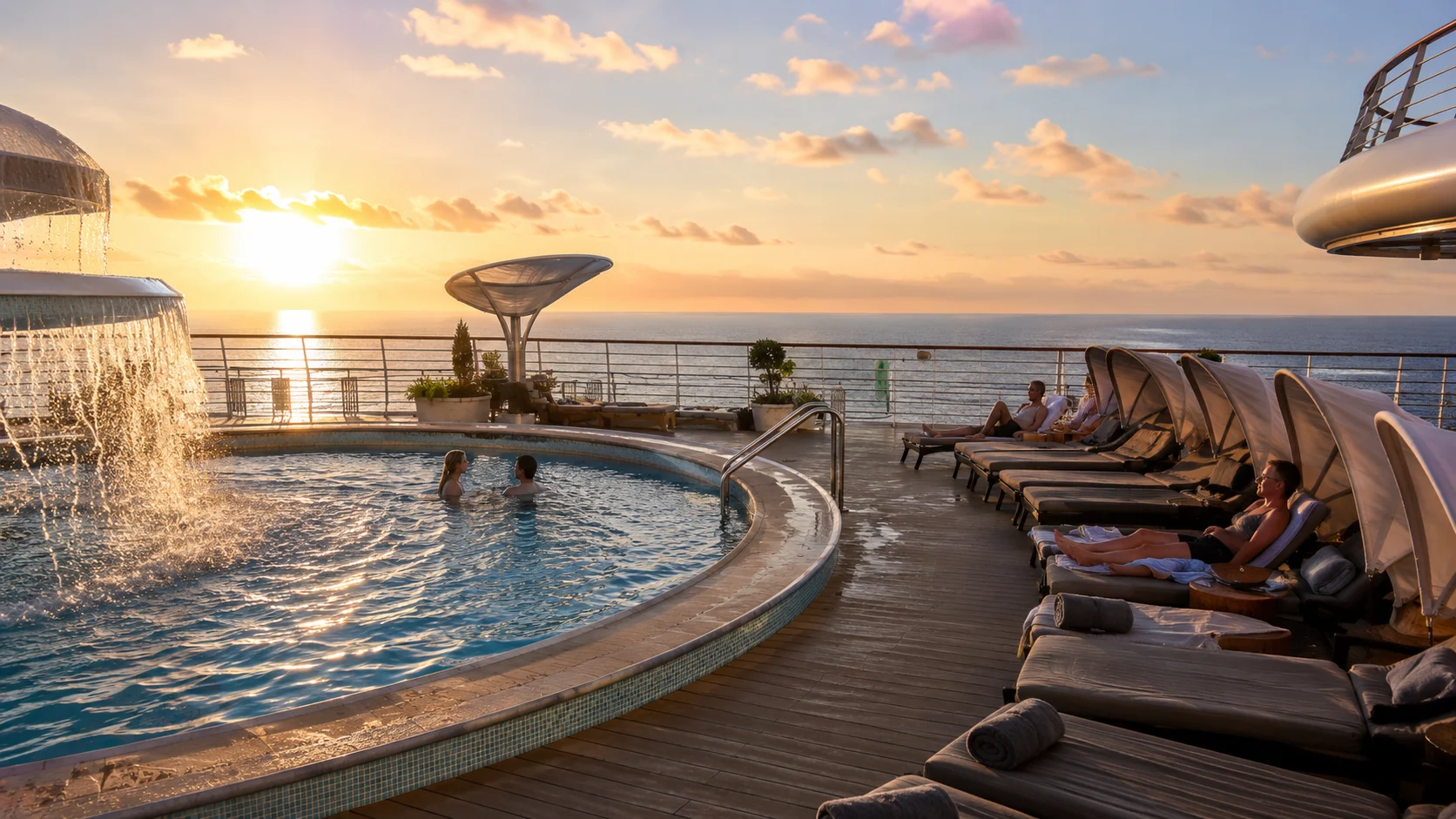
Pro: Satellite Falls adds an adult retreat on both sisters
Satellite Falls is one of Fantasy’s best ship-specific features because it gives adults another dedicated forward outdoor area beyond Quiet Cove. The shallow circular splash pool and surrounding loungers create a quieter sun deck where adults can cool off without sharing every square foot with family-pool traffic.
Satellite Falls is available on both Fantasy and Dream, so do not choose Fantasy on the assumption its sister lacks this retreat. The choice becomes the itinerary, room, and entertainment you prefer, with the adult water areas supporting either ship’s case.
Quiet Cove and Satellite Falls are for guests 18 and older, so they can provide an alternative to family-pool time for adults. They do not solve the pool-space decision for a family that wants younger children beside them throughout the day.
Pro: AquaDuck works because it is fun enough to repeat
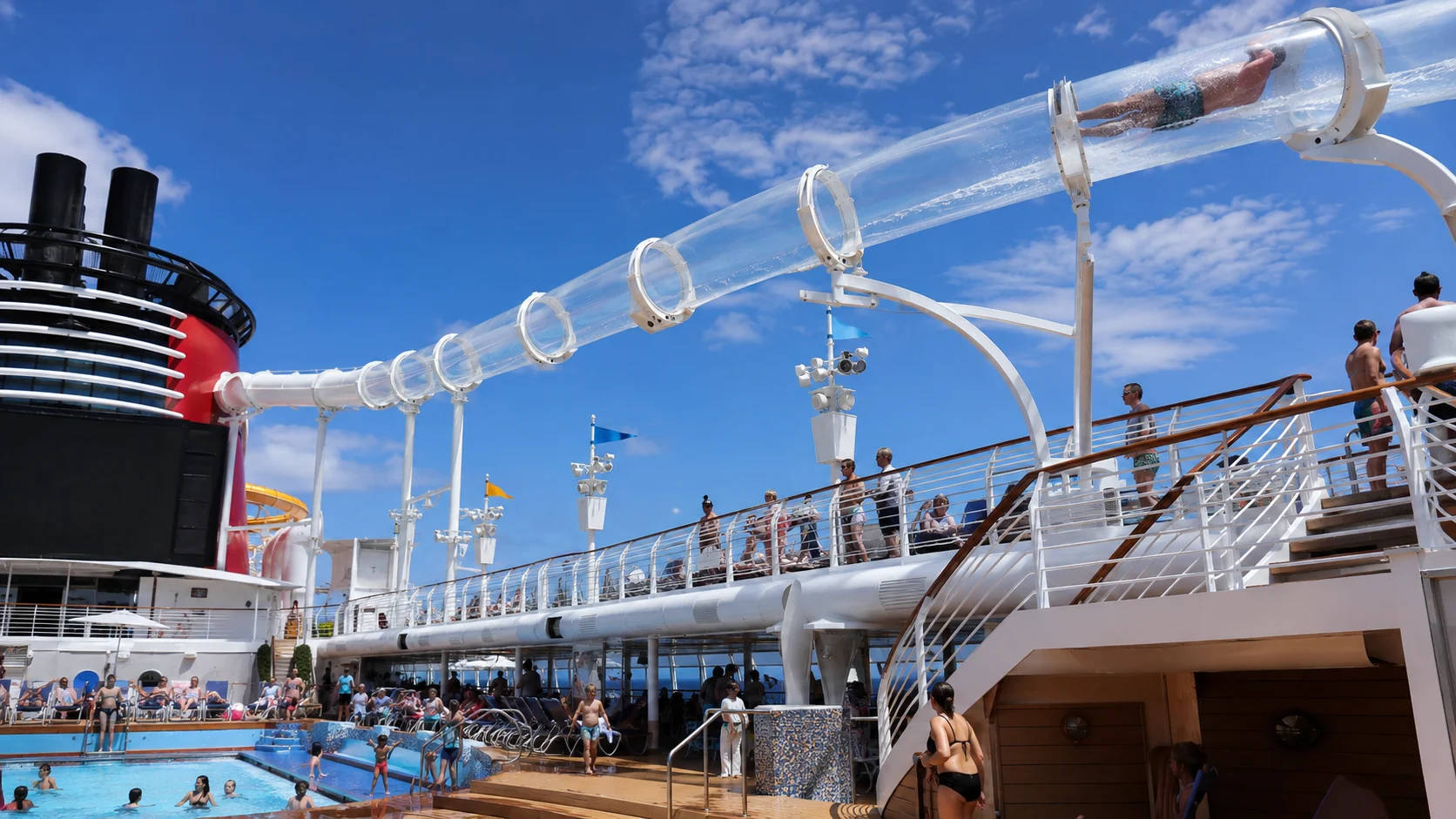
AquaDuck wraps around the upper decks in a transparent water-coaster tube, sending riders through a family-friendly circuit rather than a short vertical plunge. It is exciting enough to create a memory without becoming an attraction only thrill-seeking teenagers will use.
Fantasy includes AquaDuck, with a 42-inch minimum height and a 54-inch threshold for riding alone. A child younger than seven needs a companion who is at least 14, so settle eligibility before letting the water coaster drive the family decision.
The loading area requires stairs, so review accessibility details if someone has mobility limitations. A headline attraction should never be assumed accessible simply because the rest of the ship has elevators.
Pro: Europa gives adults a proper nighttime district
Fantasy’s Europa area groups Skyline, La Piazza, O’Gills Pub, The Tube, and other adult programming into one walkable evening district rather than scattering every bar across different decks. This is one of the clearest reasons adults can have a genuinely good Disney cruise without children.
The Tube’s London-inspired club space is particularly distinctive, while Skyline offers a quieter cocktail experience and O’Gills works for sports or pub-style evenings. Adults can shift moods without repeatedly passing a princess queue or family dance party.
The venues are not enormous, and popular trivia or adult shows can fill. Arrive early for one or two events you care about and otherwise use the district the way it was designed: wander until something sounds fun.
Pro: the kids clubs are a major reason Fantasy can justify Disney pricing
Oceaneer Club and Lab offer included secured programming for toilet-trained children ages 3 to 10 under Disney’s youth-club eligibility. Edge serves ages 11 to 14 and Vibe ages 14 to 17, so siblings may be using different spaces rather than one shared children’s club.
The nursery is a separate paid option for younger children, which matters when parents plan an adult dinner or time in the spa. Check availability and the child’s comfort with care before counting those hours as part of the vacation’s value.
Use open house to explore the youth spaces together and see what appeals to each child. For shared family evenings, Fantasy’s Frozen, Aladdin, and Disney’s Believe productions offer a different draw from Dream’s Beauty and the Beast.
Rotational dining is practical, but do not book Fantasy for the food alone
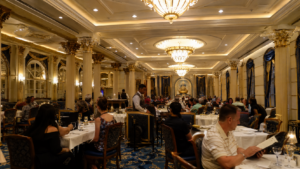
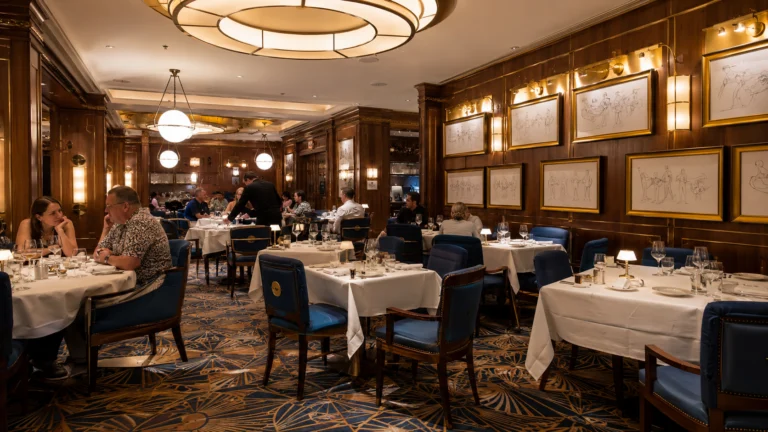
Animator’s Palate, Enchanted Garden, and Royal Court form the core rotational dining circuit, with the serving team following your family from restaurant to restaurant. The continuity is one of Disney’s most useful systems because servers quickly learn allergies, children’s preferences, and everyone’s usual drinks.
The restaurants provide three different moods without requiring extra charges. Animator’s Palate brings the most overt Disney storytelling, while Enchanted Garden and Royal Court offer calmer nights that feel more like traditional cruise dining.
Weigh the included meals and shows together rather than expect the fare alone to guarantee every dish suits every diner. Our dining guides can help compare that everyday value with optional premium meals without turning dinner into a scorecard.
Palo and Remy are paid, reservation-required options for guests 18 and older under Disney’s adult-dining rules. Choose Palo for an Italian meal or Remy for a longer French-inspired dining occasion, then coordinate childcare and review the dress and cancellation terms before committing.
Pro: Fantasy’s staterooms are still among the easiest family cabins to live in
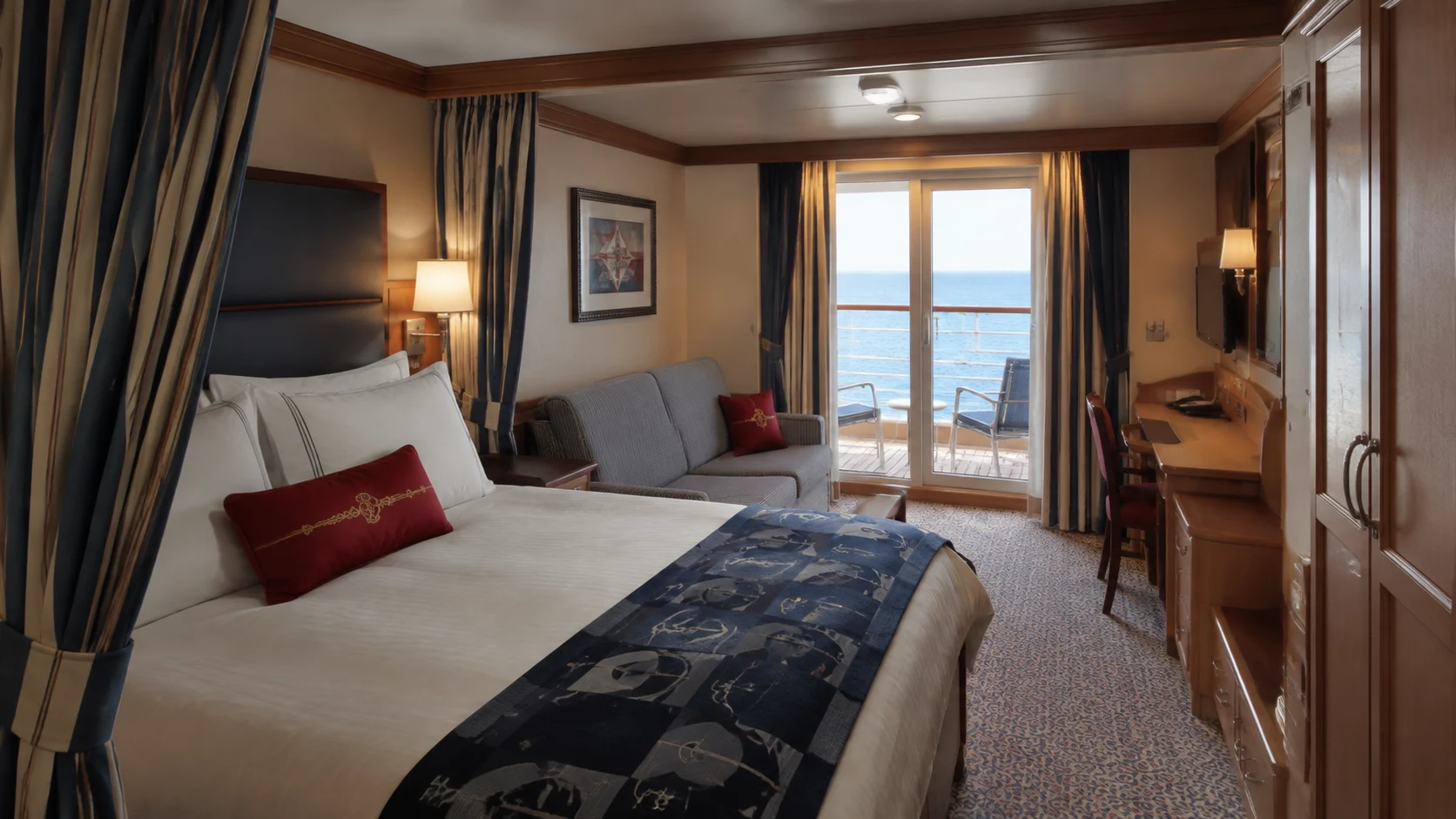
The split bathroom in many Fantasy Deluxe staterooms puts a toilet and sink in one compartment, with the bath or shower and second sink next door. Standard Inside rooms use one bathroom, while accessible designs vary, making the precise category more useful than a broad Disney-cabin assumption.
The privacy curtain between the main sleeping area and children’s sofa or bunk space also helps parents function after younger children go to bed. Disney’s standard family-room design remains one of the reasons you should choose Fantasy over a mainstream ship with more attractions but less usable cabin space.
Inside cabins with Magical Portholes can make an interior feel more playful, while verandah rooms provide the obvious private-ocean-space upgrade. Choose based on how much time the family realistically spends in the cabin rather than treating a balcony as mandatory.
Use our cabin-location guides to check surroundings, view and elevator route before choosing a room or handing assignment to Disney through a guarantee rate. A solo traveler should request the single-occupancy total, since a fare based on two sharing does not establish the price of sailing alone.
Con: at full occupancy, the pool deck can feel much smaller than the ship
Dream class can carry roughly 4,000 guests when extra berths are filled, and the family pool deck does not magically expand with the passenger count. On a peak holiday or peak family occupancy sailing, chairs disappear, elevators back up, and the central water zone can feel far denser than the rest of the ship.
The family pools themselves are not large enough to make thousands of people disappear on a hot sea day. AquaDuck, deck chairs, quick food, splash areas, and swimming traffic all concentrate in the same upper-deck zone.
Alternate swimming with shows and clubs when those suit the family, rather than expect the main deck to accommodate everyone’s ideal pool day at once. Swim diapers belong only in designated toddler areas such as Nemo’s Reef, not the swimming pools or AquaDuck.
Adults have the advantage of Quiet Cove and Satellite Falls, which is why Fantasy handles adult crowd escape better than the family deck alone suggests.
Con: far-aft cabins can trade wake views for vibration risk
Far-aft rooms put the wake view and aft venues close at hand, but vibration can vary with conditions and location. Treat that as a cabin-selection consideration for sensitive sleepers rather than claim every Deck 5 aft room has the same problem or every higher room avoids it.
The tradeoff is personal: someone who loves watching the wake may prefer that location, while a traveler easily disturbed by mechanical sensation may choose farther forward. Treat aft vibration as a room-area risk to evaluate, not a guaranteed experience for every cabin or sailing.
Check what lies above and beside the cabin as well as where it sits along the ship. That gives a light sleeper more useful information than a precise promised vibration ranking or an invented time when docking will wake the room.
Con: shorter itineraries can make Fantasy’s premium harder to justify
Fantasy built much of its reputation on seven-night Caribbean cruising, where the adult districts, clubs, rotational dining, and sea-day spaces had time to become part of a routine. Shorter Bahamas or Caribbean sailings change the math because the same Disney-level fare is divided across fewer nights.
I still prefer four or five nights to a three-night Disney trip, but compare the per-night total against Treasure, Dream, and a mainstream family ship. Fantasy should win because the classic layout, adult spaces, itinerary, or price genuinely suit you.
Build Fantasy’s real trip total by adding gratuities, internet, alcoholic beverages, premium coffee, spa visits, adult restaurants, nursery sessions, and excursions to the room price. Regular dinners, stage shows, and eligible youth clubs earn their premium only when the family has enough time aboard to use them.
Con: older hardware makes exact cabin selection more important
The ship’s age does not establish the condition of the cabin being sold today, and room condition can vary. Judge the exact location, layout and recent condition rather than assuming every older cabin is worn or every refreshed space feels new.
Nostalgia can make a favorite ship appealing, but it does not answer whether the present trip suits our family. Compare the actual room, ports, included programming and time aboard before deciding that a familiar ship deserves the same budget again.
If Fantasy and Treasure cost similar amounts for trips that both work, their different features should decide: Fantasy has Europa and the classic AquaDuck experience, while Treasure emphasizes newer themed venues and AquaMouse. Pay more for the experience you want rather than demand a fixed age-based discount.
Fantasy versus Dream versus Treasure
Dream and Fantasy share Satellite Falls, so their different shows and lounge settings are better sister-ship distinctions. Lean toward Fantasy for Frozen, Aladdin and Europa, or Dream for Beauty and the Beast and The District, provided the itinerary and cabin suit your group.
Choose Dream when its itinerary fits the vacation better and the fare is lower. Dream’s adult district and basic family experience are extremely similar, so homeport and route should do much of the deciding.
Choose Treasure when you want newer Disney storytelling such as Haunted Mansion Parlor, Plaza de Coco, and The Tale of Moana. Fantasy still wins when the classic layout, Satellite Falls, and traditional adult district matter more to you than the latest theming.
Who should book Disney Fantasy
- Families who want classic Disney Cruise Line without Wish-class circulation. Three elevator banks and grouped venues may suit the routes you use.
- Adults who want real outdoor retreat space. Satellite Falls plus Quiet Cove gives Fantasy one of Disney’s stronger adult pool setups.
- Families who use the kids clubs heavily. Disney’s youth programming is one of the strongest arguments for the fare.
- Multigenerational groups. The ship has enough adult, child, theater, dining, and pool options for several generations to split comfortably.
- Travelers who value layout over novelty. Fantasy proves newer architecture is not automatically better architecture.
Who should choose another ship
- Families who mainly want giant pools and waterpark attractions. AquaDuck is fun, but the family pool deck gets crowded quickly.
- Light sleepers considering far-aft cabins. Consider room-specific reports and your sensitivity before choosing a wake view.
- Travelers demanding a pristine new vessel. Fantasy retains its original overall design.
- Adults indifferent to Disney. Satellite Falls and Remy are excellent, but there are more adult-centered ships for the same money.
- Families paying an extreme premium for a very short sailing. Compare a longer Disney cruise or another line before committing.
How to book Disney Fantasy
Compare Fantasy with Dream and Treasure for the same vacation window using the full cabin total and the nights and ports included. Adult retreat access supports Fantasy’s appeal, but does not make it inherently better than Dream or automatically cheaper than a newer Disney ship.
Choose a cabin away from the strongest noise and vibration concerns, particularly if anyone is a light sleeper, and preserve a reasonable route to the spaces you use most. Disney’s family cabins are good enough that location can matter more than moving one category higher.
Reserve Palo or Remy only when the adults genuinely want a premium meal, then protect the major stage shows the family cares about. The rest of the week can stay surprisingly loose because Fantasy is easy enough to navigate that spontaneous plans do not require crossing three neighborhoods.
Use the adult areas when everyone in that part of the group qualifies, and offer children club time when they enjoy it. The value comes from a plan that fits the family, not from trying to maximize separate activities simply because the fare includes them.
Continue planning with the cruise tips, things to do.
How this guide was researched: This guide was checked against the cruise line’s current ship pages, deck plans, venue listings, and published policies. Details can change by sailing, so confirm booking-sensitive prices, hours, access rules, and cabin assignments before payment.
The final verdict
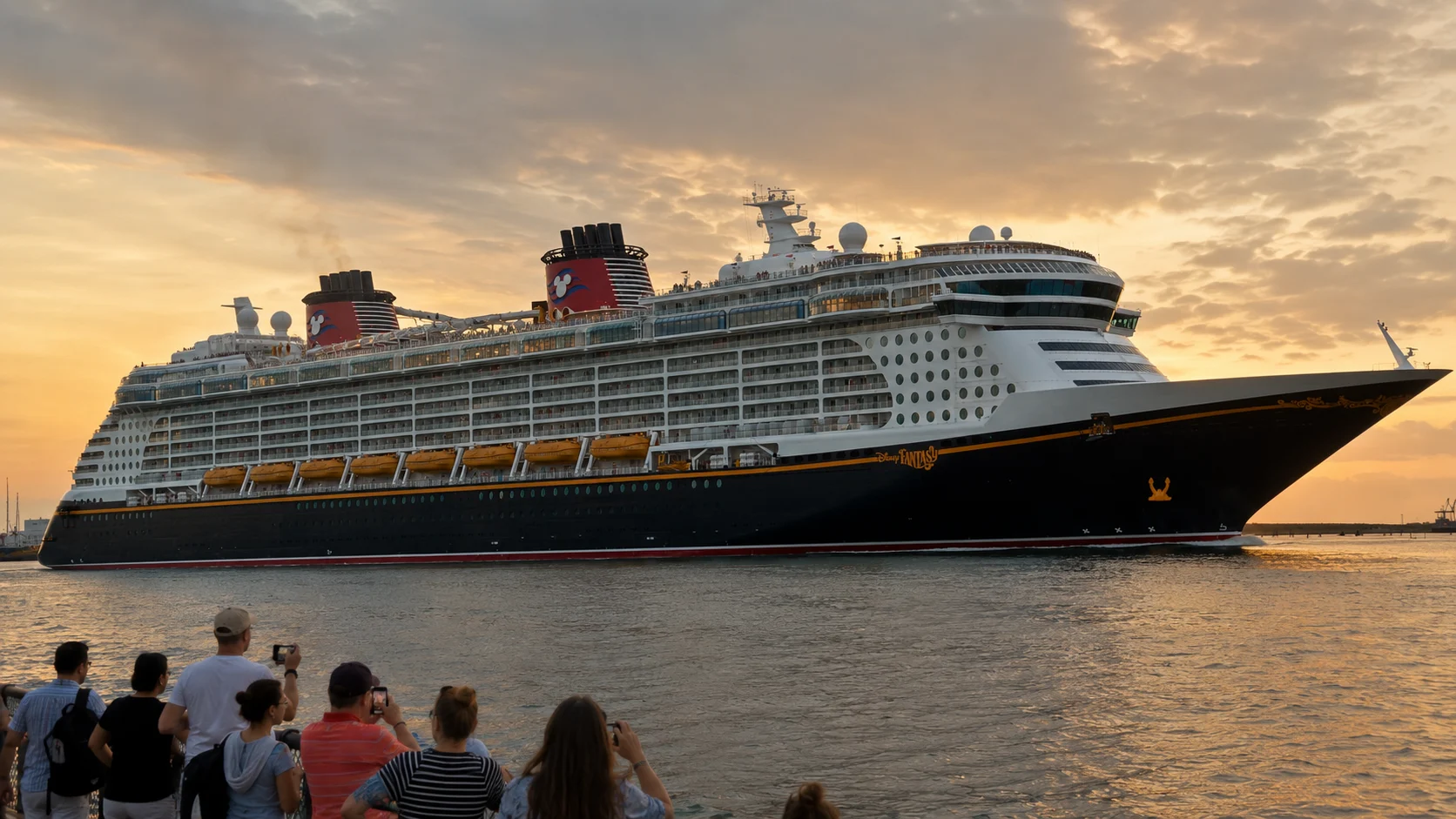
Disney Fantasy remains one of the fleet’s strongest all-around family ships because the classic Dream-class formula still works. AquaDuck, Satellite Falls, Quiet Cove, Europa, Palo, Remy, practical family cabins, excellent youth programming, rotational dining, and familiar navigation give the ship a balance the newer Wish class does not always improve.
The meaningful compromises are shared family-pool space, cabin-location considerations, paid extras and fewer opportunities to enjoy the ship on a short trip. Fantasy can justify its price when its shows, adult lounges and family programming are what you want, without assuming that age itself proves deterioration.
Compare Fantasy’s exact cabin, itinerary and total fare with Dream and Treasure before booking, and use our cruise-line guide hub if Disney itself is still part of the decision. Fantasy earns the choice when its classic layout, Europa nightlife, AquaDuck, adult retreats and family-cabin design matter more than the newer storytelling on Wish-class ships.
Plan your Disney Fantasy cruise
Finish Fantasy planning with the cabins to avoid, best cabins, and deck guide, matching the room to rotational dining, youth spaces, and the adult district.