Sapphire Princess Cabins to Avoid (and the Decks That Work)
On Sapphire Princess, start with a selected Caribe or Baja cabin when sleep matters, and check Emerald rooms against the entertainment below before taking the saving.
Dolphin balcony exposure, Aloha’s Lido ceiling, and E735’s support beam are different compromises, so choose the one your whole group can comfortably accept.
Short version: Start with Caribe or Baja for residential buffering; inspect Emerald above entertainment and Aloha below Lido. E735 has a support-beam obstruction, while Dolphin mini-suite exposure and family bed layouts need separate checks.
The rooms to check before paying
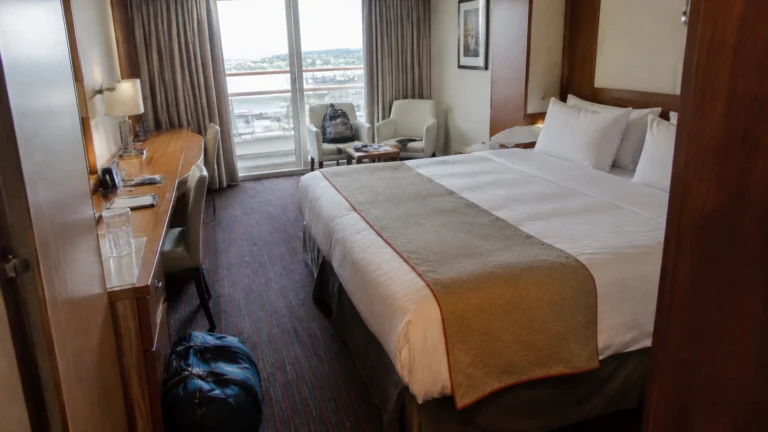
For light sleepers, compare accommodation with cabins above and below on Caribe Deck 10 or Baja Deck 11. That is a useful starting position, rather than a promise that neighbors, corridor traffic, or ship movement will never disturb you.
Be more selective on Emerald Deck 8 above public venues and Aloha Deck 12 below Lido. Sapphire skips Deck 13, so that two-number gap does not create an extra floor between Aloha and the pools or buffet.
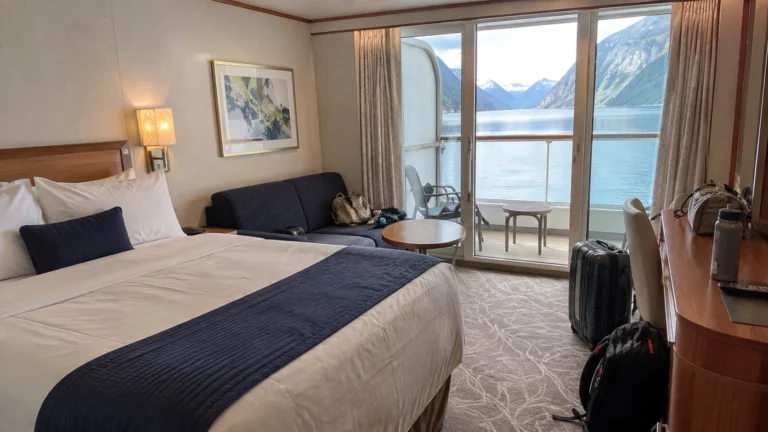
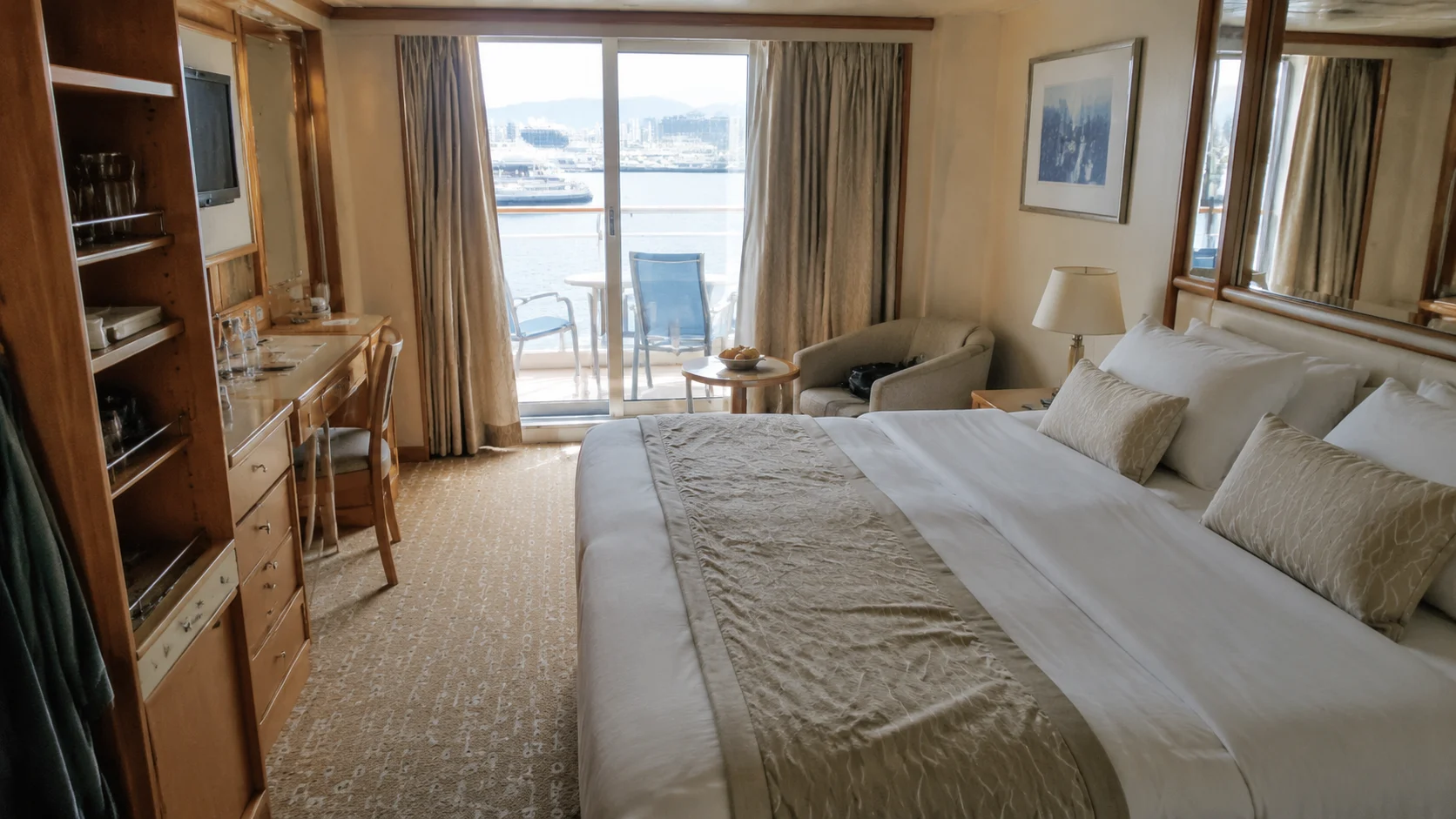
Choose a Dolphin mini-suite for its sitting area and bathtub, with its outdoor exposure understood. If the balcony is the main attraction, a selected Caribe balcony may be the better upgrade even when the interior is smaller.
Use the official deck plan alongside the room’s description, not a map of another Princess ship. A similarly named deck or cabin can have a different relationship to the public spaces here.
Emerald rooms above Club Fusion need a bedtime decision
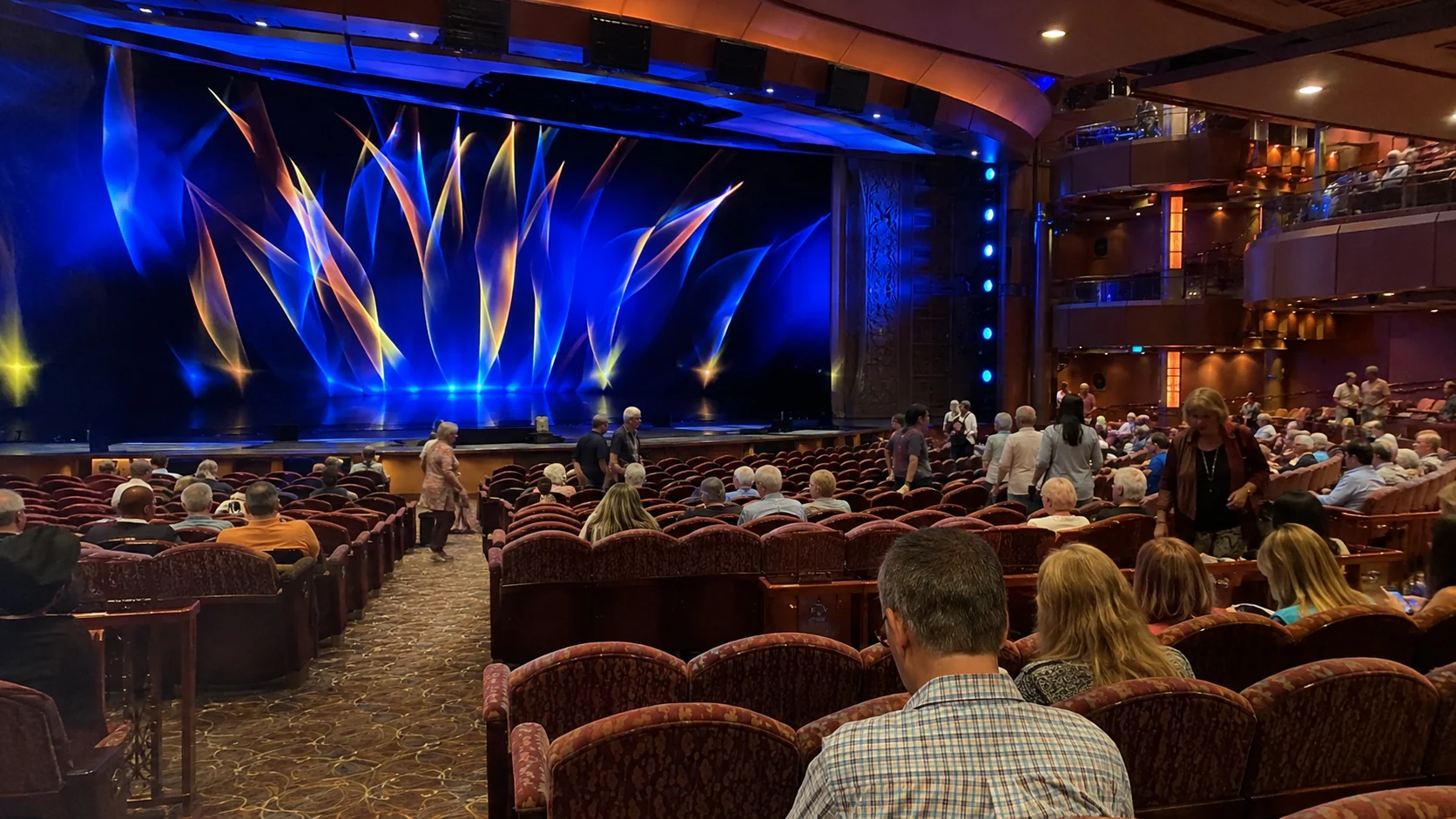
Club Fusion occupies the aft end of Promenade Deck 7, directly below the aft Emerald accommodation area. Skip that relationship when someone wants to sleep while an evening band, dance event, or other entertainment could still be running.
Mini-suites E728 and E731 are worth comparing for their extended balconies, but they sit in this aft Emerald area. Choose them for that outdoor space if your bedtime fits the venue below; for early nights, compare a buffered residential position instead.
For a light sleeper, compare a Dolphin mini-suite with cabins underneath, accepting its more exposed outdoor space, or a Caribe balcony if interior size is flexible. You are choosing which compromise matters less to you.
If you normally stay out until late, aft Emerald may work well. Sound can vary between rooms and evenings, so check a recent room-specific report if this location otherwise looks appealing.
Check forward Emerald against the theater and outside promenade
Princess Theater is forward across Decks 6 and 7, so compare forward Emerald accommodation with the performance footprint beneath it. Someone who naps during rehearsals or sleeps before evening shows has a different concern from a passenger who stays out late.
Some forward Emerald rooms also face the upper part of the outdoor promenade. Check the cabin notes for view restrictions and how the outside walkway affects the window before choosing it for a private sea view.
Choose a more central lower oceanview or a buffered interior when price and sleep matter more than a particular window. If scenery is the upgrade you want, pay for an exact room whose outside arrangement suits that purpose.
The view and the floor need separate checks. A window between boats can look attractive in a photograph while the public room beneath the cabin remains the bigger concern for your routine.
An obstructed oceanview is a window purchase
Sapphire’s obstructed oceanviews on Emerald have windows affected by boats or other equipment. Choose them for natural daylight at a lower fare, with the window’s actual sightline understood.
For daylight at a comfortable fare, an obstructed oceanview can be a sensible step up from an interior. Skip it when you expect to watch the horizon from the bed and the documented obstruction would spoil that use.
Compare exact-room photographs with the current description. A gap between boats, a full boat outside the window, and equipment interrupting eye level create different experiences even within the same broad category.
Accessible oceanview E301 is explicitly marked as fully obstructed in the current room record. Choose it for confirmed access features and acceptable daylight, or compare a verified accessible balcony when an open sea view matters too.
E735 has a disclosed support-beam obstruction
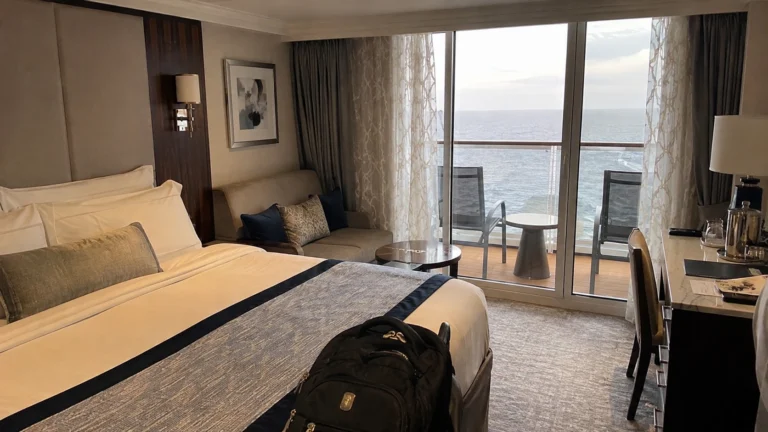
E735 is a rear-facing Premium Balcony on Emerald Deck 8. Its current room notes identify a partly obstructed balcony due to a support beam, which is a material detail for anyone choosing the room for photographs or an uninterrupted wake view.
Skip it when a clear panoramic view is the reason for paying extra. Compare rear-facing Caribe balconies C748 and C753, or a suitable side-facing balcony, then inspect photographs of whichever exact room is available.
Keep E735 on the list when the wake-facing setting matters and the beam position feels acceptable after you have seen it. A Premium Balcony label does not override a cabin-specific obstruction note.
Also compare its aft Emerald relationship to Club Fusion below and the walk to your everyday destinations. Solving the balcony question does not settle the bedtime or mobility question.
Dolphin mini-suites can leave you exposed from above
Many side-facing Dolphin mini-suite balconies extend beyond the decks above. They can give you open sky and sunshine while also leaving the outer balcony visible to passengers higher up.
Skip that arrangement when privacy or reliable overhead cover is the feature you most want. A selected Caribe balcony, or an aft Emerald mini-suite whose covering you have confirmed, is the more useful comparison.
Choose Dolphin when the sofa, sitting area, and tub improve daily life enough to outweigh the exposed balcony. A family spending evenings inside may value that extra room more than two adults who plan to read outside for hours.
Confirm cover, railing material, and the sightline on the actual room. A deck drawing can help identify the footprint, but it doesn’t establish exactly how rain, wind, or neighboring sightlines will affect your chair.
Aloha’s convenience needs an exact ceiling check
Aloha Deck 12 sits below the Lido Deck 14 cabin block, pool areas, Horizon Court, and aft dining or outdoor spaces. The public footprint changes along the ship, so one Aloha cabin can have a different ceiling from another.
For early bedtimes, late mornings, or children’s naps, compare Baja one floor lower with accommodation overhead. That reduces the need to guess whether chair movement, foot traffic, or service activity above will affect your rest.
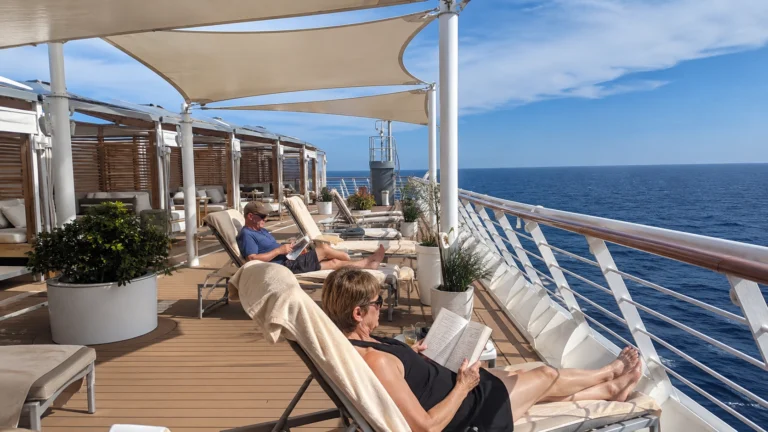
Keep Aloha when quick access to upper food and pool areas is a benefit you will use often. The aft Terrace Pool is on Aloha itself, making the stern convenient for travelers who enjoy that smaller wake-facing setting.
Check the exact pool or service boundary before choosing. A room under a cabin, open deck, or restaurant should not receive the same blanket warning simply because all three carry an Aloha letter.
Lido forward rooms suit a different daily route
Lido’s accommodation sits forward of the main pool area. It can be convenient for pool time, but it places you high and forward compared with a lower, more central room.
Skip that position when reducing motion is a stronger priority than reaching the pool quickly. Compare a lower central oceanview or interior, or a more central Caribe balcony if private outdoor space is important.
A traveler who likes short journeys to the pool and does not mind height may prefer Lido. Compare the actual route to the buffet, theater, and aft venues too, because living on a public deck doesn’t put every destination nearby.
Use the deck guide to decide which elevator bank serves your routine. The bank changes your walking pattern more meaningfully than paying for a high deck without a reason.
Don’t put a family into beds that obstruct the room
Check the sleeping arrangement for every passenger, not just the maximum occupancy on the booking screen. Pullman ladders, sofa beds, and rollaways can change how everyone reaches the bathroom once the room is in nighttime mode.
Choose a mini-suite when a sitting area and sofa-bed arrangement solve that problem. Compare two confirmed nearby rooms when separate bathrooms and different bedtimes matter more than a larger shared lounge.
E728 and E731 currently show three berths, so don’t assume either is a four-person room because other mini-suites take four. The exact room record needs to match your group before balcony preference becomes the deciding factor.
Our best cabins guide helps you compare those layouts. A more expensive room only earns its fare when the available beds and bathroom work for the people staying in it.
The forward family suite is not an eight-person shortcut
Sapphire’s two-bedroom Family Suite arrangement is limited to six guests, even though Princess’s general description also discusses eight-person layouts on other ships. Confirm the complete linked arrangement and occupancy directly before booking.
D105’s current notes require it to be booked with D101 and identify a metal-front balcony. That makes the combined booking and seated view important checks, rather than treating D105 as a self-contained suite chosen by its name alone.
Skip a high forward family arrangement when someone strongly dislikes ship movement. Compare separate lower rooms that meet Princess’s family booking rules when the extra living area would come at the expense of everyone’s comfort.
For a group that wants to stay together, the two bathrooms and shared lounge can still be valuable. Make sure the actual connecting setup, beds, and balcony suit the whole family before paying for those advantages.
Laundry and elevator convenience should stay convenient
Self-service laundromats appear on several cabin decks, but their positions differ. Choose nearby when you plan to wash regularly, leaving a little distance if opening doors or extra corridor traffic tends to bother you.
Likewise, a few doors from your useful elevator bank can be a better compromise than the far end of a corridor. For limited stamina, the shorter journey may be more valuable than avoiding every possible passing conversation.
Princess’s room services guidance explains bedding and laundry arrangements, while the map shows location. If passing conversations or shared-room traffic tend to wake you, give those doors a little distance.
Skip a guarantee when one outcome would spoil the trip
A guarantee can work when the fare saving is meaningful and the eligible locations are all acceptable. Choose an assigned cabin when an obstruction, exposed balcony, long walk, public ceiling, or specific bed arrangement would materially change your enjoyment.
For access needs, use Princess’s accessibility guidance to confirm the room and route together. Extra square footage in an ordinary mini-suite doesn’t establish an adapted shower, door clearance, or the space your equipment needs.
For most couples prioritizing sleep, start with a selected Caribe or Baja room buffered by accommodation. Move to Emerald, Aloha, or a distinctive aft room for a benefit you have actually checked and want to use.
Our Sapphire tips connect the cabin choice with your onboard routine. Keep the room number when a particular physical feature is the reason you are paying more.
How this guide was researched: Sapphire’s current official deck plans, room descriptions, and venue information were compared with the relevant Princess policies. Deck-plan locations describe possible exposure rather than measured noise; room views, menus, prices, and operating arrangements should be confirmed for your sailing.