Ruby Princess Cabins to Avoid (and the Rooms That Are Fine)
On Ruby Princess, check the actual window or balcony before choosing the deck, because some premium aft rooms have support beams and one obstructed-window category can contain very different views.
For a light sleeper, start with a room on Caribe or Baja between cabin decks, then compare Emerald’s evening venues and Riviera’s pool-deck neighbors before accepting a saving.
Short version
Check E734/E735 and B750/B751 for support-beam balconies, E732/E733 for the same Vista Suite compromise, and individual obstructed-window notes before paying for a view. Compare Caribe or Baja for a cabin buffer and inspect Riviera against Lido above.

Skip these aft balconies if an open wake view is essential
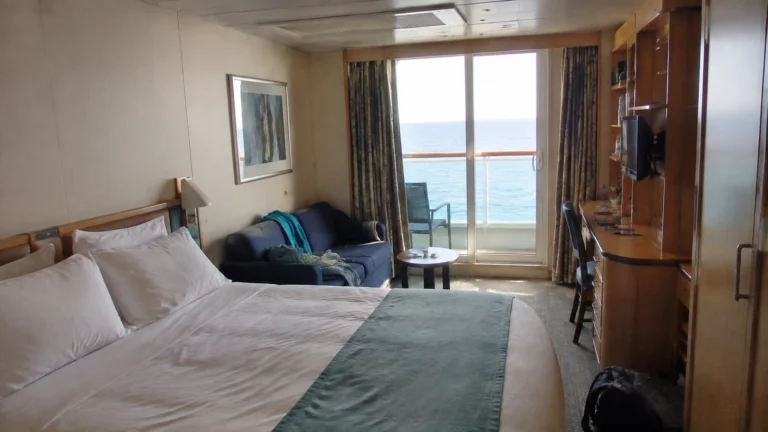
E734 and E735 on Emerald Deck 8, plus B750 and B751 on Baja Deck 11, are Premium Balcony rooms with a specific support-beam obstruction note. The premium label describes the rear-facing product; it does not remove that obstruction.
Avoid these rooms when sitting outside with an uninterrupted central wake view is the reason for your upgrade. Ask for the actual balcony photograph and decide whether looking around the beam is a compromise you can happily accept every day.
For two guests, compare C752 or C753 on Caribe Deck 10 and B748 or B749 on Baja. These are aft-corner Premium Balcony alternatives whose current individual records do not carry the same support-beam note.
Those alternatives are still stern rooms with a long walk to the forward theater. Choose them for the rear-facing outlook, then keep a more central side balcony in the comparison if repeated walks or docking movement matter more.
The official deck plan lets you open each room’s notes before paying. Check the version matching your departure, especially when a room number’s view is the main reason for choosing it.
Do not assume a Vista Suite removes the beam
E732 and E733 are Vista Suites at the Emerald stern, and both carry the support-beam note too. Their extra sitting space, bathroom and suite benefits can be valuable without producing the unobstructed balcony you imagined from a generic photograph.
Keep one on the shortlist when the suite itself solves a real need and the photographed beam does not bother you. Skip it when you are stretching the budget mainly to buy a clean wake view.
Compare a different exact suite and the aft-corner balcony rooms before deciding. A regular Premium Balcony may be enough when the view matters more than the separate sitting area and suite services.
Treat the quoted square footage carefully as well. Princess’s published room totals include the balcony where stated, so a large figure does not mean that all of it is indoor space.

Choose obstructed oceanviews by number, not just code
Ruby has Oceanview Obstructed categories OV, OW, OY and OZ, but the individual window matters more than trying to rank those four codes from best to worst. Lifeboats and structure change the outlook along the ship.
For a useful example, E327 and E330 are OV rooms marked fully obstructed, while E403 and E404 are also OV but marked partly obstructed. Buying the same category does not settle how much of the view you will see.
Choose a blocked window when daylight is the goal and its fare is appealing beside an Interior. Avoid it when scenery from the bed or sitting area is the feature you are trying to buy.
Compare an unobstructed Oceanview at the same time, then consider a balcony only if you want private outdoor space too. A window and an outdoor seat solve different needs, so the more expensive product is not automatically the sensible answer.
Do not make the opposite mistake of assuming every Oceanview outside Emerald is clear. Forward Lido rooms L101 and L102 have partial-obstruction notes in the current records, despite their different deck location.
Be selective about Riviera beneath Lido
Riviera Deck 14 is immediately beneath Lido Deck 15. Its upstairs neighbors change from forward cabins to pool areas, food counters, Horizon Court, Café Caribe and outdoor seating as you move aft.
Avoid a room directly under the busier pool or food footprint when daytime naps, late mornings or an early bedtime are essential. Moving to an ordinary balcony on Aloha Deck 12 can keep you fairly close to the pools while adding accommodation overhead.
For an early riser who repeatedly returns from swimming, Riviera’s one-flight convenience may be worth the compromise. Compare the actual overhead area instead of rejecting the whole deck because one room has a busier ceiling.
Pool furniture and preparation are reasons to inspect the location, rather than proof that every guest will hear them. A deck plan can show what operates nearby, but it cannot measure what a particular stay will sound like.
Our Ruby deck guide helps match the cabin to the routes you will repeat. A shorter trip matters most when you genuinely make it several times a day.
R746 and R747 suit pool convenience better than a quiet-room gamble
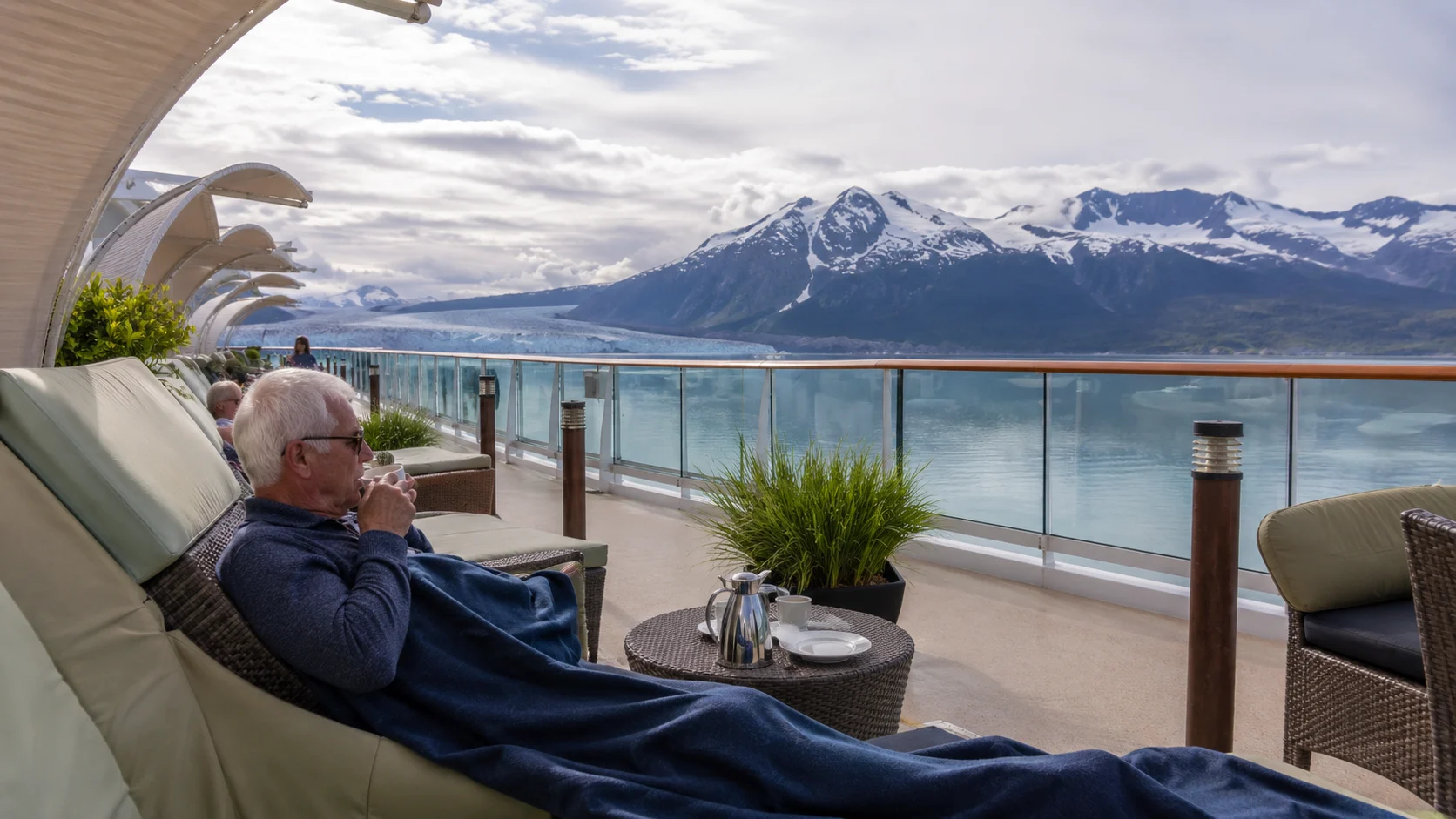
R746 and R747 are side balconies at the aft end of Riviera beside the Terrace Pool approach. Their individual notes describe an extended angled balcony, which is a different feature from the rear-facing Premium Balcony rooms beyond them.
Choose either when that aft outdoor routine is something you expect to enjoy. Avoid buying one on the assumption that every stern room must have a sheltered hallway and an undisturbed ceiling.
You are still below the aft Lido food and terrace area, with nearby movement toward the pool. For a sleep-first trip, compare a selected Caribe or Baja room and accept the longer ride upstairs.
These two rooms currently have two berths. A useful balcony shape does not turn them into a family cabin, so confirm capacity before getting attached to the number.
Emerald puts evening venues below your room
Emerald Deck 8 gives you quick access to the Deck 7 lounges and restaurants, but that same closeness deserves a floor check. Princess Theater is forward, Explorers Lounge sits farther along, and Club Fusion occupies the stern.
Avoid the room above the lively venue you would least want operating beneath you when you rest. Compare a similar room on Dolphin, Caribe or Baja if the fare difference is small and the lower evening route is not essential.
A cabin above a dining room or circulation area raises different questions from one over music and dancing. Trace the exact position before treating all of Emerald as one noise category.
For an adult who stays out late and enjoys walking one flight to the lounges, the location may work well. Choose that convenience deliberately rather than hoping the evening program will end at the same time you want to sleep.
Think through Dolphin balcony exposure before upgrading
Dolphin Deck 9 Mini-Suites are appealing for the sofa area and tub, especially when more than two people share. The side balconies project farther out than the cabin decks above, leaving much of the outdoor area exposed.
Skip that setup when shade or feeling screened from upper balconies is your main outdoor priority. Compare a side-facing Caribe balcony with its partly covered design, or ask for photographs of the exact Mini-Suite you are considering.
Keep Dolphin when extra indoor sitting space and the bathroom are what improve the trip. You can enjoy the room while knowingly accepting a more open balcony.
Do not turn a general photograph into a promise for every stern or corner position. The balcony shape changes at the ship’s ends, and an individual-room image is more useful than a blanket claim about an entire category.
High forward rooms are a convenience purchase with a motion tradeoff
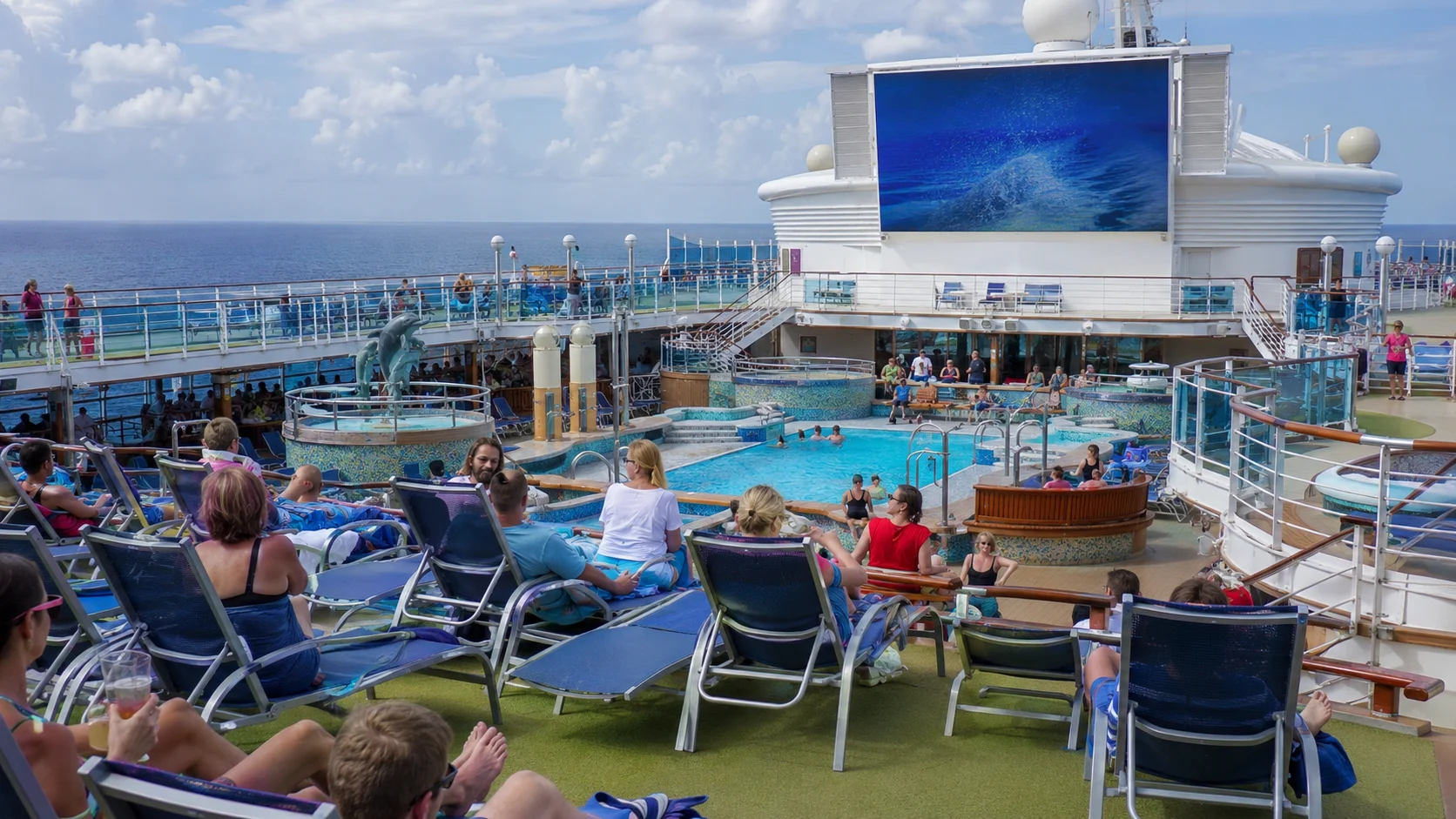
The forward Lido cabin section makes pools and quick food easy to reach, and much of the public flow stays outside that residential corridor. It can be a practical choice for someone who spends most of the day upstairs.
Avoid choosing it for convenience alone when high forward movement has bothered you before. Begin with a lower, more central room and compare the extra elevator trip with the comfort you want.
A lower Oceanview can provide daylight without moving you to Lido. If a balcony is important, a central Caribe or Baja position is a more balanced starting point than the furthest forward room available.
For mobility needs, settle the accessible layout first. The accessible route guide explains the ship’s routes, but the exact bathroom, door and equipment space still need confirmation with Princess.
Confirm beds and connecting doors before choosing the fare
A room’s daytime photograph does not show the route to the bathroom after every extra bed is prepared. Confirm the upper berth, sofa or rollaway arrangement for the actual number rather than assuming all rooms in that category sleep four.
D733, for example, is a four-berth Dolphin Mini-Suite in the current records, while the aft-corner balcony examples above have two. Choose the family layout that works before comparing which balcony looks more exciting.
Connecting rooms are useful when both belong to your group. When you do not need the interior door, compare a nonconnecting alternative, while recognizing that a connection is a preference to consider rather than proof of a noisy room.
If location, a connection or an exact obstruction is essential, choose a booking that secures that feature. A later-assigned fare only makes sense when you can accept the eligible rooms, including their less appealing locations.
Start with the room that solves your biggest concern
For sleep, compare Caribe or Baja with accommodation above and below; for a clearer wake view, compare the verified aft-corner numbers with the beam-marked alternatives. For daylight on a smaller budget, open the individual Oceanview notes and choose the obstruction you can accept.
Our Ruby cabin choices help weigh those upgrades, and our Ruby planning tips connect the room to the rest of your day. Keep the feature you will use often enough to justify its price.
Use the Ruby room descriptions for the category’s bathroom and benefits, then save the exact room confirmation. That gives you a far better booking decision than an impressive category name and a view you have not checked.
How this guide was researched
Ruby Princess’s current individual cabin records and all relevant deck maps were inspected visually for obstruction notes, berth counts and the spaces above and below. Historical passenger balcony descriptions were checked for design context, not treated as current noise or condition guarantees.