Independence of the Seas Cabins to Avoid (and Where to Book Instead)
Independence of the Seas cabins need the most care beneath Deck 11 public areas, beside the Royal Promenade and around the stern’s structural balcony views.
For most light sleepers, a nonconnecting room on Deck 8 or 9 with cabins above and below is the strongest starting point.
Short version: Choose Deck 8 or 9 for a conventional cabin buffer; favor a standard interior over a Promenade window for privacy and early nights, and choose a side-facing balcony over 7408 or 7708 when an open sea view and shorter walk matter most.
Deck 10 beneath pools, fitness and Windjammer
Deck 10 is the main location to approach carefully if you sleep lightly or like a late start. On the Independence deck plan, Deck 11 has spa and fitness facilities forward, the Solarium and pools through the middle, and Chops Grille, Giovanni’s Table and Windjammer aft.
The room’s position determines which of those spaces is overhead.
Under pool seating, the possible disturbance is furniture moving, footsteps or cleaning. Under a restaurant, it is the movement of diners and staff.
Beneath fitness areas, equipment and music are the more relevant concerns. None of those relationships establishes a fixed noise level or a daily wake-up time, but each adds uncertainty that another cabin overhead avoids.
Deck 9 is the straightforward alternative for pool-loving travelers who still want a buffer. A nonconnecting room on Deck 8 or 9 also works well for couples who split time between upper-deck activities and lower-deck restaurants.
Keep Deck 10 when the shorter route or a particular suite matters more, rather than paying for height as though it automatically improves sleep.
The sports court, FlowRider and waterslides are on Deck 13 aft, so they are not the direct ceiling above a Deck 10 cabin. That matters when comparing rooms: the warning is about the space directly above the bed, not every attraction farther up the ship.
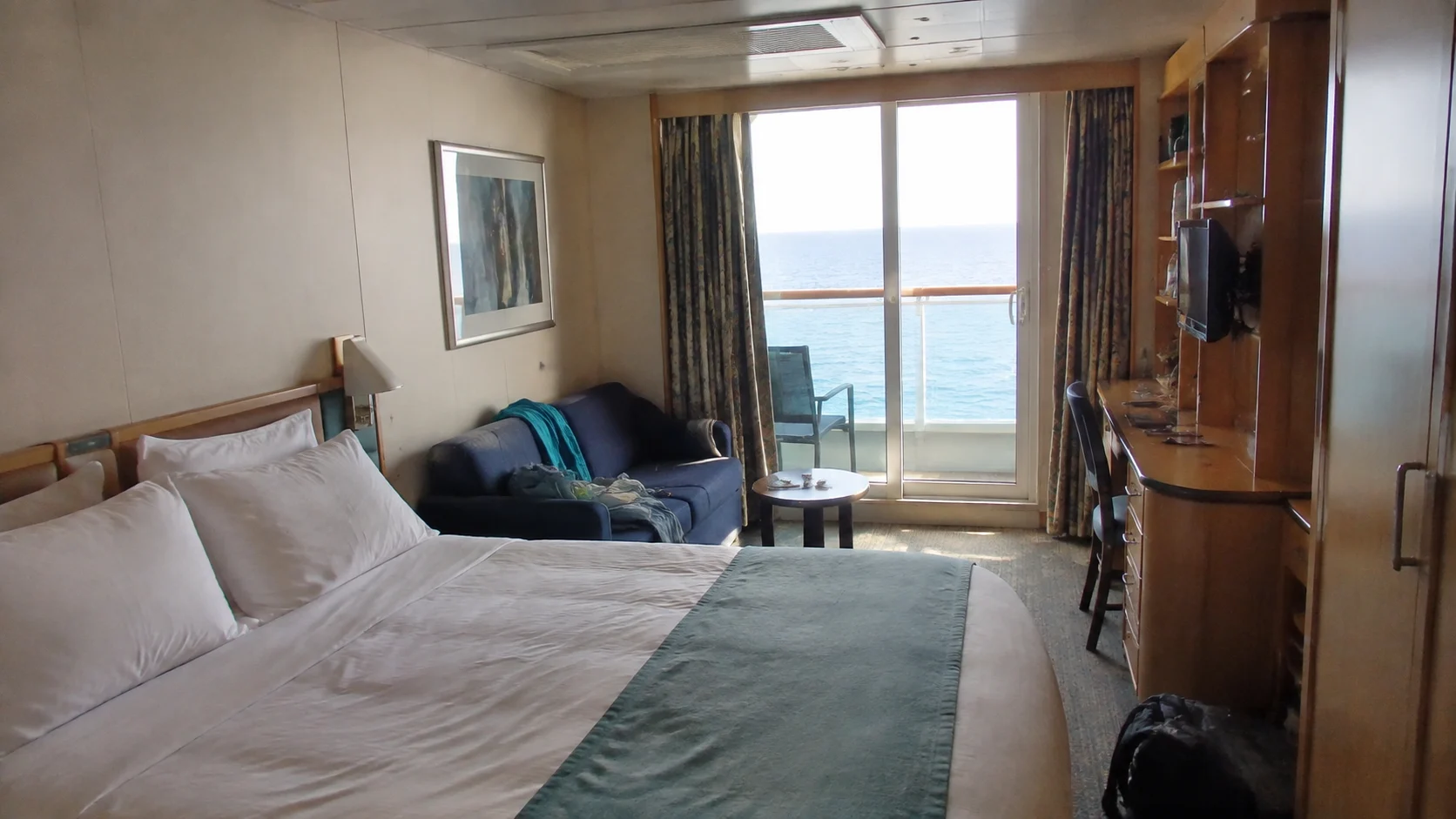
Royal Promenade windows for early sleepers
Promenade View Interior rooms on Decks 6, 7 and 8 have windows facing the indoor Royal Promenade. They bring people-watching to an interior budget, but the view is into the ship rather than out to sea.
Cabins face one another across the open space, so closing the curtains is part of keeping the room private.
These are appealing rooms for night owls who enjoy the atmosphere and may watch an event from their window. They are a less natural fit for a toddler’s nap or an early bedtime during evening activity.
Deck 8 places you farther above the Deck 5 Promenade floor than Deck 6, but it does not promise that event sound disappears.
Choose a conventional interior for darkness, privacy and a lower fare when the window adds little to the trip. Choose an Ocean View room when daylight and real sea views are the reason for upgrading.
Independence does not offer Virtual Balcony interiors, so a Promenade window should not be mistaken for a live exterior screen.
There is also an important difference between a room overlooking the Promenade and an ordinary interior somewhere on Deck 6. A June 2024 guest cabin review described interior 6447 as quiet from the Promenade and largely quiet in the corridor during that stay.
The current plan places 6447 in a separate aft interior corridor. It is a useful positive example, rather than a promise that every room one deck above the Promenade sounds alike.
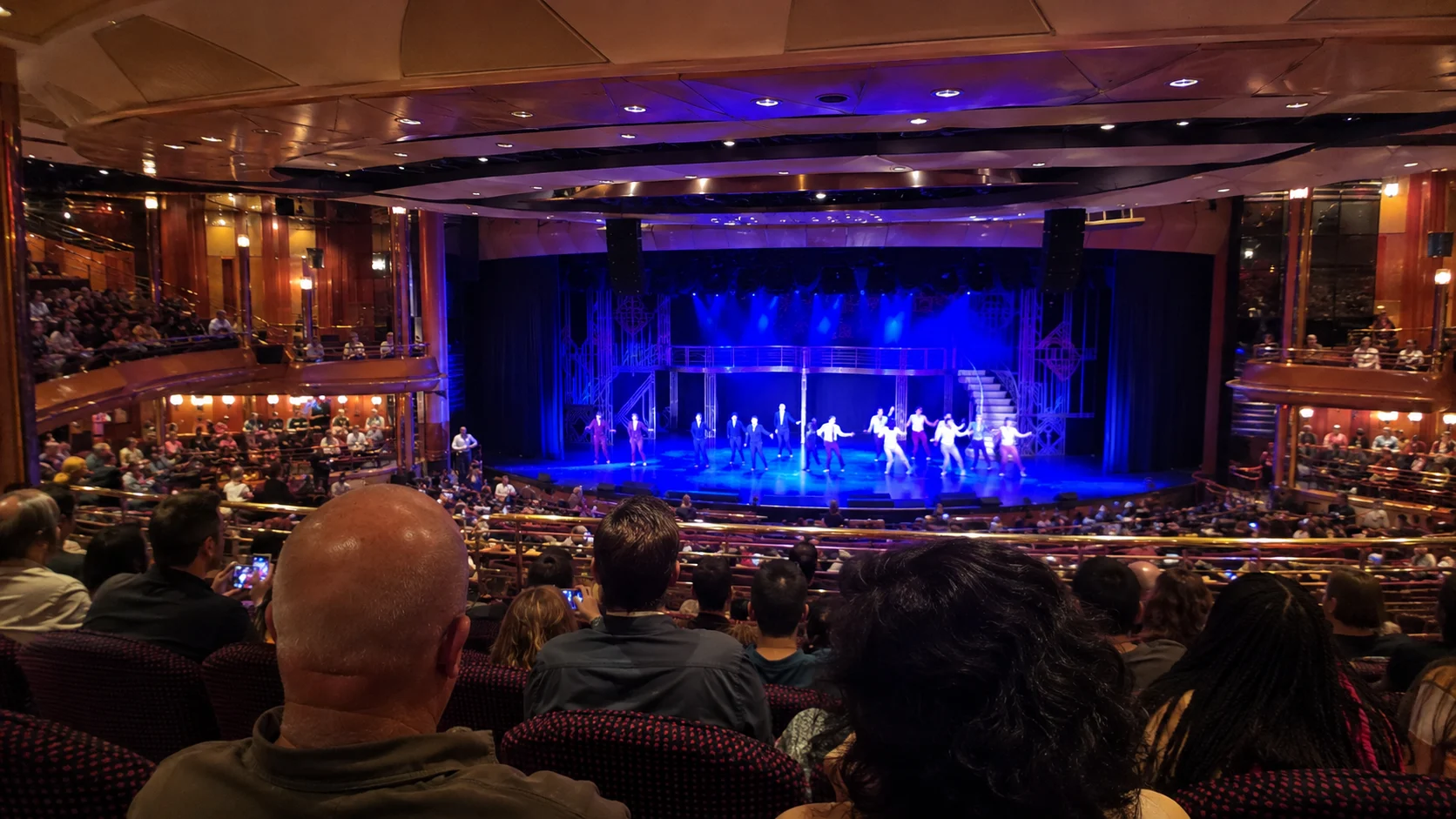
Aft balconies 7408 and 7708 for a clear ocean view
Cabins 7408 and 7708 are corner balconies at the stern on Deck 7. Their outdoor space and aft outlook can be attractive, but the Freedom-class stern framework is part of the scene.
Buy them for the particular terrace and wake view, not as interchangeable substitutes for a conventional side-facing balcony.
The difference matters most when you plan to spend mornings outside watching the sea. A larger balcony can feel generous while its steel framing interrupts parts of the outlook.
A photograph of a standard balcony elsewhere on the ship will not show that compromise, and a room’s horizon view can differ from its straight-down view.
For an open outlook with a shorter corridor walk, a side-facing balcony on Deck 8 or 9 is the simpler recommendation. The aft corners make more sense when spreading out outdoors matters more than an uninterrupted view or being close to the elevators.
Do not move automatically from a Deck 6 side balcony to Deck 7 expecting a dramatic improvement. Deck number alone does not tell you the balcony shape, surrounding structure or direction of the view.
The aft corners are unusual because of where they sit, not because every room on their deck has the same drawback.
High forward panoramic rooms for quiet or motion sensitivity
The forward panoramic accommodation on Deck 12 offers broad windows and a very different outlook from a standard lower-deck oceanview. The tradeoff is a high, forward position near the fitness area, with the forward outdoor recreation deck above.
It is a less forgiving location for someone who already knows that ship movement bothers them.
A May 2018 panoramic guest review praised the view but reported music reaching the room from the recreation and fitness areas; staff turned the music off after the guest raised it. The review gives inconsistent cabin numbers, so it is more useful as a dated account of that location’s tradeoff than as a reason to blacklist one room.
That report does not establish a continuing problem, and a plan cannot tell you how loudly a venue operates on your cruise. For a traveler prioritizing sleep, a lower oceanview or a cabin-buffered balcony is the clearer choice.
Keep a high panoramic room when the indoor view and extra space are the features you will actually use.
Families should also distinguish a big window from private outdoor space. A panoramic room can give everyone more living room, but adults cannot step onto a separate balcony while a child sleeps.
A regular balcony or two connecting rooms may solve that daily routine better.
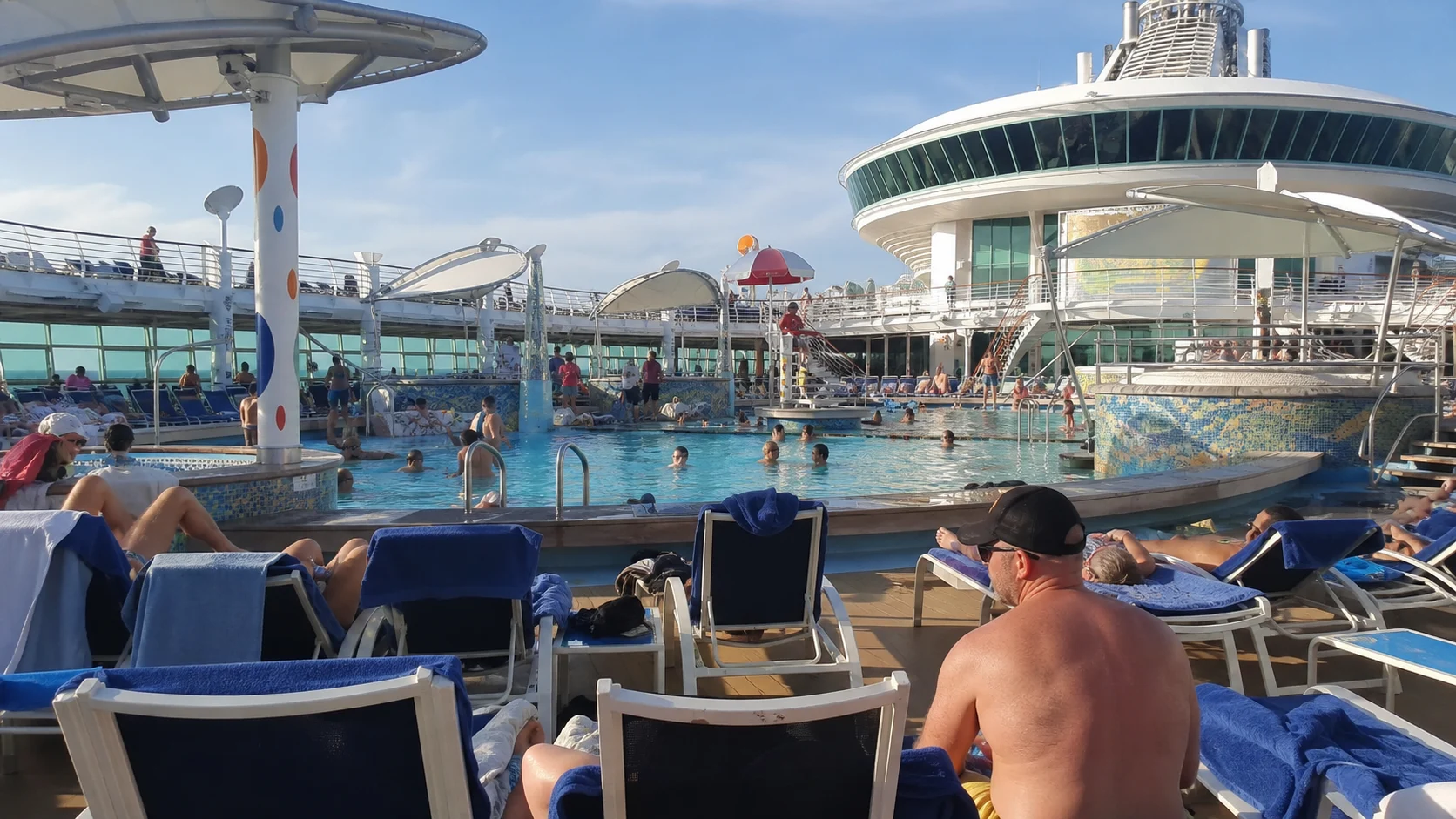
Lower rooms beside evening venues
Independence’s theater, Studio B, casino, Royal Promenade and Main Dining Room occupy the lower public decks. A nearby cabin can make evenings easy, but an early sleeper gains less from being close to a busy entrance or directly beside an operating venue.
Choose a cabin-only corridor when a short walk to nightlife is not a priority. For theater fans, a forward room may save repeated walks; for families using the aft buffet and sports areas, an aft elevator route may be more useful.
A central room is a compromise between those journeys, rather than a guarantee that every destination is close.
Lower decks still deserve a place on the shortlist for motion-sensitive travelers. September 2023 passenger discussion included positive reports of Independence’s Deck 3 oceanviews, including little corridor noise.
The comments do not establish one universally quiet cabin, but they are a welcome counterweight to assuming every lower room near public decks is a mistake.
For the best balance, choose a lower, central room with a sensible relationship to the public space above. A room farther toward either end gives up some of that motion advantage, even when its particular outlook is more exciting.
Connecting doors and extra beds you do not need
A connecting door is useful when your party has booked both rooms. It is less valuable for a couple who will never open it, so a comparable nonconnecting room is my tiebreaker when price, view and location are otherwise similar.
That preference does not mean every connecting cabin has a noise problem.
For a family, the important question is what happens at bedtime. A sofa bed can take over the sitting area, while a Pullman changes the space above a bed.
The permitted occupancy tells you how many guests may book the room, but not whether everyone can comfortably reach the bathroom while the beds are in use.
Two confirmed connecting rooms are worth pricing against one larger family cabin, especially for teenagers or several adults. Two bathrooms and a door between sleeping spaces can be more helpful than one large room with a premium label.
For younger children who need close supervision, one room may still be the better fit.
Accessible rooms and long corridor walks
Preserve the right adapted room when accessibility is essential. Royal Caribbean’s accessible room guidance describes features such as wider doors and roll-in showers, but the offered cabin still needs to suit the traveler’s transfer side, mobility device and bathroom routine.
A standard room on a quieter-looking deck is not a suitable replacement if it loses those features. The route to the elevator and the places you will use most also deserves weight: a lovely far-aft balcony is less appealing if every return to the room creates a tiring walk.
For a traveler who cannot comfortably use stairs, proximity to a useful elevator bank is a practical benefit. There is no good reason to reject every cabin near an elevator as noisy; corridor traffic depends on the room, nearby doors and passengers, and convenience may be the more valuable tradeoff.
Guarantee fares when location is important
Royal Caribbean’s guarantee terms leave the exact room and location to the line, with assignment possible up to port check-in. An obstructed view is possible, and traveling parties are not promised nearby rooms.
A guarantee is good value when you can accept the allowed locations and use the saving elsewhere. It is a poor fit once a nonconnecting room, clear sea view, particular bed setup or short elevator route has become essential.
Paying to choose the room buys control over those everyday features.
For two cabins traveling together, book confirmed rooms when proximity matters. For an aft-balcony enthusiast, choose the actual stern room rather than hoping a generic balcony guarantee will deliver it.
A discount cannot make the wrong room right for a traveler with a specific need.
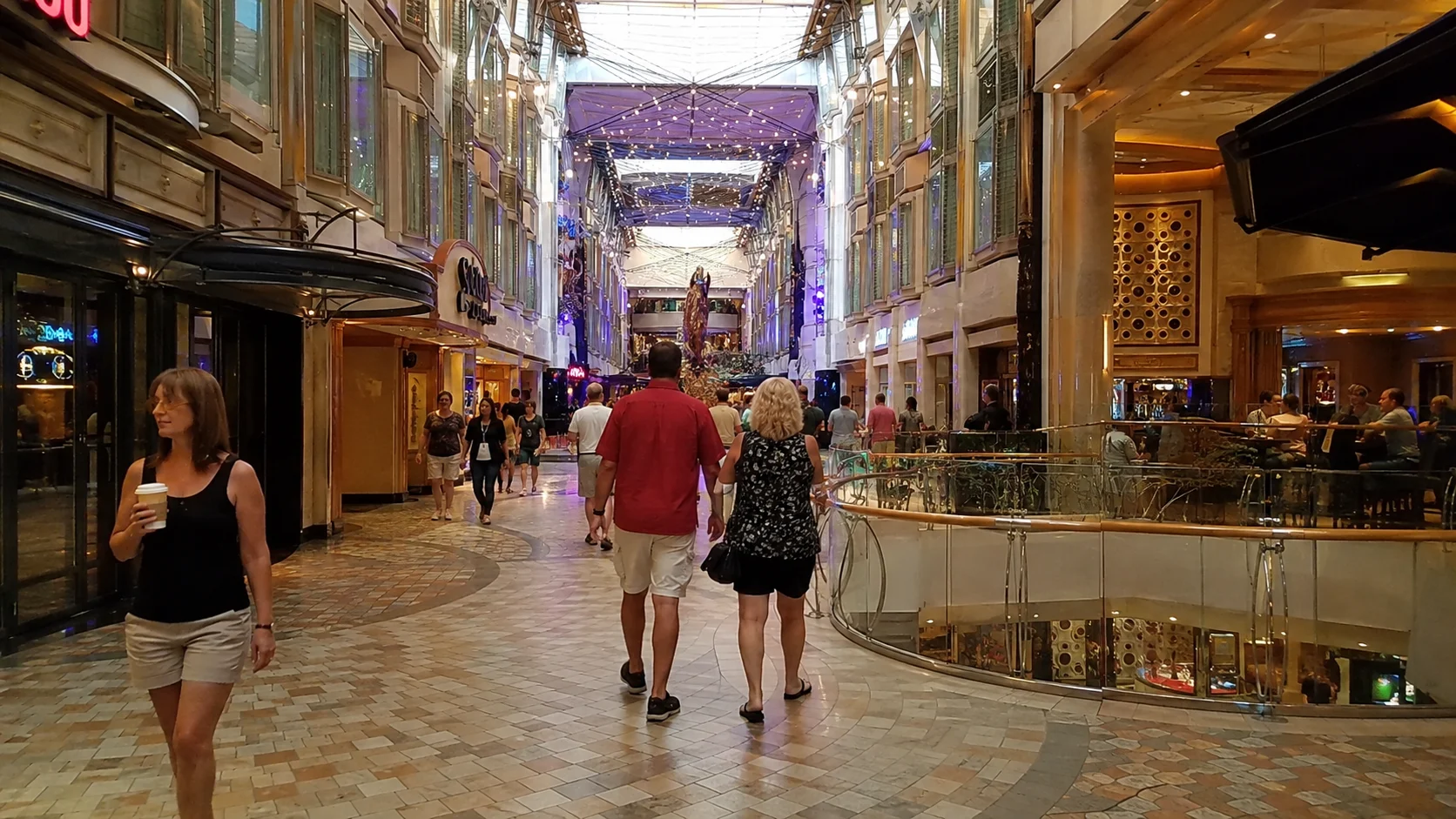
The Independence rooms to choose instead
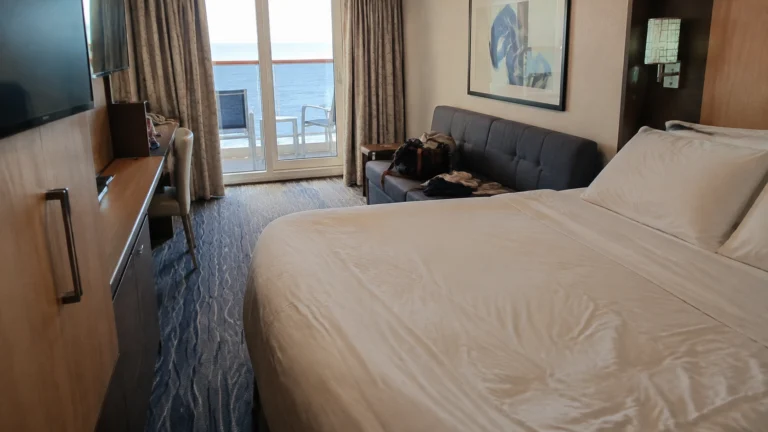
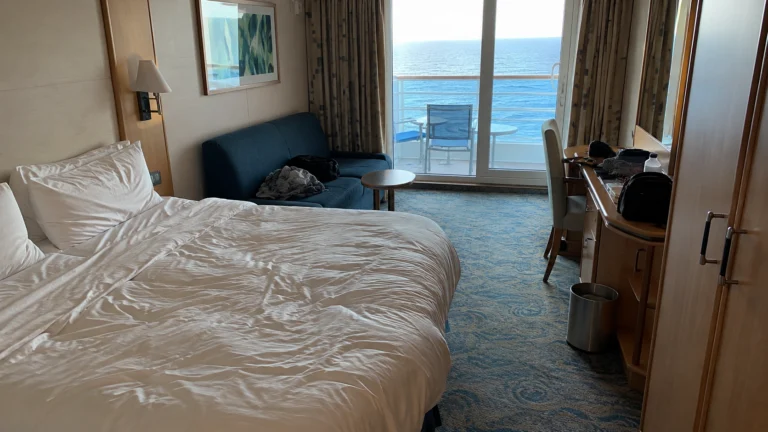
For most couples, start with a nonconnecting Ocean View Balcony on Deck 8 or 9 with cabins above and below. It keeps a conventional outdoor balcony and avoids the busiest upper public deck directly overhead.
A standard interior in a cabin-only corridor is the better-value choice when the room is mainly for sleeping.
For motion sensitivity, move lower and toward the center, accepting that the public-deck relationship needs more care. For families, choose the bedtime layout first, then the view.
For travelers who love a big aft terrace, 7408 and 7708 can stay on the list as long as their structure and longer walk are part of the appeal rather than a surprise.
The best cabins guide covers the upgrades worth considering, while the deck guide explains the routes and the ship tips help plan the rest of the trip. The right room earns its fare through the sleep, space and view you will enjoy each day.
How this guide was researched: I compared Independence’s current deck plans and room policies with dated passenger accounts, separating location-based tradeoffs from individual noise experiences. A past report can help explain a choice without predicting the conditions on every sailing.